









“Brieftasche” — one of the German words for a wallet — is one of the few terms in the leather trade where two people say the same thing and mean something different. One pictures a landscape format that banknotes lie flat in. Another pictures an upright wallet with a coin pocket. A third pictures a folder for documents.
Before you choose a format, then, it pays to sort the vocabulary out. After that, picking from our men's wallets takes five minutes — before it, an hour.
Brieftasche, Geldbörse, Geldbeutel, Portemonnaie: do they all mean the same thing?
In the shops: almost. In everyday speech: no. The differences have grown up regionally and historically, and none of them is wrong.
- Brieftasche originally described the flat landscape format in which paper money lies unfolded — literally a “letter case”, hence the name. Today many people use it for any larger men's wallet, whatever the format.
- Geldbörse is the neutral umbrella term and expressly includes models with a coin pocket.
- Geldbeutel is the everyday southern German and Austrian version of the same word. No practical difference.
- Portemonnaie historically stresses the coin pocket — monnaie being the small change. In today's usage it too is an umbrella term.
In practice that means: if you search for a men's Brieftasche and are shown a portrait wallet with a coin pocket, that isn't the shop getting it wrong. It is the breadth of the word. More useful than the term, therefore, is the question of format.
Portrait or landscape: how to decide
This is the only fork in the road that really counts, and it comes down to a single question: where do you carry the wallet?
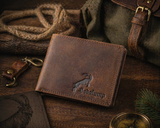
Landscape format — wider than it is tall, folding open once. The cards sit side by side, notes stay unfolded or are folded once. This is the classic jacket shape: flat in the inside pocket, barely any bulk. In the back pocket of a pair of jeans it is uncomfortable, because the width lies across the pocket.
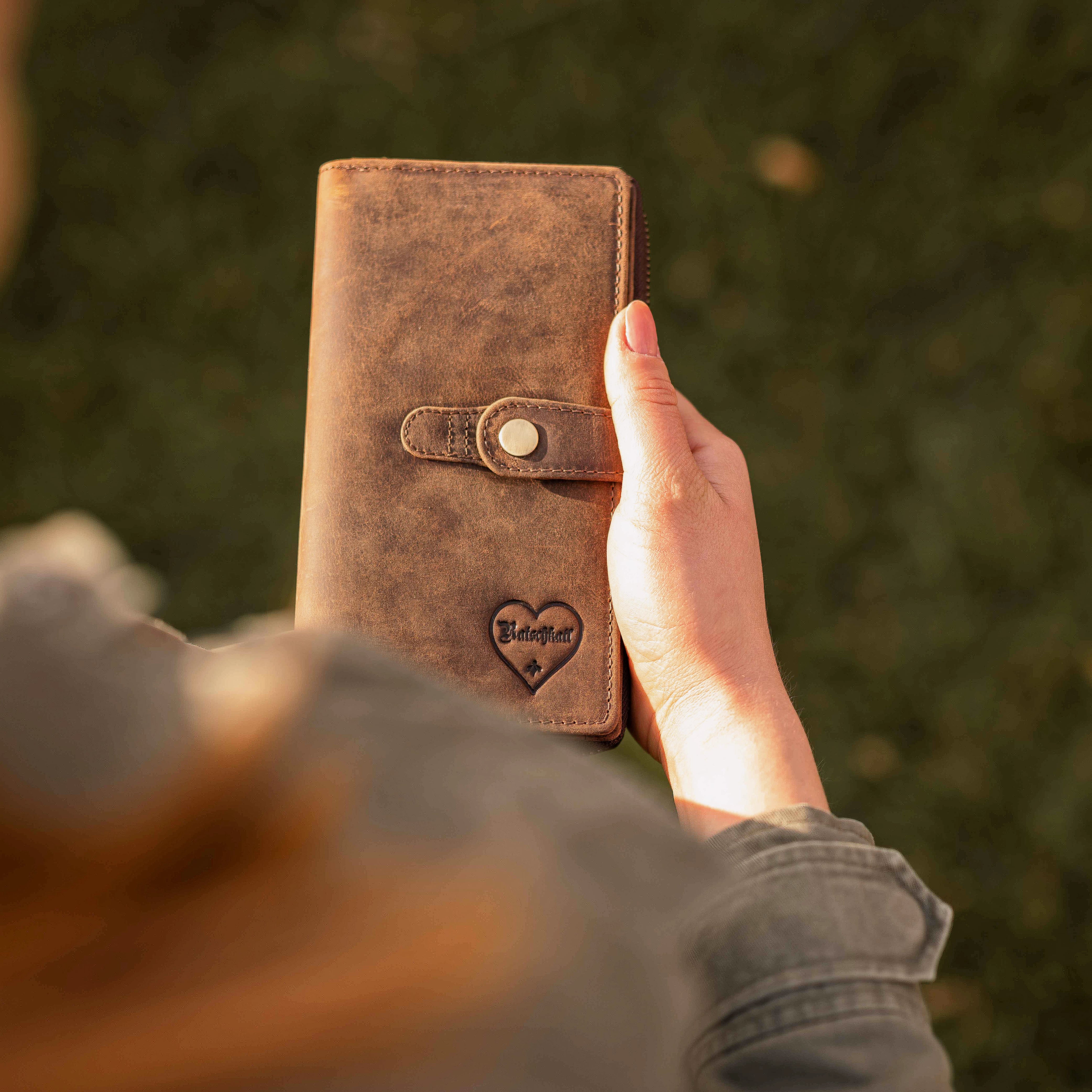
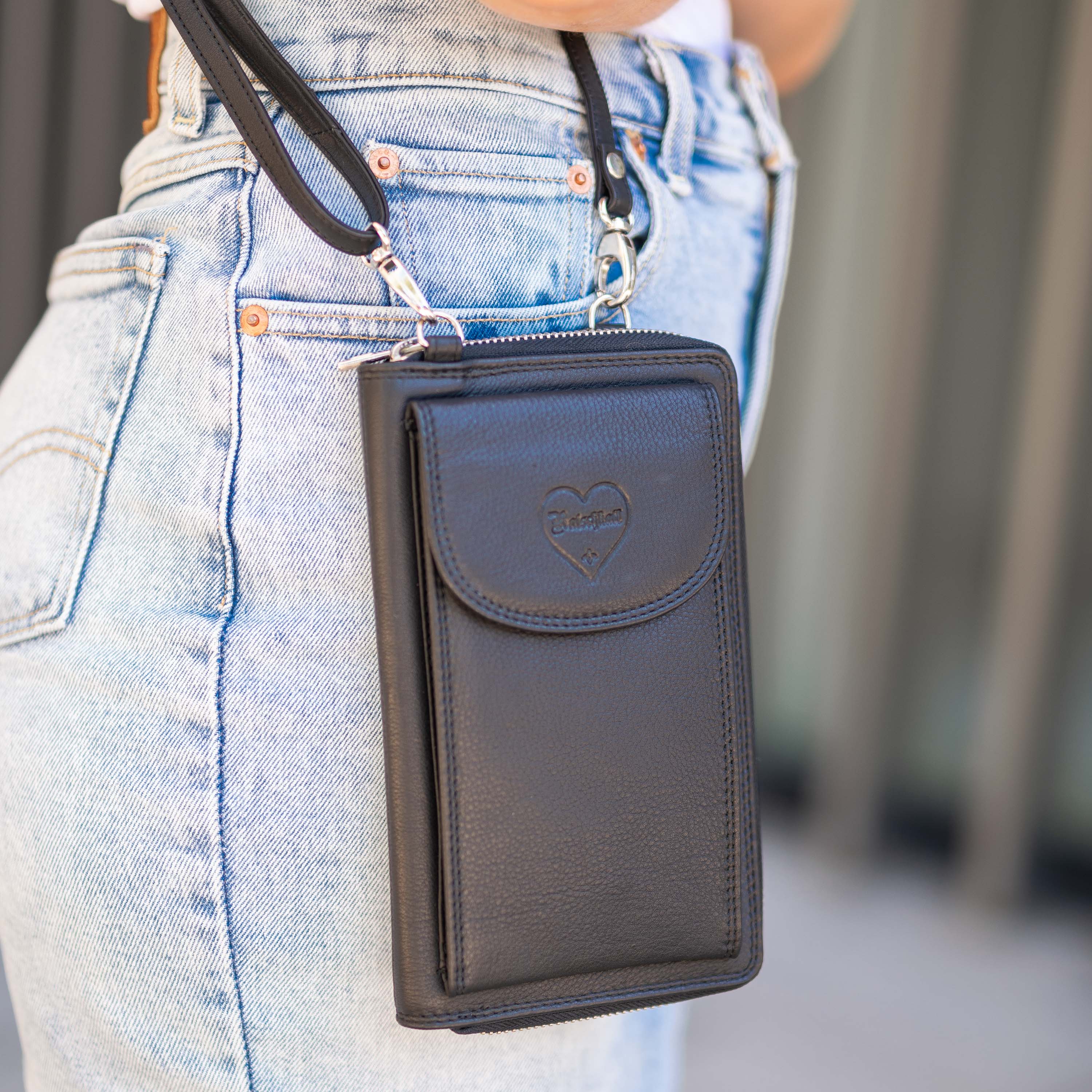
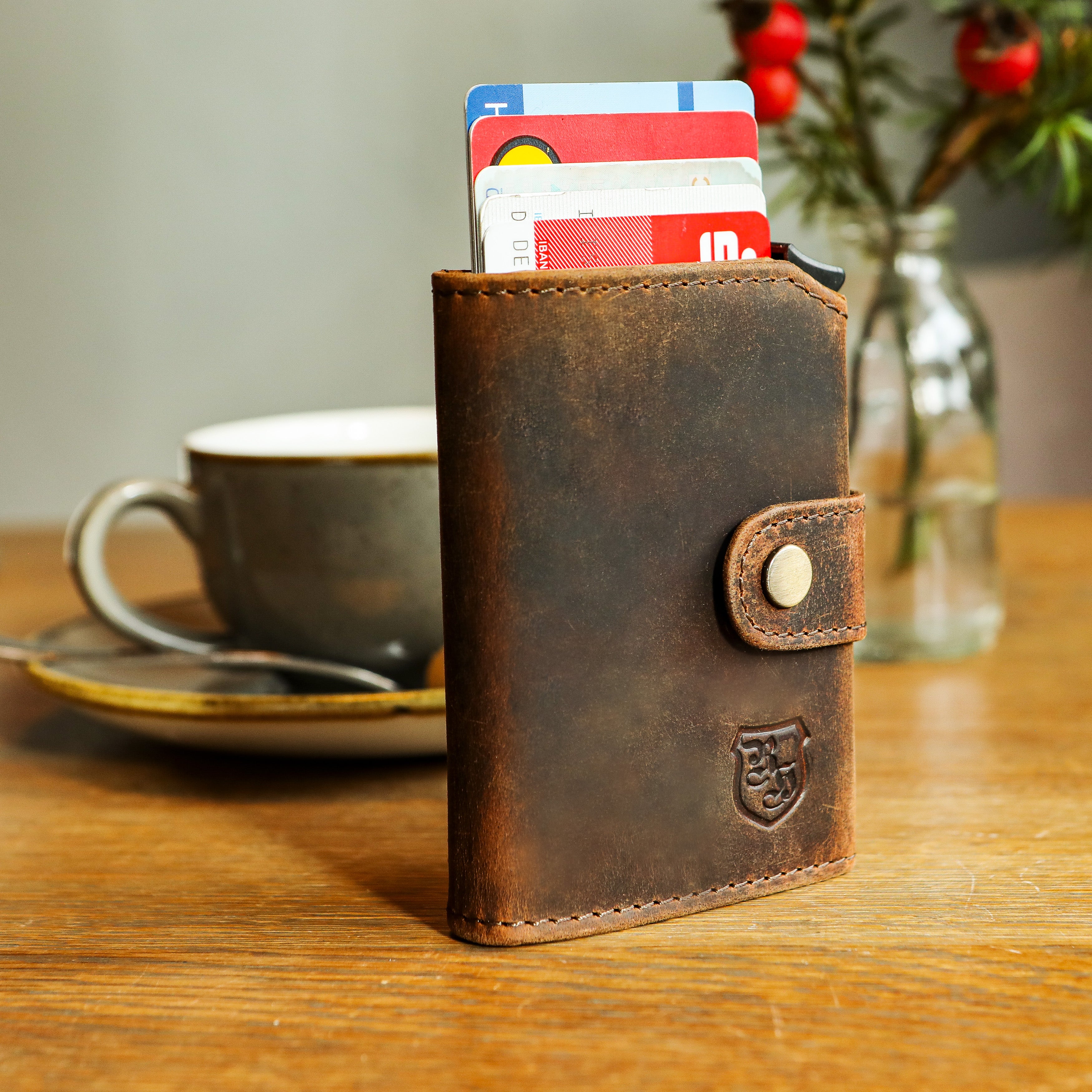
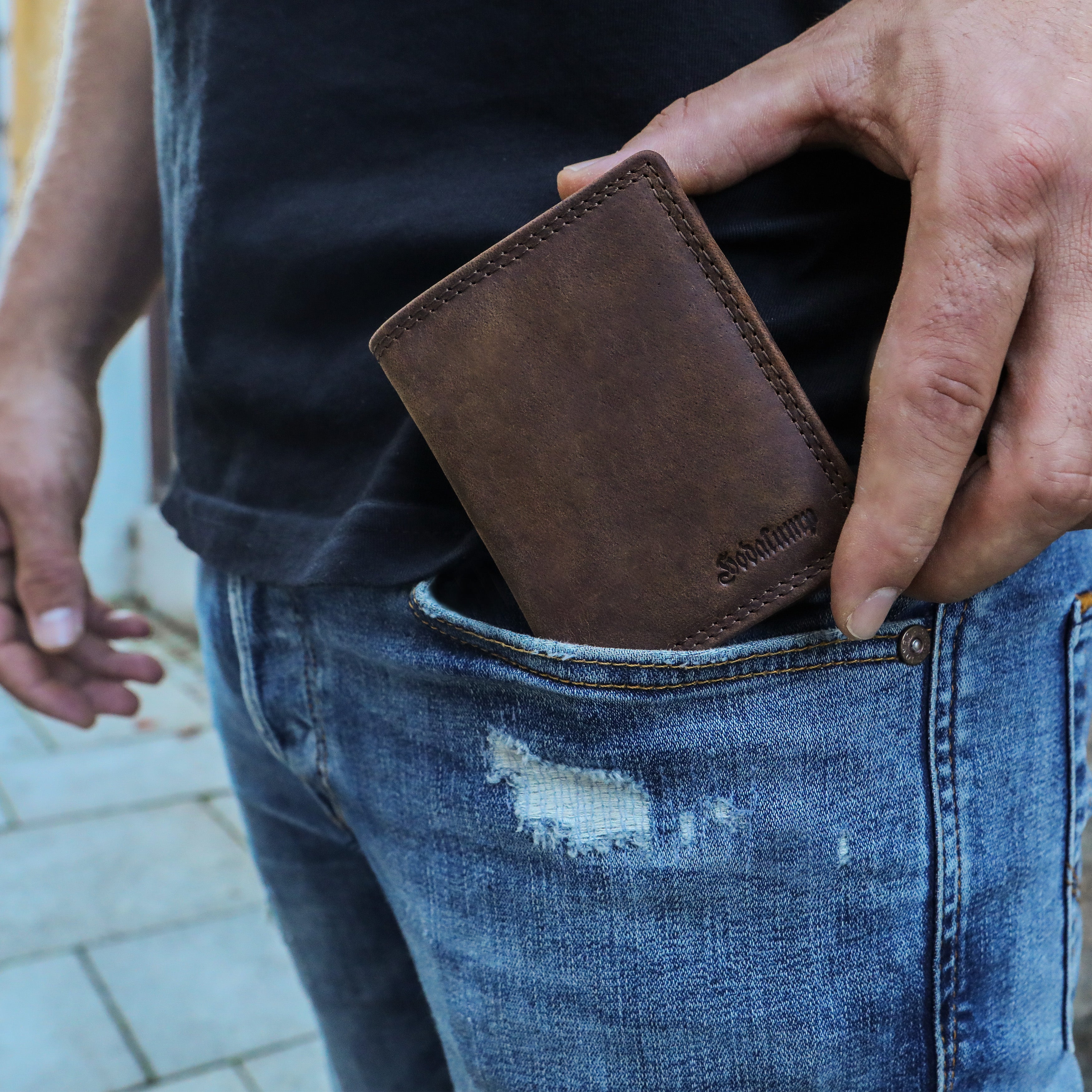
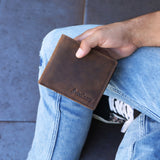
Portrait format — taller than it is wide. The cards sit one above the other, notes get folded. This shape fits into a front trouser pocket and into jacket pockets without twisting. Anyone without a suit pocket is almost always better off with it.
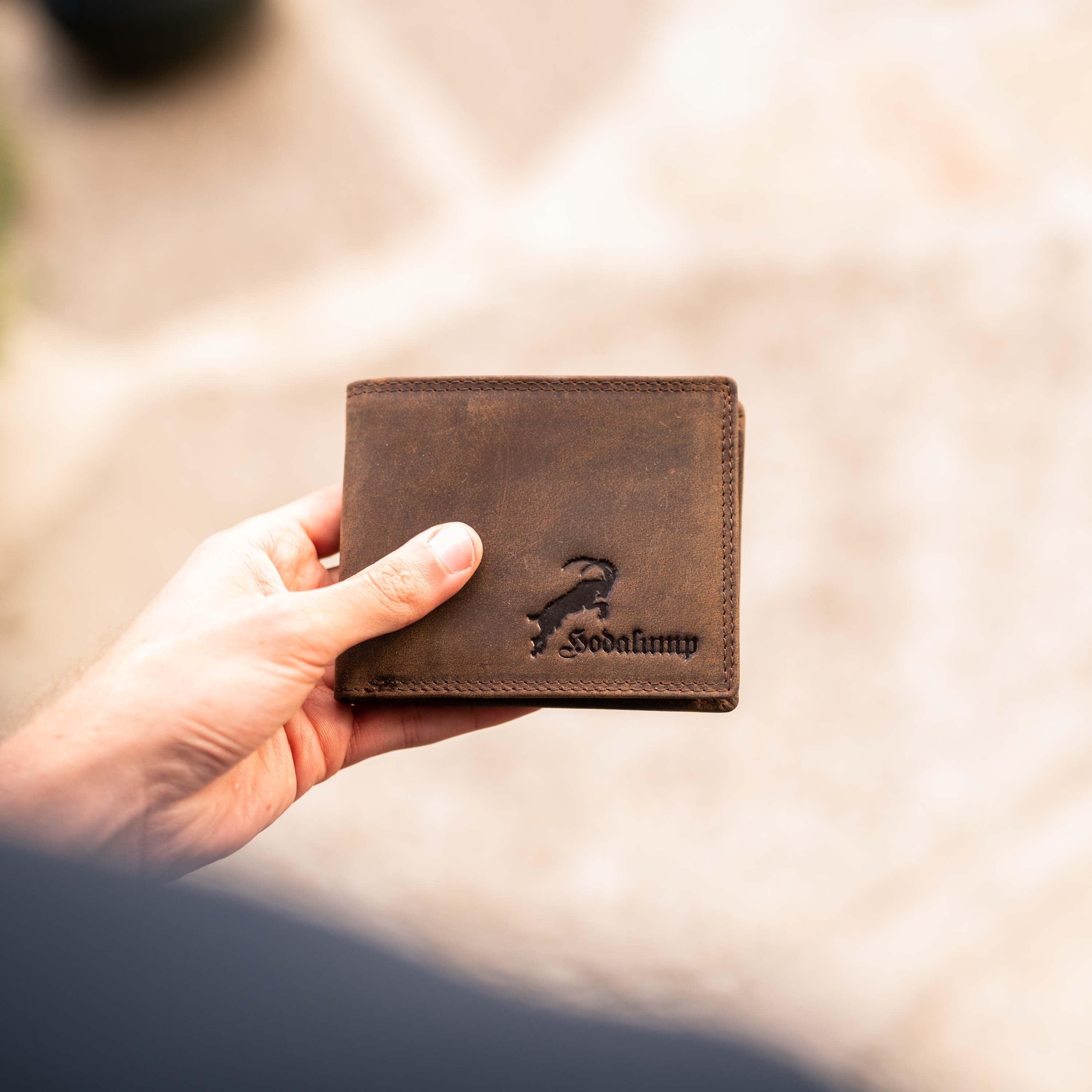
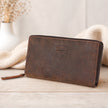
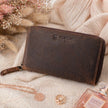
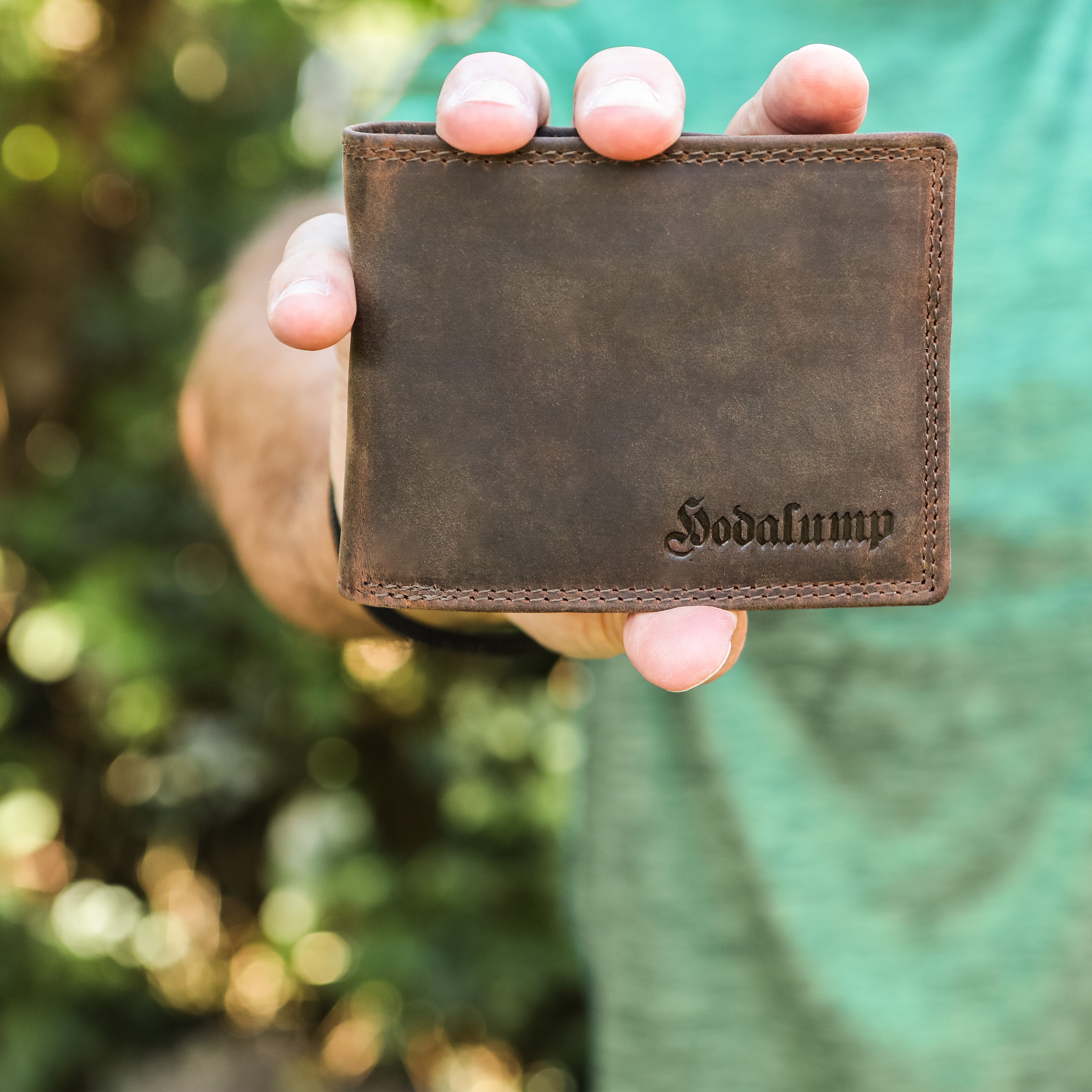
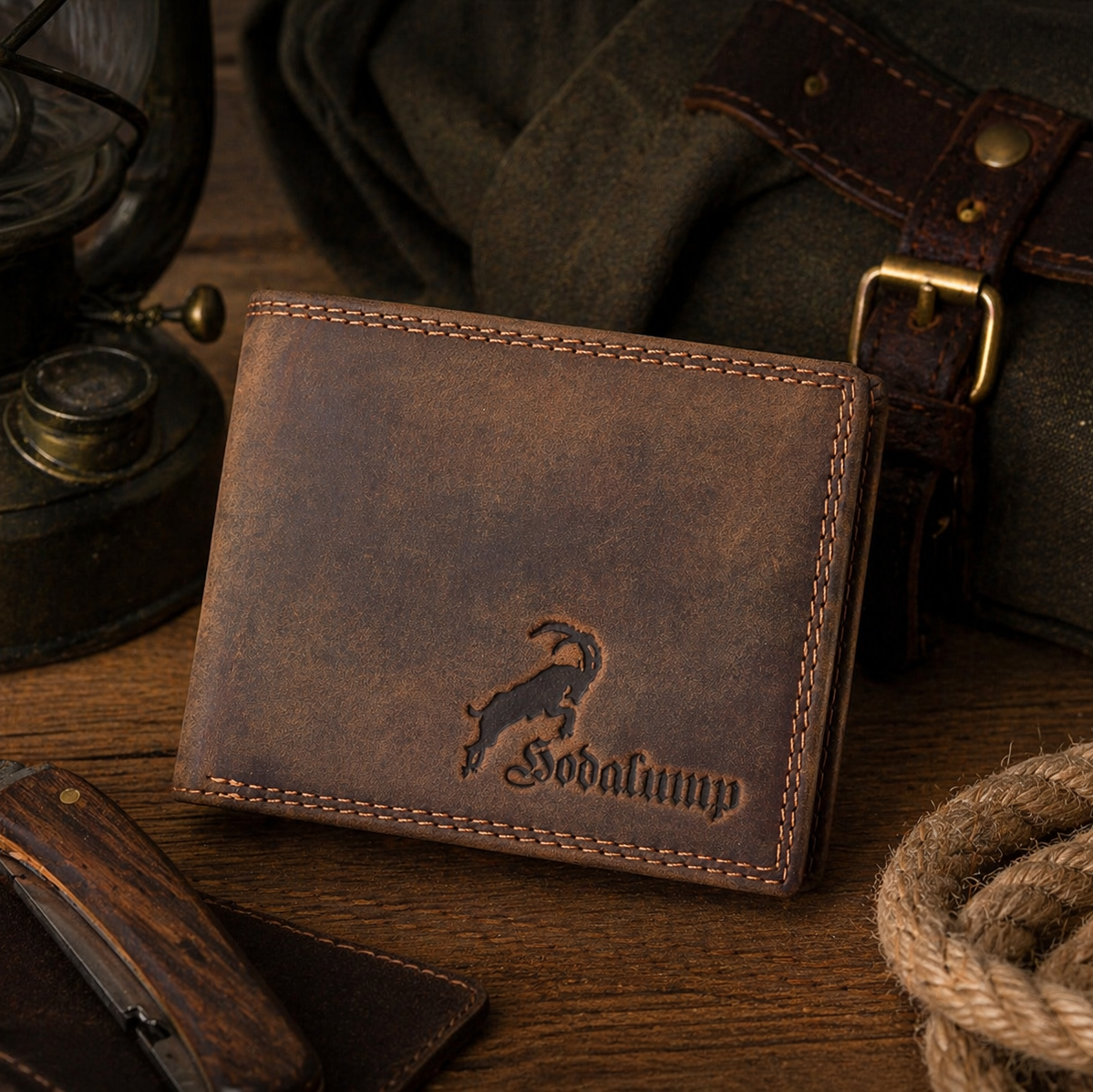
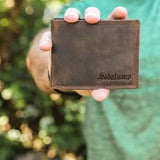
An example of each: the Large Raudi Portrait Wallet at €39.95 is the upright version, with numerous compartments and a zipped pocket of its own for small change. The Hodalump Classic Wallet at €39.95 in Hunter Vintage leather is the compact all-rounder, with compartments for cards, notes and coins.
How much fits into which format?
We deliberately don't give exact compartment counts here — those are on the individual product pages and differ from model to model. What can be generalised is the running order.
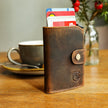
- Card holder and card case, from €15.95: cards and driving licence, nothing else. No coin pocket.
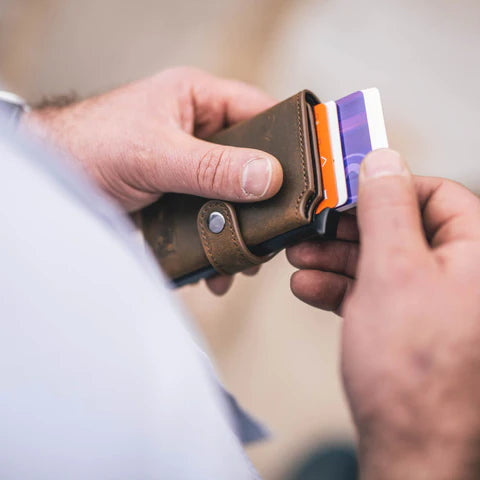
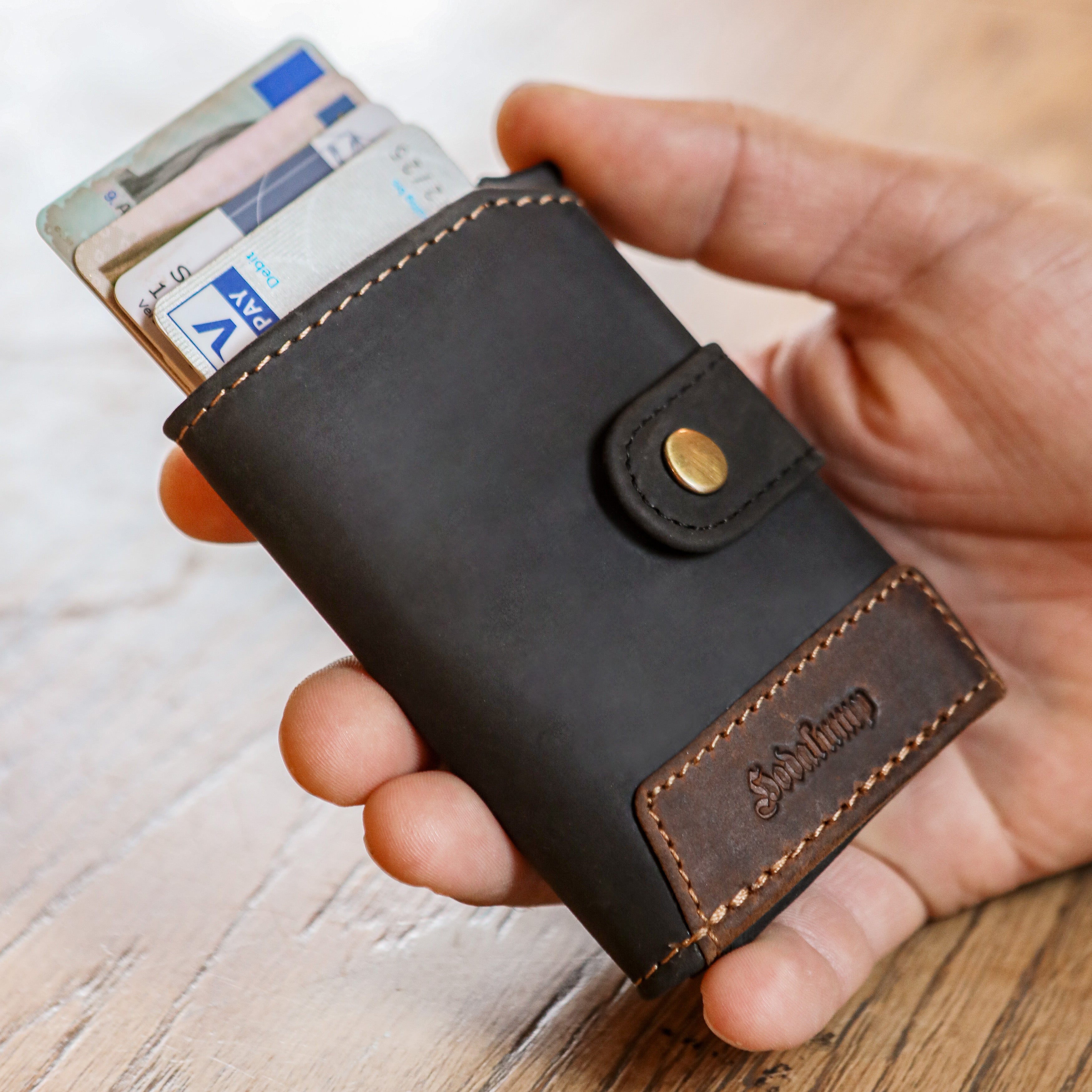
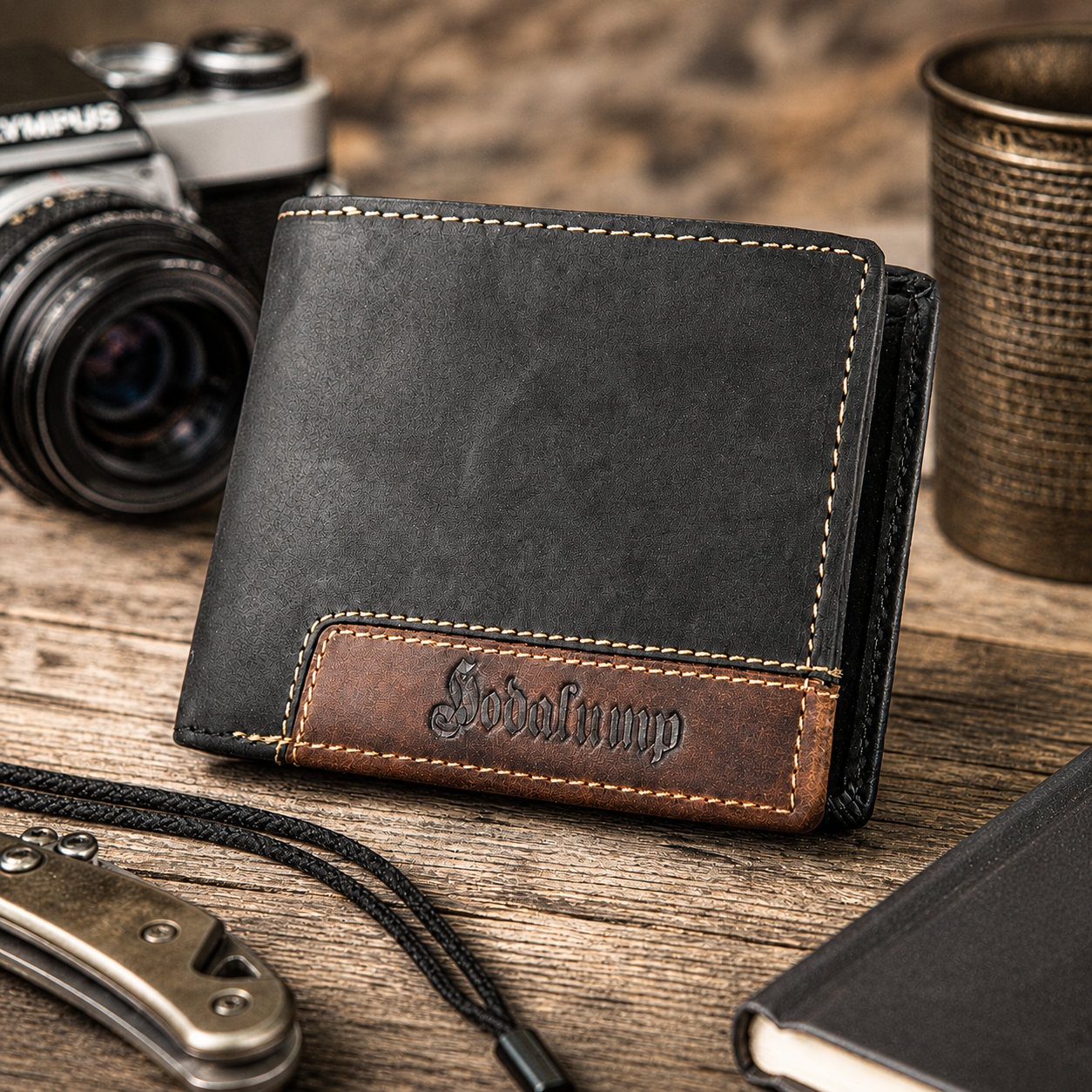
- Slim wallet, €19.95 to €34.95: cards, folded notes, a small coin pocket. The Franz Slim Wallet at €24.95 is the typical model in this class.
- Classic wallet, €29.95 to €39.95: cards, notes, coin pocket with a press stud. Covers what most people need day to day.
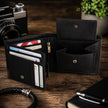
- Large wallet, €39.95 to €46.95: a clear window for ID or driving licence on top of that, more card slots, often a second note compartment.
The Large Hias Wallet at €46.95 stands for the top tier: several card slots, a large note compartment, a coin pocket with a press stud and a clear window for the driving licence. The Large Kobi Wallet at €39.95 is the slightly more compact version of the same idea. If you want to compare the whole group, you will find it under Large Wallets.
How flat can a wallet be?
This is where the most common misconception sits. The thickness of a wallet doesn't come from the leather, it comes from the contents. Ten cards stacked in compartments add more bulk than the entire outer material.
If flatness matters to you, there are three routes. First: carry less. Second: a design that lays cards side by side rather than stacking them. Third: do without the coin pocket. The Flat Benny Wallet at €29.95 in oiled Hunter leather takes the middle route — it has a flat coin pocket and is still meant for a front pocket or an inside jacket pocket. The Fredl Money Clip Wallet at €34.95 takes the radical one: the notes are held by a clip in the middle, and there is no coin pocket at all.
The slim formats are gathered in the Slim Wallets. Honestly: anyone who uses cash every day will not be happy with a slim wallet. It is a format for card payers.
Coin pocket or no coin pocket
That isn't a question of style but of arithmetic. If you pay in cash, you accumulate small change — and small change without a pocket ends up loose in a trouser pocket and gets lost. If you only pay by card, you are carrying an empty compartment around that makes the wallet thicker.
There are two kinds of closure. The press stud opens one-handed and gives a wide opening — handy at the till, handy with stiff fingers. The zip holds more securely if the wallet gets turned upside down, but needs two hands. All the models with a proper coin section are under Wallets with a Coin Pocket.
Does a wallet need RFID protection?
The question comes up in almost every buying conversation, and the answer is calmer than the advertising suggests. Contactless cards can technically be read from a short distance. In practice the banks limit the damage, because without a PIN only small amounts and only a limited number of consecutive payments are possible.
Even so, there are two good reasons for a shielding layer. First, the side effect that several cards in the same slot no longer confuse the terminal. Second, how it feels in a crush — a funfair, a station, a busy city centre.
If that matters to you, there are two routes. Either a wallet with the protection already built in; the selection is under Wallets with RFID Protection. Or a thin card sleeve that you slide into any existing slot — that is the cheaper option and works with the wallet you already own.
Where the wallet sits determines the shape
The last point usually gets overlooked and yet decides more than anything else whether a wallet still looks good after two years.
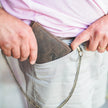
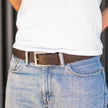
Back pocket: the worst of all options. The wallet is bent every time you sit down and warps permanently; cards press through the leather. If it has to be the back pocket, then keep the contents to a minimum and choose a flat format.
Front trouser pocket: the best solution for jeans and work trousers. Portrait format, narrow, without a sprawling flap. Anything wider than it is tall will twist here.
Inside jacket pocket: here the wallet may be wide, but not thick. A flat landscape format or a card case with a note compartment is the classic choice.
Coat pocket or bag: the only position where a large wallet with lots of compartments makes unqualified sense, because neither pressure nor space comes into it.
If it really should be a document folder
Some of the people searching for a Brieftasche actually mean something larger — a container for papers, not for cards. There are two directions for that.
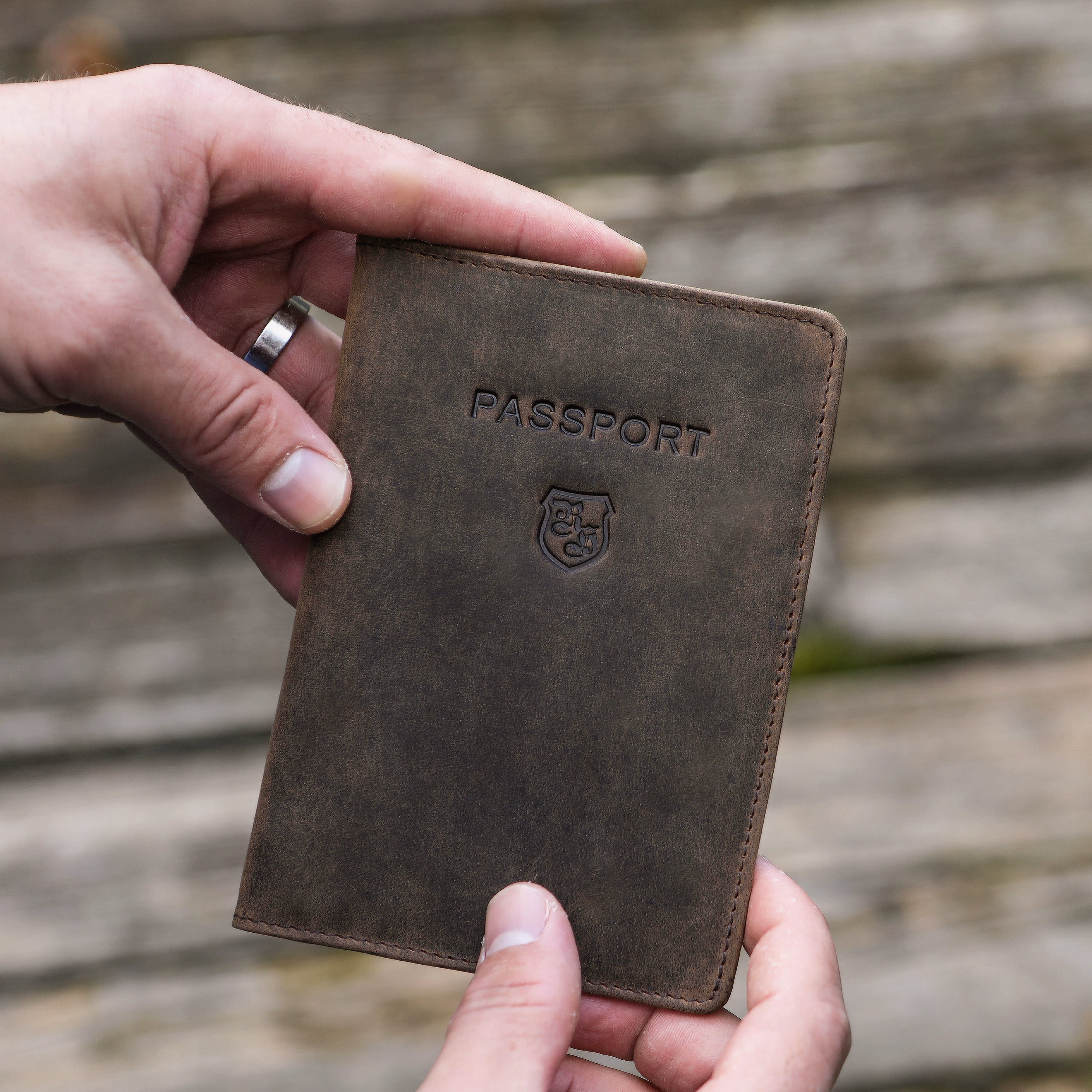
For travelling, the Henrik Travel Wallet at €39.95 is the right format: several card slots, a large slip pocket for the passport, a compartment for notes and a separate one for further documents, all behind a zip that runs right round. For the office it is the leather document folder at €79.95, with room for A4 documents, a notepad, a tablet and business cards.
And for the vehicle registration document, which otherwise falls apart folded up in the glove box, there is the vehicle registration folder at €14.95.
What I would recommend to whom
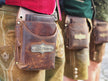
If you work in a suit and rarely touch cash: flat format, few compartments, inside pocket. If you are out in jeans and handle coins every day: portrait format with a coin pocket, in the front pocket. If you carry a lot of paper — ID cards, loyalty cards, receipts: the large wallet with a clear window, even though it adds bulk. If you need a chain because the wallet would otherwise fall out at work: there are separate models with a chain for that.
What goes wrong: buying a large wallet because it seems more upmarket, and then carrying it half empty in a back pocket. Leather takes on the shape it sits in — a half-filled wallet warps.
If you want to go deeper into how material and layout decide the lifespan, that is covered in the big guide to men's wallets. And if you would rather compare directly which models come in which format, the Leather Wallets for Men category is a quicker route than any list.