
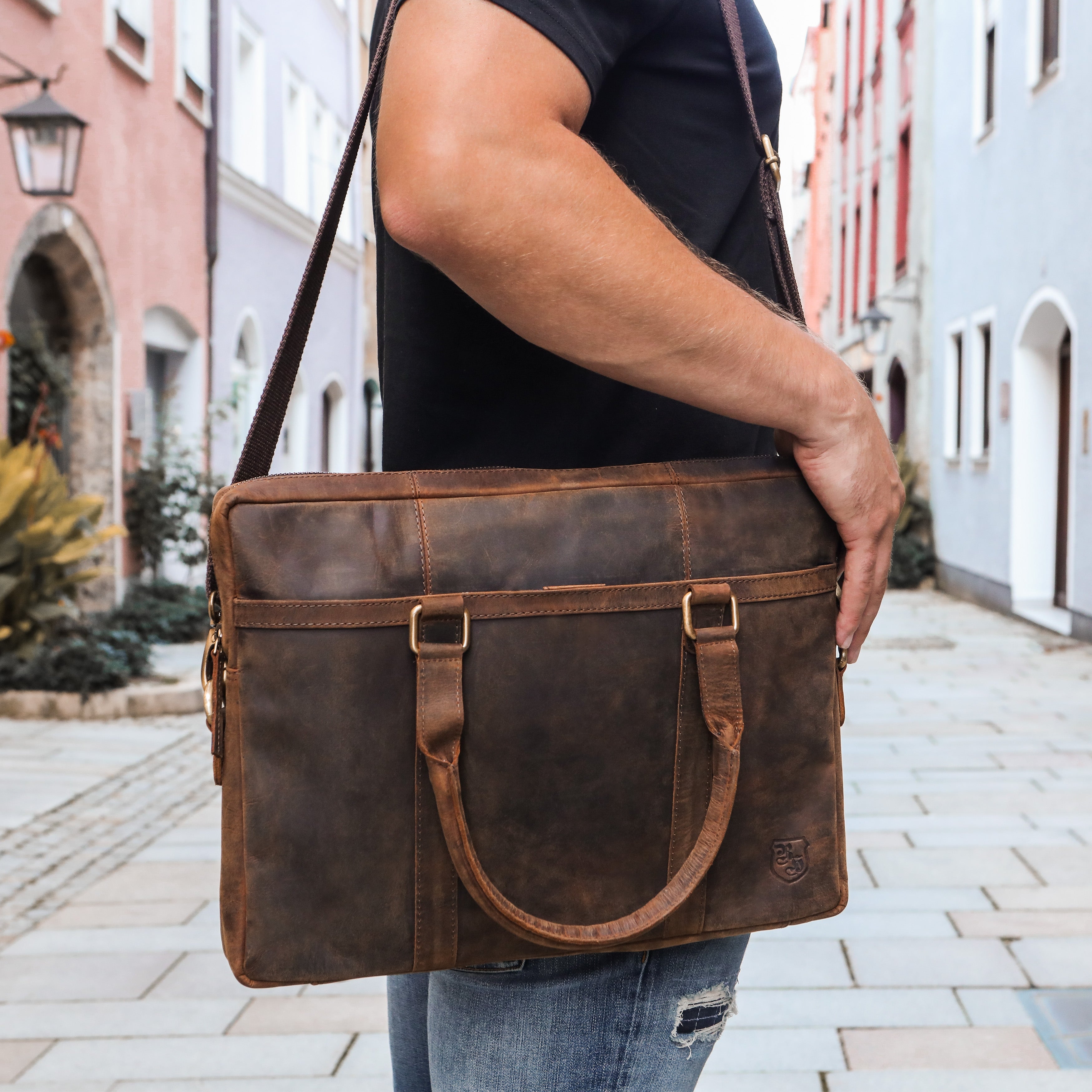
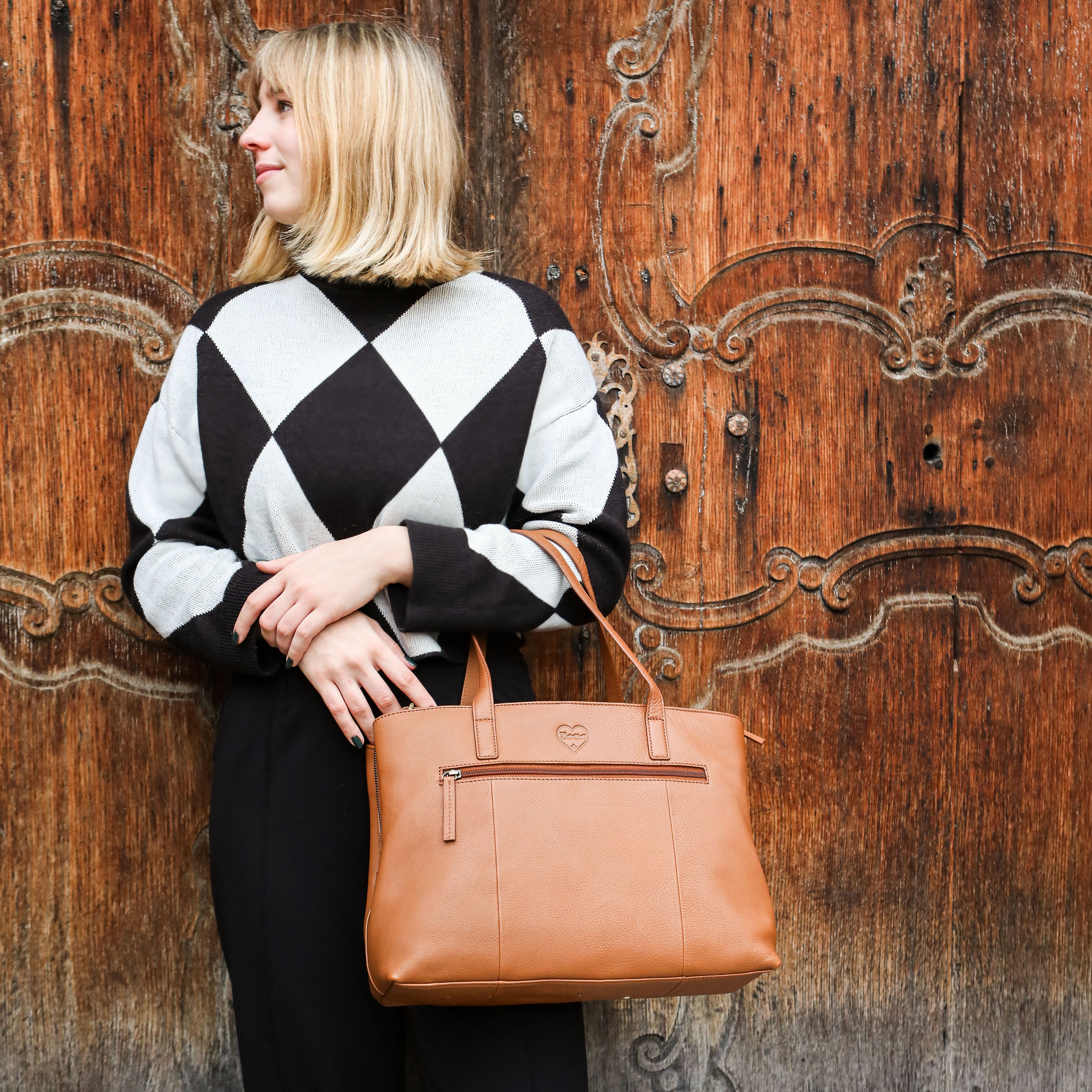
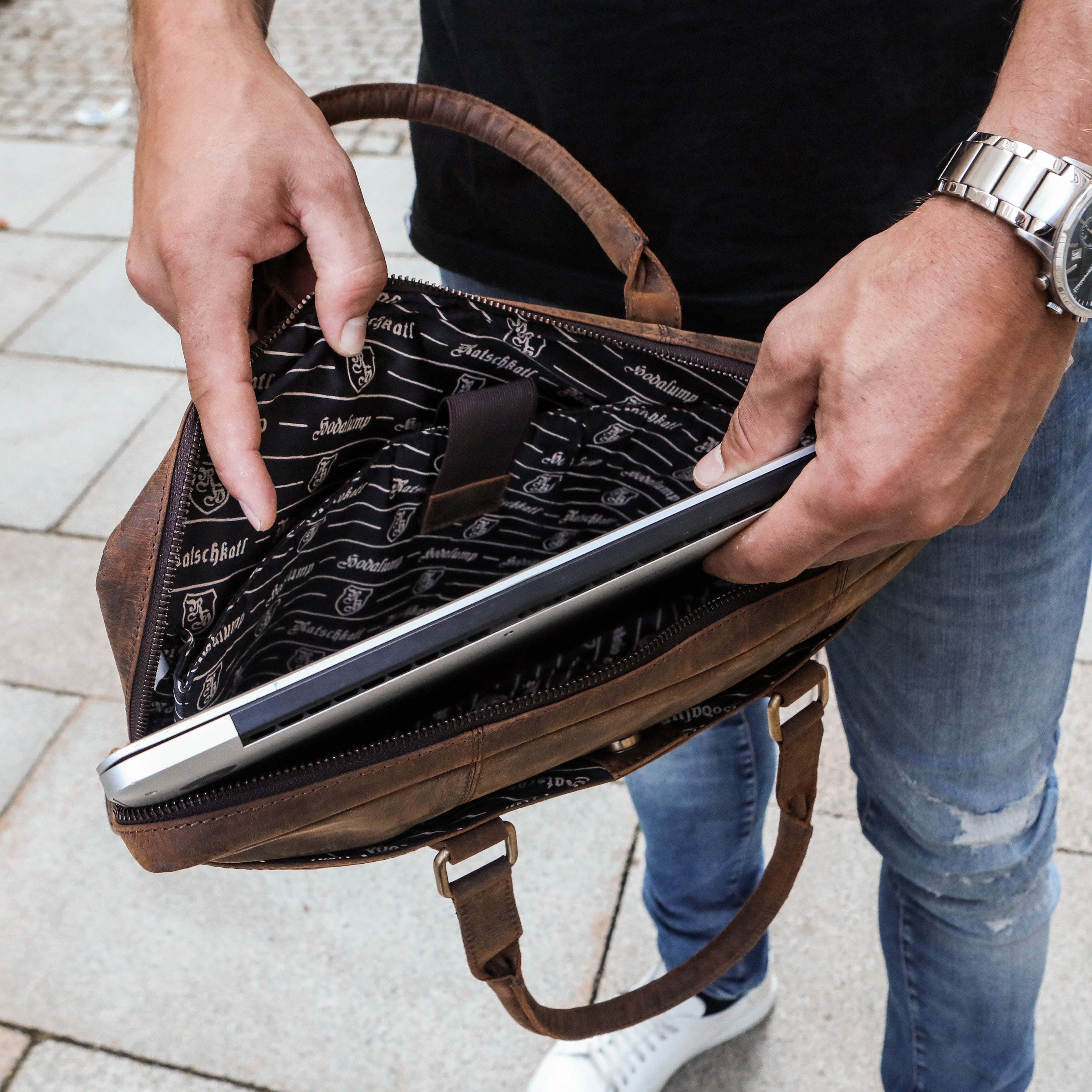
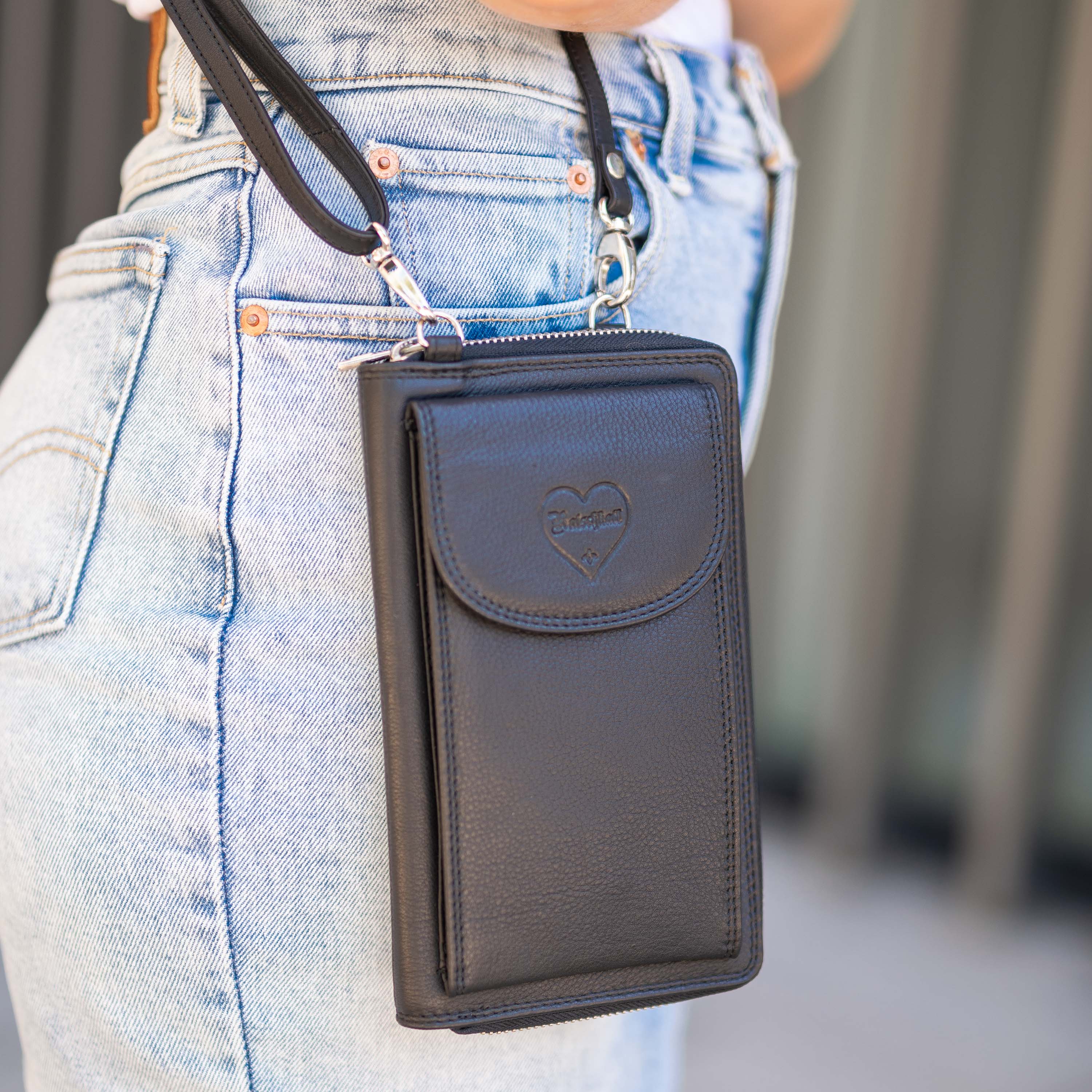
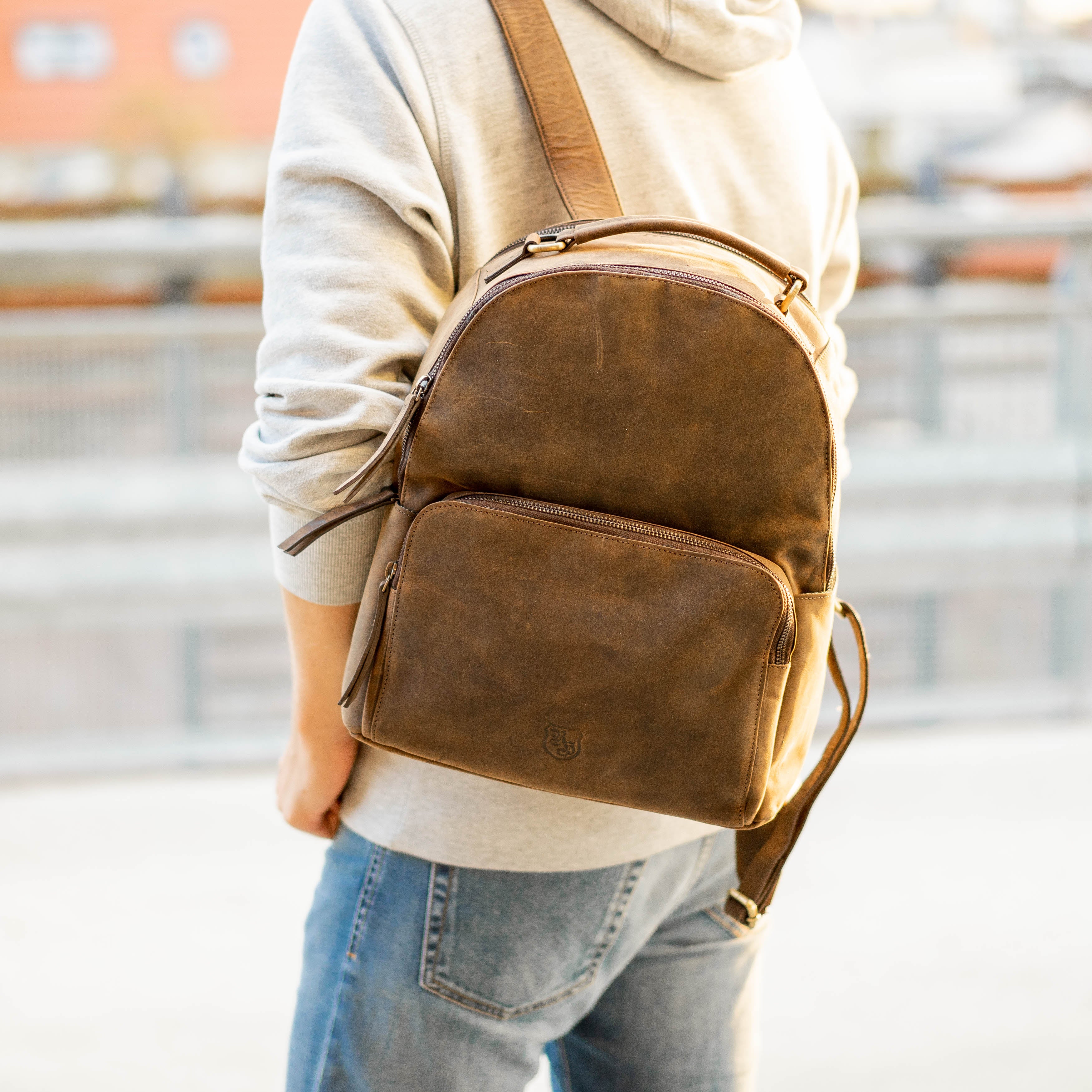
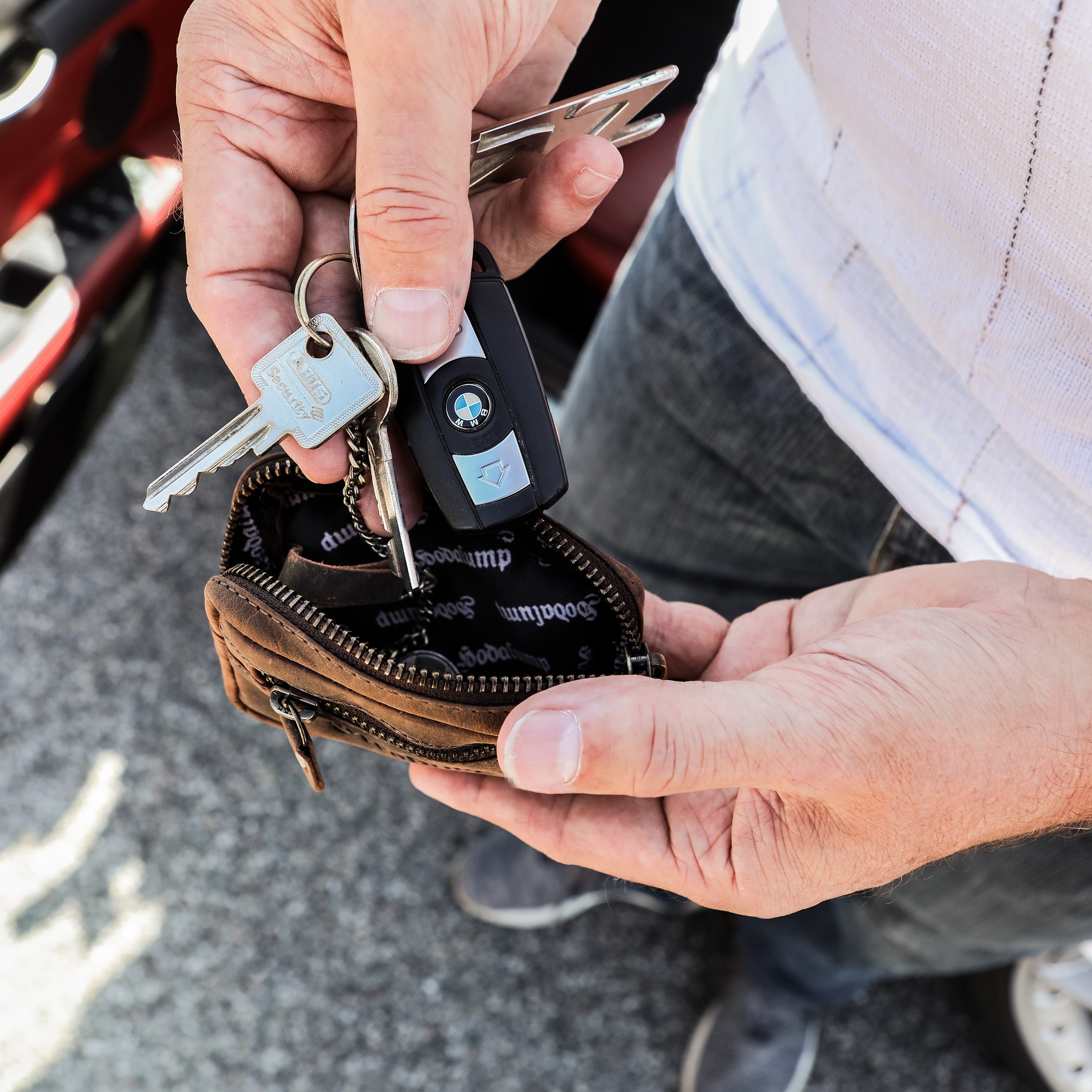
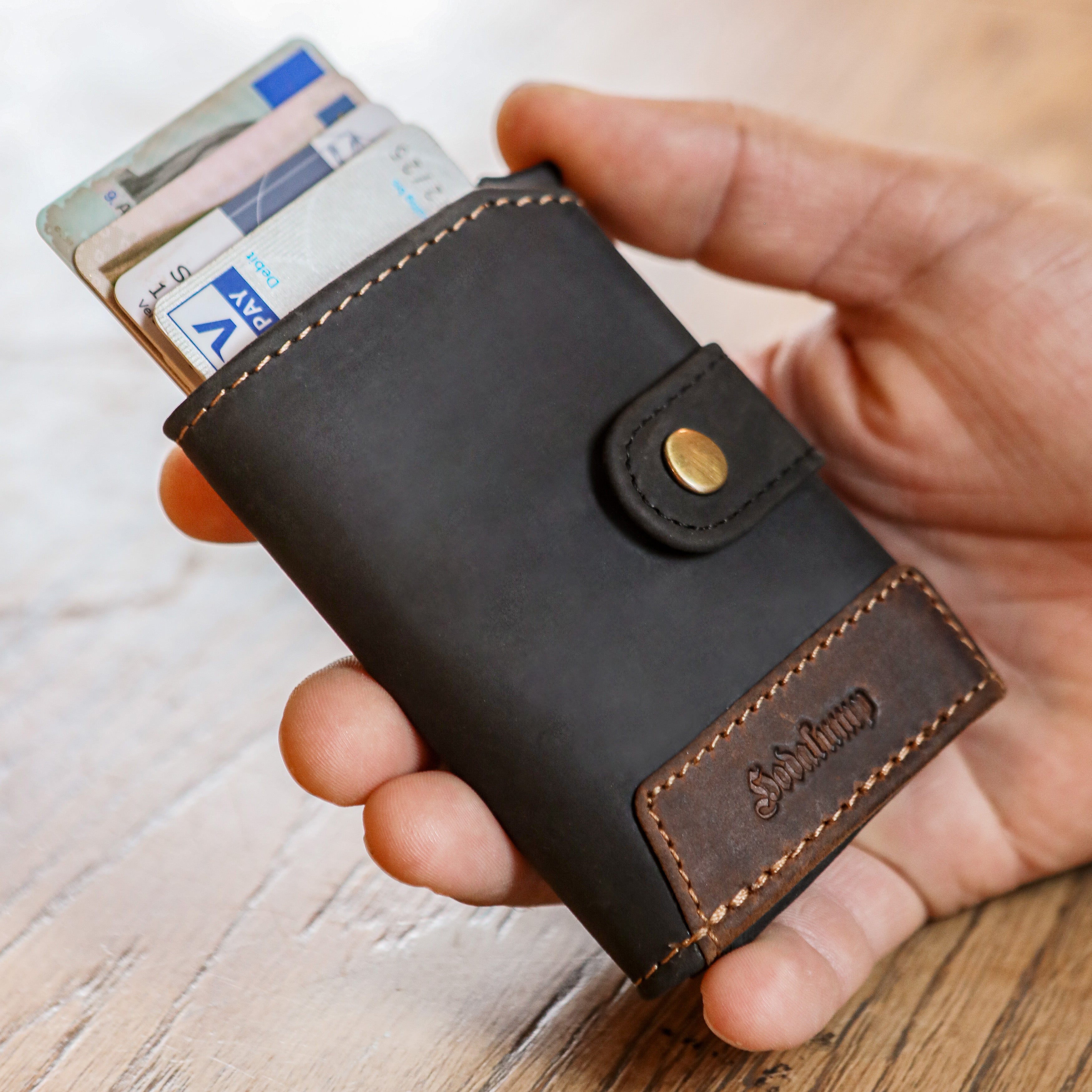
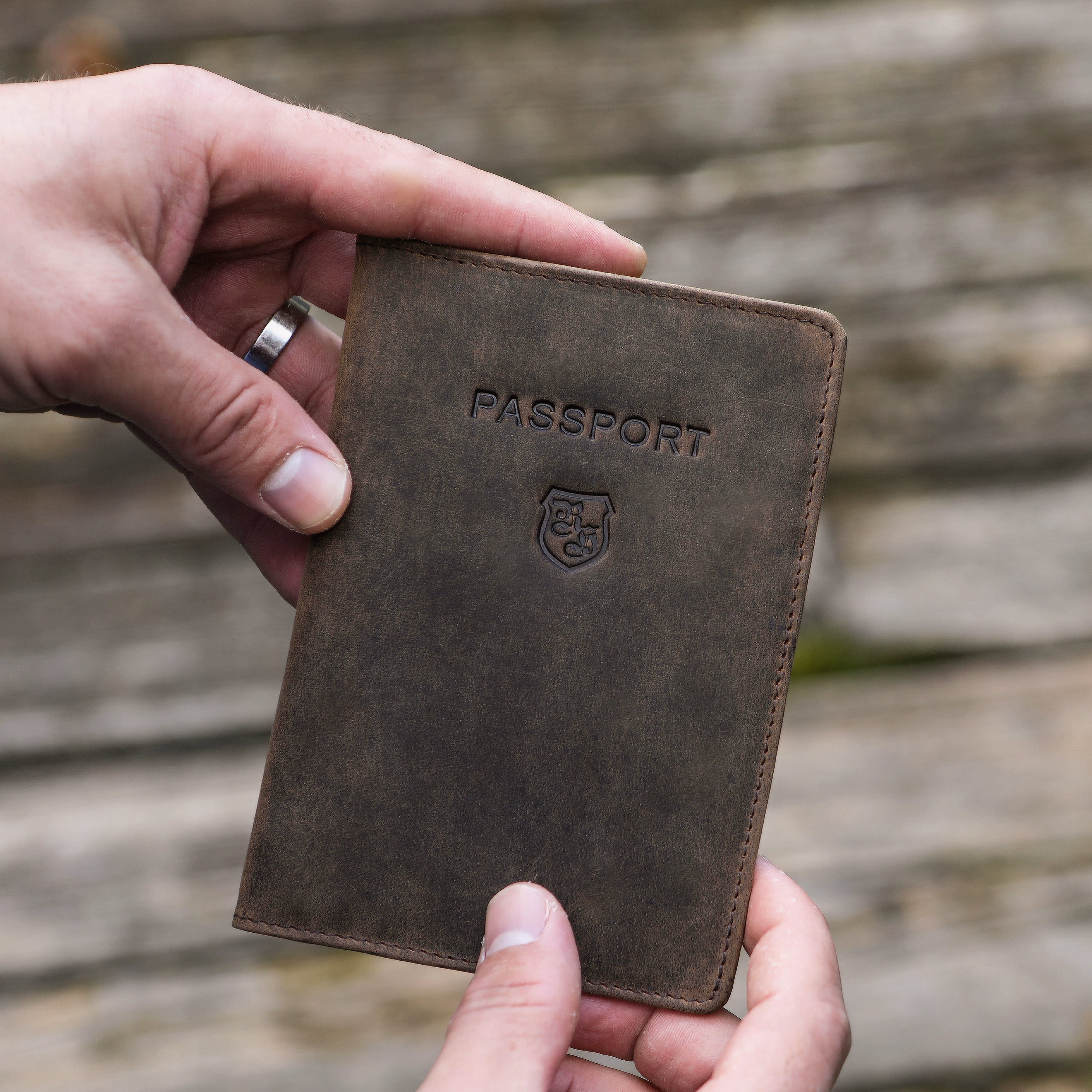

















The question is rarely “which one is the prettiest”, but “which one fits in my bag and holds what I put in it”. Between a card holder at 24 euros and a large purse at 80 euros there are no grades of quality, only different daily routines. This comparison sorts five designs by size and says who each one is made for.
First: how much really needs to fit?
The most common mistake is buying a purse that is too big. It gets chosen because it looks generous, and then carried around half empty for years — or it fills up with receipts nobody needs. The more honest approach: take your current purse and count.
- Up to 6 cards, barely any coins, notes only rarely: A compact model is enough. Anything larger you carry for nothing.
- 8 to 12 cards, coins every day: The mid-size class. This is the most common case.
- More than 12 cards, ID cards, receipts, photos: A large purse with a zip all the way round, otherwise it bulges open.
The three designs
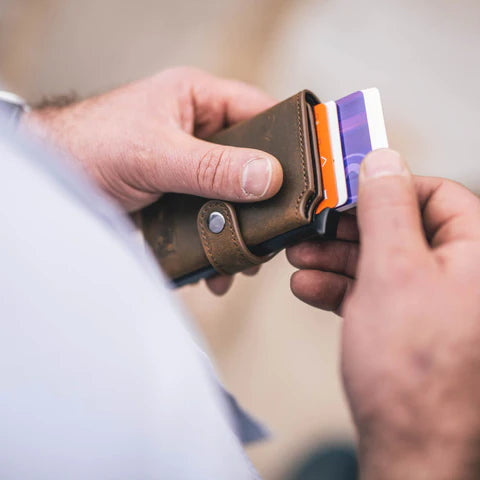
Compact and flat
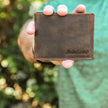
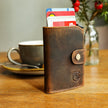
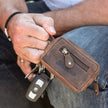
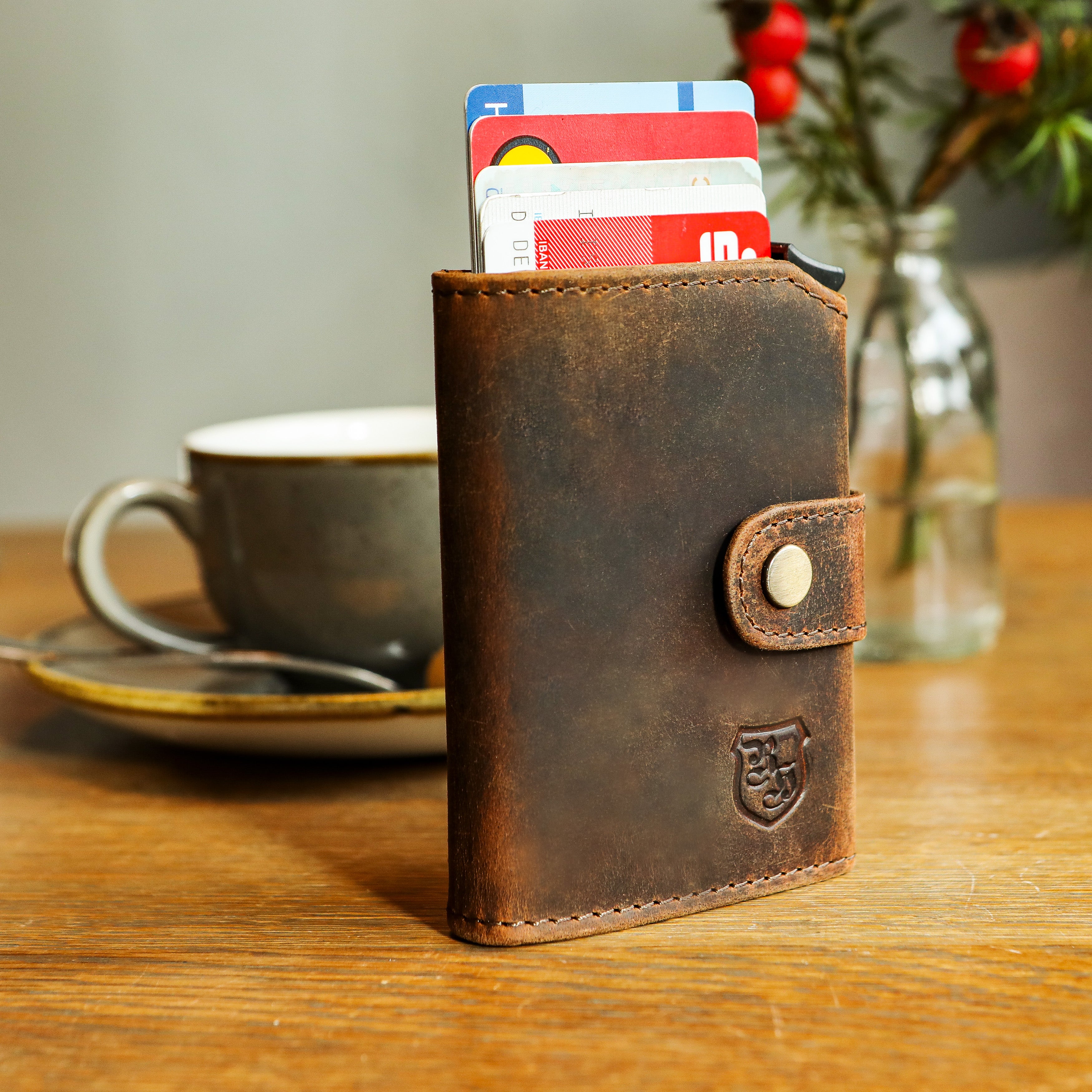
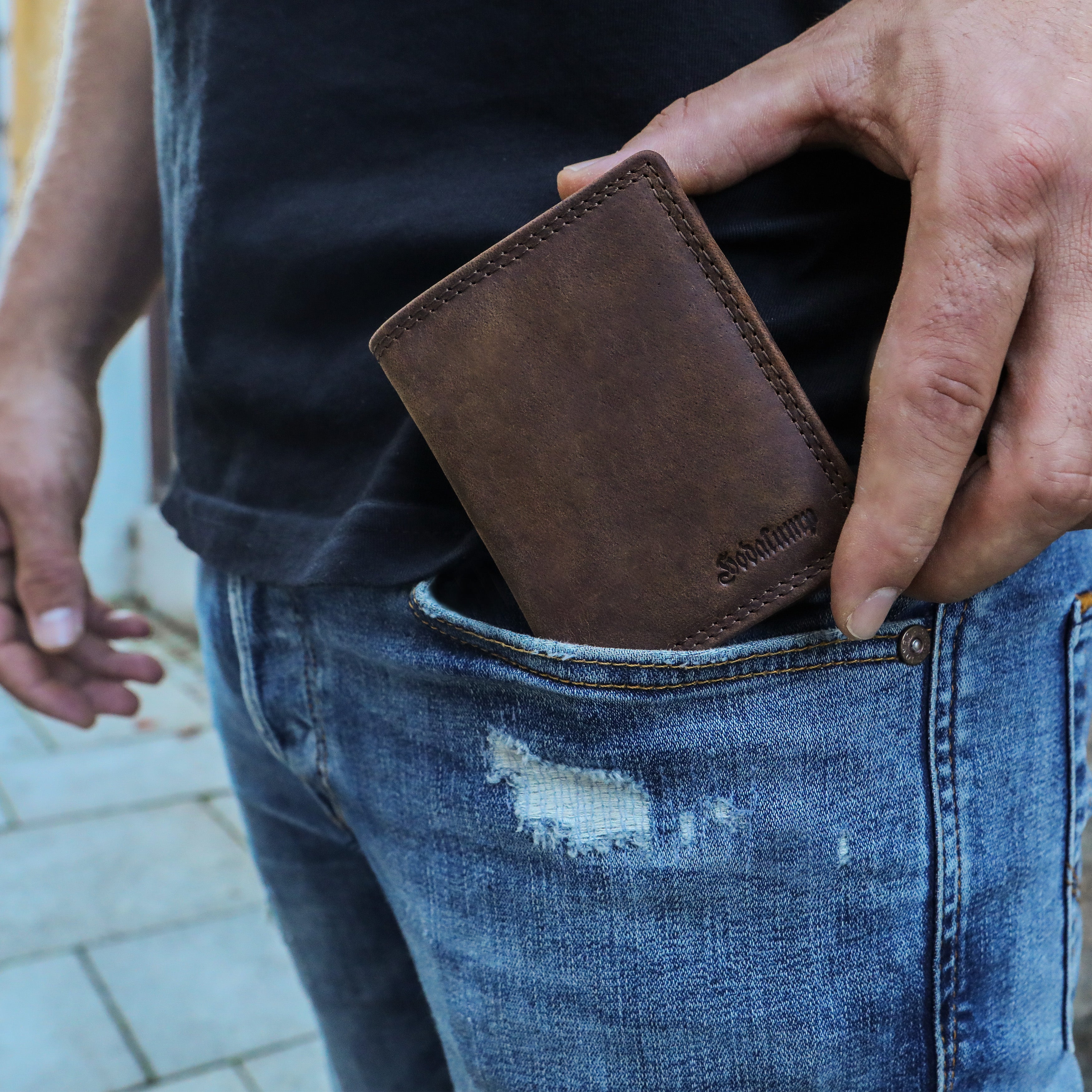
Fits in any handbag and, at a pinch, in a jacket pocket. Card slots, one note compartment, a small coin pocket with a press stud. If you mostly pay by card, this takes you further than you would think.
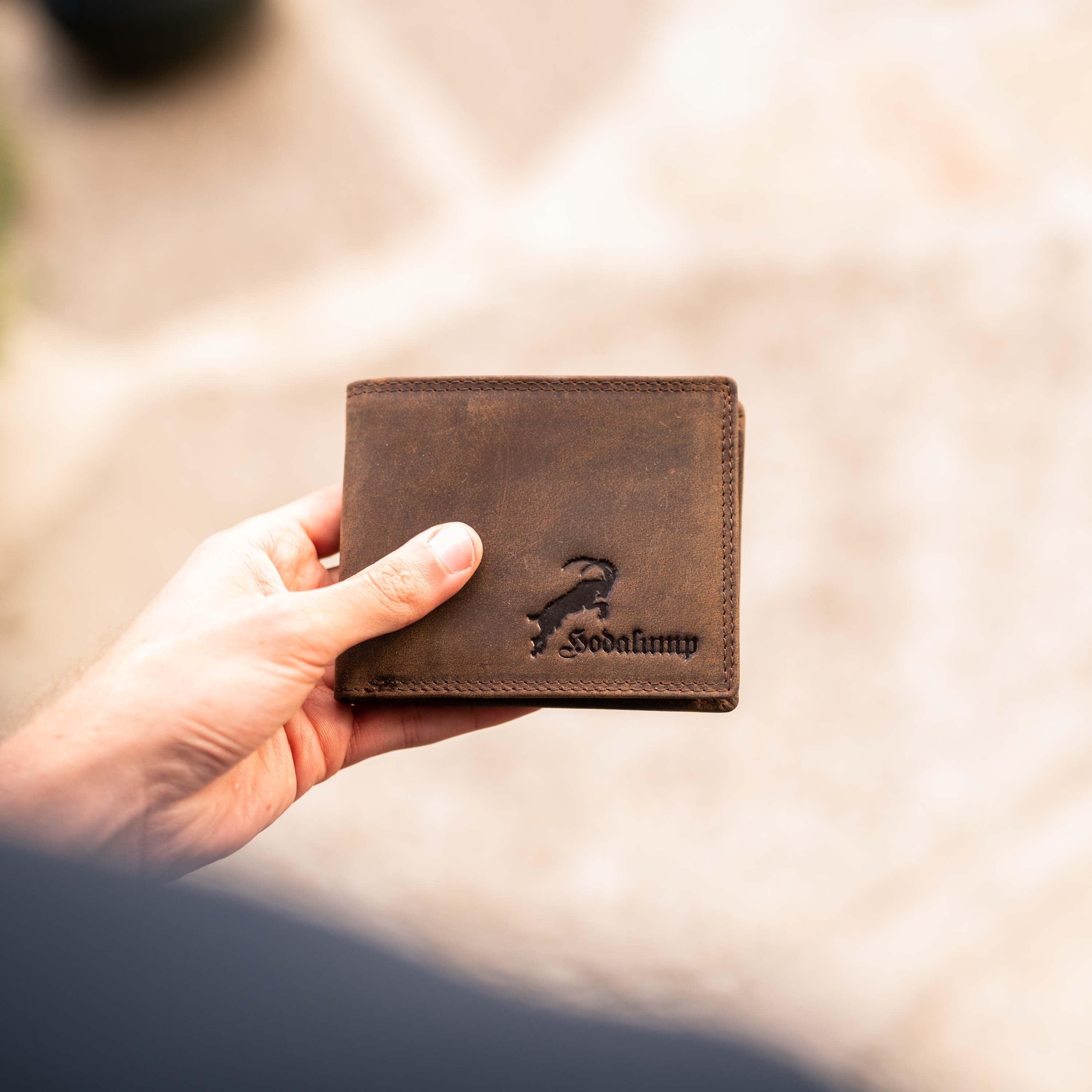
Mid-size with a coin pocket
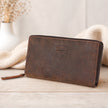
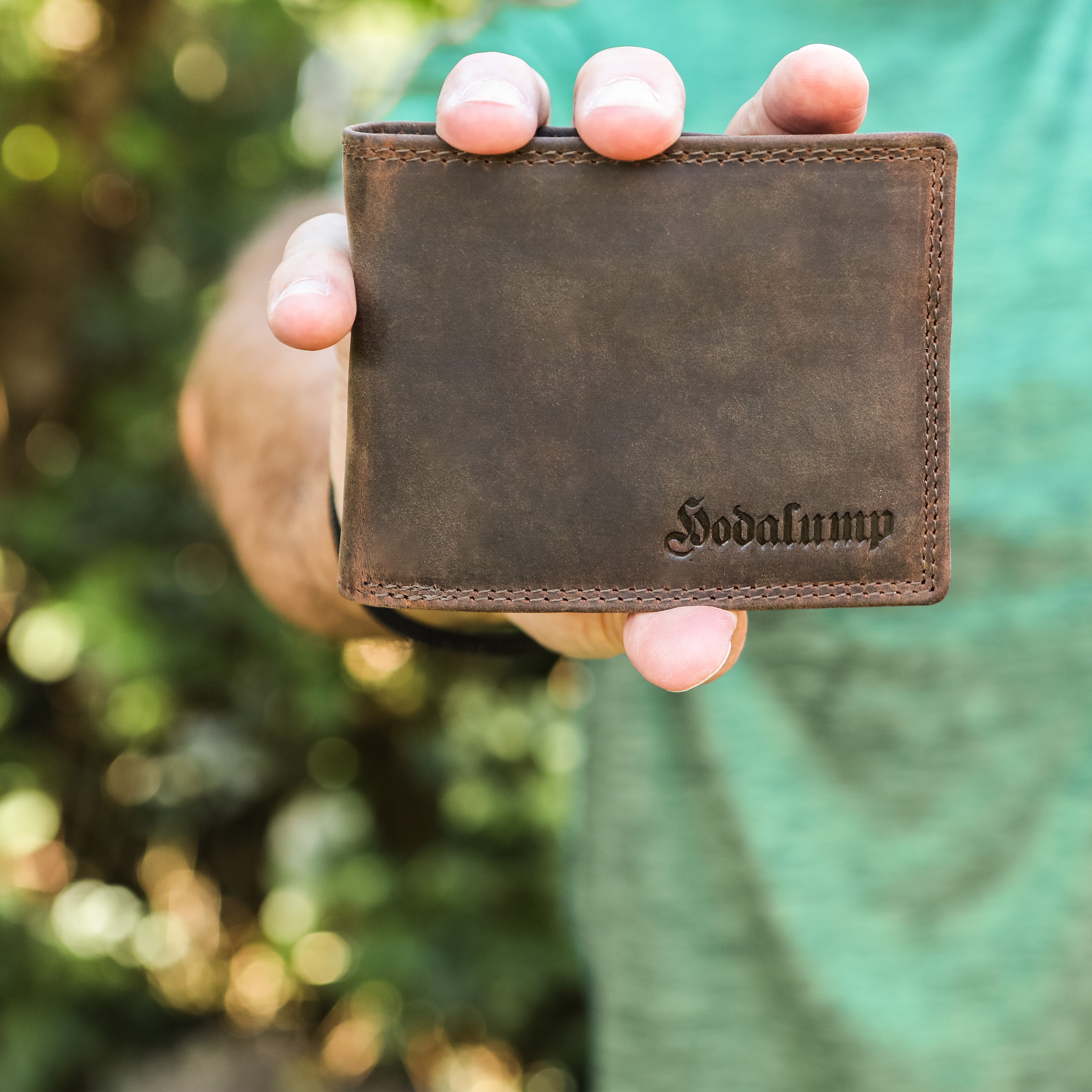
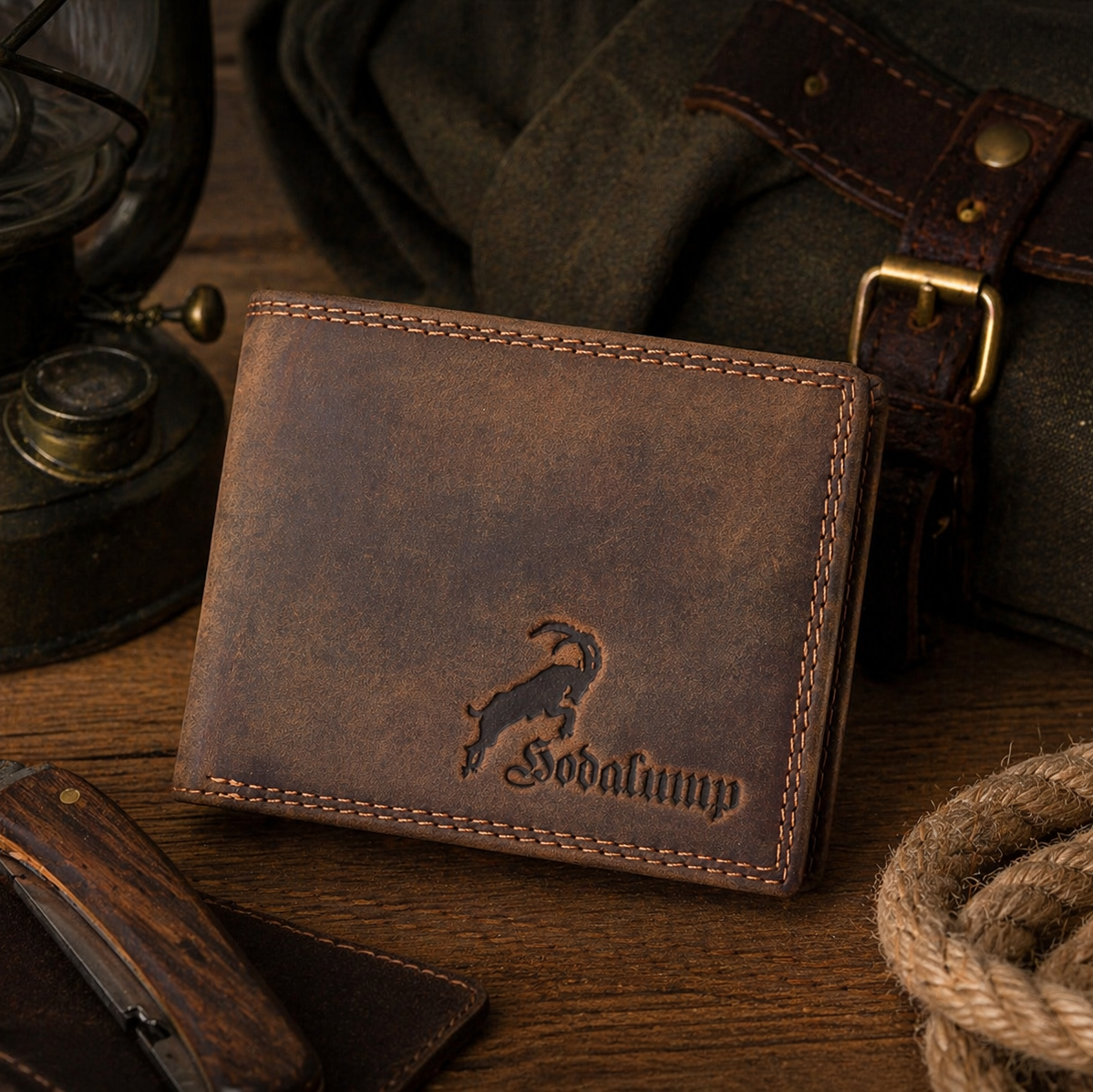
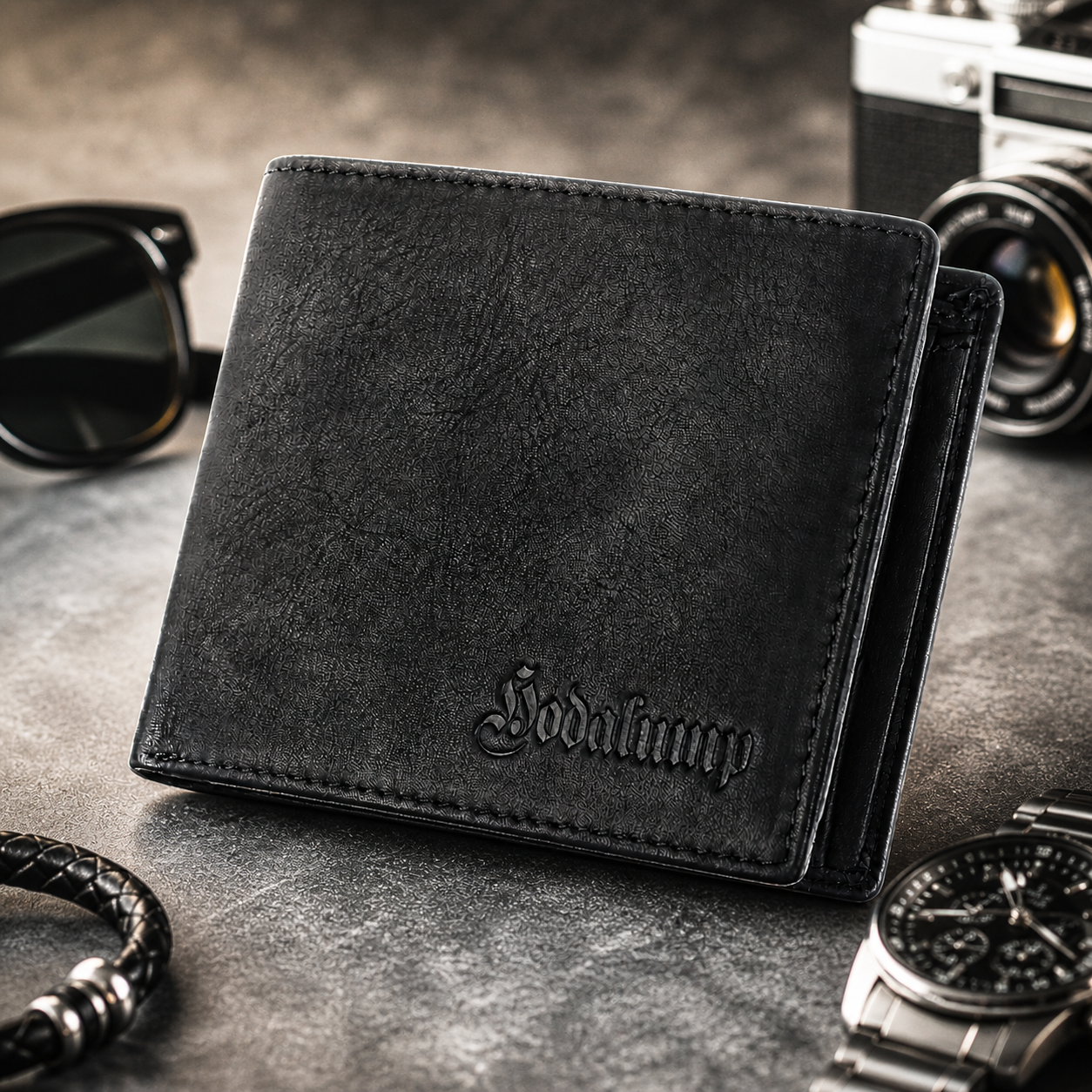
The all-rounder. Enough slots for bank, loyalty and insurance cards, a divided note compartment, and a coin pocket that opens with one hand. If you do not know what you need, this is the safe choice.
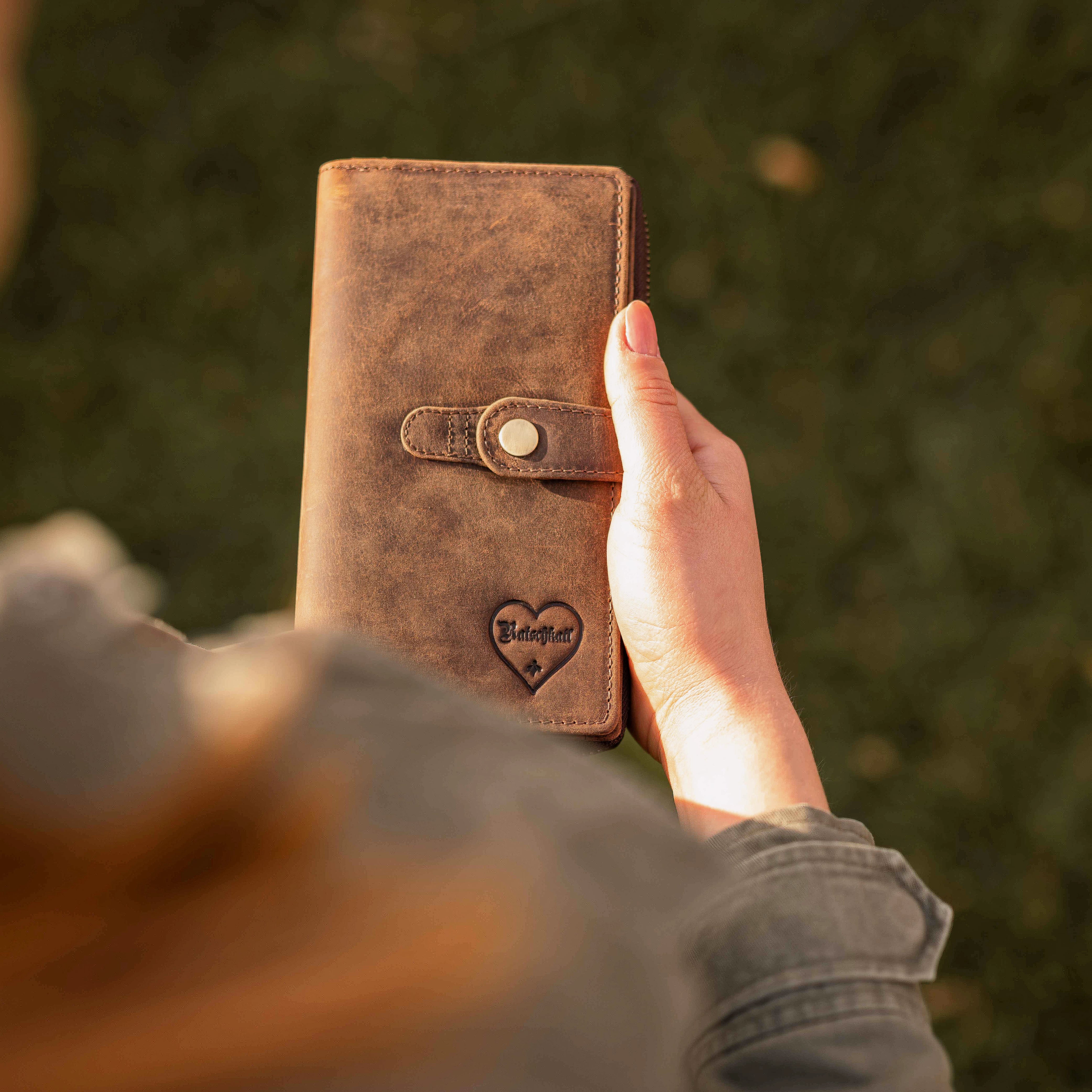
Large with a zip all the way round
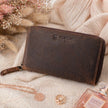
Everything stays put in here, even when the purse ends up upside down in your bag. Room for ID cards, a clear window, often a separate compartment for notes at full size. The price for that is bulk — it no longer sits comfortably in a small handbag.
How to spot quality before you buy
Three things can be checked from the photo and the description alone:
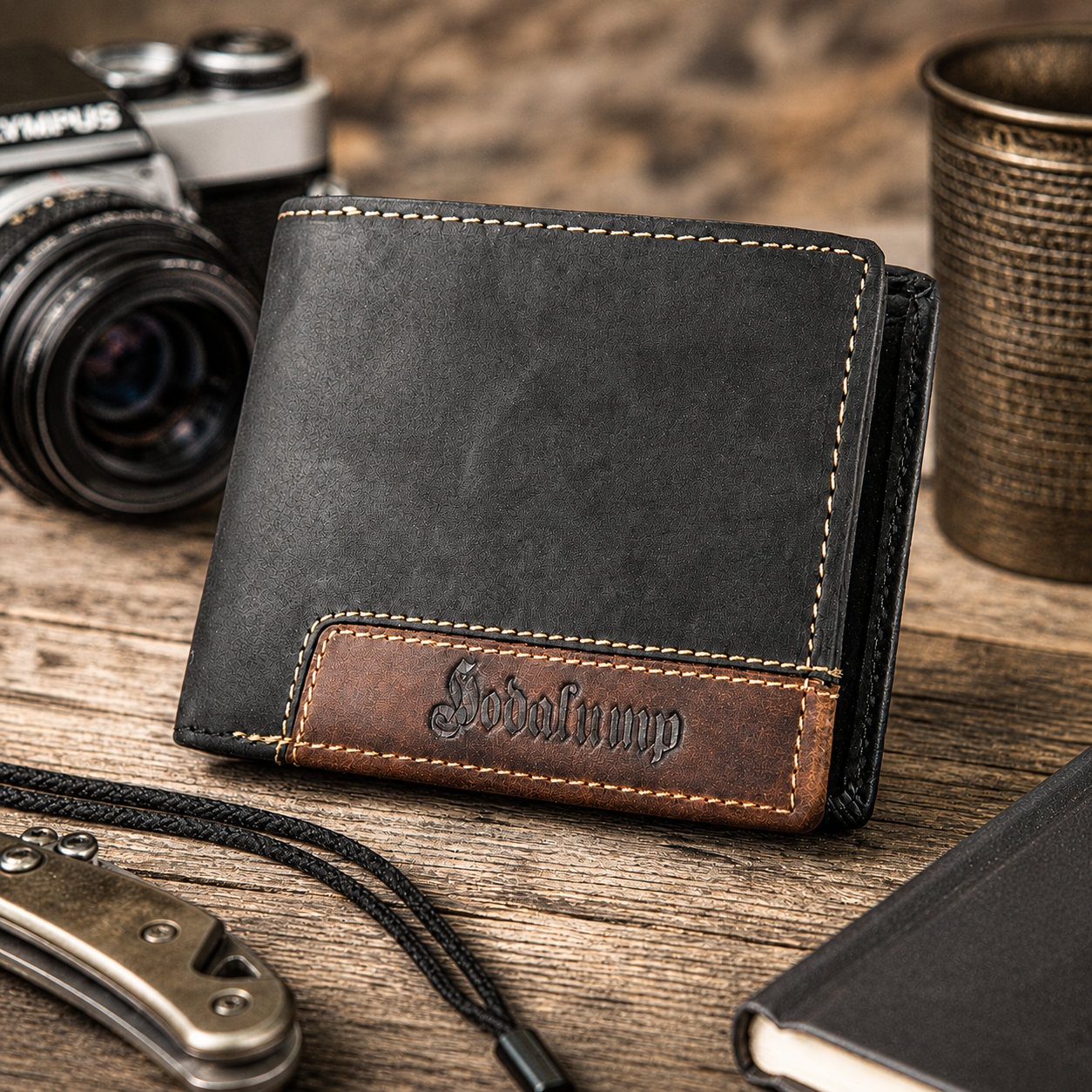
- The edges. Neatly dyed, rounded edges last longer than raw cut ones. The edge is where a purse wears through first.
- The seam at the coin pocket. That is the point with the most movement. A tight, even seam there says more about the workmanship than the whole of the outer leather.
- The press stud. It should close firmly but open with one hand. A stud you have to prise apart with both hands becomes a nuisance within two weeks.
Leather changes — and that is the idea
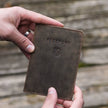
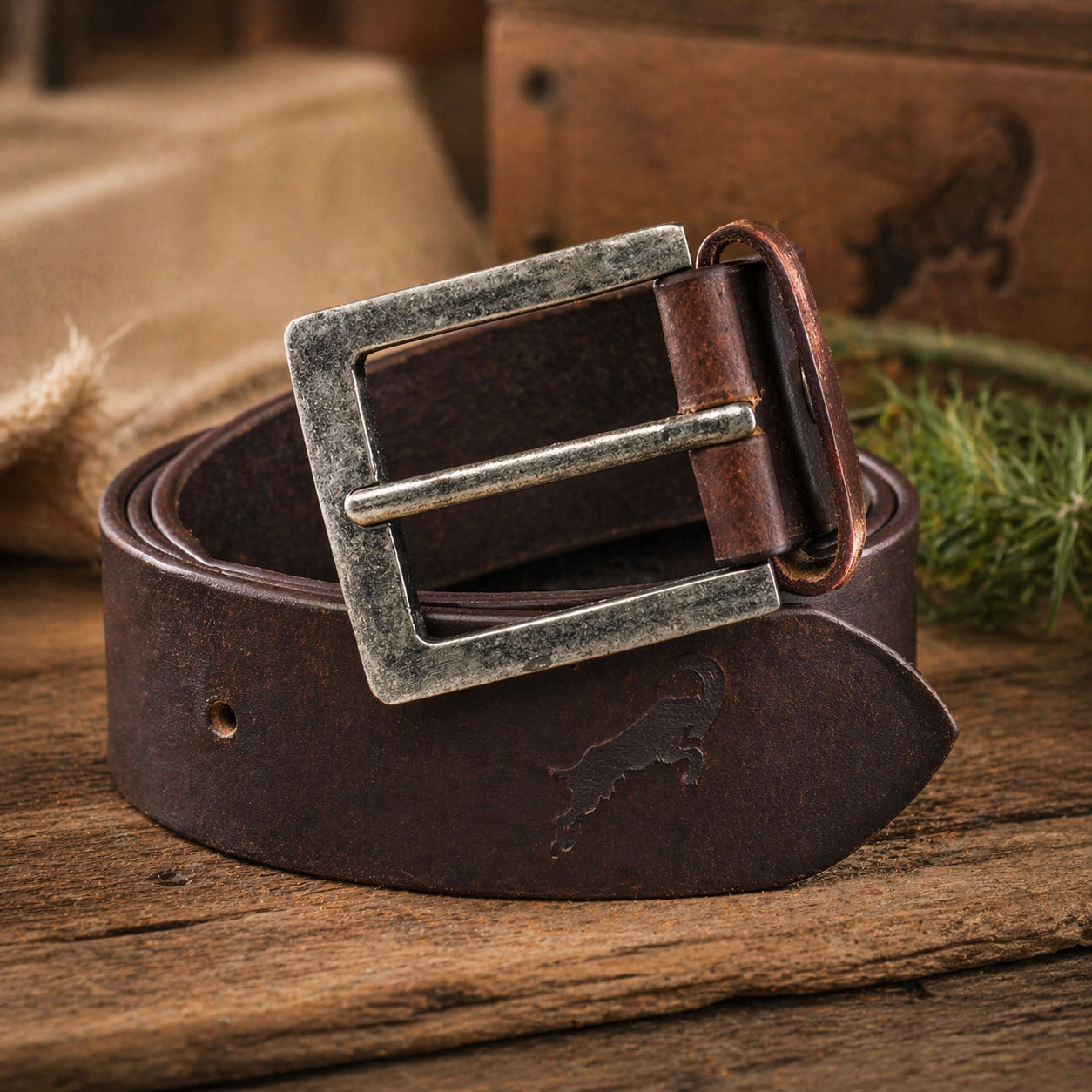
Real leather darkens, the edges take on a sheen, and a lighter zone forms where it is handled. That is not wear, it is patina. If you want a purse that looks after three years exactly as it did on the first day, coated material is the better buy — but it comes with the cracks that go with it.
One note on care: a little leather grease twice a year, thinly applied, is plenty. More does more harm than good, because the leather stops breathing.
And the colour?
Practically speaking: dark colours forgive signs of use, light ones show every coffee mark. Pink and cognac age especially visibly — lovely if you like patina, irritating if you do not. Black and dark brown are the easiest to look after.
In short
Buy for what you carry every day, not for what could theoretically fit. The mid size covers most cases. And look closely at the edges and the seam at the coin pocket — that is where it is decided whether a purse lasts two years or ten.