











“Men’s bag” is a catch-all for five very different things. Anyone searching for one usually has a specific situation in mind: the way to the office, the laptop that keeps sliding about in an unpadded rucksack, or simply the phone and wallet without bulging trouser pockets. This comparison works by purpose rather than by looks.
The starting question: what do you carry every day?
Not what should theoretically fit — what actually comes along every day. Everything else follows from that.
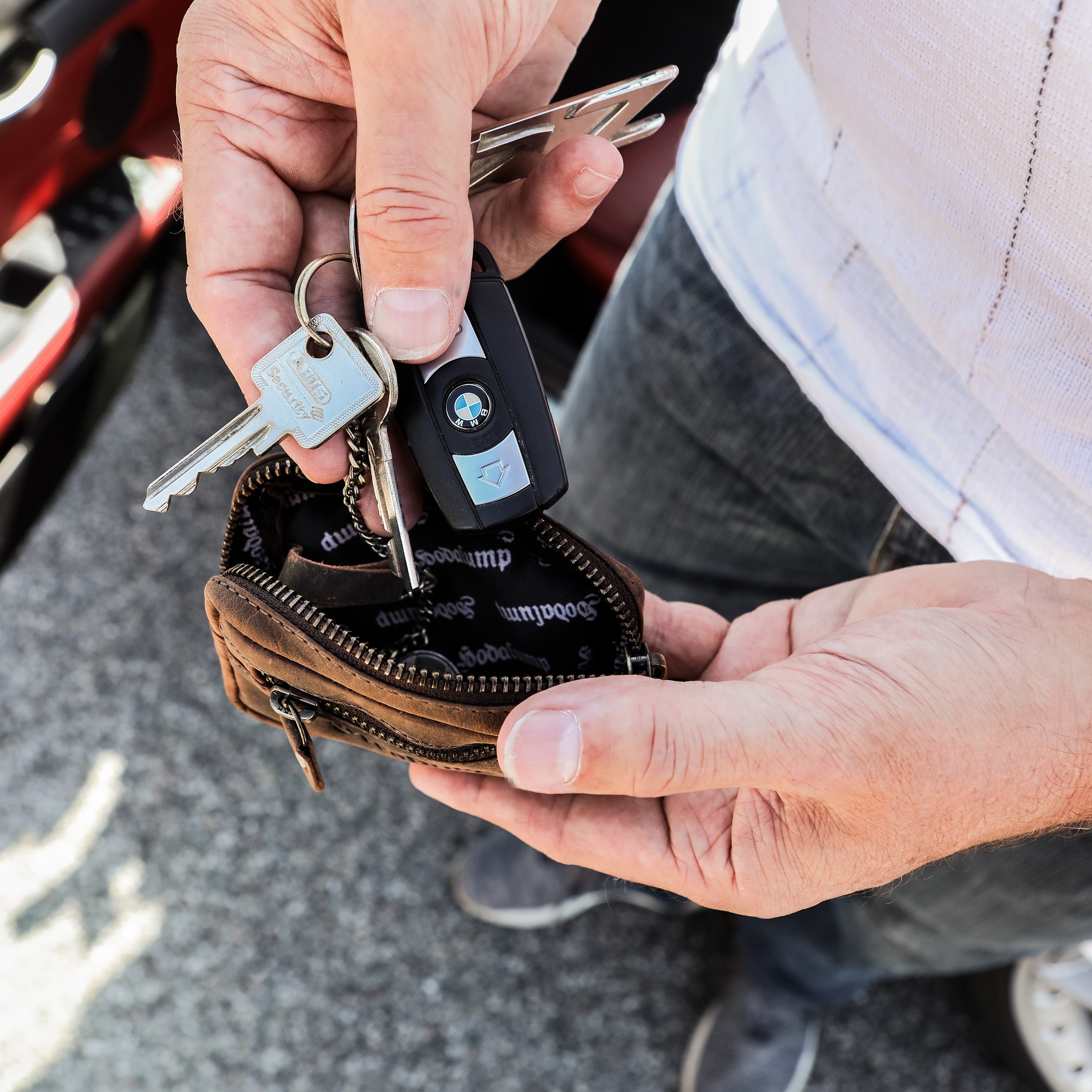
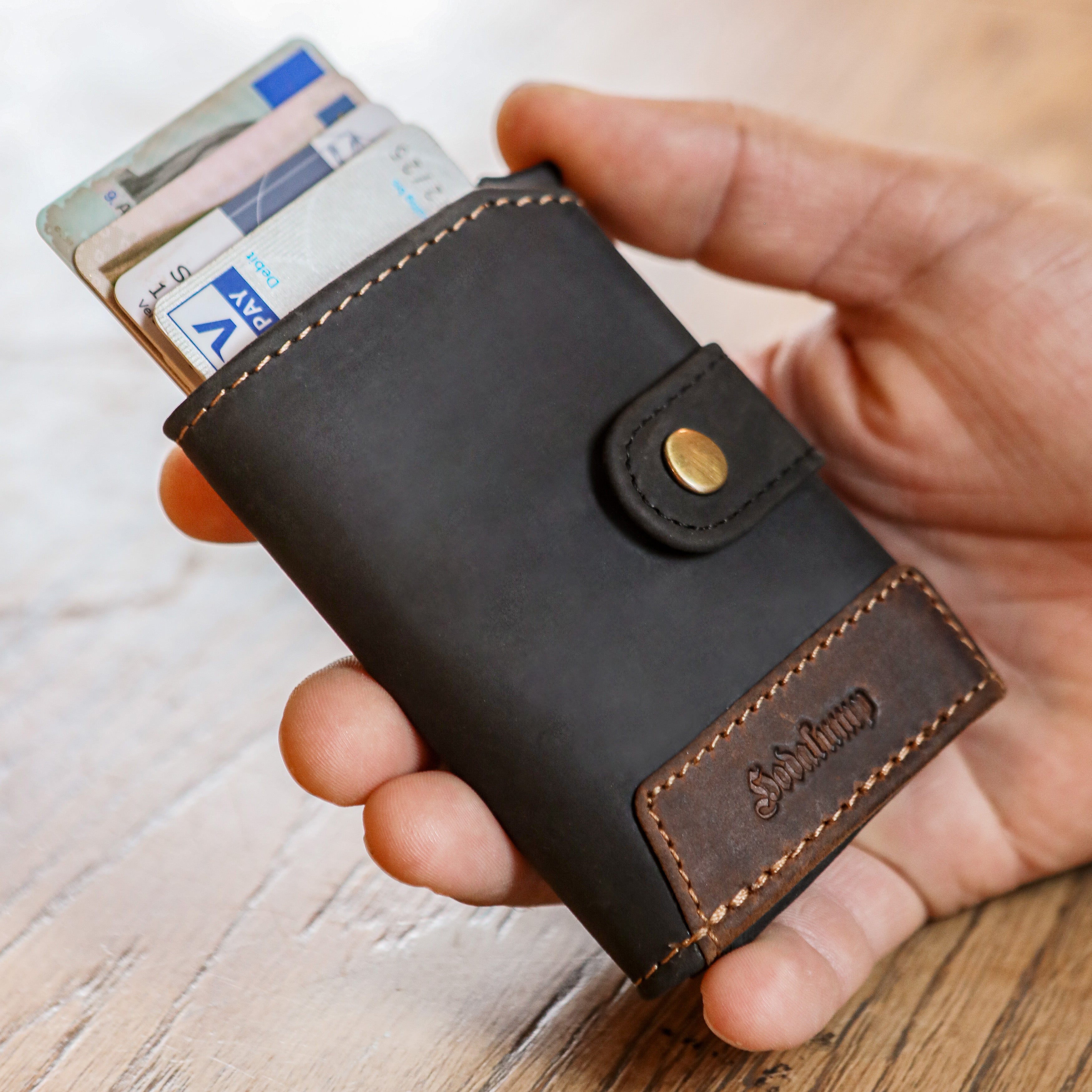
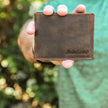
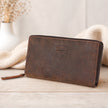
- Phone, wallet, keys: A shoulder bag in a small format. Anything larger you carry around empty.
- A4 papers as well: A folio or a briefcase.
- Laptop with you: A padded compartment is essential, not an extra.
- Daily commute, both hands free: A rucksack.
The shapes in detail
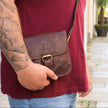
Small shoulder bag
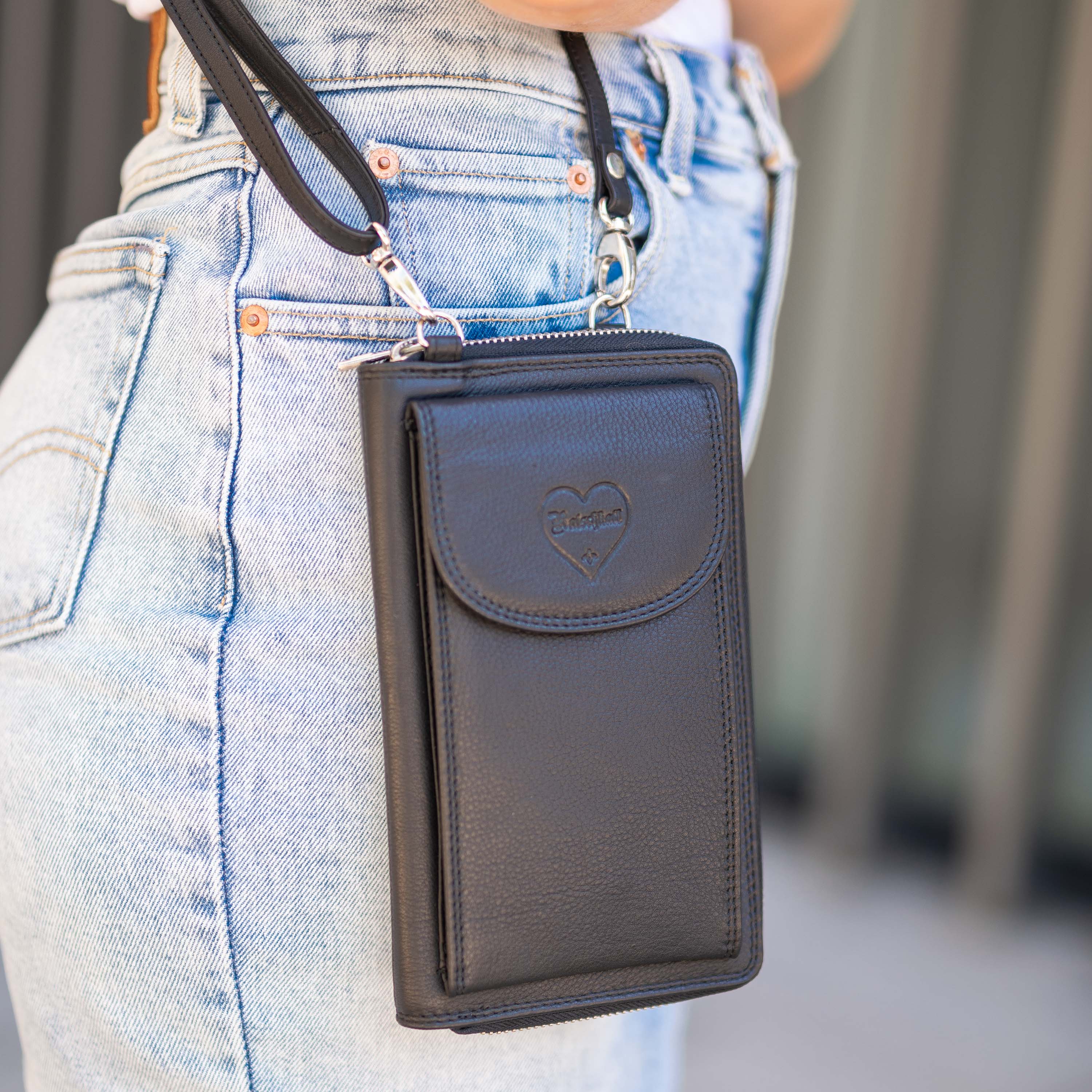
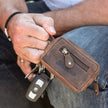
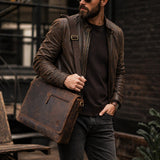
The antidote to full trouser pockets. Phone, wallet, keys, perhaps a charging cable. It sits close to the body and does not get in the way on a bike. Limit: an A5 notebook fits, and nothing beyond that.
Folio
Flat, for A4 documents and a tablet. Carried under the arm or slipped into a larger bag. Looks tidier in a meeting than a rucksack. Limit: no room for a change of clothes or a water bottle.
Briefcase
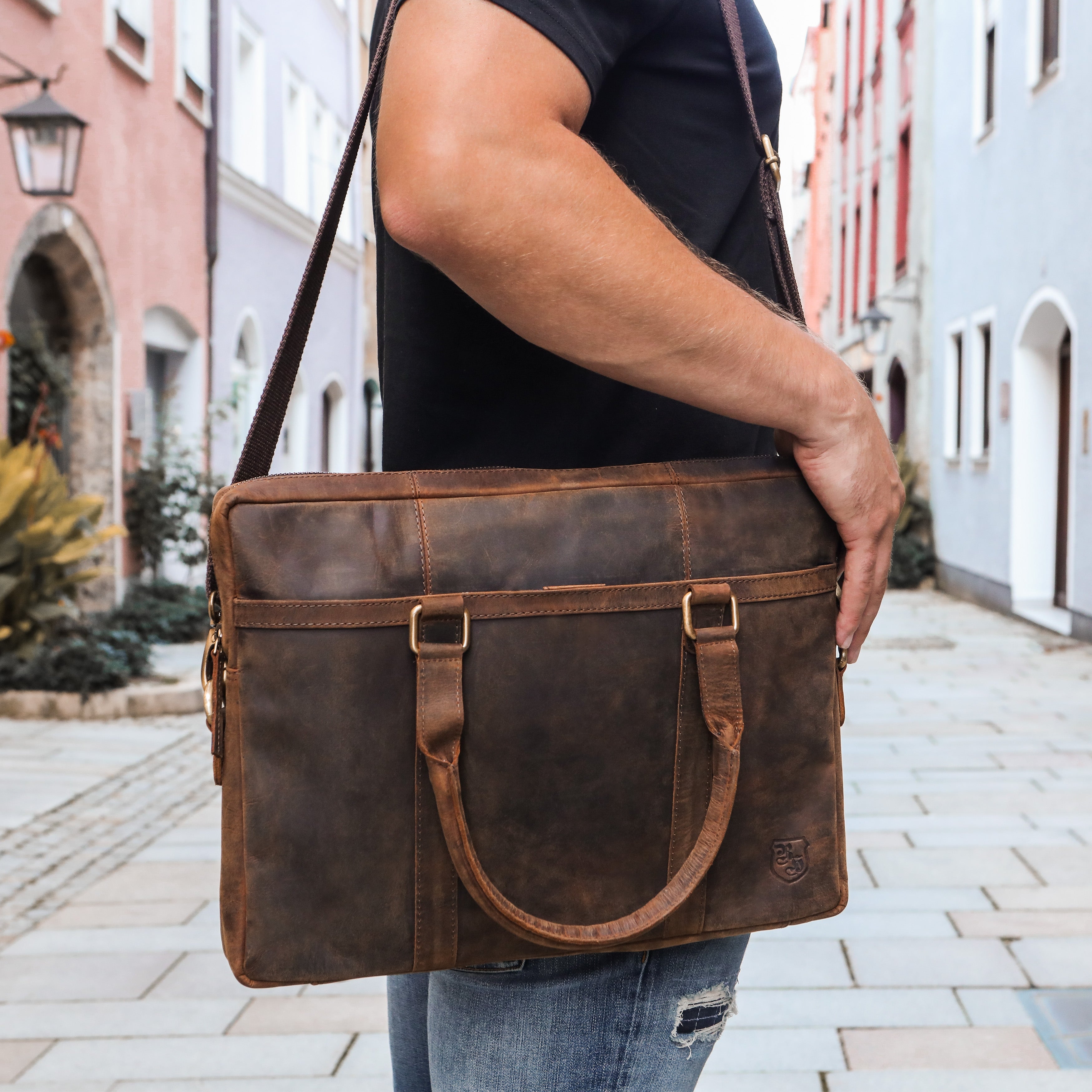
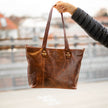
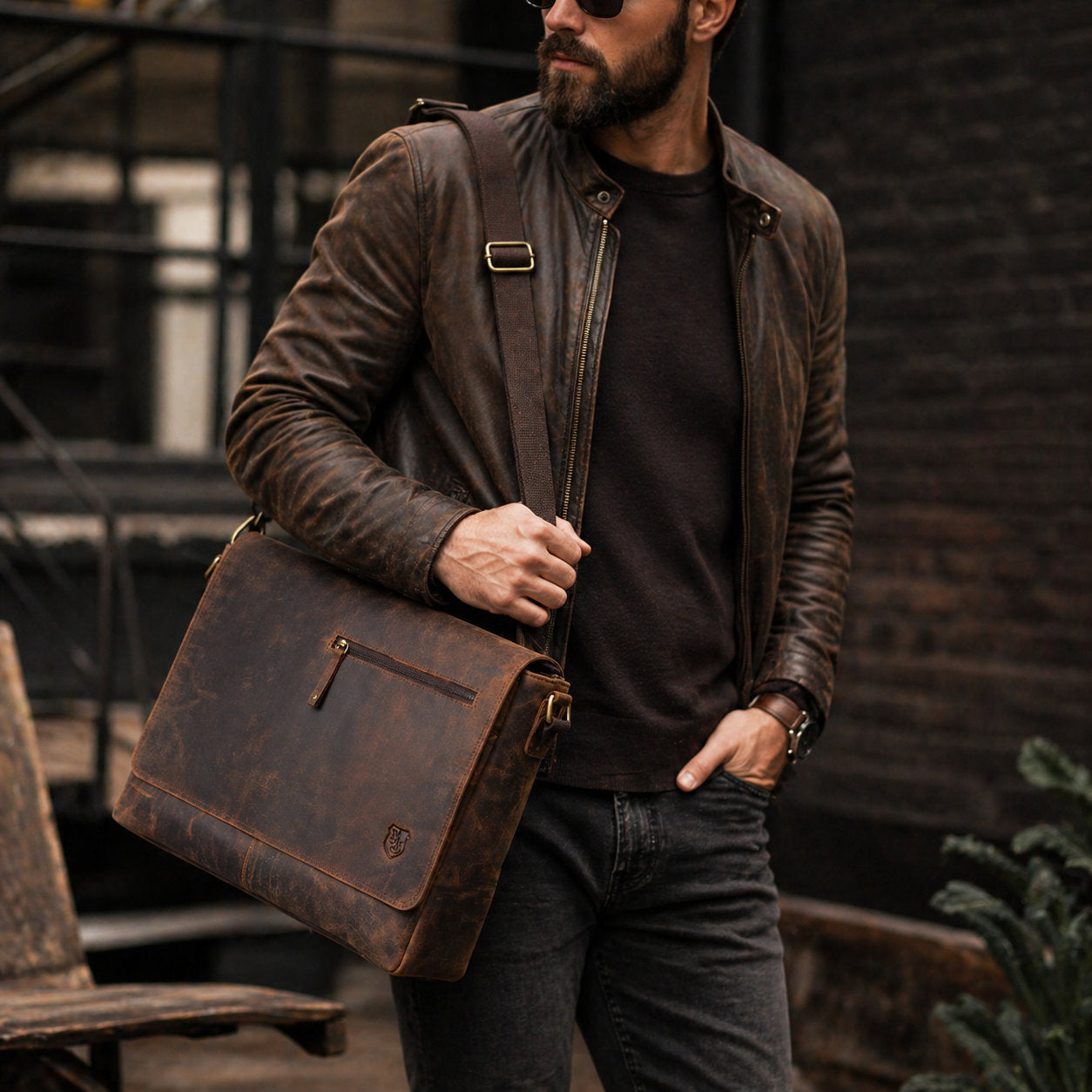
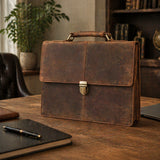
The classic with structure: a main compartment, front pockets, a shoulder strap. It stands up on its own, which is more useful on the train and under a desk than it sounds. Limit: awkward on a bike, because it knocks against your leg as you pedal.
Laptop bag
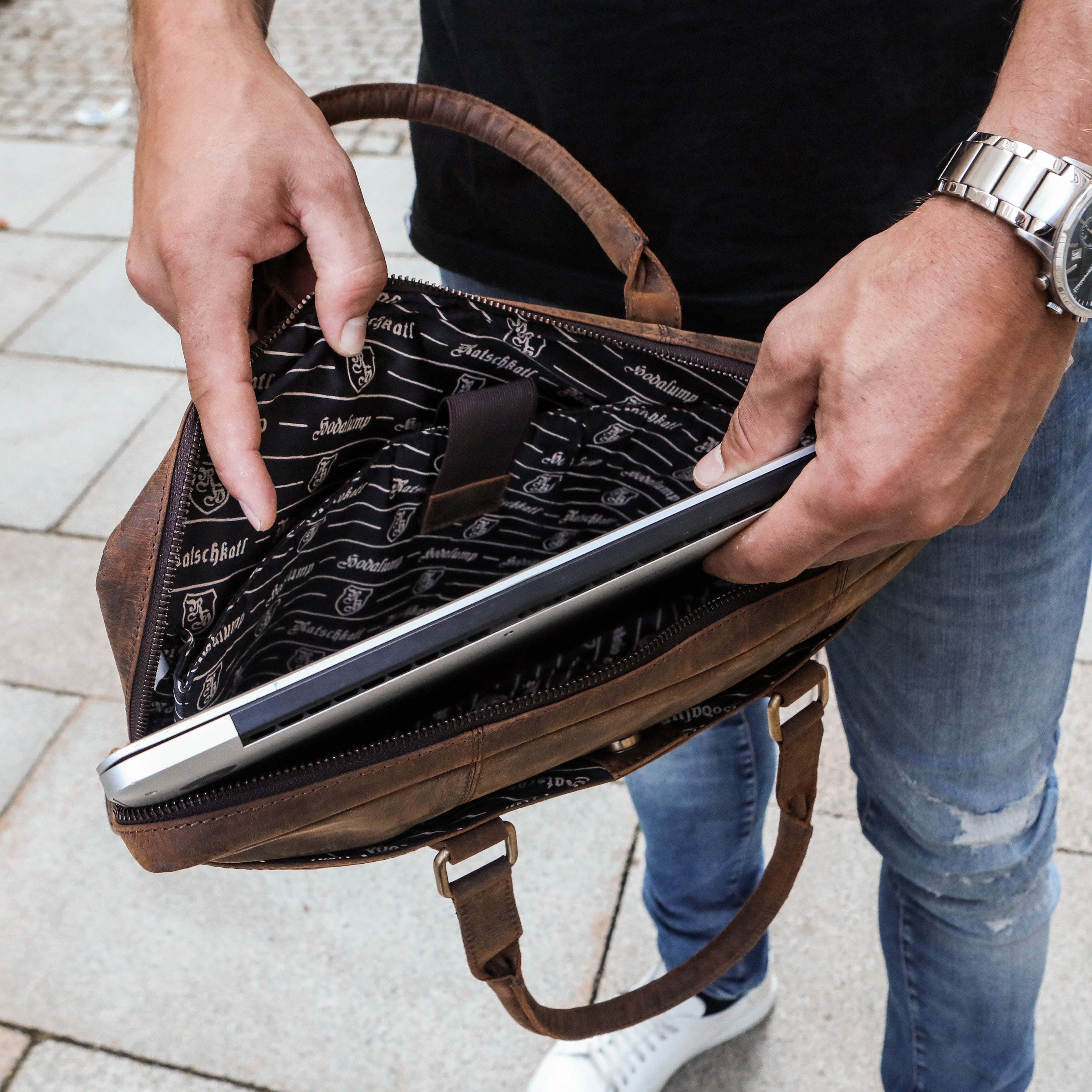
Like the briefcase, but with a padded compartment in a defined size. Check the screen diagonal of your machine before you buy — a 15-inch compartment will not take a 16-inch laptop, however small the difference sounds.
Rucksack
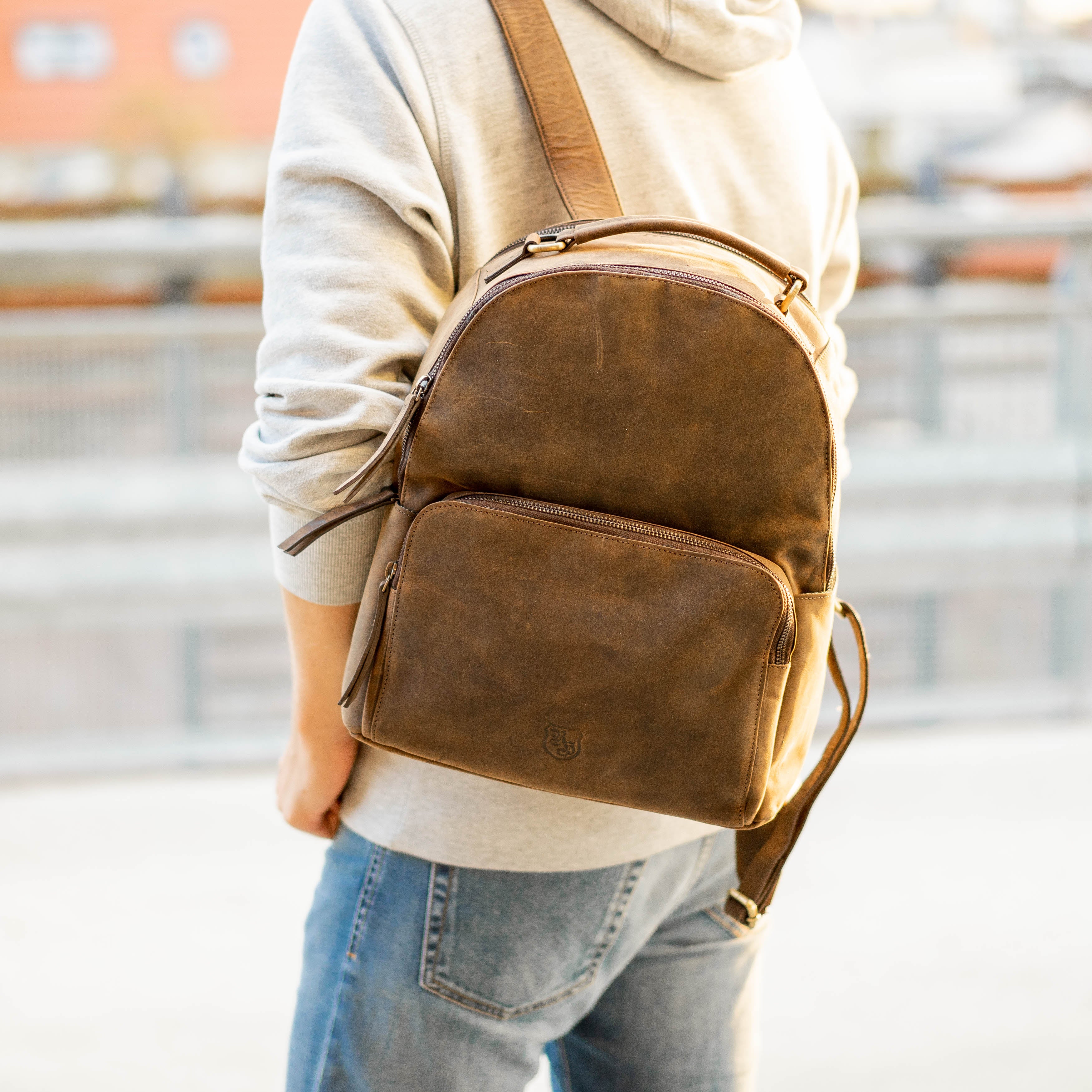
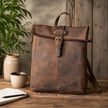
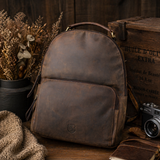
For the daily journey with weight to carry. Both hands free, and the load rests on both shoulders instead of one. Limit: in a formal meeting it reads differently from a briefcase — whether that matters depends on your line of work.
What matters with leather
A bag carries more weight than a wallet, and it does so at only a few points. Three places decide how long it lasts:
- The strap fixing. Everything hangs from it. Riveted loops or ones stitched several times over will hold; glued ones will not.
- The zip. The component that most often gives up first. A wide metal zip still runs years later, a narrow plastic one often does not.
- The base. That is where the bag is set down. A reinforced base or feet extend its life considerably.
Oiled leather forgives rain better than smooth, glossy leather. Leather that has got wet should never go on a radiator — let it dry slowly, then apply a thin coat of grease.
Judging size realistically
Measurements in centimetres say little until you compare them. The simplest test: put your laptop on the table and measure it. Then add two centimetres in each direction — that is what the padding needs. If that does not fit the internal dimensions, it will not fit in reality either.
In short
Describe the journey first, then choose the bag. If you commute daily and carry a laptop, a rucksack serves you better than the better-looking briefcase. And with leather, it is the strap fixing, the zip and the base that decide whether a bag lasts three years or fifteen.