







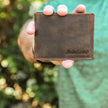
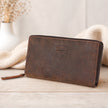
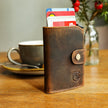
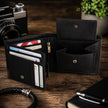








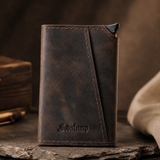
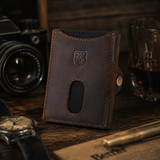
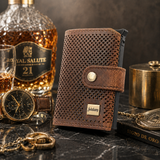
Slim wallet is not a protected term. It covers everything from an aluminium case with a slide mechanism to a flat leather holder with six slots. People searching for “slim wallet” usually have the same problem in mind: the old wallet is too bulky in a trouser pocket. This comparison sorts the designs and says where each one reaches its limit.
Four designs, four compromises
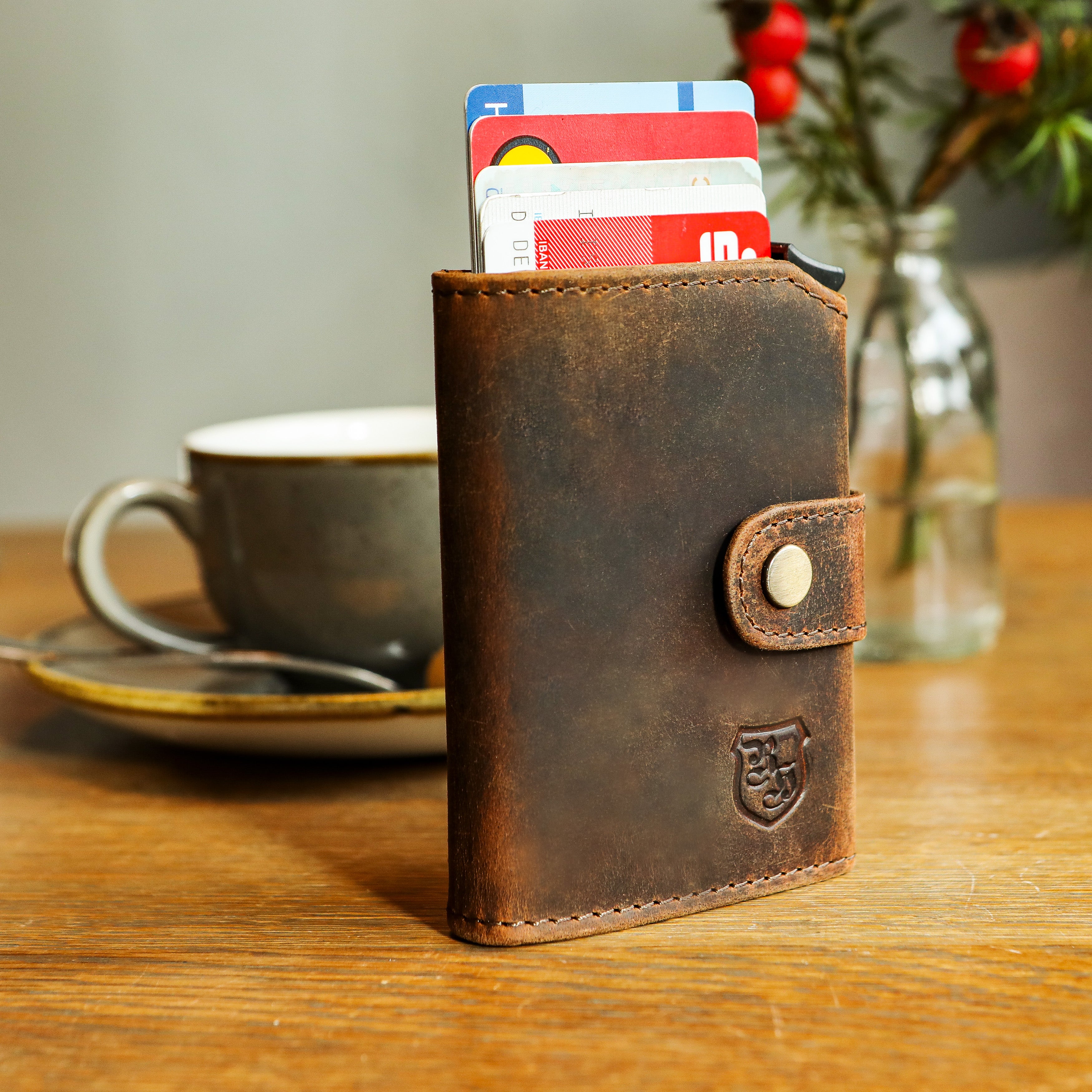
Card case with a slide mechanism
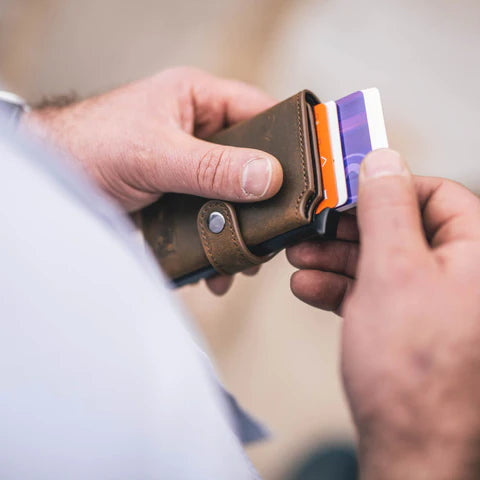
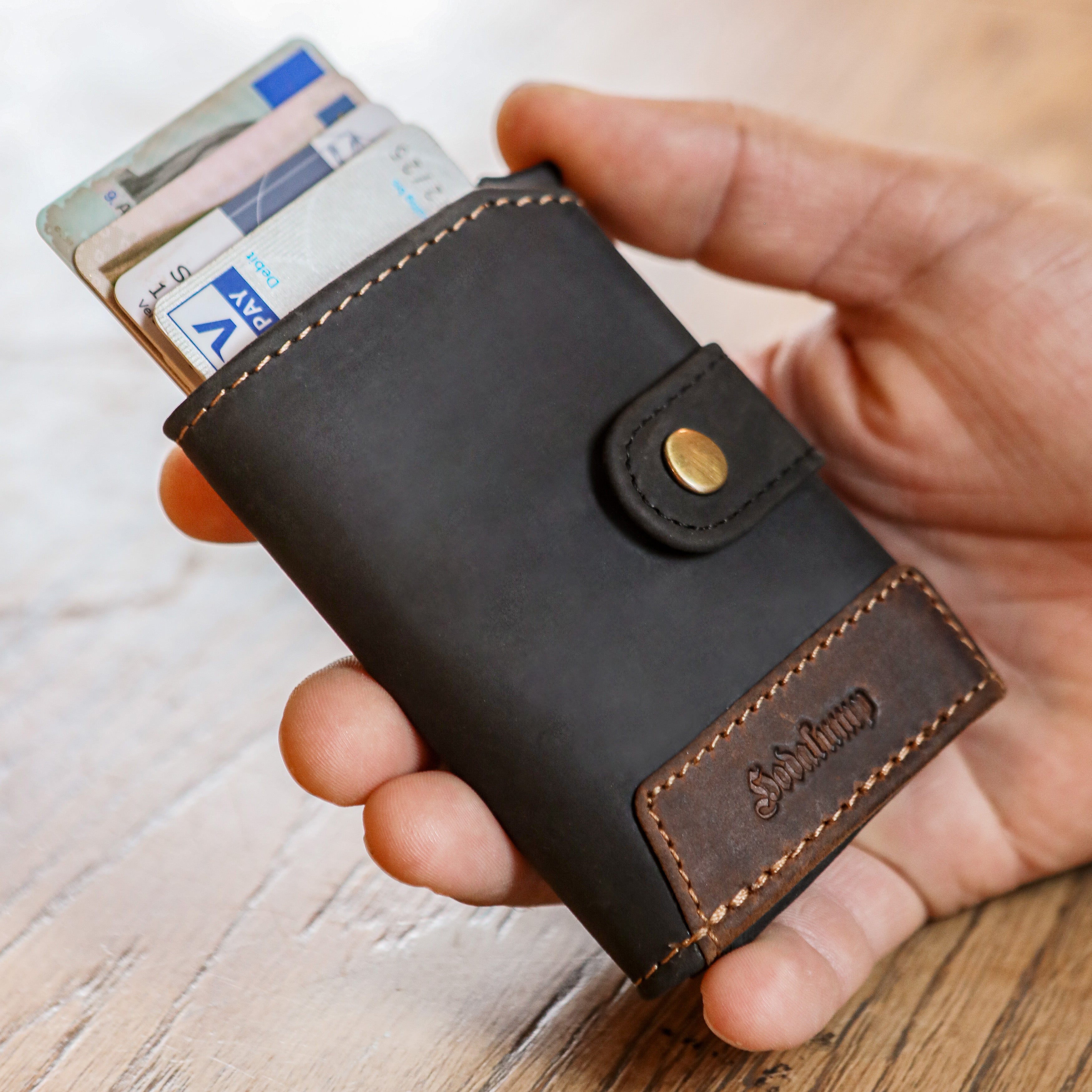
Cards sit stacked inside a case, and a push of the thumb fans them out. The flattest of the lot, and usually RFID-shielded by the metal itself. Limit: notes have to go on the outside under an elastic band or a clip, and there is no room at all for coins.
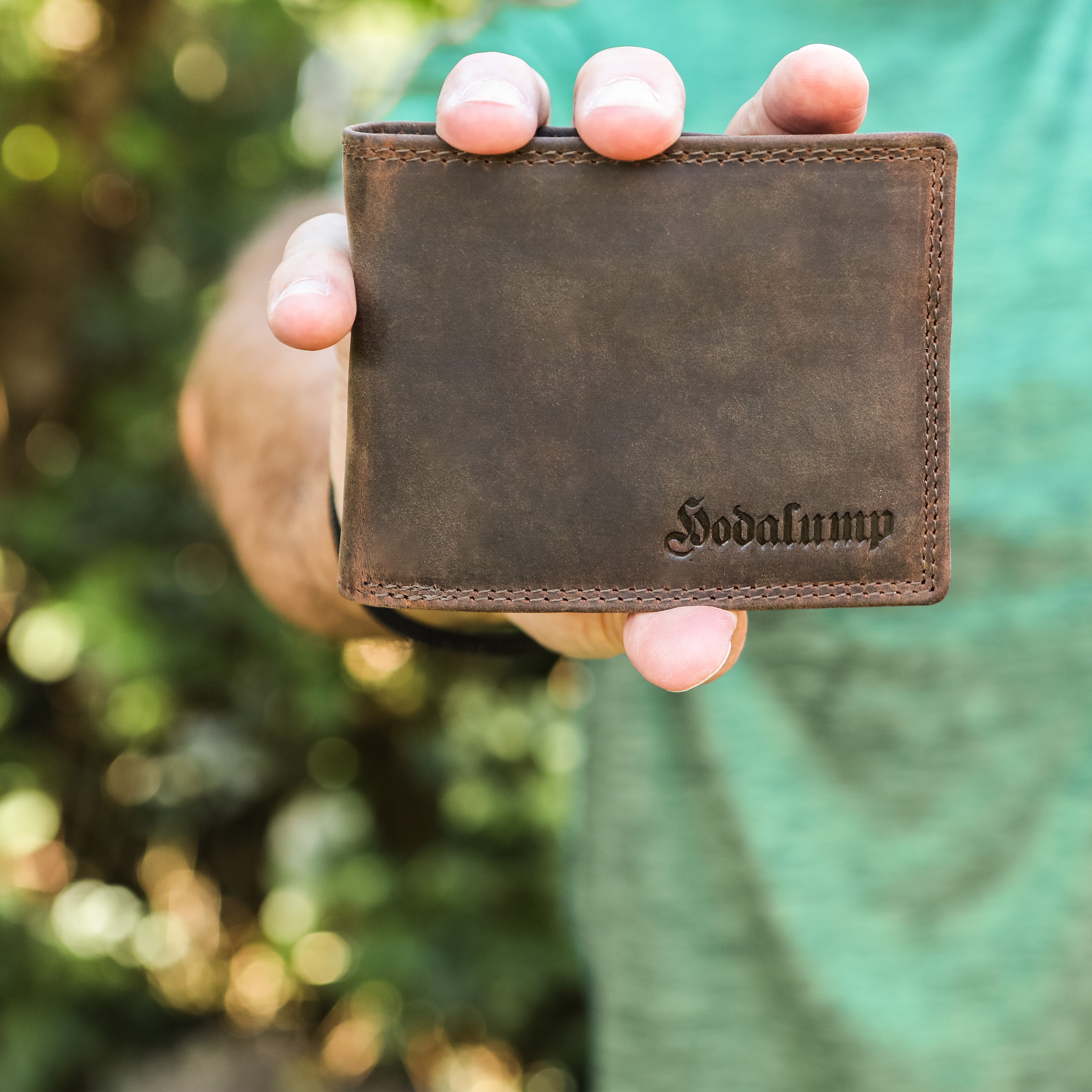
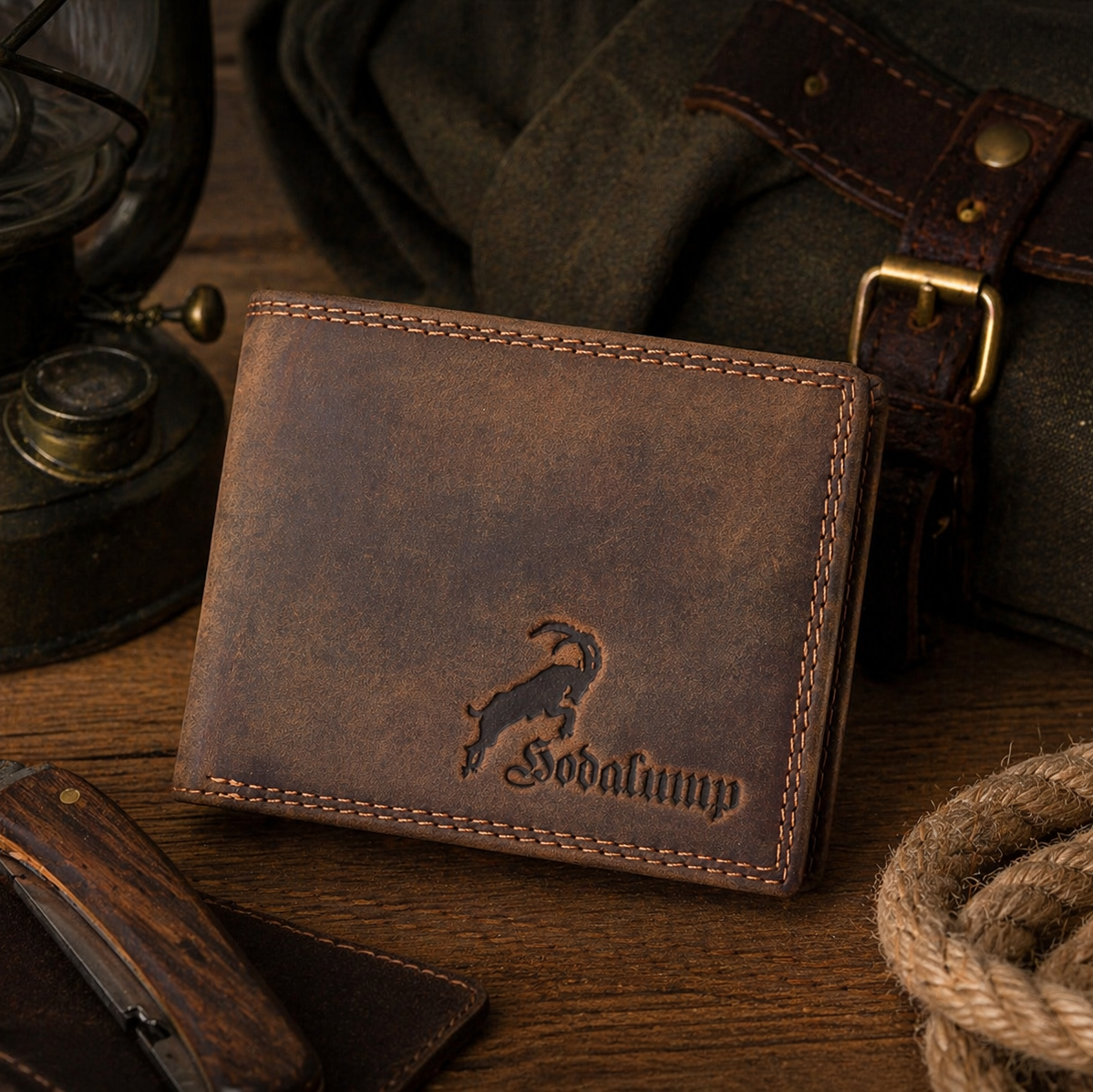
Leather card holder
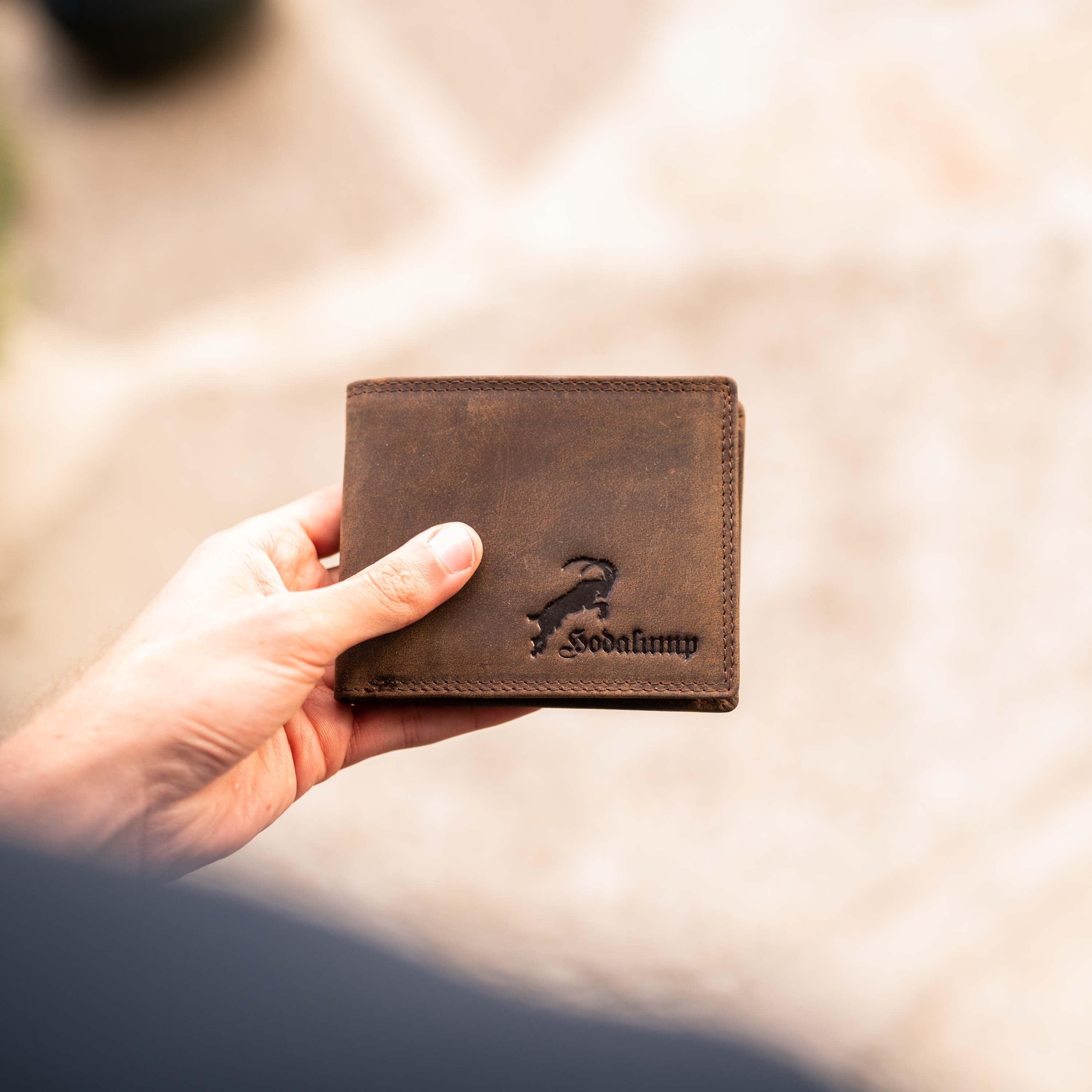
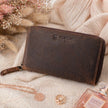
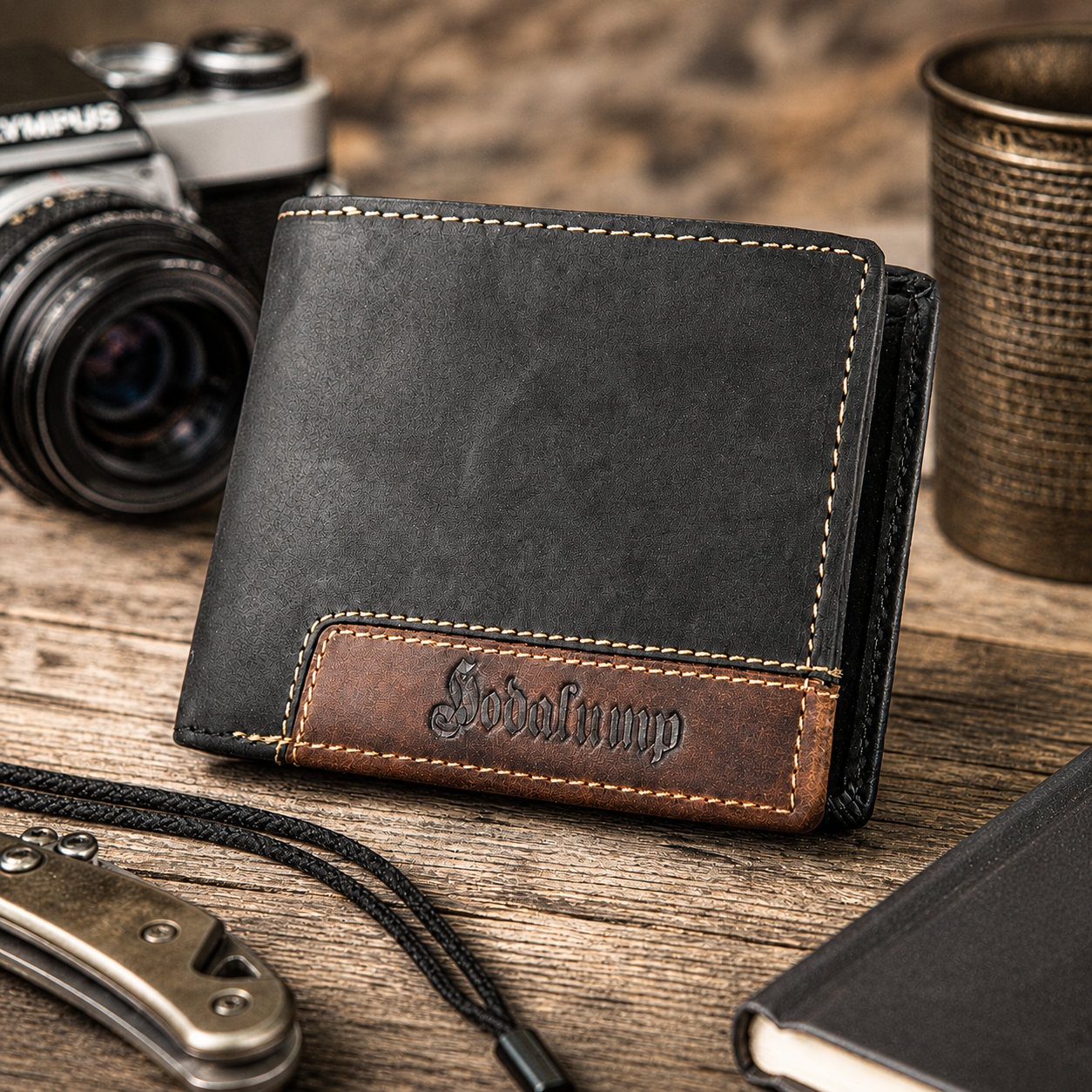
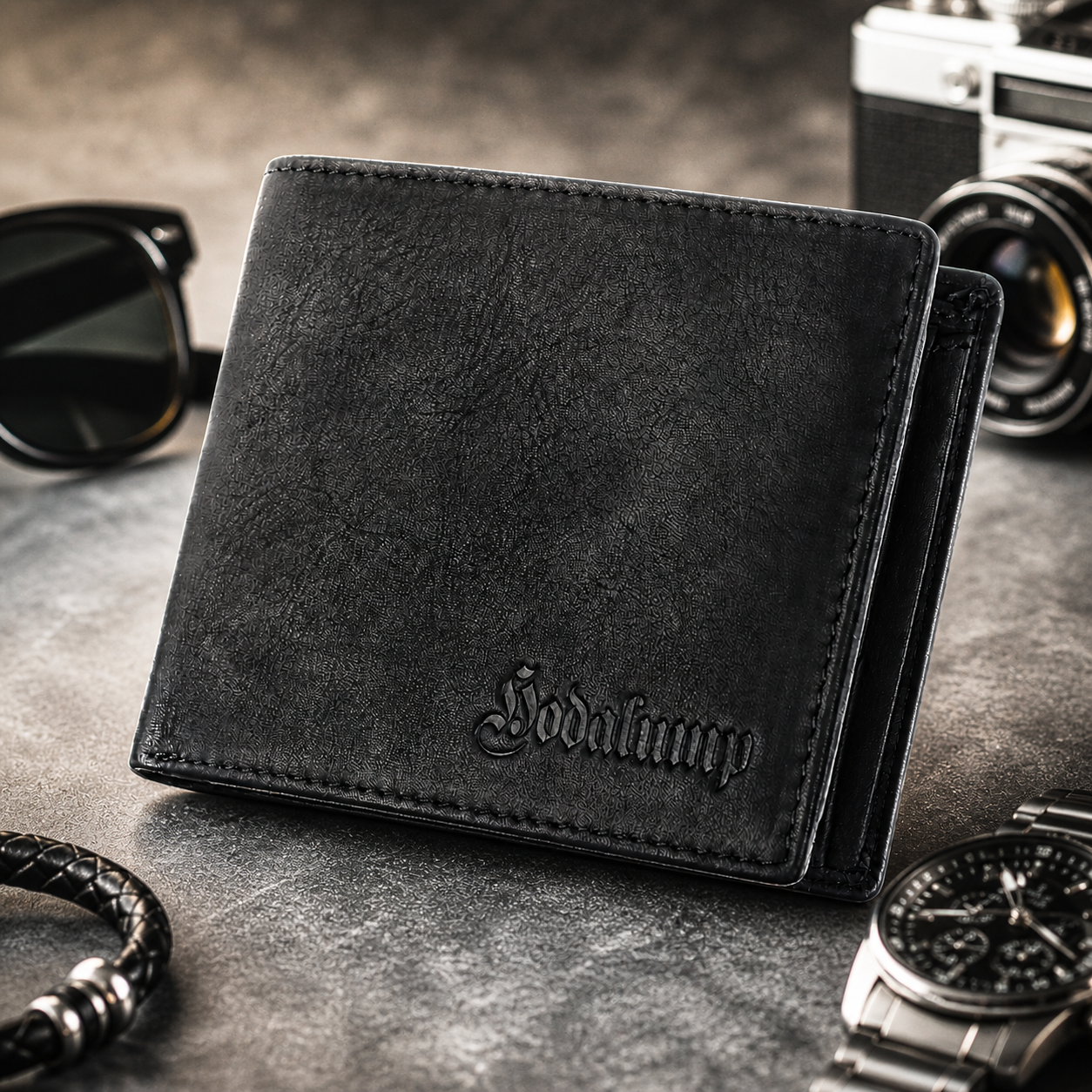
Several slots plus a central compartment for folded notes. Softer in the hand than metal, it grows more supple over time and moulds itself to the stack of cards. Limit: loose change stays outside, unless there is a coin pocket of its own.
Money clip
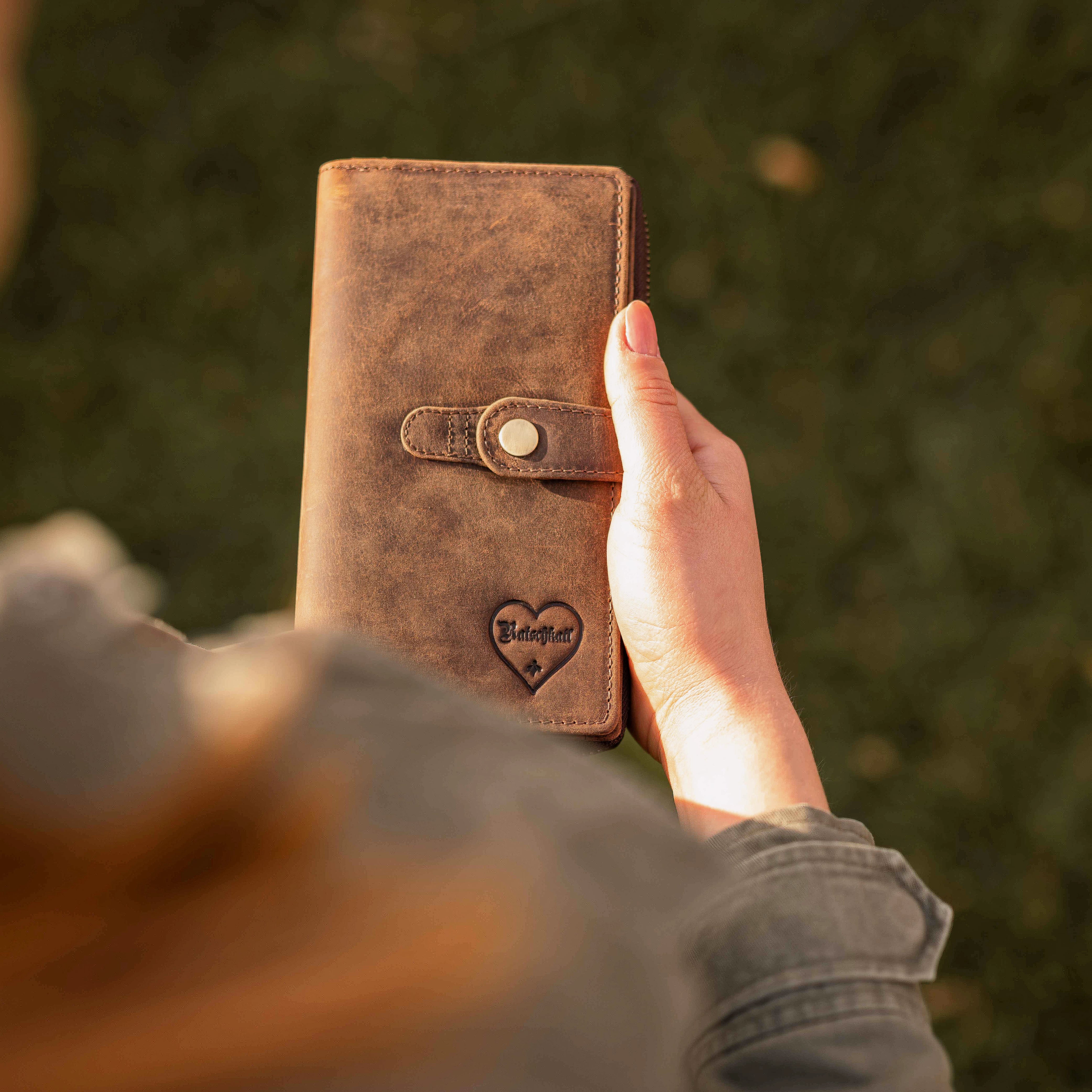
Card slots plus a metal clamp for notes. For anyone who carries cash but does not want coins. Limit: the clip does not grip properly with only a note or two — it needs a few of them to hold.
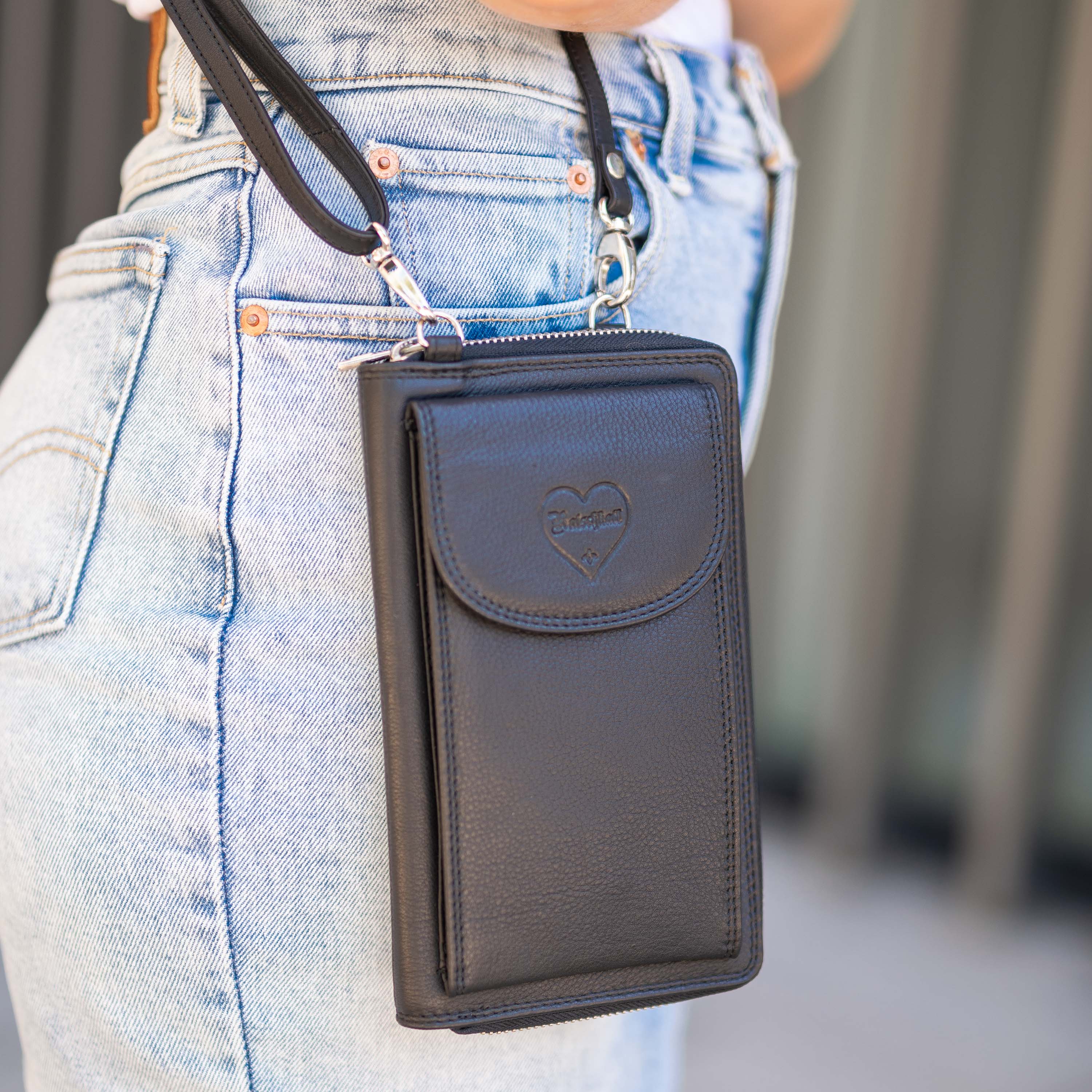
Card holder with a coin pocket
The compromise for anyone who cannot get rid of loose change. A little thicker than the plain card holders, but still noticeably flatter than a classic wallet. Limit: if you are handed a lot of coins every day, this will not make you happy.
How many cards really fit?
Manufacturers’ figures assume thin plastic cards. In practice: count one card fewer if you carry an embossed credit card — that one adds noticeable bulk. And leather gives: a holder that is tight at first will take one more card after a fortnight.
A flat holder with six to eight cards comes to about a centimetre. Anything above that is no longer a slim wallet, whatever the label says.
RFID: do you need it?
Reading a card contactlessly through a pocket is technically possible, but rare in practice and capped by transaction limits. More important than the shielding itself: if a holder has RFID shielding, contactless payment through the holder no longer works. You have to take the card out. If you find that a nuisance, choose a model without shielding on purpose.
Front pocket or back?
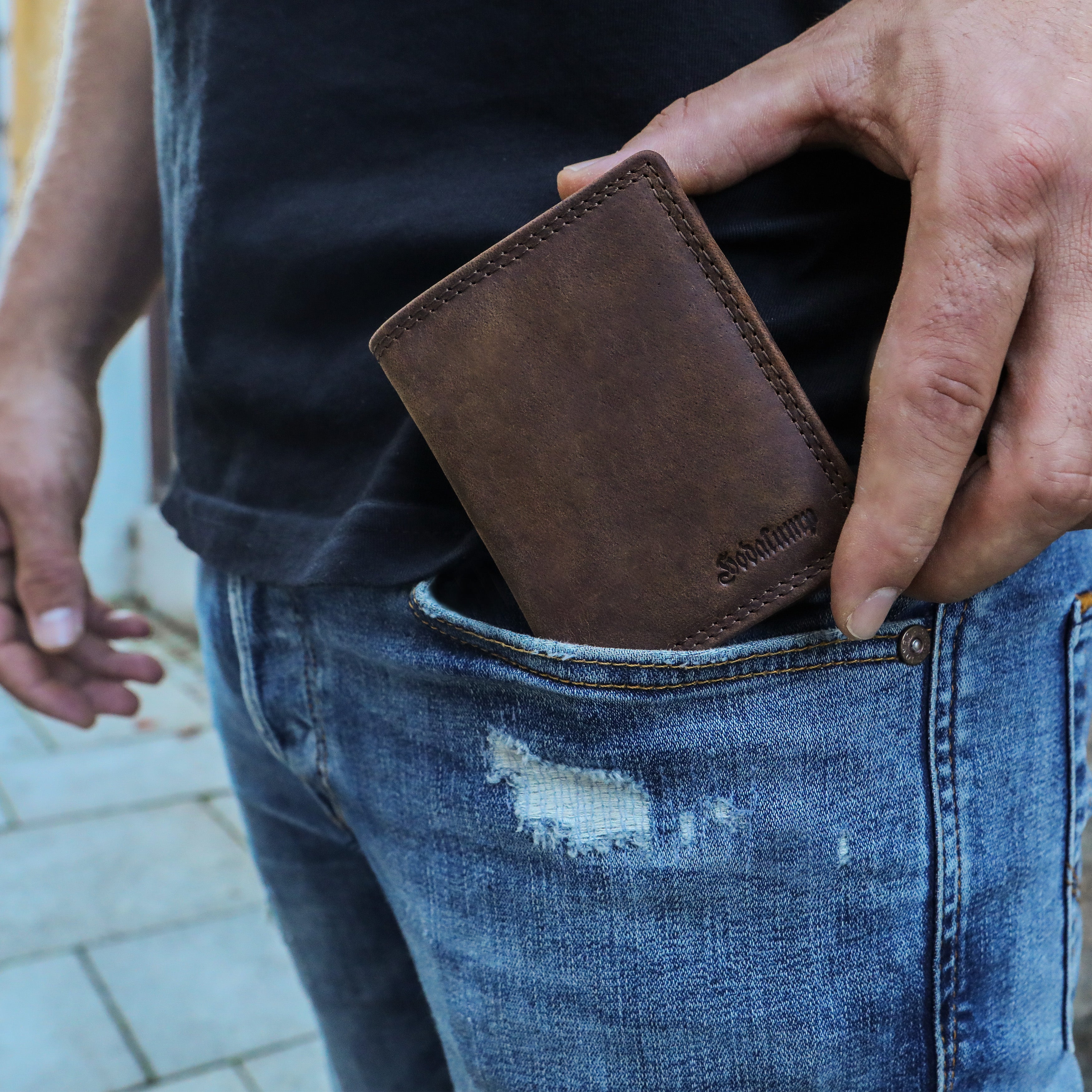
A slim wallet belongs in the front trouser pocket. That is not only more comfortable, it is the real reason for the design: in a back pocket, any wallet you sit on bends, and the cards take it badly. If you carry yours at the back, you do not really need the flat format.
How to spot good workmanship
- The slot edges. That is where the thumb pushes the card out, thousands of times over. Dyed, burnished edges cope with it.
- The spine seam. A holder is bent open every time a card is pulled out. If anything tears, it tears here.
- The leather thickness. Too thin and it goes wavy, too thick and it defeats the purpose. Good card holder leather is thin but firm.
In short
Decide first what has to come along: cards only, cards plus notes, or coins as well. The design follows from that, not the other way round. And if you pay contactlessly, think beforehand about whether RFID shielding helps or gets in the way.