





























There are two kinds of glovebox. In one, the vehicle registration document lies flat in a folder. In the other it lies under the owner's manual, two parking discs, an ice scraper and a napkin — creased.
The second kind doesn't stand out until somebody wants to see the papers or you sell the car. Then you spend five minutes searching and produce a document that looks like a till receipt from the year before. That is what this article is about: what people usually keep in the car, what is better off not living there permanently, and what a folder actually changes.
What this article does not cover
One thing up front, so you don't read to the end and then miss it: what you are legally required to carry in the car is not in this article. That is a legal question. It is answered bindingly by your vehicle registration office, your insurer or a legal adviser — not by a leather goods manufacturer and not by a blog article that happens to rank well.
What is here is the practice: what usually ends up in the glovebox, how it can be organised and which format is enough for what. For the question of legal obligations, stick with the source responsible for it.
What sits in most gloveboxes
Ask drivers and you almost always get the same list. It is not a set of rules but a habit:
- The Zulassungsbescheinigung Teil I — part one of the German vehicle registration, which almost everyone still calls the Fahrzeugschein. A single sheet that gets folded and is the first thing to fade along the fold lines.
- Proof of insurance, as a card or a letter depending on the case. For trips abroad, often the green card as well.
- The most recent roadworthiness test report. Rarely needed, but wanted immediately when it is.
- The service book or maintenance records, usually a booklet plus loose invoices from the garage.
- Odds and ends: parking permit, fuel card, garage card, emergency numbers, sometimes an accident report form.
Together that is three to six papers and two to four cards. That is exactly the amount that fits into a flat folder — and exactly the amount that turns into a pile when it sits loose in the glovebox.
The driving licence is the special case on that list. For most people it doesn't go in the car but in the wallet, because it belongs to the person and not to the vehicle. If you would rather keep it in the car, make that a conscious decision rather than one of convenience. Which wallets even have a compartment of the right size for it is covered in the guide to men's wallets.
What many people deliberately do not leave in the car
Here habits diverge clearly, and the reasoning is usually the same: anything that would make it possible to sell or re-register a vehicle is kept at home by many people, not in the vehicle itself.
That applies above all to the Zulassungsbescheinigung Teil II, part two of the registration, formerly the Fahrzeugbrief — the title document. Most people keep it in a file at home or in a safe deposit box. The same goes for the purchase contract, for copies of identity documents and for the spare key — a spare key in the glovebox is not a spare key, it is a first key for somebody else.
And then there are the things nobody leaves there on purpose and which age in the car regardless: fuel receipts, car wash vouchers, old parking tickets. Those belong either in your bookkeeping or in the bin, not in the glovebox.
Why a folder changes anything at all
The obvious answer is order. The more interesting one is the paper itself.
A car is the worst place a document can be stored. In summer the glovebox gets hot, in winter moisture creeps in, and in between everything shifts on every bend. Loose paper develops dog-ears, after two years the fold line becomes a break line, and thermal paper — garage receipts, for example — fades away completely in the sun.
A folder does not solve all of that, but it solves the mechanical part: the paper lies flat, it doesn't get bent every time you reach into the compartment, and it doesn't slide into the footwell. That sounds banal. It is the difference between a document you present and one you apologise for.
What fits into the vehicle registration folder
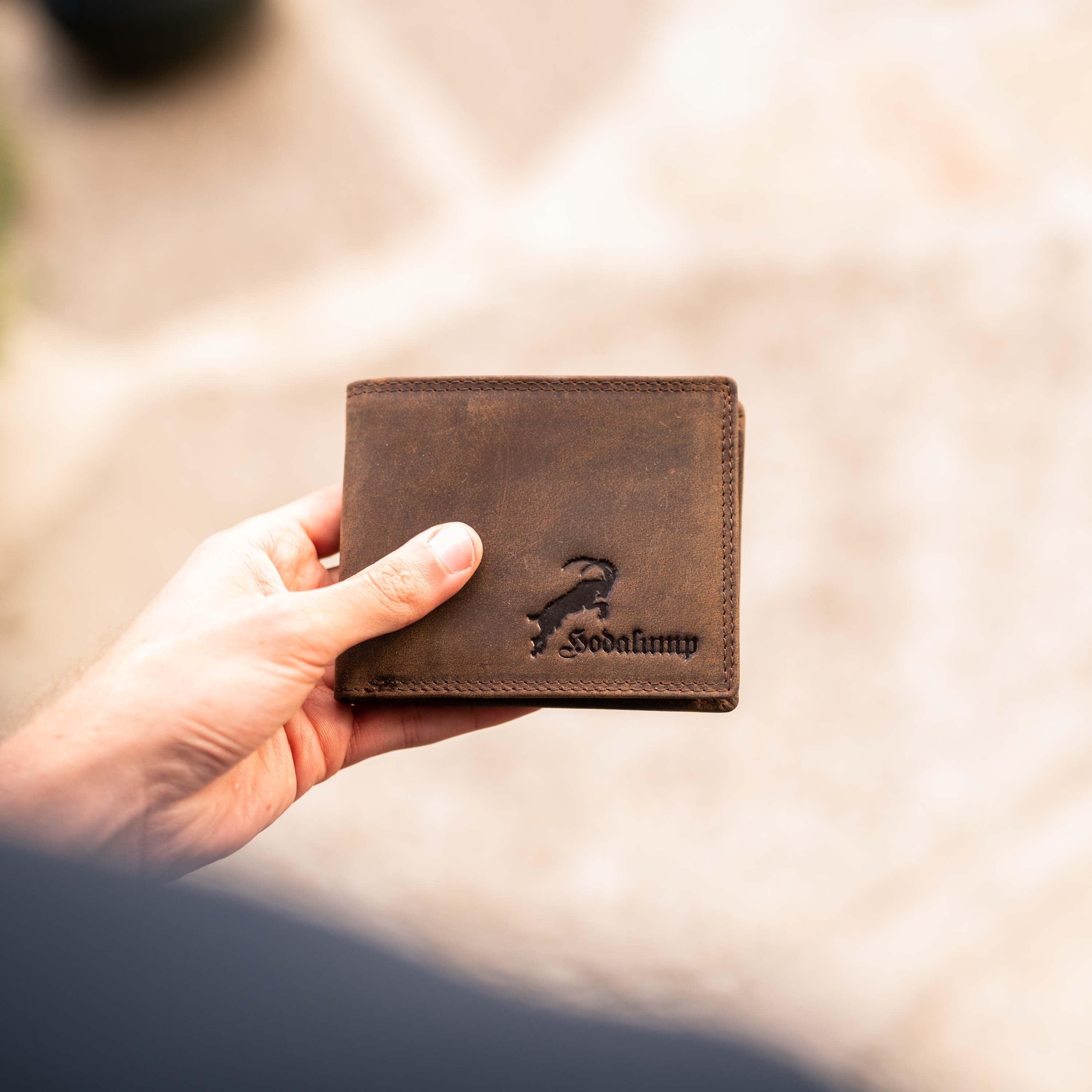
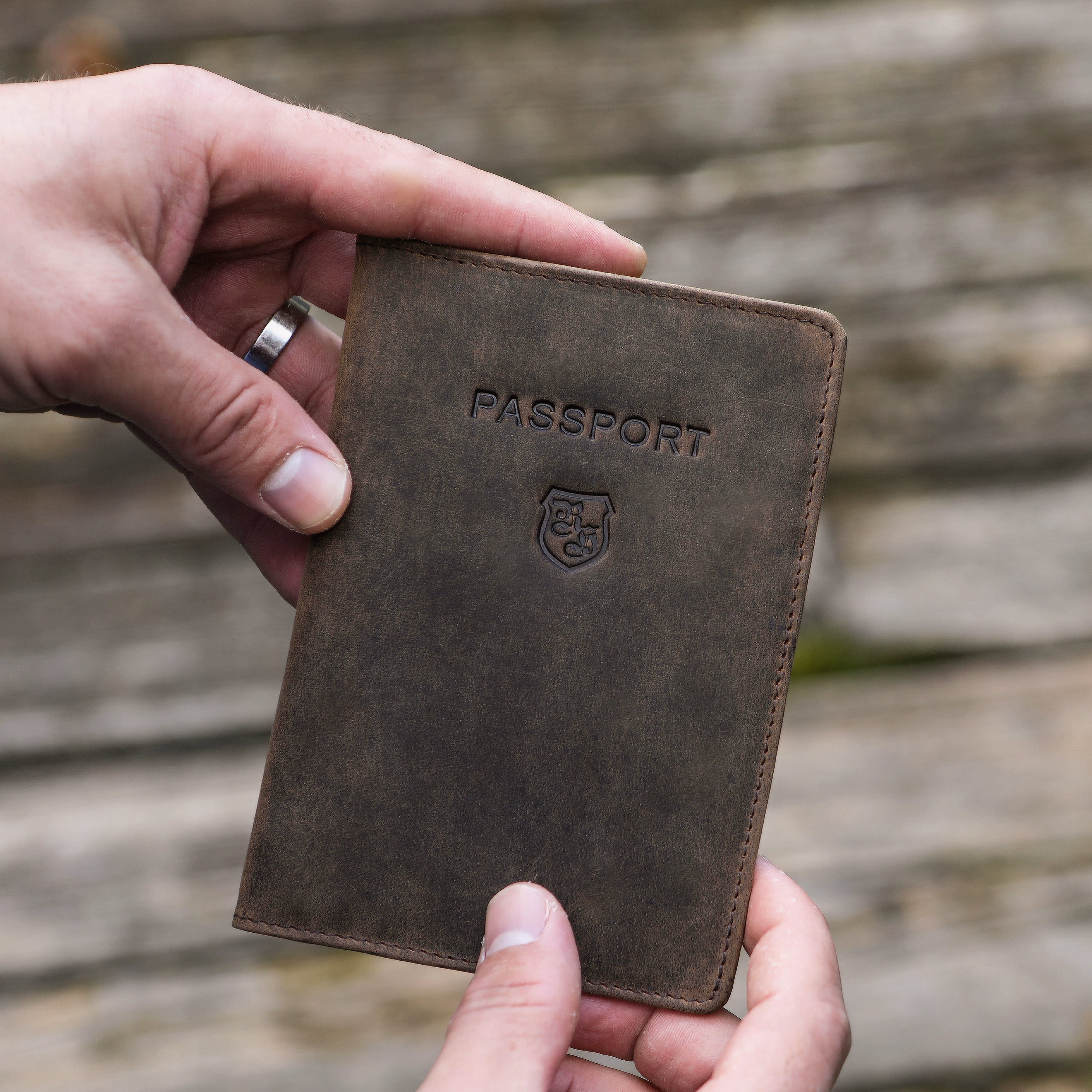
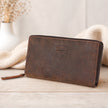
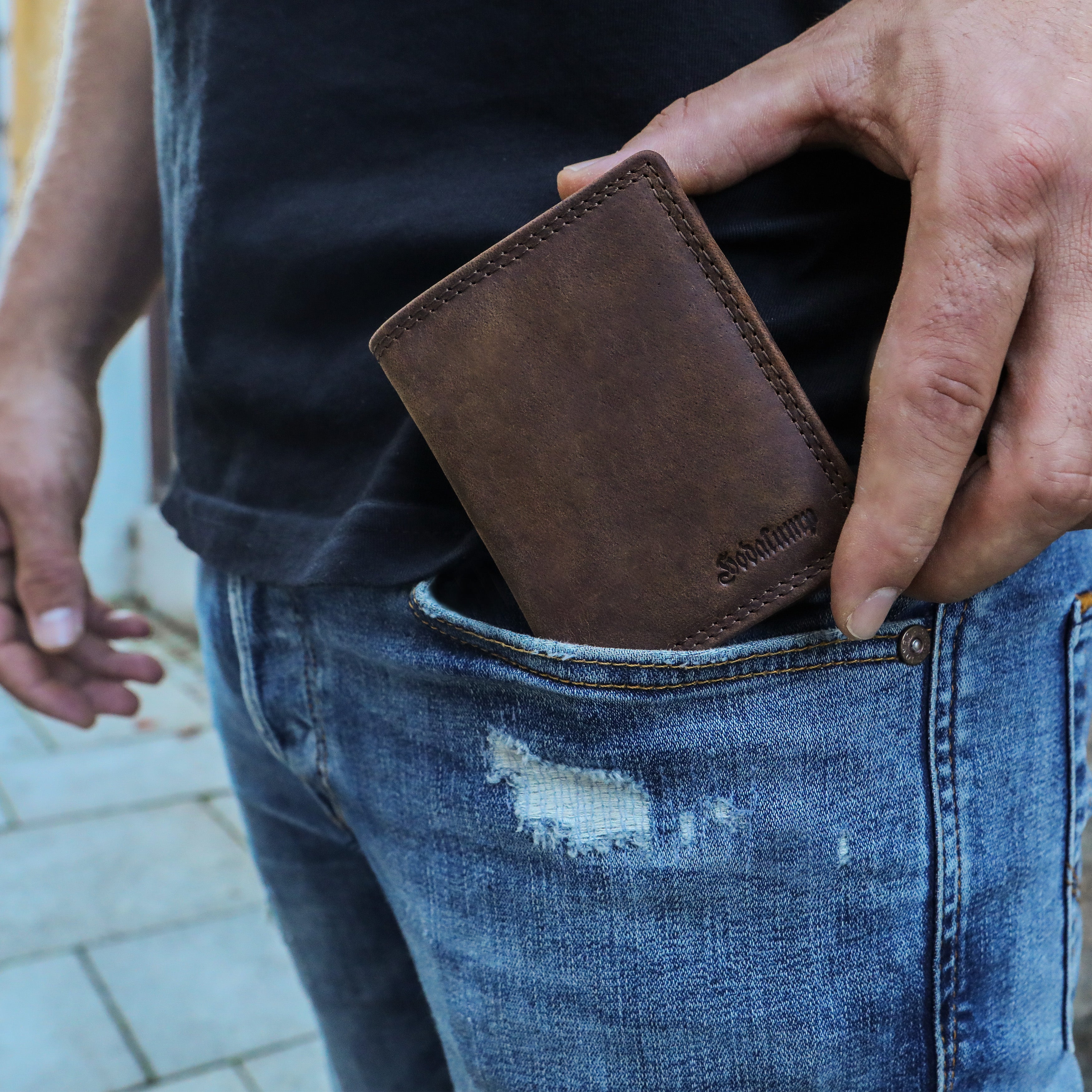
The vehicle registration folder at €14.95 is cut for exactly this: registration document, driving licence, insurance card and whatever else belongs to the vehicle. Inside there are slip pockets, outside it is genuine leather. The format is compact enough for the glovebox, the centre console or even a jacket pocket. Rated 4.65 from 63 responses.
The limit matters: a folder of this size is meant for folded single sheets and cards, not for a whole vehicle file. If you want to keep the service book, every garage invoice and the complete test history together, you need a different format — more on that shortly.
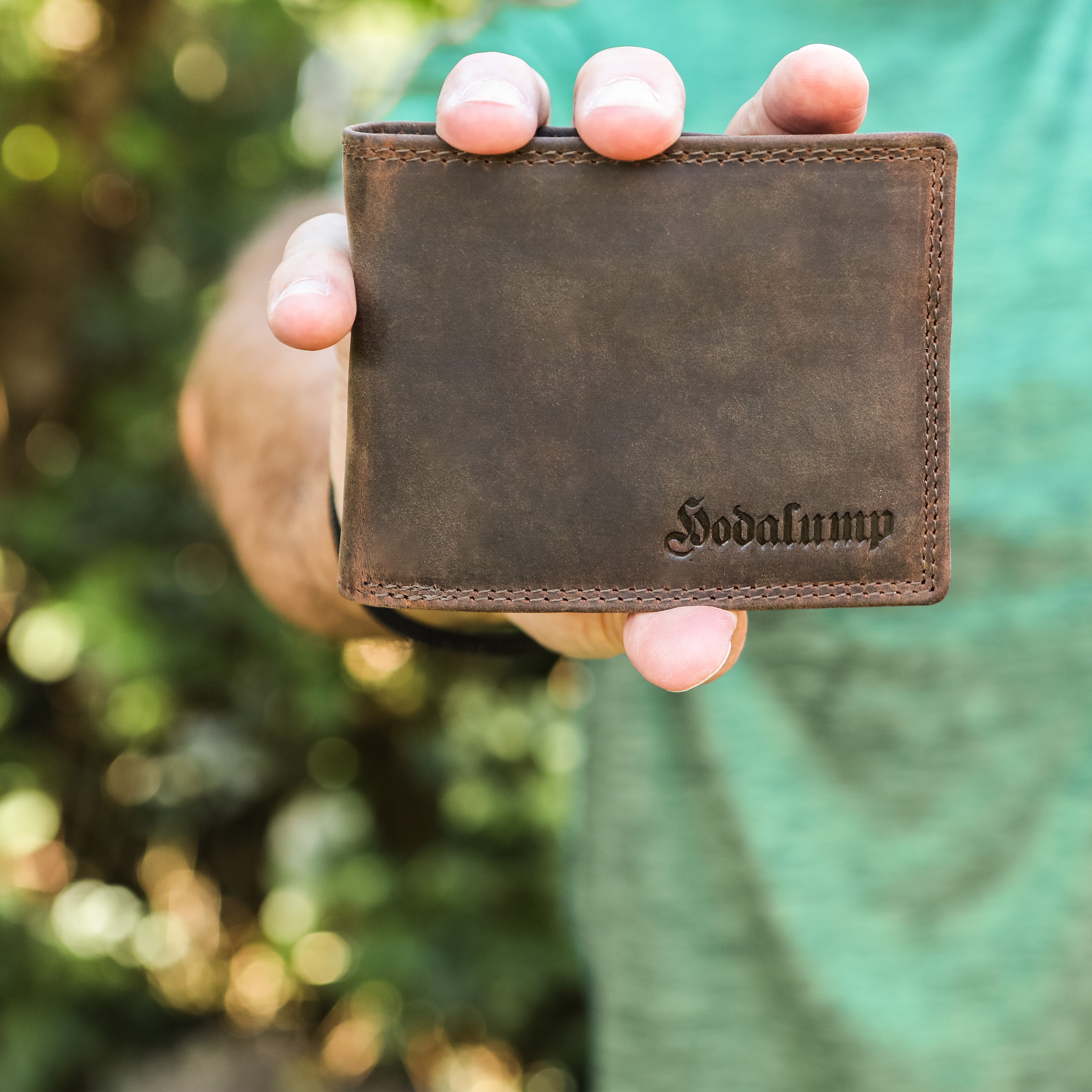
And one clarification, because people ask regularly: the folder comes as it is — smooth leather outside, no lettering. If you run several vehicles and want to know which folder belongs to which car, put a slip of paper with the number plate in the front slip pocket. It is inelegant and it works.
When it is more than one sheet: the next size up
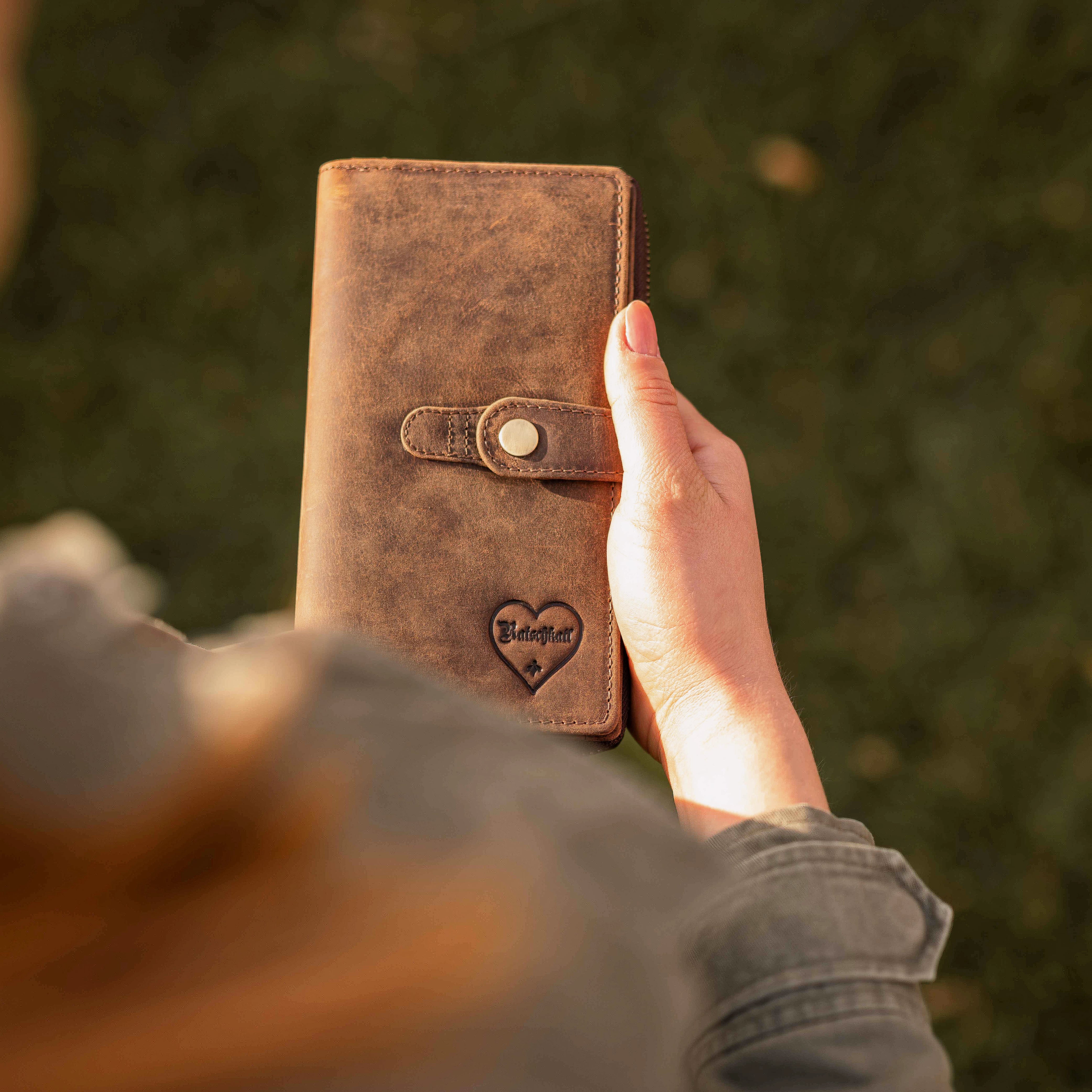
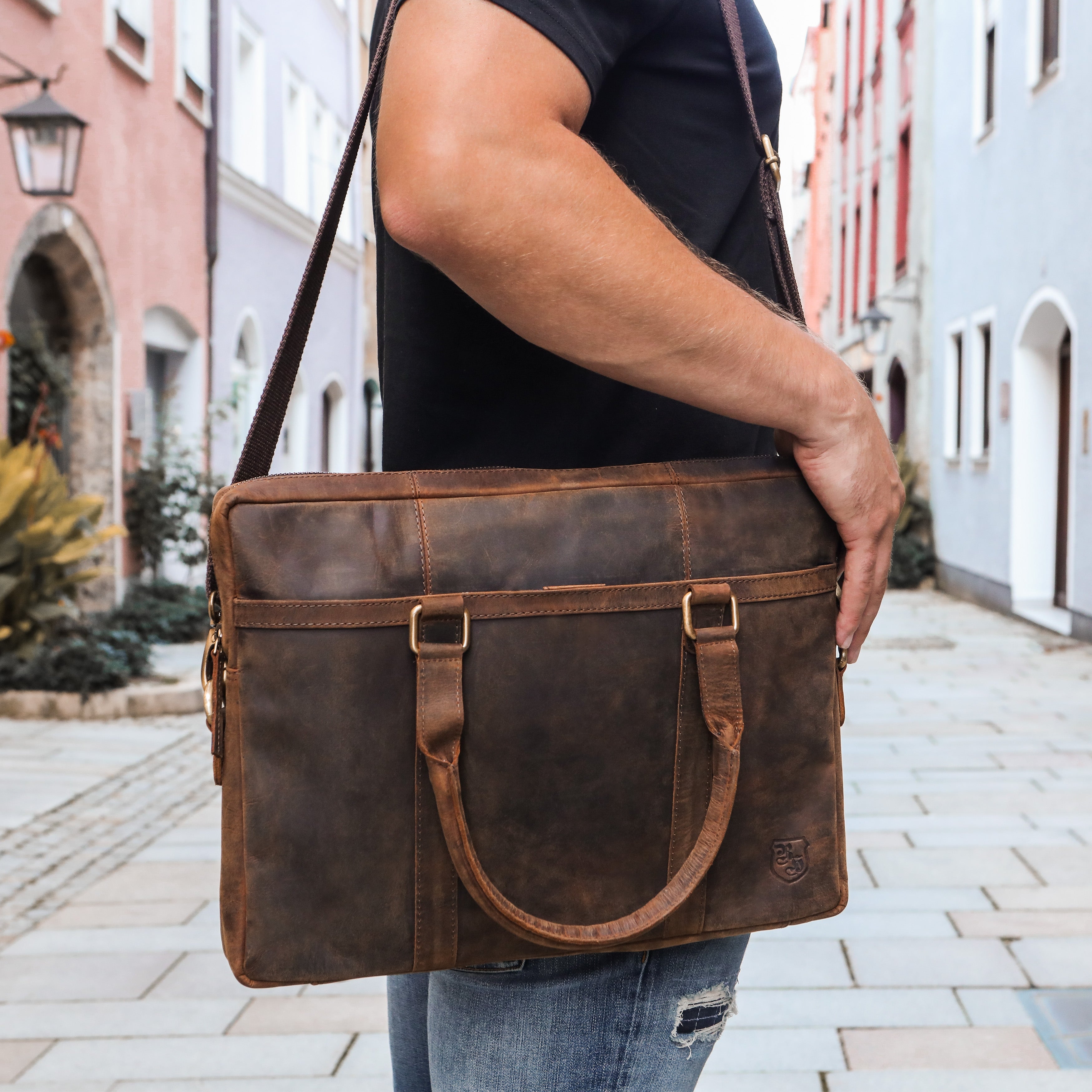
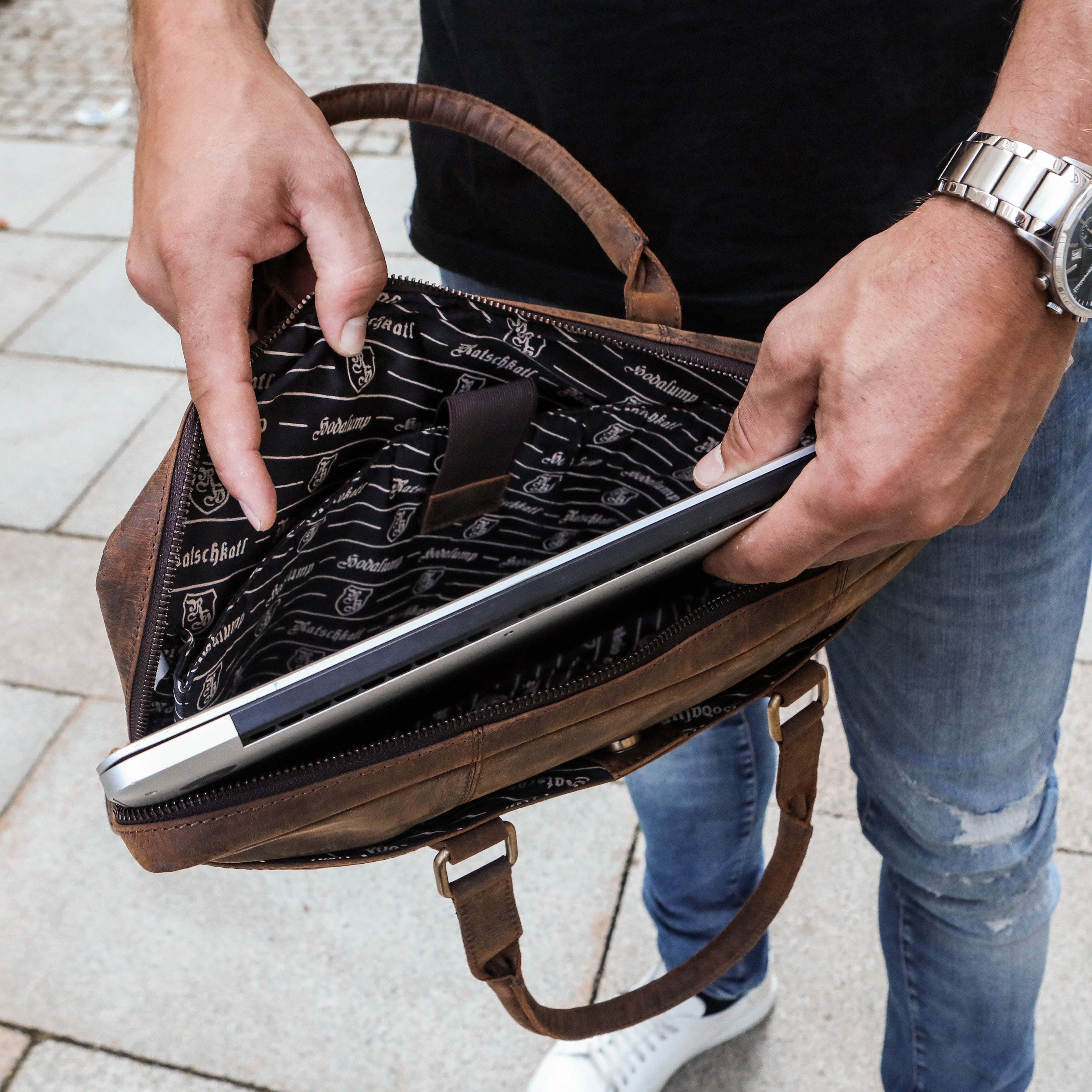
As soon as the service book, invoices and test reports come into it, we are talking about A4. The leather folder at €79.95 is built for that: room for A4 documents, a notepad, a tablet and business cards, integrated compartments and a zip running all the way round that holds everything together in transit.
The usual set-up among people who have their vehicle paperwork under control looks like this: in the car, the small folder with what you need on the road. At home, the large folder or a file with everything that documents the value of the vehicle. When you sell, you then produce a folder rather than a shoebox — and that makes more of an impression in a price negotiation than it ought to.
Both formats sit under leather cases and leather bags respectively.
The spare key and the plastic cards
A car comes with more than papers. A key with a remote housing scratches the display in your trouser pocket, and the cards for the charging point, the car wash and the garage are too few for a wallet and too many for the shelf.
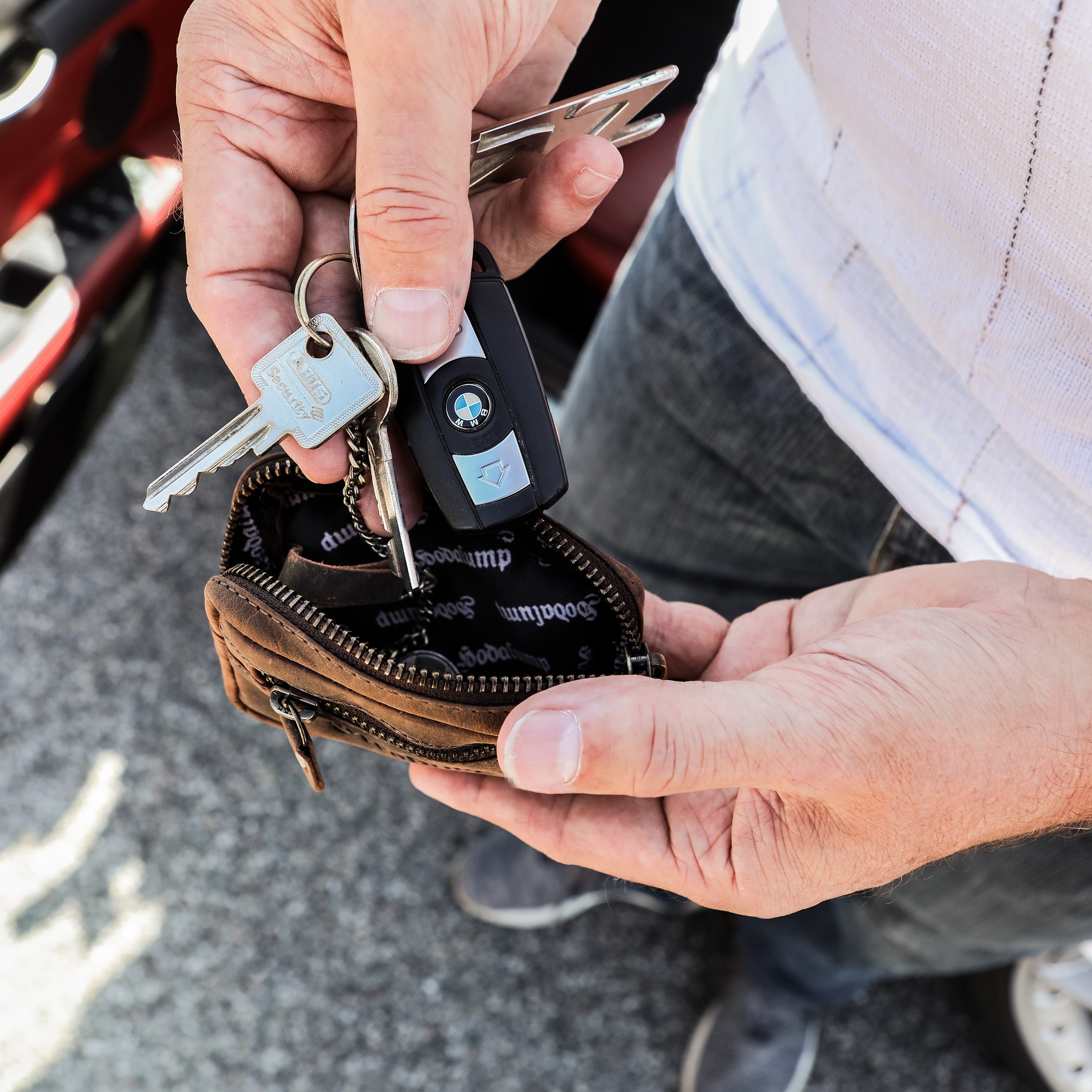
For the key there are two routes. The Rudi key pouch at €19.95 is a leather pouch with a zip and an internal key ring — a little change, a shopping trolley token or a card will fit alongside. The Hodalump key organiser at €29.95 takes the other route: it holds around six keys that swing out like the blades of a pocket knife, bolted together and without rattling. Further models are under key cases.
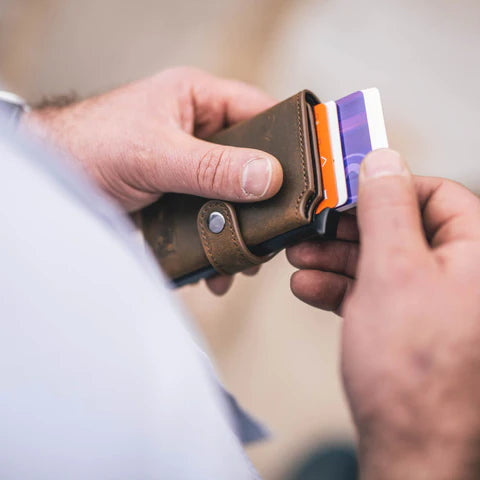
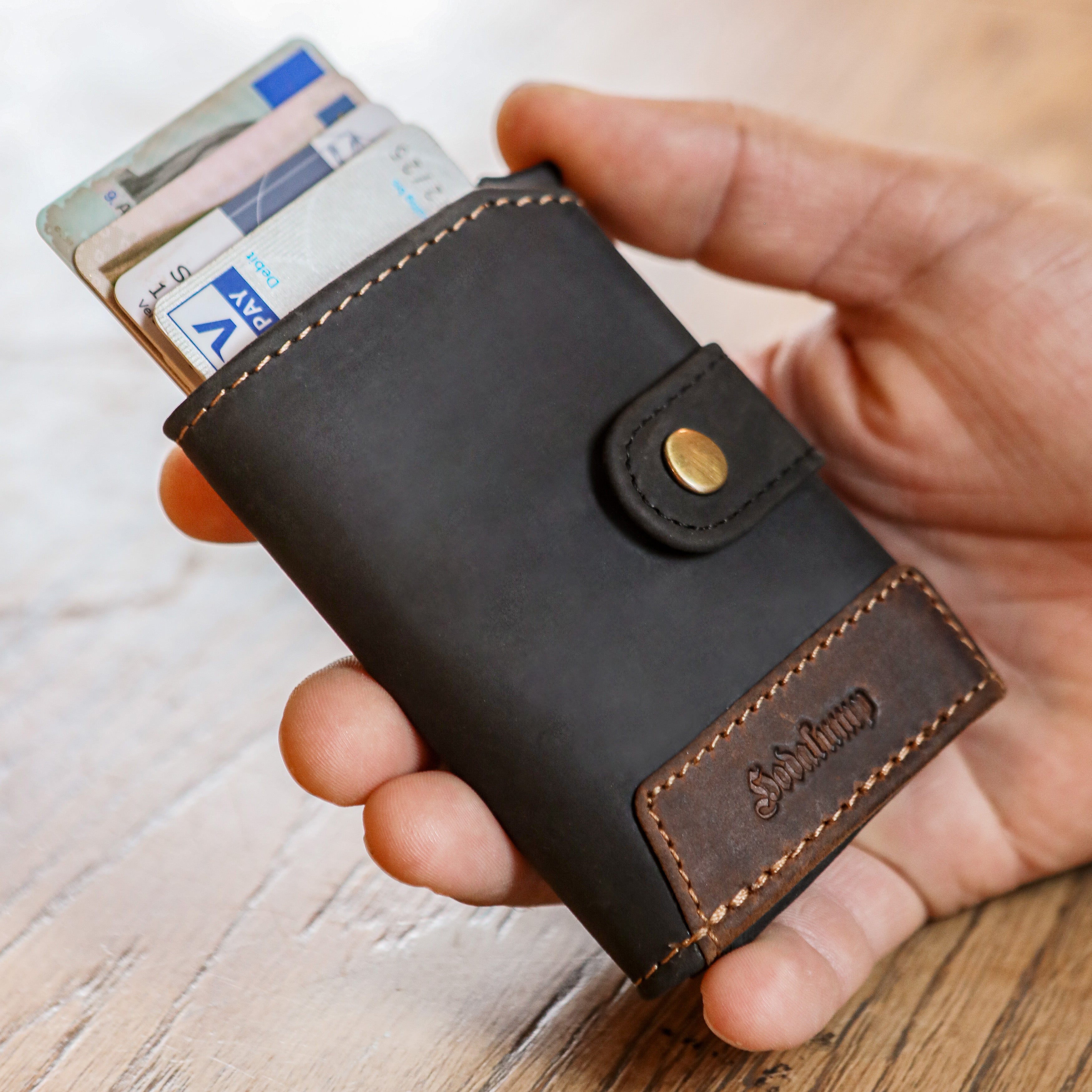
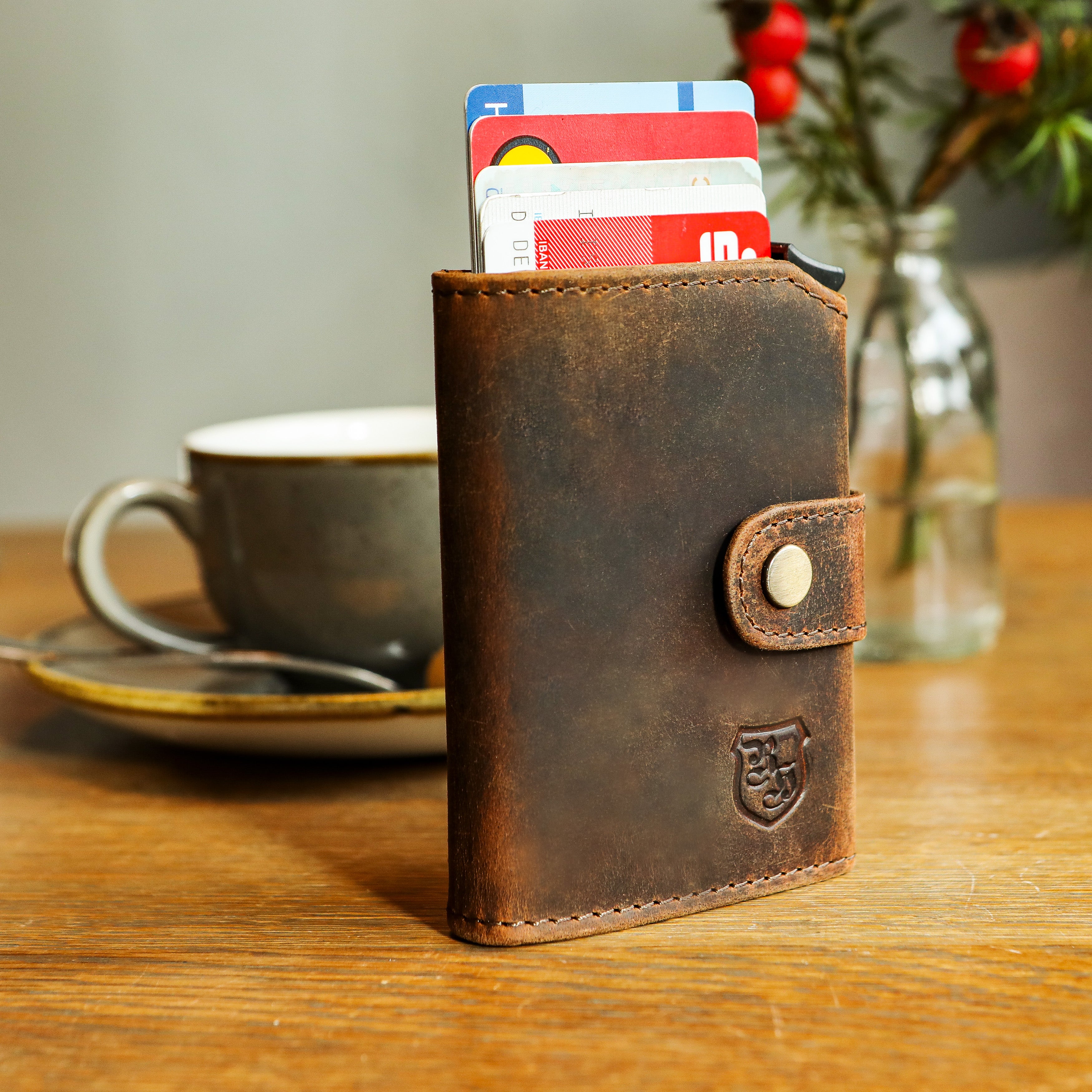
For the cards, the card box at €19.95 is the pragmatic solution: aluminium housing, pop-up mechanism, room for up to seven cards that cannot fall out. It is not made of leather and does not want to be — it is the hard container for the cards that would otherwise lie loose in the centre console.
Two cars, two folders
Anyone with more than one vehicle — a second car, a trailer, a motorbike, a company car — almost always makes the same mistake in practice: one folder for everything. That works until one vehicle is sold or deregistered and the papers have to be sorted apart again.
At €14.95 per folder the alternative is cheap: one per vehicle, each staying in its own car. Then every glovebox holds exactly what belongs to that vehicle, and the trailer doesn't accidentally take the car's papers into the garage with it.
What the leather does over the years
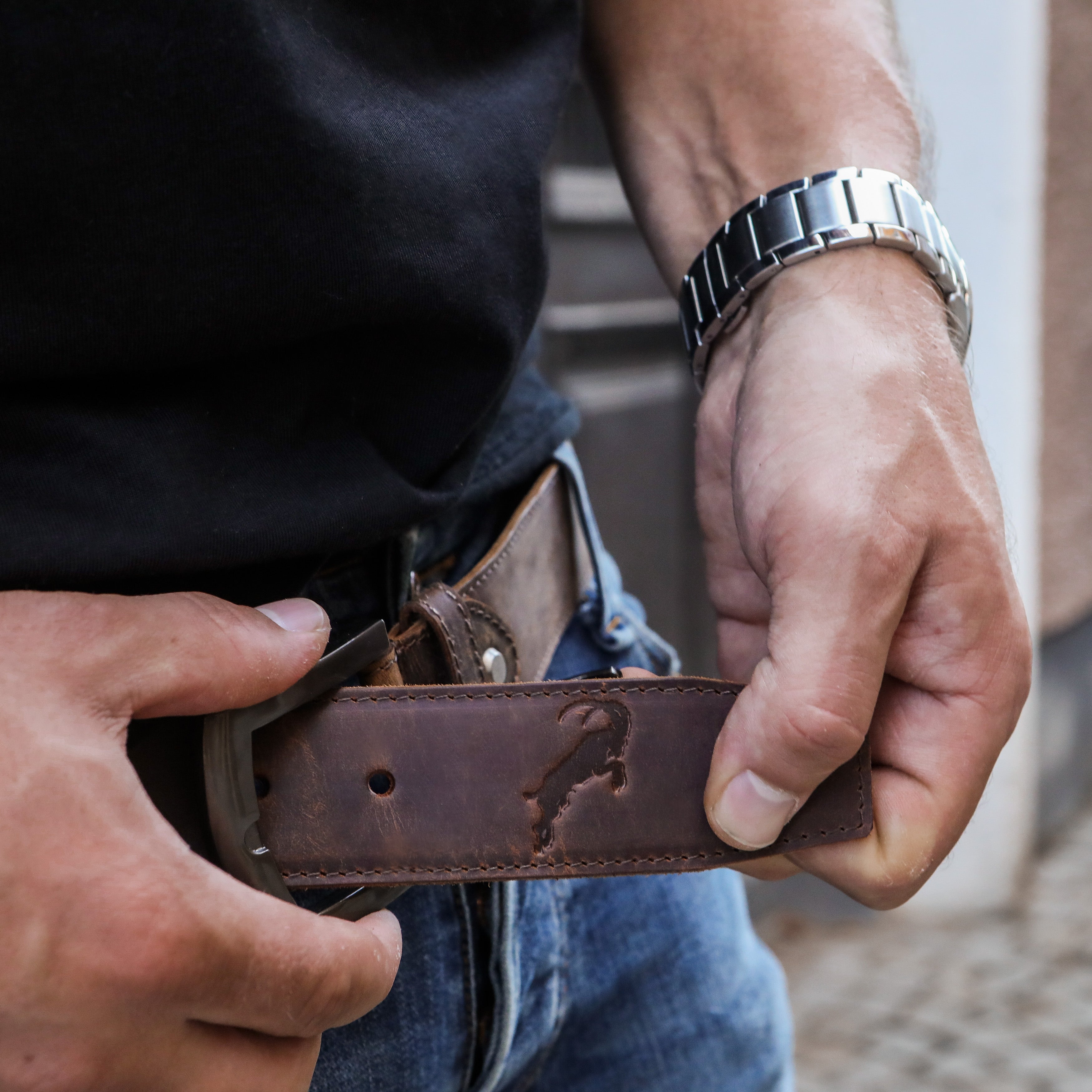
A folder that lives in a car does not have an easy time of it: sun through the windscreen, heat in summer, cold in winter. Genuine leather takes that better than coated material, because it doesn't depend on an adhesive layer that comes away. It darkens, gets smoother at the edges, and after a few years you can see that it is in use.
It doesn't need much care for that. Wiping it down once or twice a year and greasing it sparingly is enough — sparingly being the decisive word, as described in the article Applying leather grease properly. The table above sets the four formats side by side, from the small folder to the A4 version. Further leather goods for everyday use are under leather accessories.