
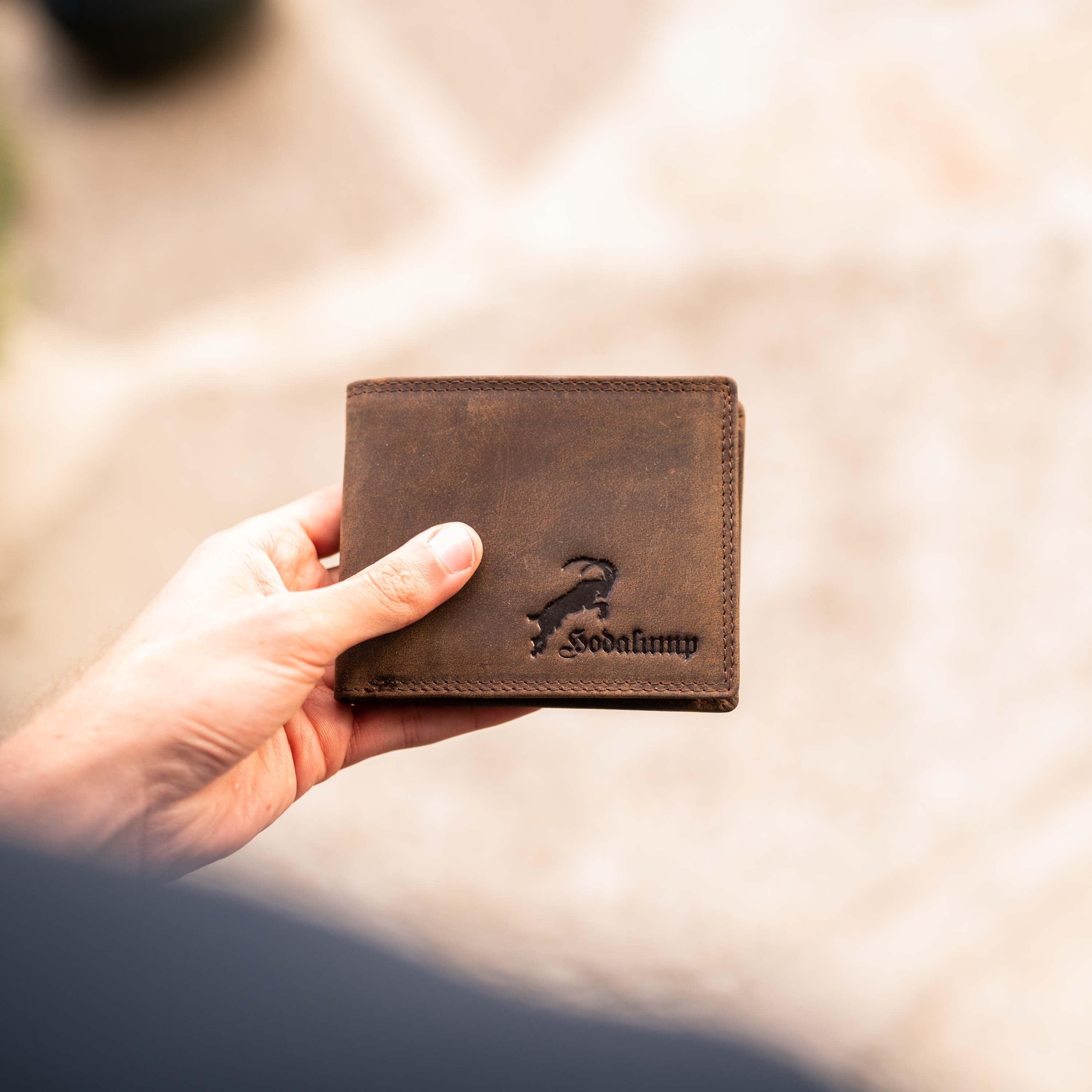
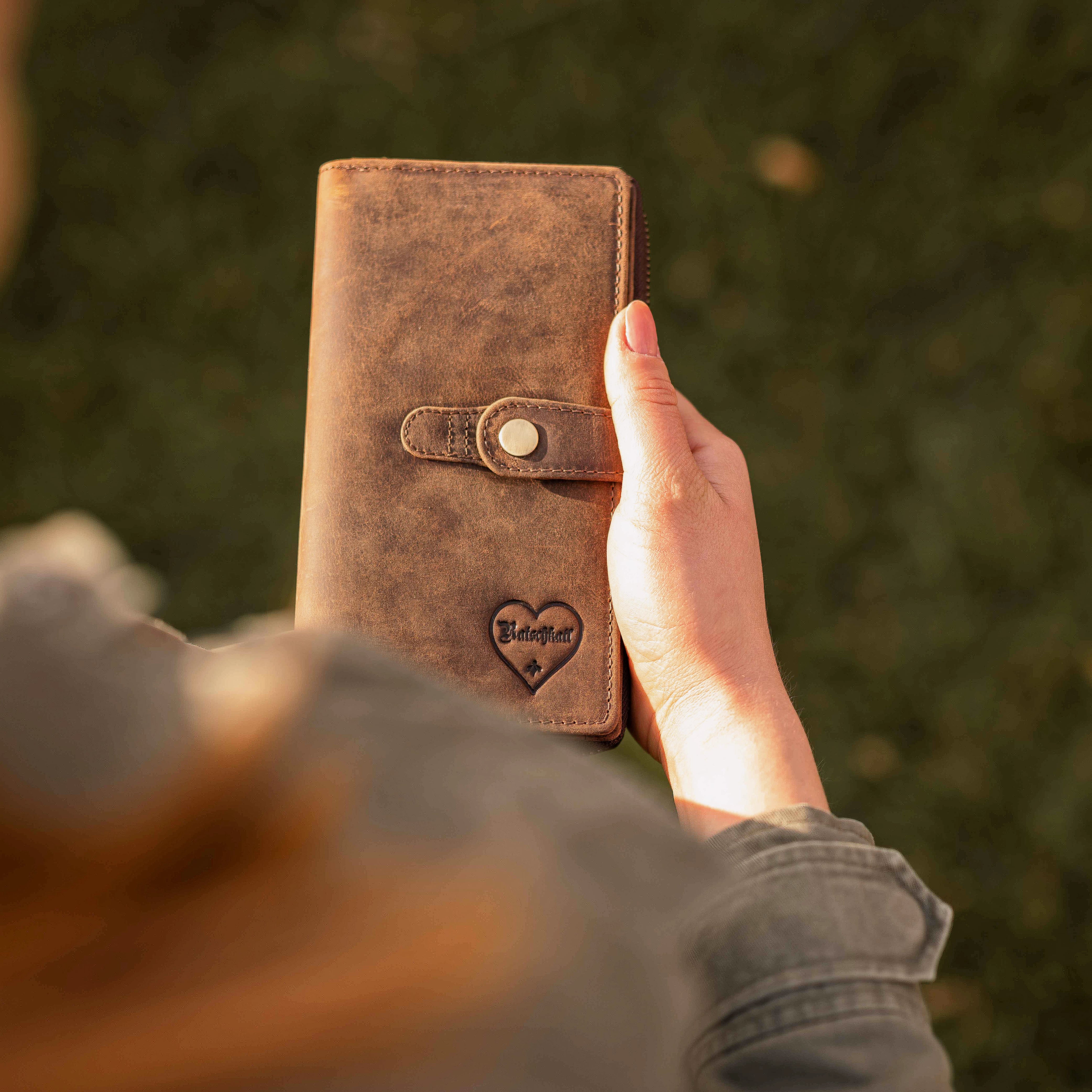
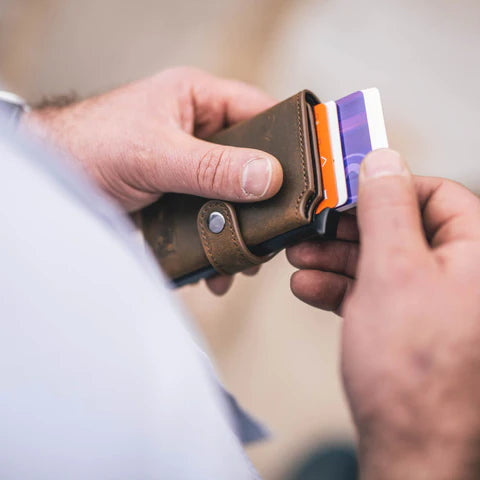
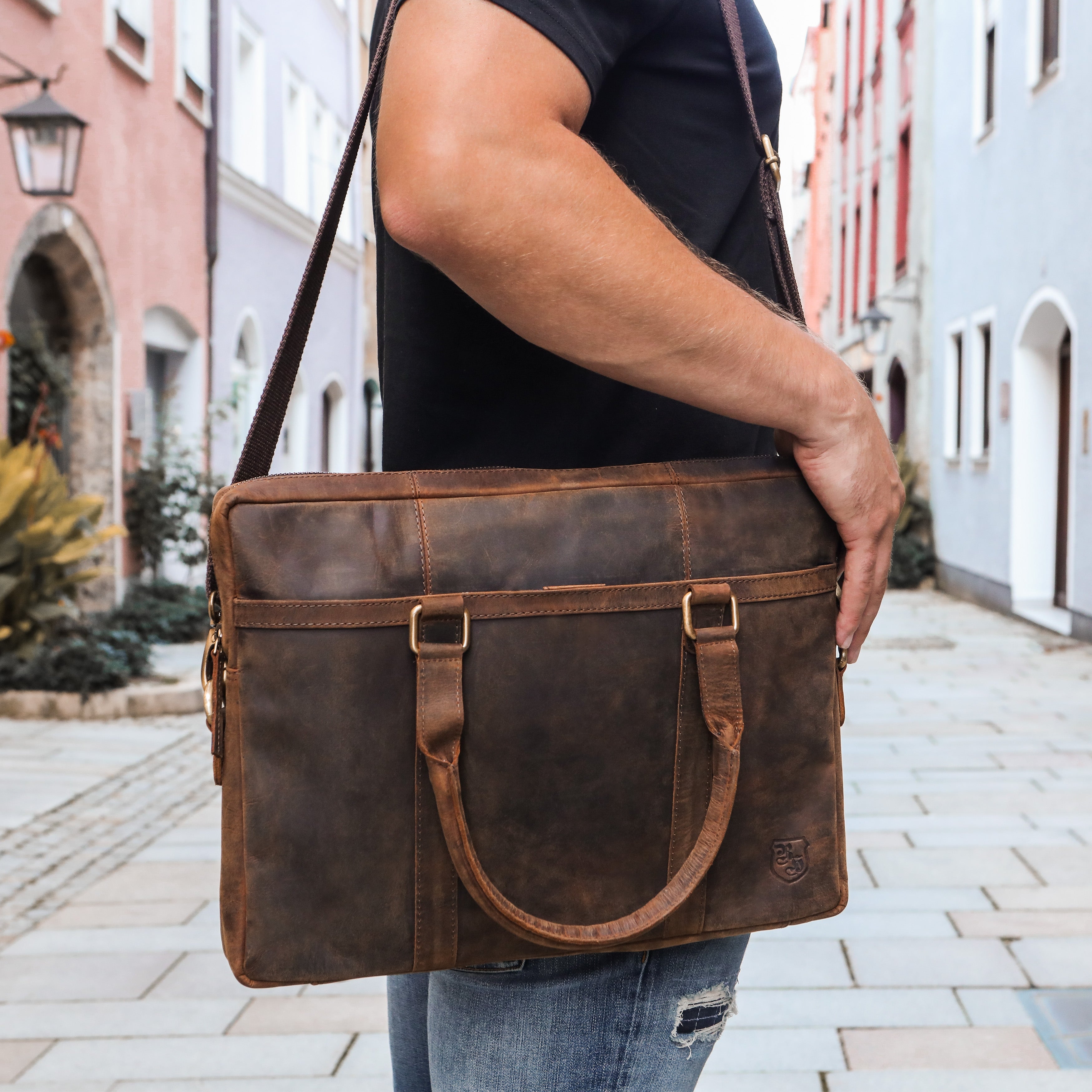

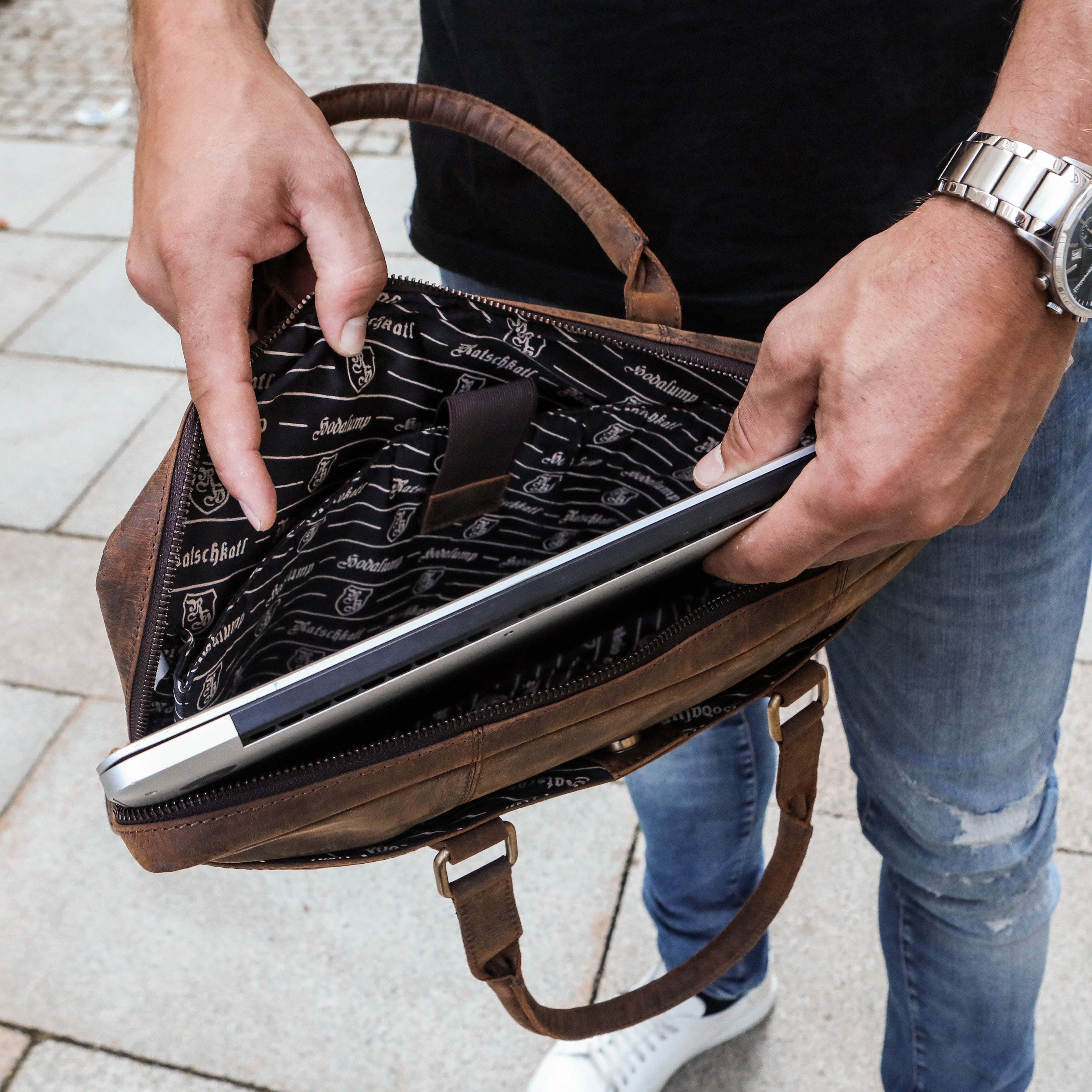
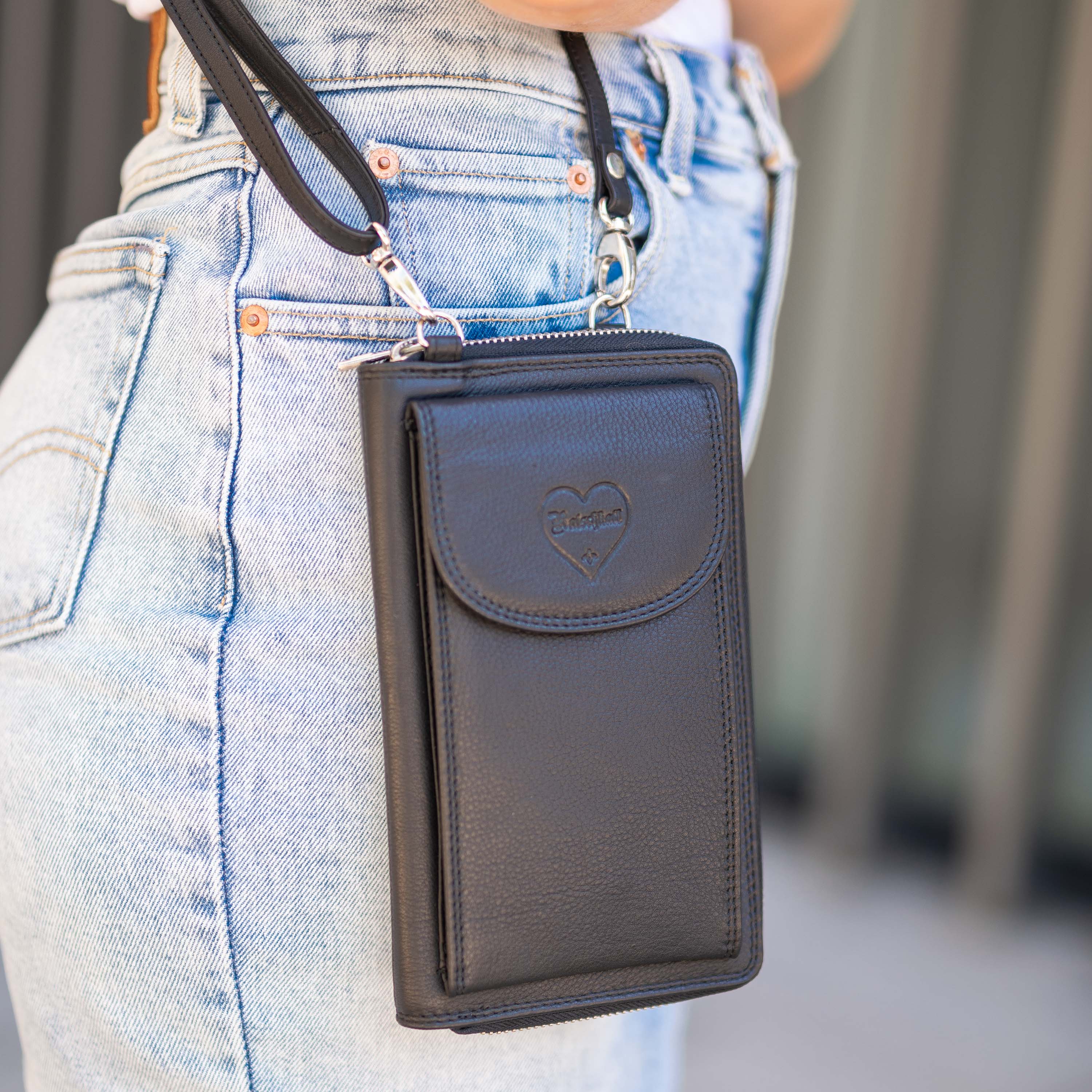

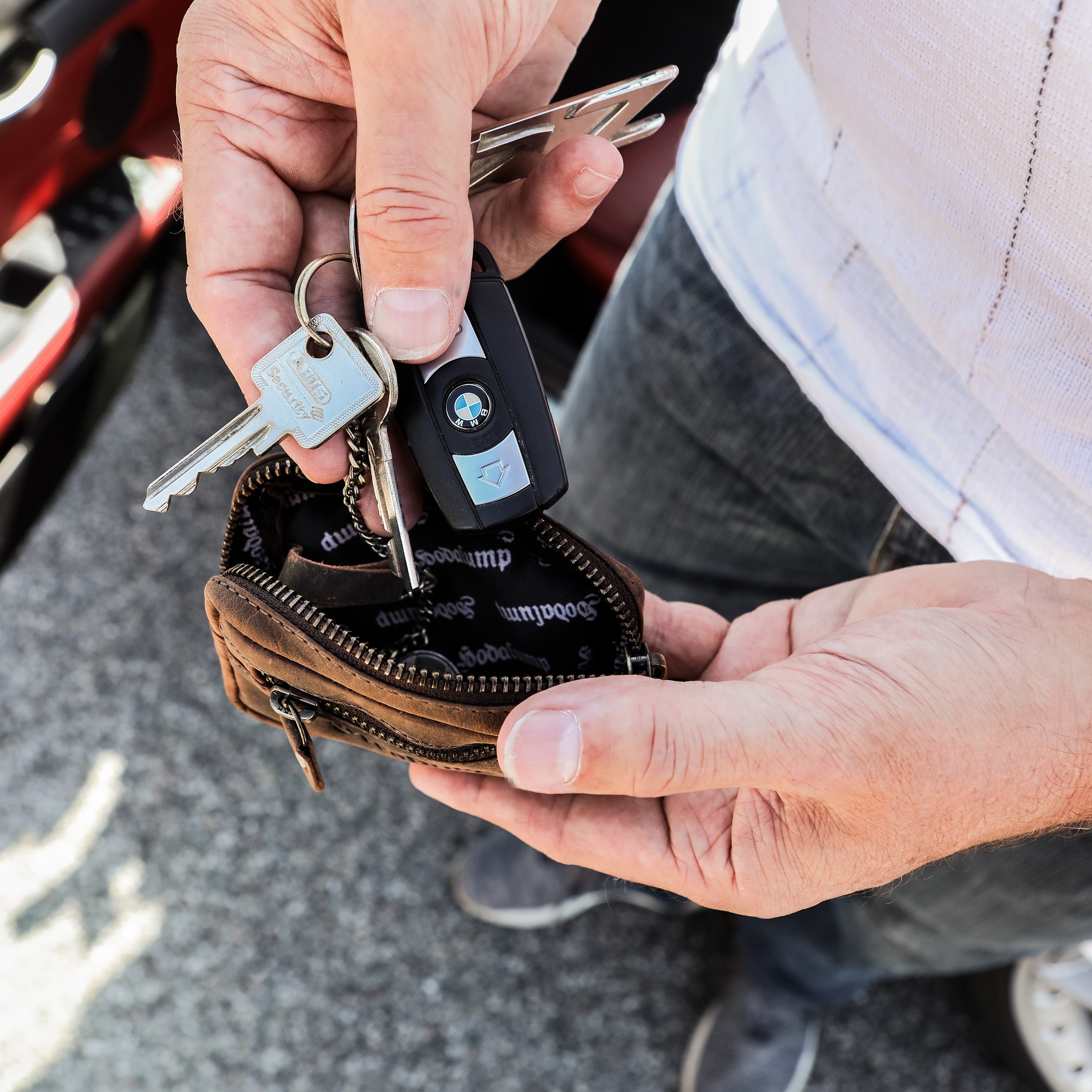
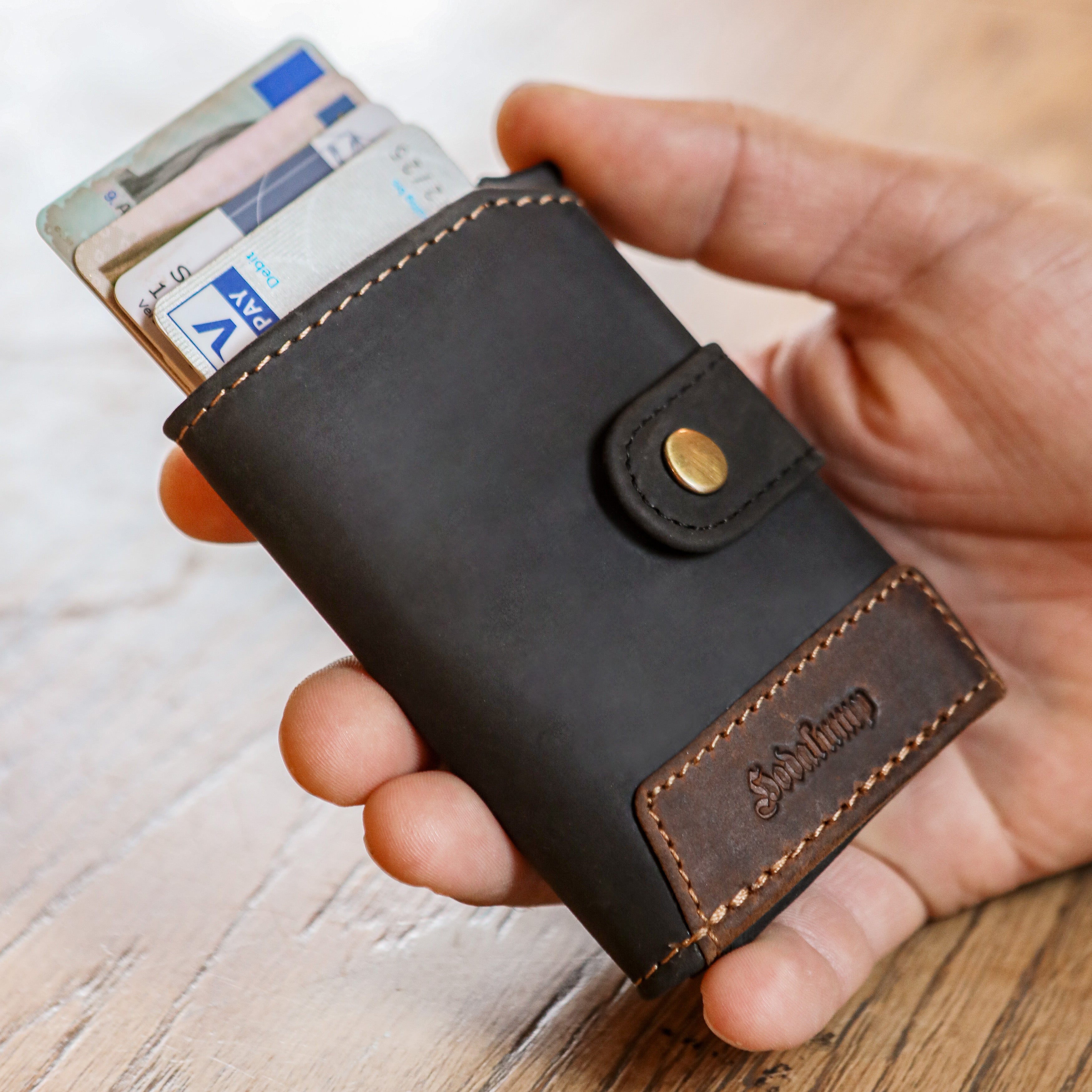

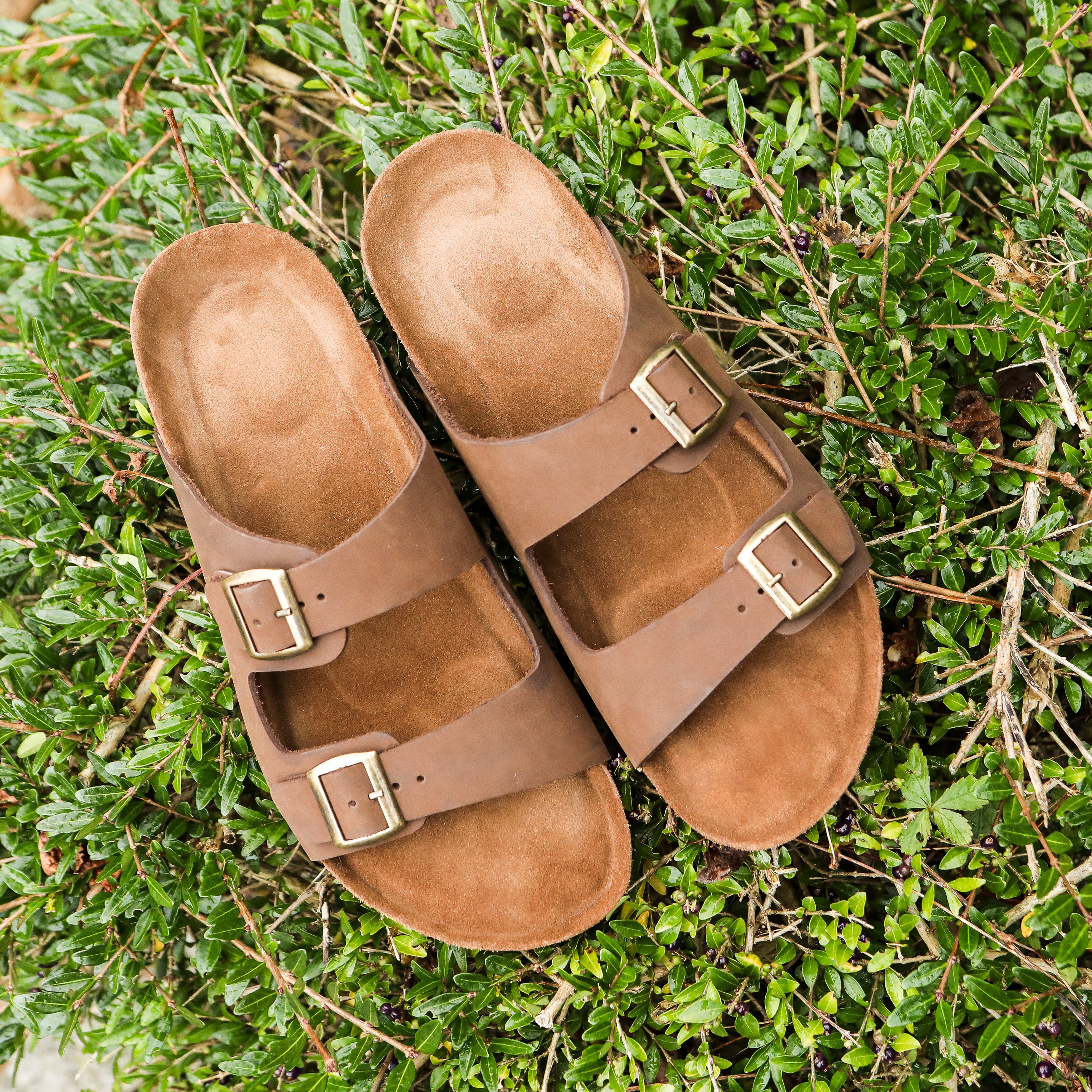

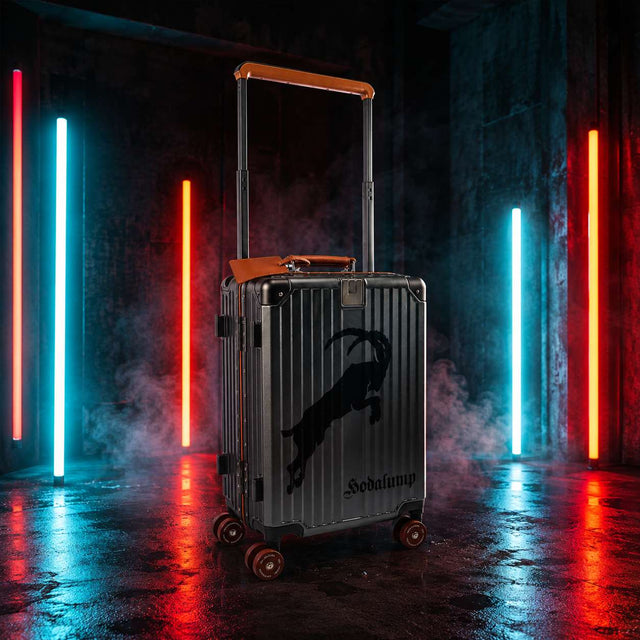





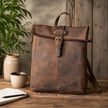

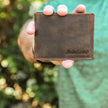
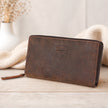
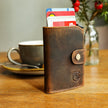






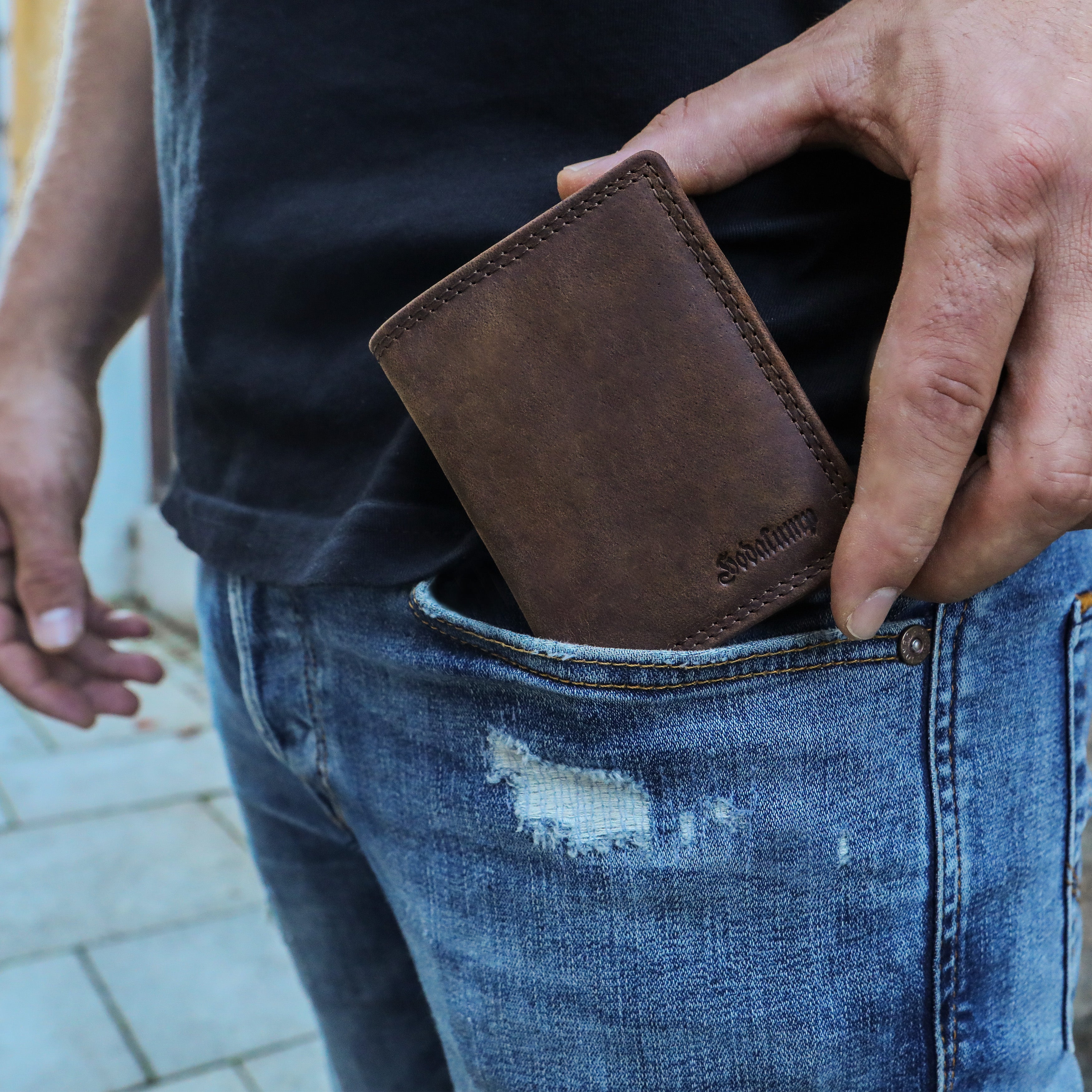


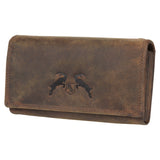
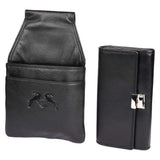
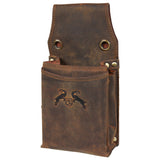
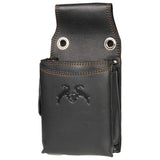
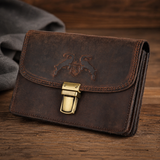
Kellnerbörse, Bedienungsgeldbeutel, Kellnerportemonnaie, Kellnergeldbeutel, Gastro-Geldbeutel. Five German words for one object: the waiter's wallet.
That is the answer, and it is not meant to dodge the question. There is no design that is only ever called a Kellnerbörse and none that is only ever called a Bedienungsgeldbeutel. Which word somebody uses depends on the business they learned it in, not on the thing itself.
It gets interesting one step further on. Because there certainly are differences — they just don't run along the words, they run along the design. And knowing the three designs is what actually helps you when you buy.
Why there are five words for the same thing
The words come from different corners, and that explains why they persist so stubbornly.
Bedienungsgeldbeutel is the word from the trade floor. The Bedienung is the person working front of house, the Geldbeutel is the wallet they carry. Anyone who trained in a Bavarian pub says it that way, and a manager ordering replacements for the team types it in that way too.
Kellnerbörse — literally "waiter's wallet" — is the word from retail. Börse instead of Geldbeutel sounds like a catalogue, like a specialist supplier, like a workwear mail-order company. It is the word you read, not the one you hear.
Kellnerportemonnaie is the same move one notch more formal. It turns up mainly in writing and hardly ever in a kitchen.
Gastro-Geldbeutel is the word used by someone not yet working in the job — by the manager buying for the business, or by someone looking for a present for an apprentice. It describes the industry instead of the person.
The practical consequence for you: if you are researching and one term brings up little, search under another. You are looking for the same product. And if somebody tries to tell you a Bedienungsgeldbeutel is something different from a Kellnerbörse — that is not true.
Where the real difference lies: three designs
This is where things genuinely differ in practice. The complete range is under waiter's bags; the table above shows the five models covered below.
1. The wallet on its own
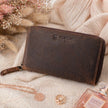
A long, flat wallet with plenty of note compartments and a sturdy coin pocket. It goes in an apron pocket or a trouser pocket. No loop, no strap.
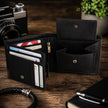
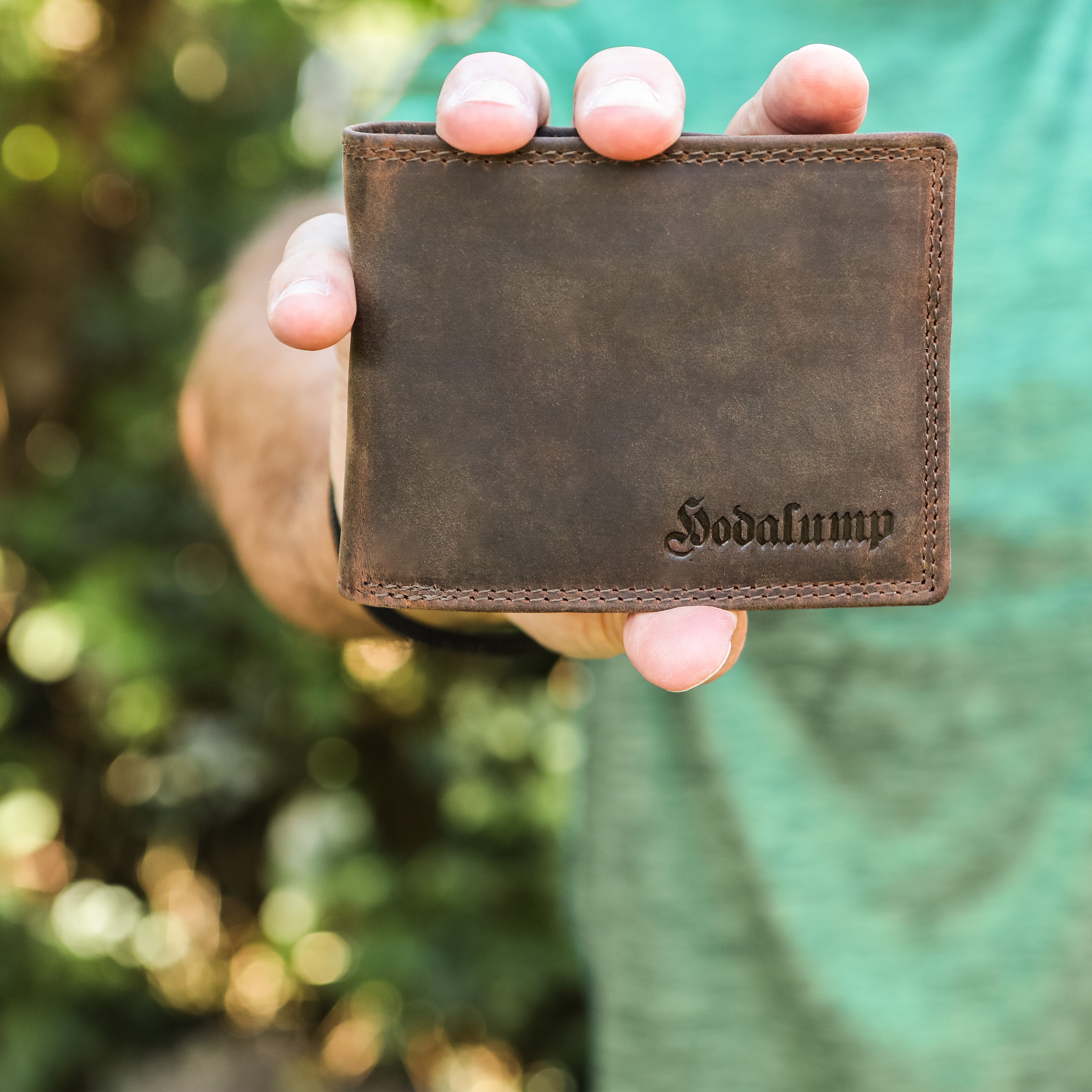
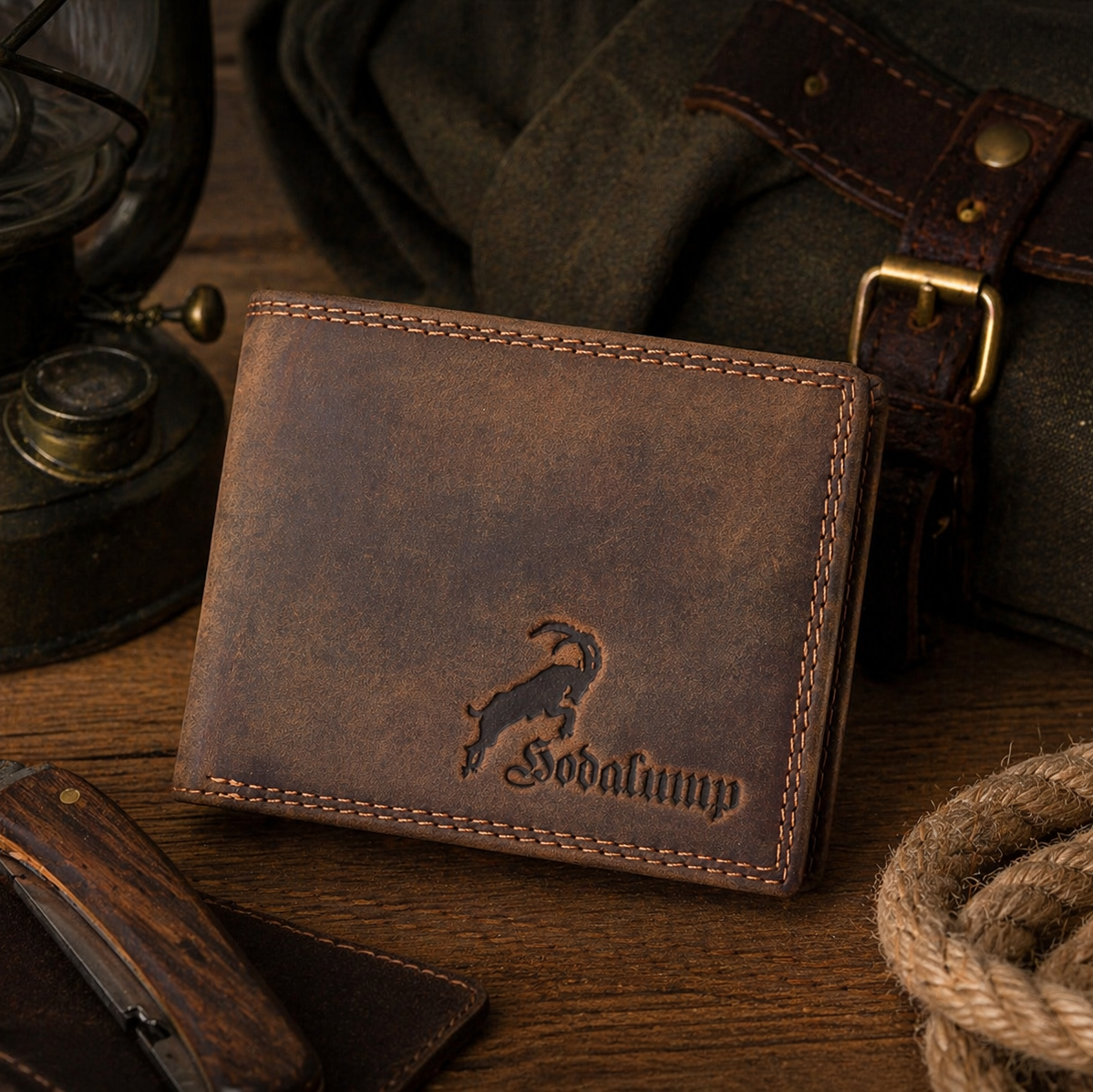
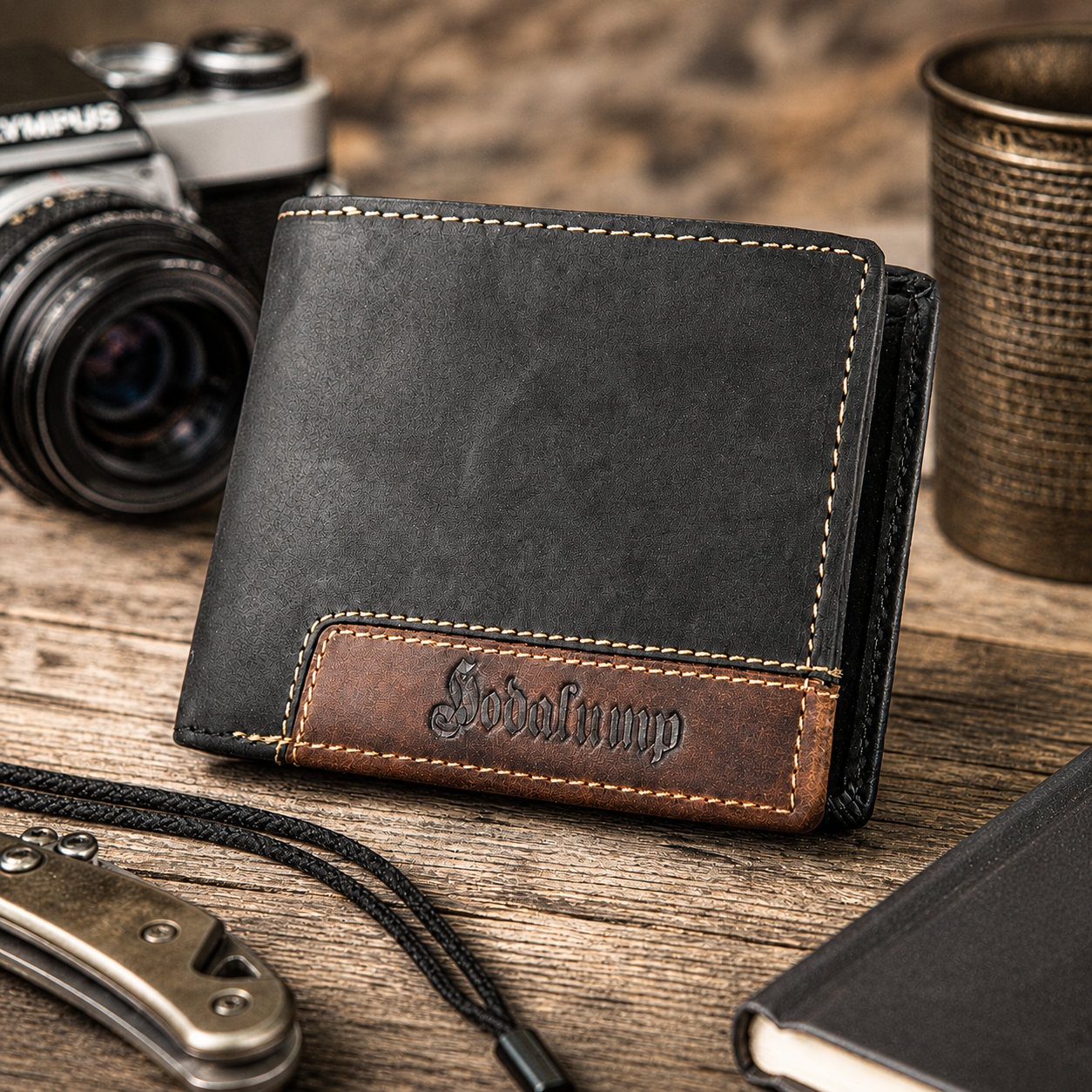
The Kellnerbörse H&R at €69.95 is this type: 18 cm long, 10 cm wide, 4 cm deep, with five note compartments plus two extra compartments in the press-stud flap, and a large coin pocket lined with leather.
Five note compartments is the point that matters. An ordinary men's wallet has one, sometimes two. Anyone working front of house sorts by denomination — otherwise every round of change costs three seconds too many, and three seconds times two hundred tables is an entire evening.
When this design is right: when you wear an apron with deep pockets and a strap on the hip annoys you. Restaurants, table service, quieter shifts.
2. Wallet plus holster
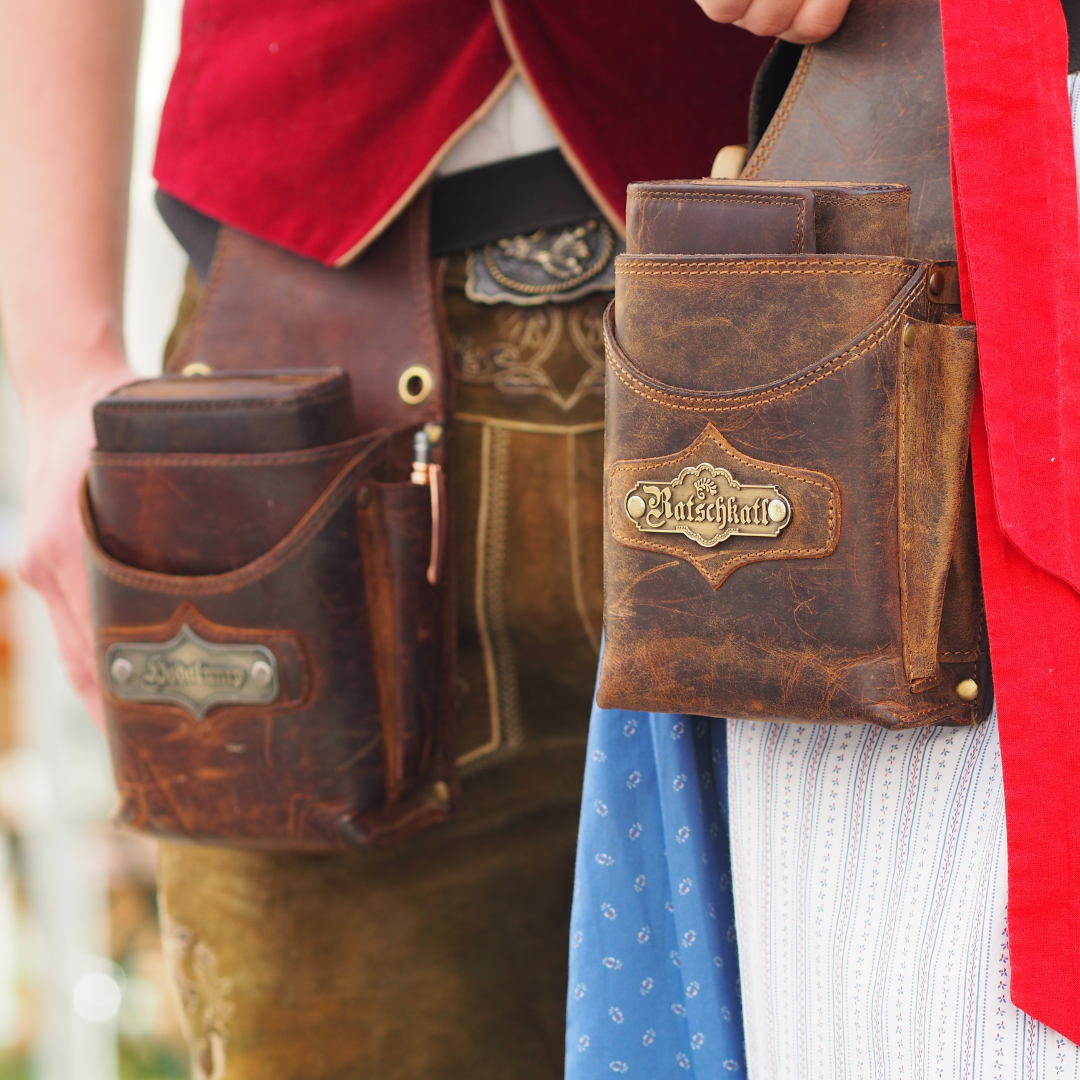
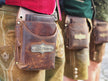
The holster is the leather pouch that slides over the belt and takes the wallet. Together they make a set: the wallet hangs at your hip, you pull it out, take payment, put it back.
The Kellnerset Slim 2.0 from €19.95 and the Kellnerset Slim 1.0 from €22.95 are built this way. The measurements are identical for both: wallet 18 × 10 × 3.5 cm, holster 25 × 16 × approx. 8 cm. Important when ordering — with both of them you choose whether you want the holster or the wallet. So you can buy a replacement part when one of the two is worn out, instead of replacing the whole set.
The difference between 1.0 and 2.0 is stated in the product descriptions and is a question of what goes in: the 1.0 is designed for the waiter's wallet, order pad, pen and bottle opener, the 2.0 for the waiter's wallet, order pad, pen and smartphone. If your phone has to come along on shift, that is the more relevant version.
When this design is right: beer gardens, festival tents, outdoor service, anywhere you are not wearing an apron with usable pockets or you cover a lot of ground.
3. The holster without a wallet
The case most people overlook: you already have a wallet you like and only need the holder. The holsters are available separately for that.
- Kellnerhalfter Hodalump Braun, €59.95, in Hunter leather. Outer 25 × 13 × 7 cm, inner 15 × 13 × 7 cm.
- Kellnerhalfter Hodalump Schwarz, €49.95. Outer 25 × 13 × 9 cm, inner 15 × 11.5 × 9 cm — so 2 cm deeper inside than the brown one, and 1.5 cm narrower.
- Men's waiter's holster, €79.95, with a belt loop and an iron emblem. Outer 26 × 14 × 7 cm, inner 16 × 14 × 7 cm. The women's model has the same measurements and the same price — the difference is the emblem.
Hold those internal measurements against the wallet you already own before you order. A wallet 4 cm thick will not go into a holster 7 cm deep if an order pad and a pen need room alongside it. The shop itself names the Kellnerbörse H&R as the matching wallet in each of the holster descriptions — that is the documented combination.
And the chip pouch? A fourth thing entirely
The chip pouch at €34.95 often turns up in the same searches, but it is not a wallet. It is a leather pouch with a belt loop for tokens, vouchers, small change, receipts and notes — for everything that comes up alongside the money.
At a festival tent or an event running on a token system it is the item that makes the difference. In a restaurant where people pay by card you don't need it. Honestly: if you are unsure, buy it later. It is the only one of the five items you genuinely only need in certain kinds of business.
Related, but a topic of its own: the pouch for a handheld ordering device. If you work with an Orderman or a comparable handheld, you need a dedicated holder for it — that is covered in the article Pouch for Orderman devices.
How to recognise a usable waiter's wallet
Whatever the word and whatever the design, four points decide the matter in daily use:
- The number of note compartments. Below four it gets tight. Five is the usable size.
- The coin pocket. It has to open wide and hold its shape. A floppy coin pocket costs time on every round of change, and time is the whole currency front of house.
- The belt loop. It has to fit over your work belt. Check that before you order — a 4 cm wide belt will not go through every loop.
- The leather. A wallet in service is opened and closed several hundred times a day. The seam at the fold is where cheap models give up after one season.
What is deliberately missing from that list: looks. A waiter's wallet is a tool. It picks up patina, scratches and beer rings, and that is fine — after two years it looks used because it has been used. How to keep the leather supple all the same is covered in the article Applying leather grease.
What else you need
The wallet is one part of the kit, not the whole of it. An order pad, a pen, a bottle opener and, depending on the business, a chip pouch go with it — which of those makes sense in which order, and what a complete set costs, is set out in the article Putting together a waiter's set. The individual pieces are under leather accessories.
And if in the end you just need one word to be understood at work: say Kellnerbörse. Everybody gets that, in any establishment.