








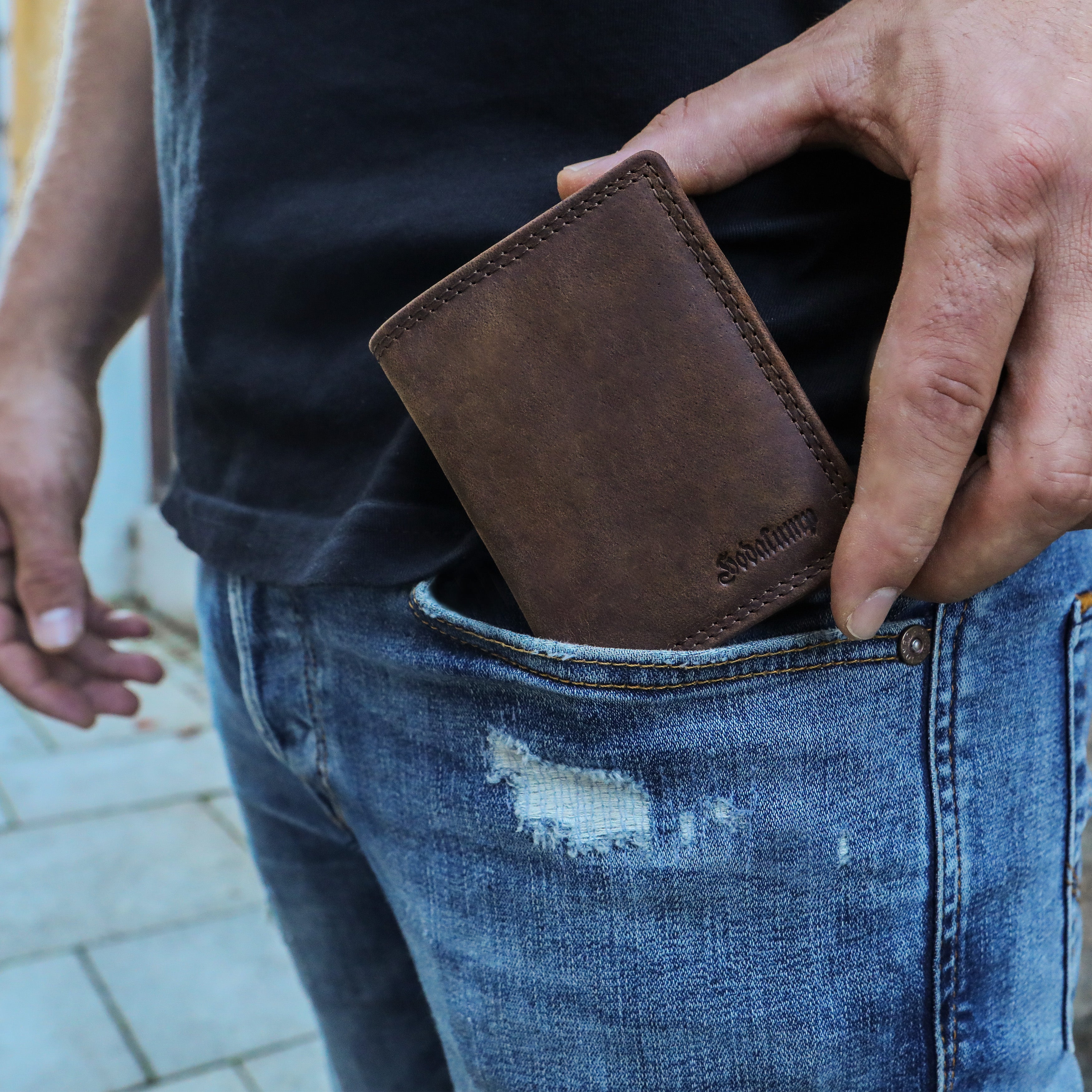


There are two kinds of marks of use. One kind makes a piece of leather more beautiful, the other ruins it. The difference is not a matter of taste but a question of what is happening inside the material — and once you can tell them apart, you also know when to step in and when to keep your hands off.
This is about ageing, not about care. How to clean and grease a wallet is covered in the care guide for leather wallets.
What patina actually is
Patina sounds like an effect somebody applies. In fact it is the result of four fairly mundane processes running at the same time:
- Oils from your hands soak in and darken the leather where you handle it. That is why a wallet first goes dark exactly where your thumb and forefinger open it.
- Light changes the dyes. A piece of leather that often lies in the sun darkens across its whole surface — markedly on some leathers, barely at all on others.
- Abrasion smooths the surface. The topmost fibres lie flat, the light refracts differently, and matt becomes silkily glossy.
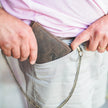
- Compaction through pressure. The edges of a wallet that sits in the same trouser pocket every day do not just go darker, they go firmer too.
All four processes need an open surface. On a heavily pigmented leather none of it happens — there is a closed layer sitting between your hand and the fibre. That is why not every leather ages equally beautifully, and why some wallets look like new after five years, just with flaking at the corners.
Why oiled leathers develop character fastest
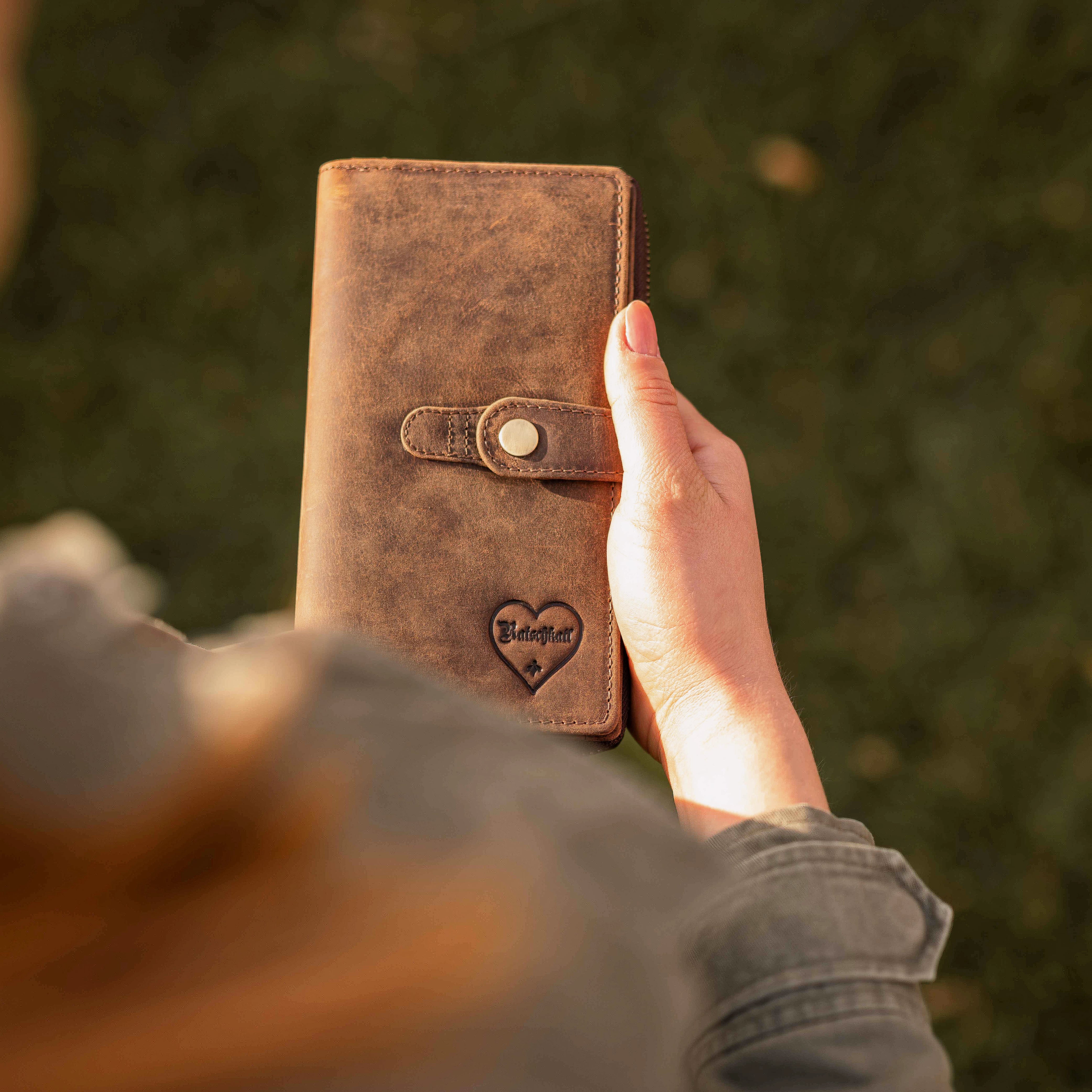
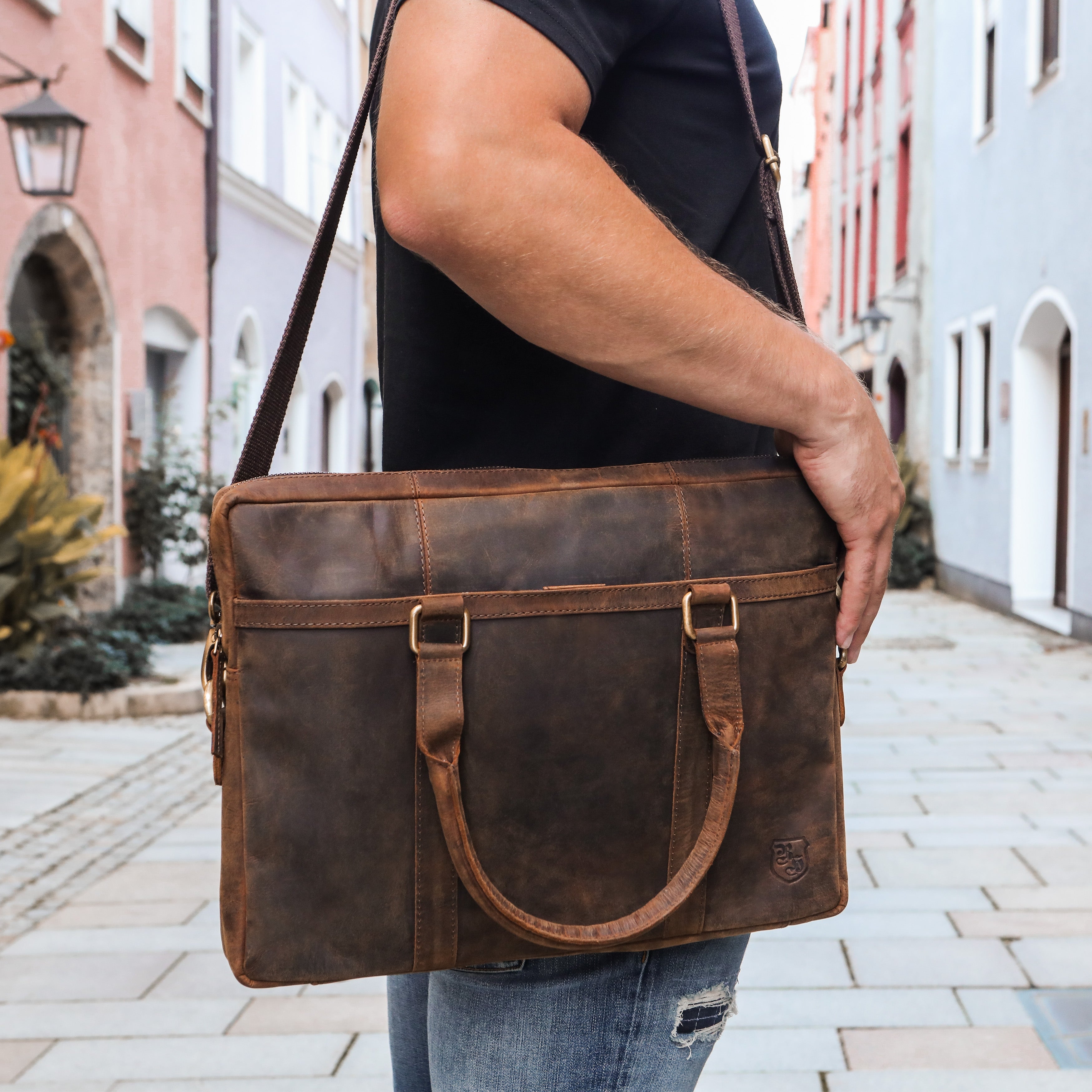
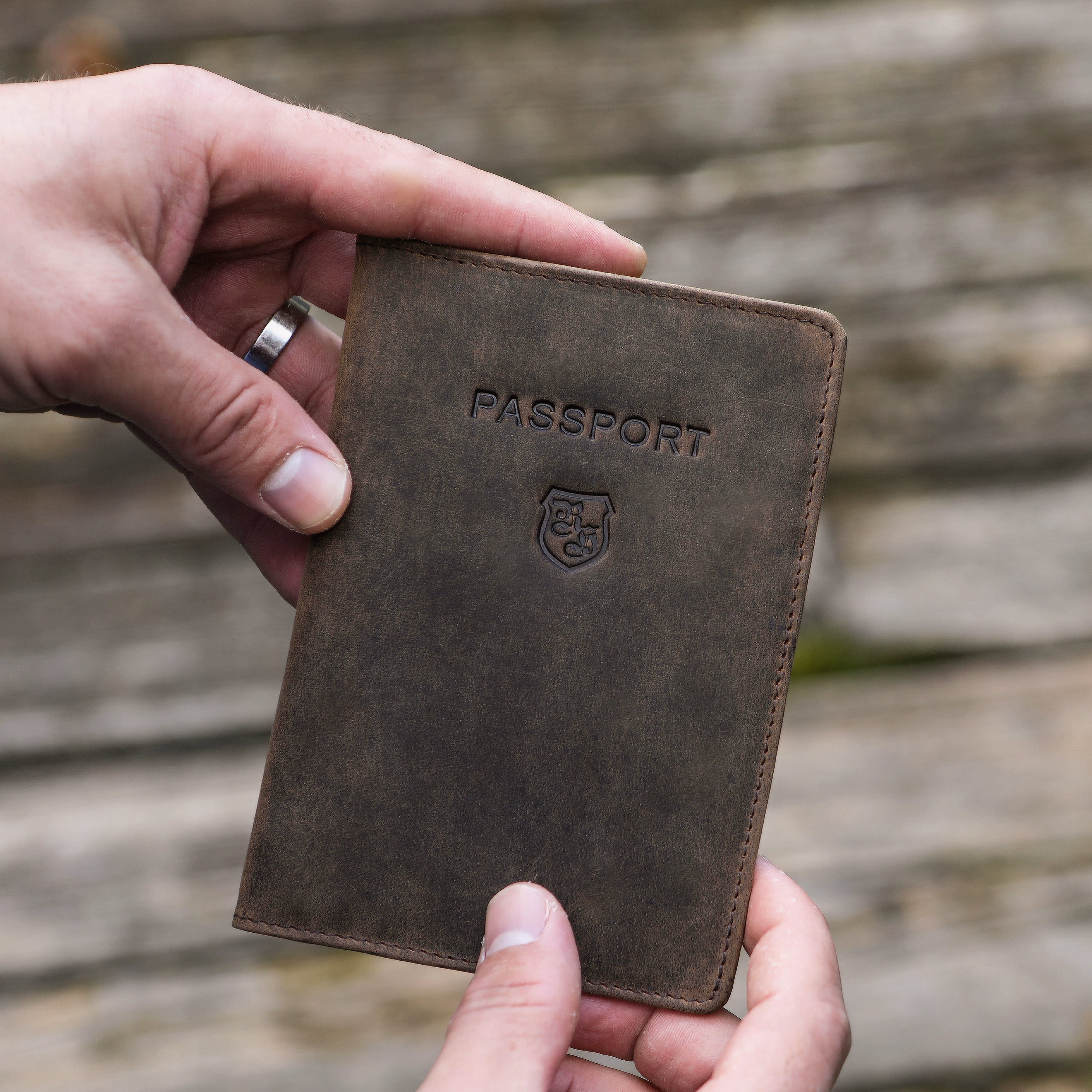
Oiled, open-pored leathers — in this range they go under the name Hunter Vintage — are built for exactly this process. They have no covering layer of pigment; instead they are dyed all the way through and saturated with oils. Everything that comes at them from outside gets through.
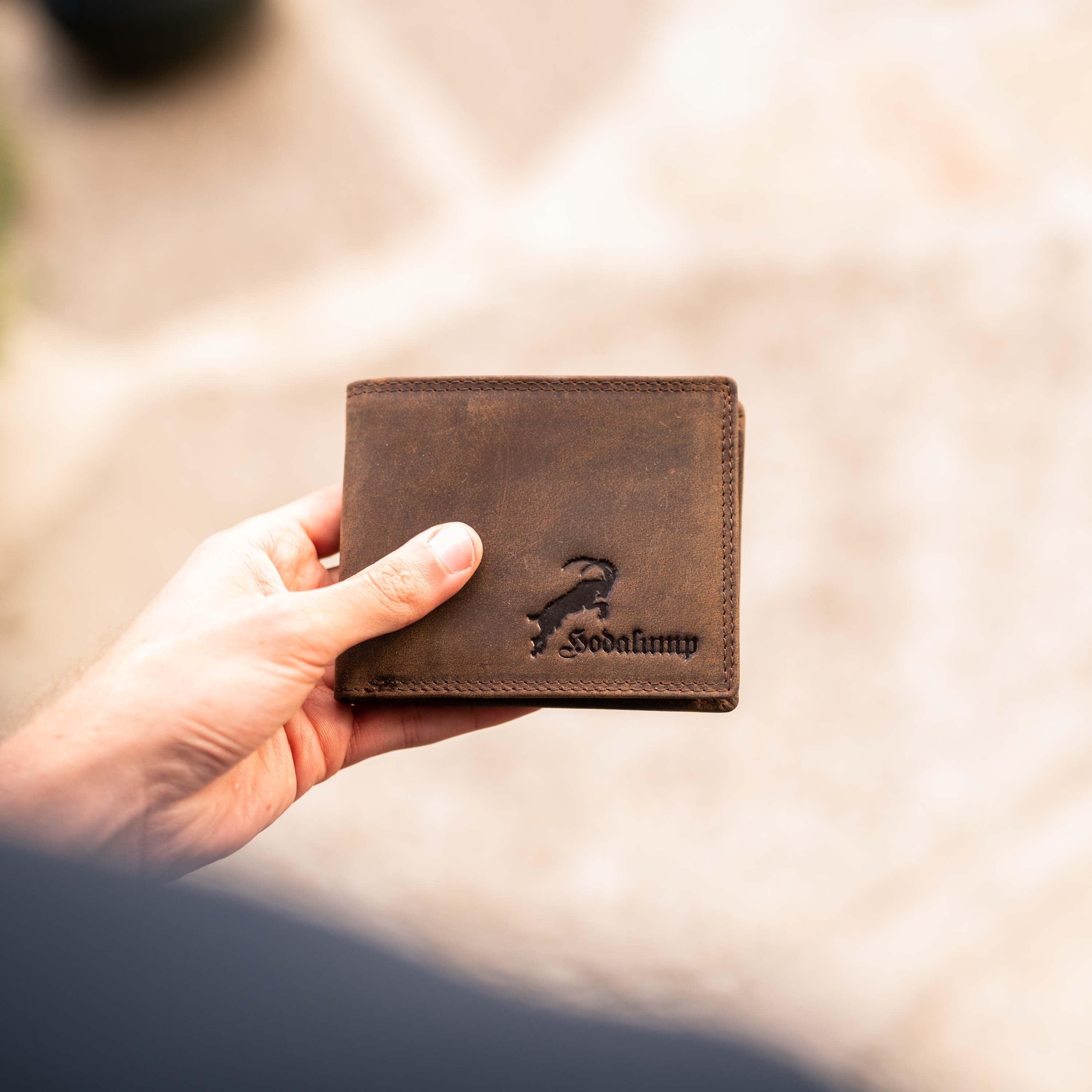
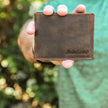
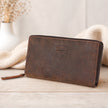
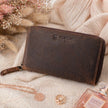
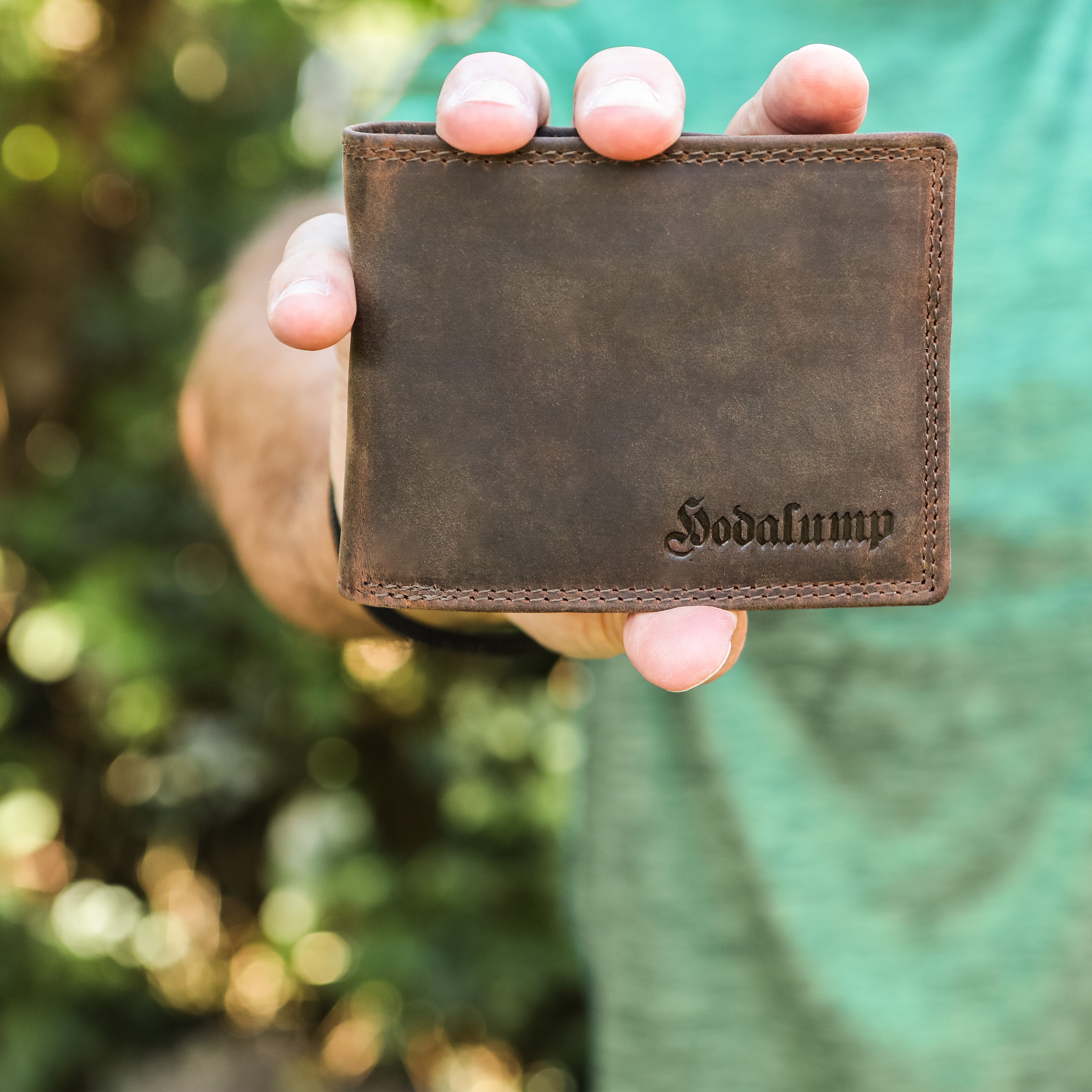
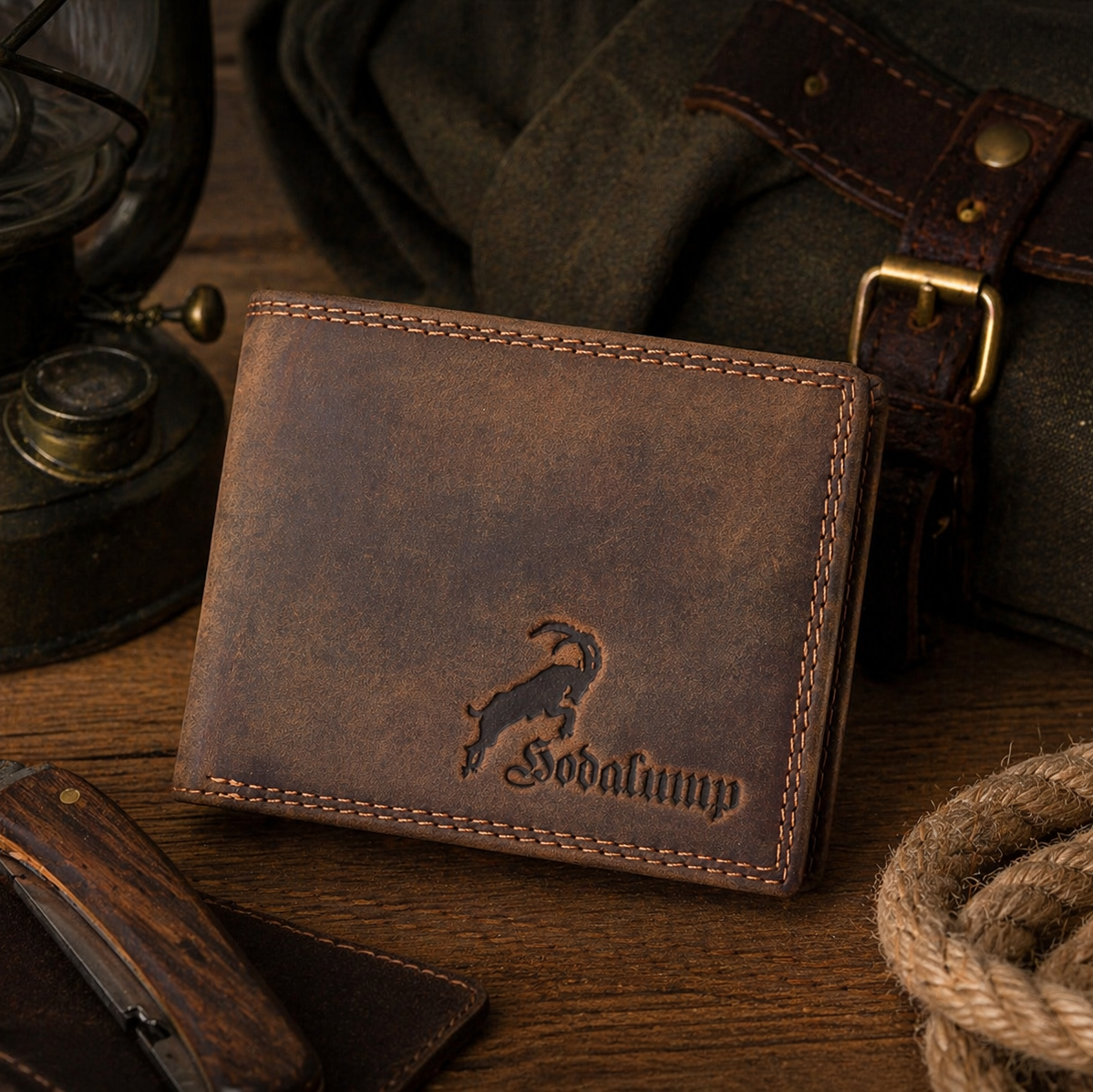
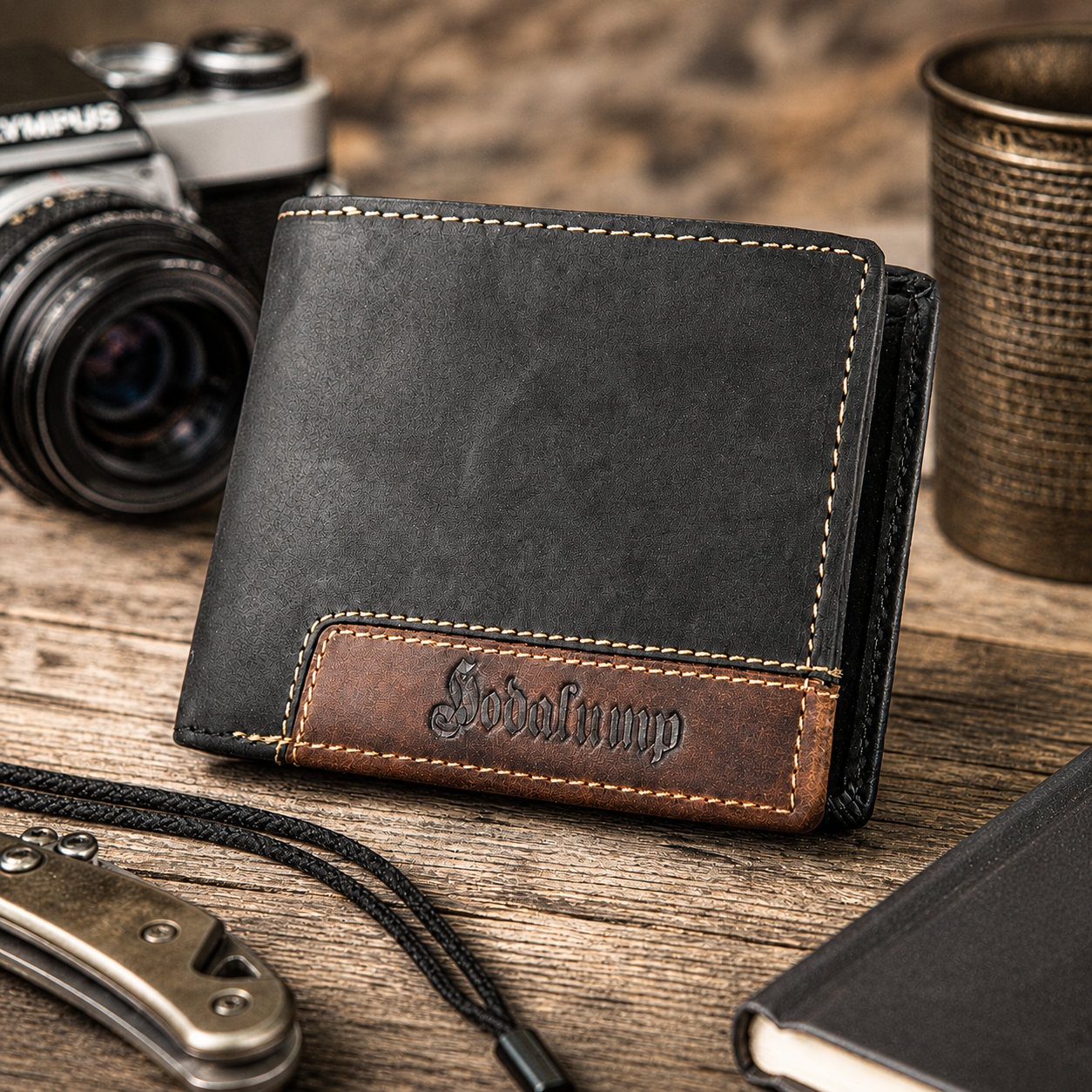
You can see it in the pull-up effect: bend the leather and the oil migrates away from the bend, and the spot visibly lightens. Let go and it flows back. That very effect turns every crease into a visible line — and turns a Hodalump Classic Wallet (€39.95) into a piece that after two years no longer resembles any other.
If you expect that, you will be happy. If you expect a piece of leather to look the way it did on day one, give oiled leathers a wide berth. They start changing on roughly the second day. That is not a weakness, but it has to suit you.
Water stains: why they leave a ring
A drop of water on open-pored leather soaks in and carries oils and soluble dyes outwards with it. As it dries, those substances are left behind at the outer edge of the damp zone — exactly where the evaporation happened last. That is why you do not see a blotch but a ring. In the middle the leather is rather stripped of oil and lighter, around the outside sits a dark line.
It also explains why dabbing at the spot gets you nowhere: all you do is make the ring bigger. What actually helps:
- Dampen the whole surface lightly and evenly — do not wet it, just go over the entire area with a damp cloth. Then there is no longer any edge for anything to settle at.
- Let it dry slowly, at room temperature, lying flat or pushed back into shape. No radiator, no hairdryer, no sunshine. Fast drying pulls the fibres together and leaves the leather hard and brittle.
- Only once it is completely dry, apply a thin coat of leather grease (€8.95). That evens out the places where the oils have been washed out. Details on quantity are in the guide Applying leather grease.
With nubuck and suede this does not work. There the ring sits in the raised nap, and grease mats it down for good. That stain stays.
Scratches: which disappear and which stay
On oiled leathers most scratches are not scratches at all but displaced oil. The fibre is intact, the oil has simply been pushed aside. Put your thumb on it and rub for a few seconds with light pressure — the warmth redistributes the oil and the pale mark is gone. It works astonishingly reliably and doubles as a good test of the material.
Three kinds do stay:
- Cuts where the grain layer has been severed. Material is missing there, and it does not come back.
- Scratches on corrected grain leather. If the surface has been buffed and re-embossed, the embossing at that spot is gone. It cannot be recreated.
- Worn patches at the edges where material has been removed over the years. You can darken those again with grease, but the fibre stays open.
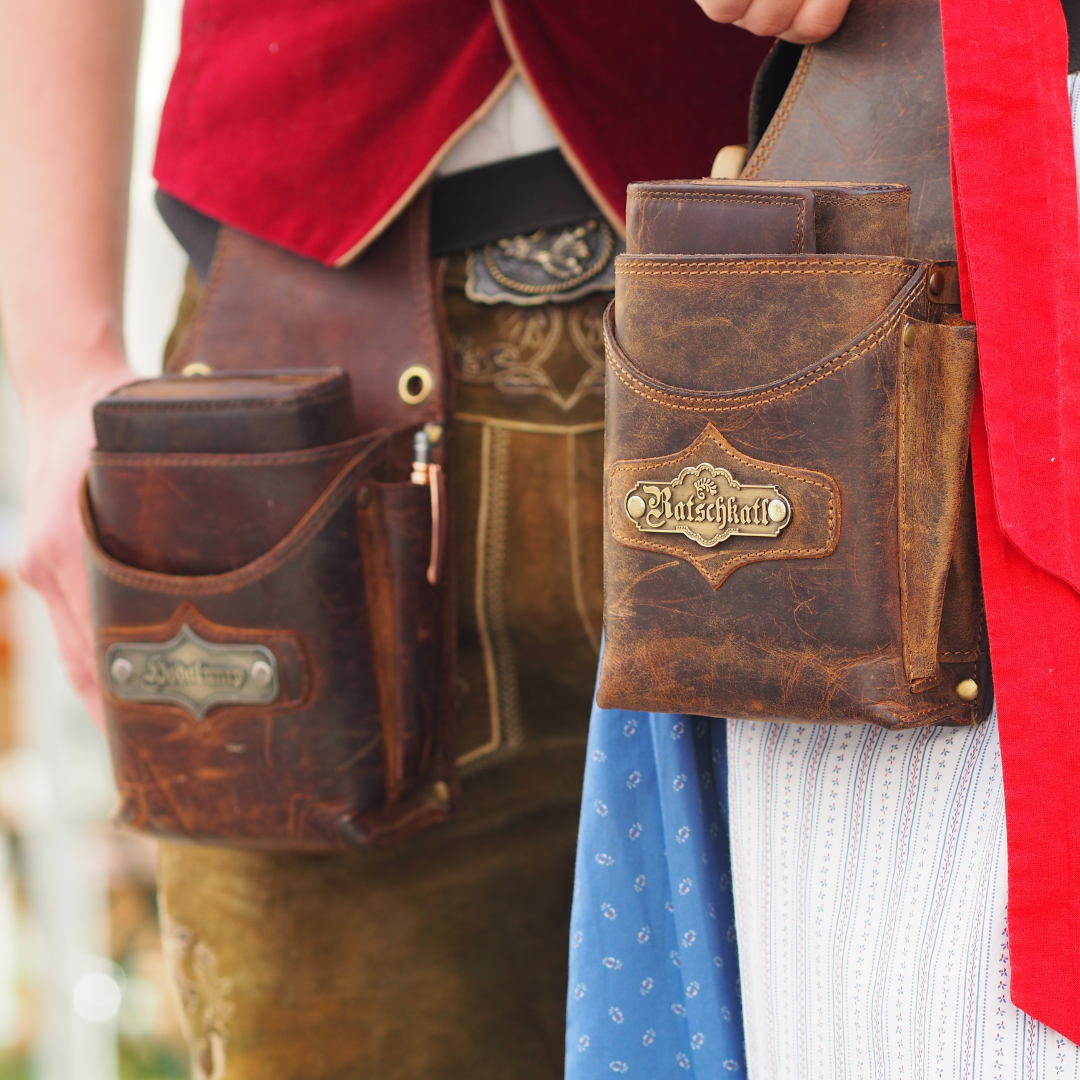
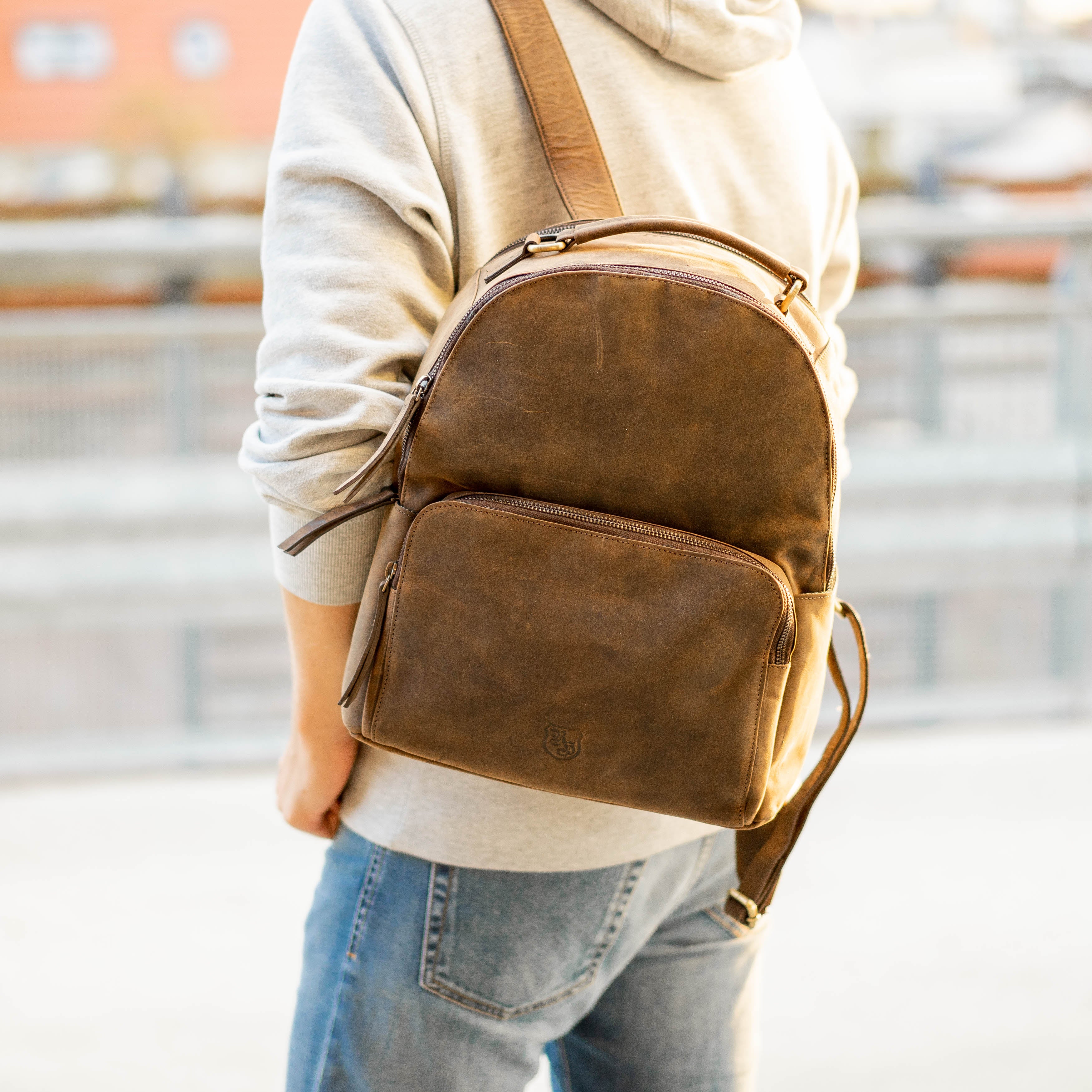
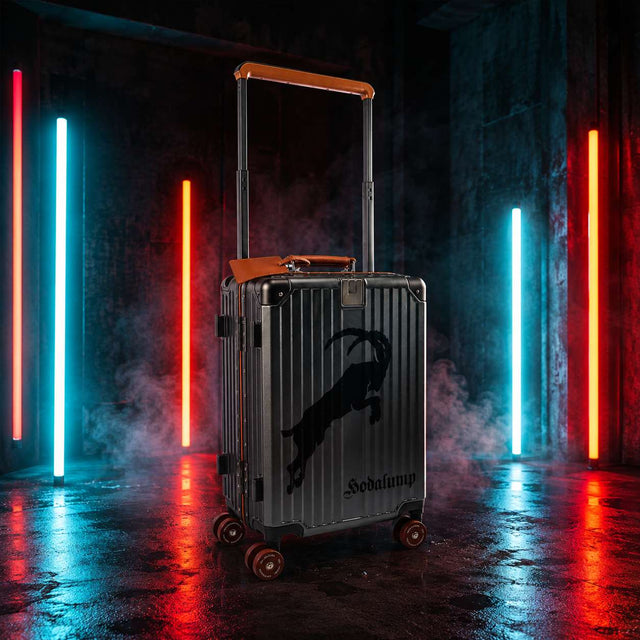
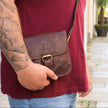
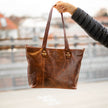
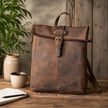
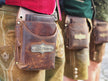
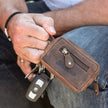
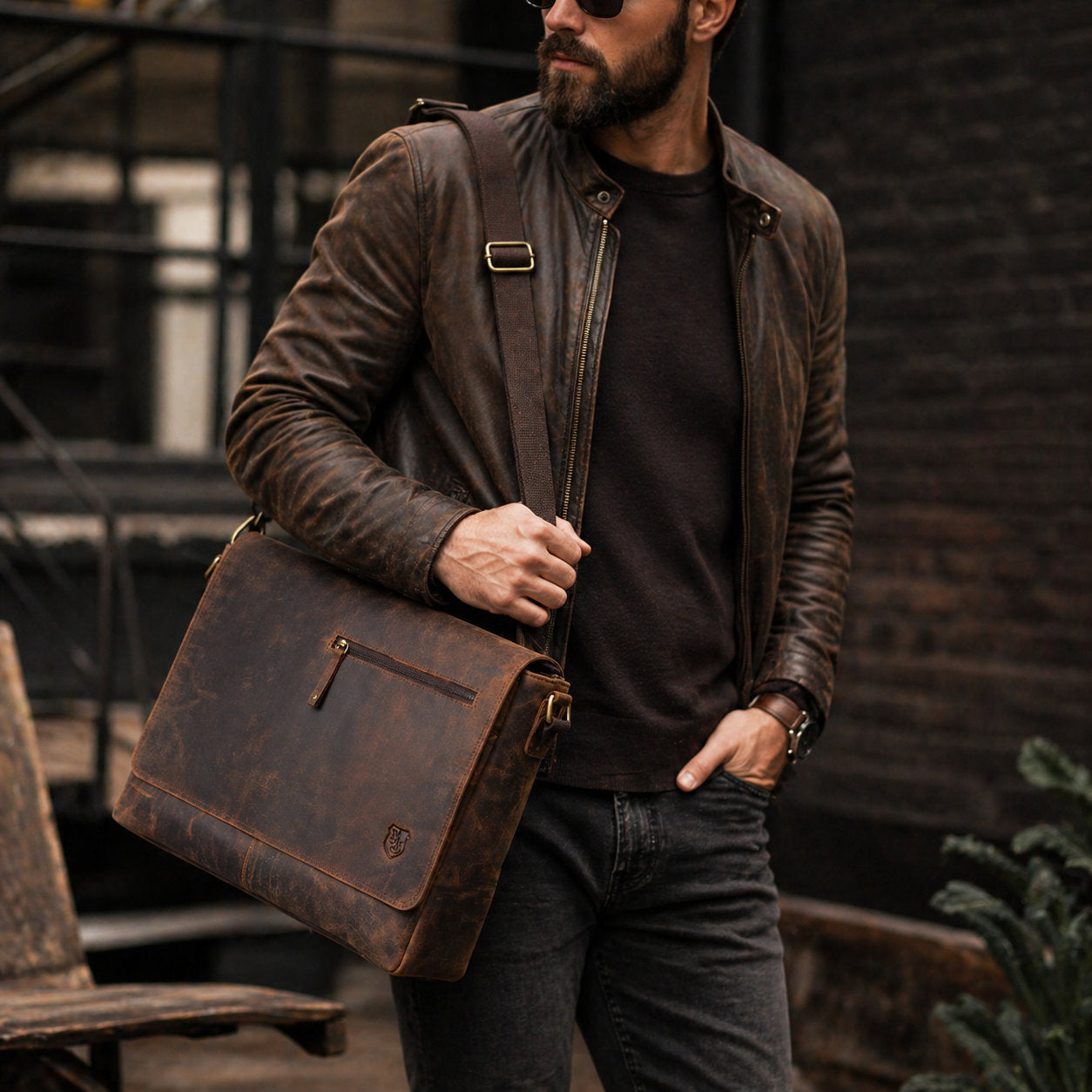
On a coarse grain — for instance on the buffalo leather pieces in the leather bags, from the Large Travel Bag (€249.95) to the tobacco pouch (€29.95) — both show up far less. Not because less is happening, but because the surface is restless anyway.
Darkening: normal, uneven, irreversible
Natural and oiled leathers darken. A light cognac-coloured piece can be almost red-brown after two years. It does not happen evenly: the back of a wallet that always sits in a trouser pocket stays lighter than the front. On a bag, the side facing the sun goes darker than the side that hangs against your body.
There is no reversing it. Speeding it up, yes — if you want a more even colour, turn the piece round from time to time instead of always carrying it or putting it down the same way up.
Where patina ends and damage begins
These four things are not patina, they are warning signals:
- Fine pale lines running across the direction of the bend that cannot be rubbed away. That is the beginning of fibre breakage from dryness. From that point on, all you can do is avoid further damage.
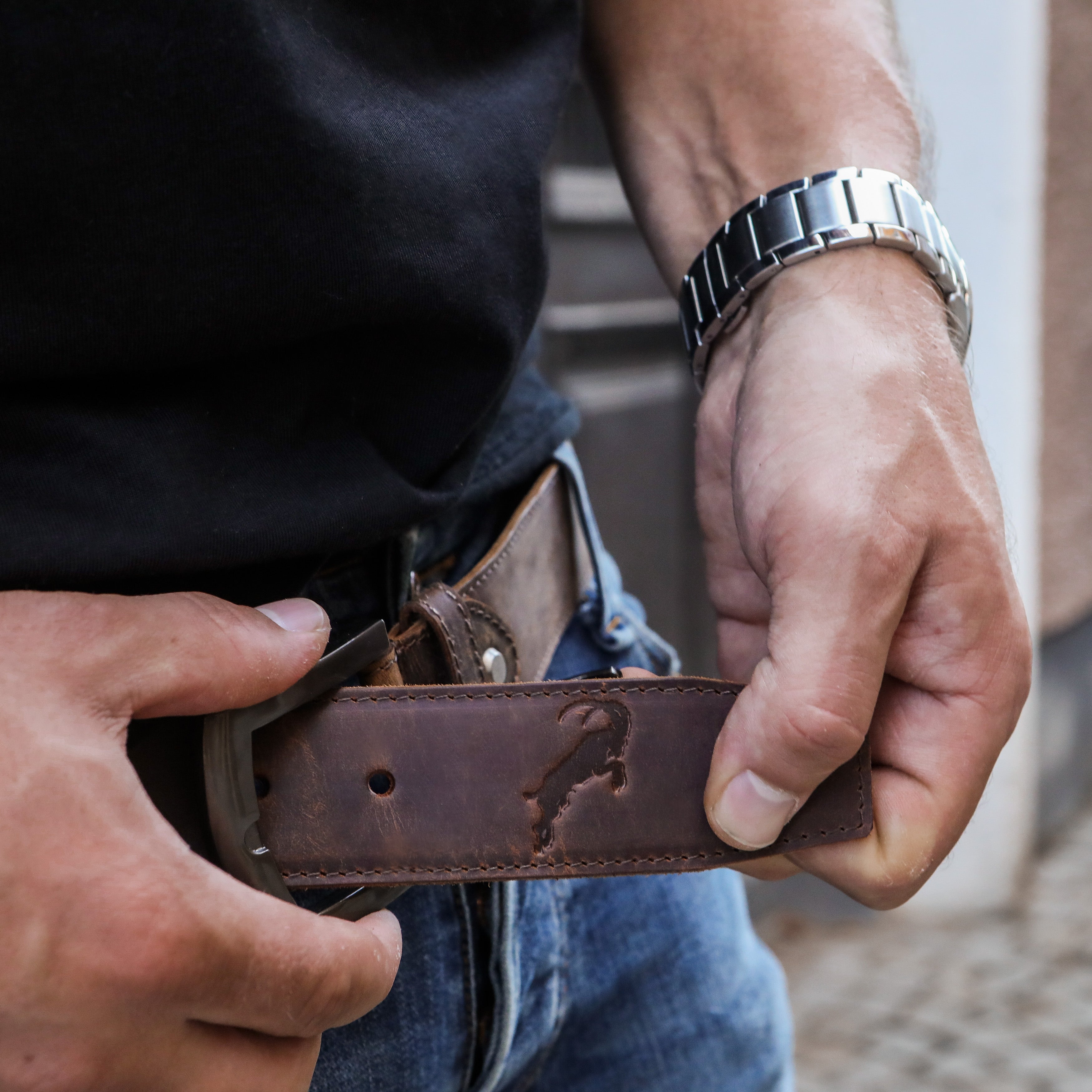
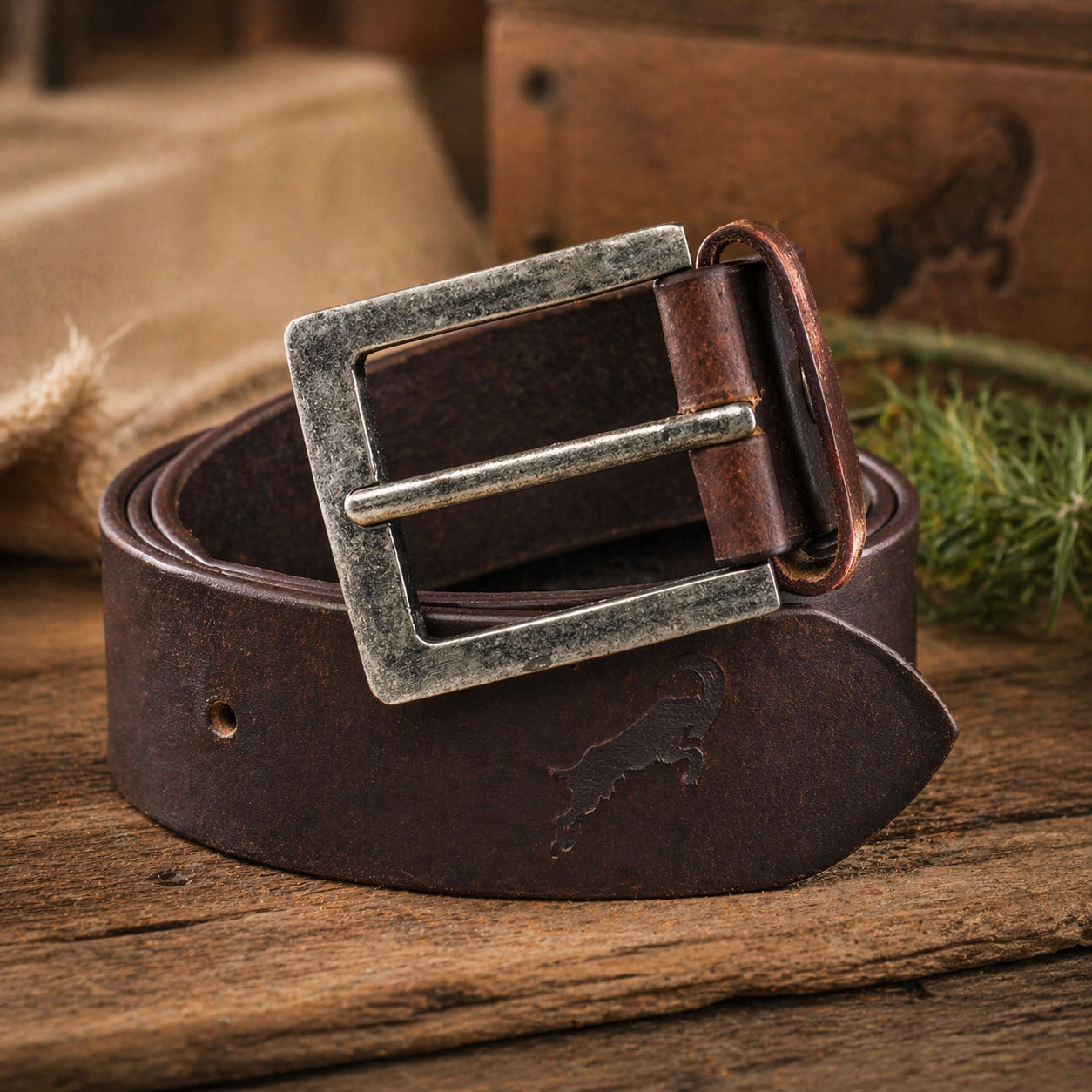
- Cracks at fold points — on wallets at the spine, on belts along the row of holes. See the leather belts on that: there the row of holes is the classic weak point.
- Greenish or white patches with texture after damp storage. That is mould, not patina. Brush it off dry, then let the piece dry right through and never put it away damp again.
- Stiff, board-hard areas after a soaking. Usually dried too fast. Grease will bring some of that back, but never all of it.
A whitish, dusty film on oiled leathers, by contrast, is usually harmless: oils that have migrated out and crystallised on the surface. Rub it off with a dry cloth and it is gone.
What you can control — and what you cannot
You can control three things: that the leather does not stay permanently dry, that it dries slowly after a soaking, and that it does not always lie in the same position. That is all. What the patina looks like in the end depends on your hands, your trouser pocket and your daily life — which is exactly why it is different on every piece.
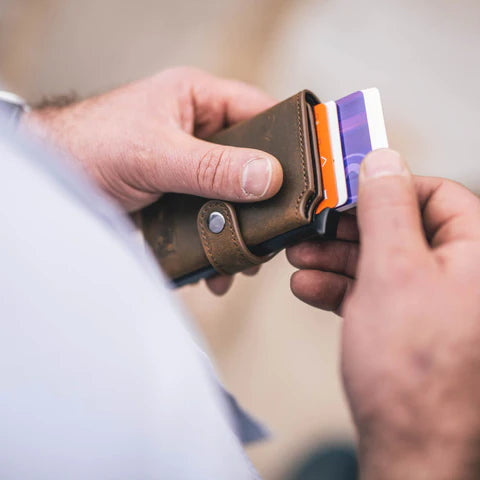
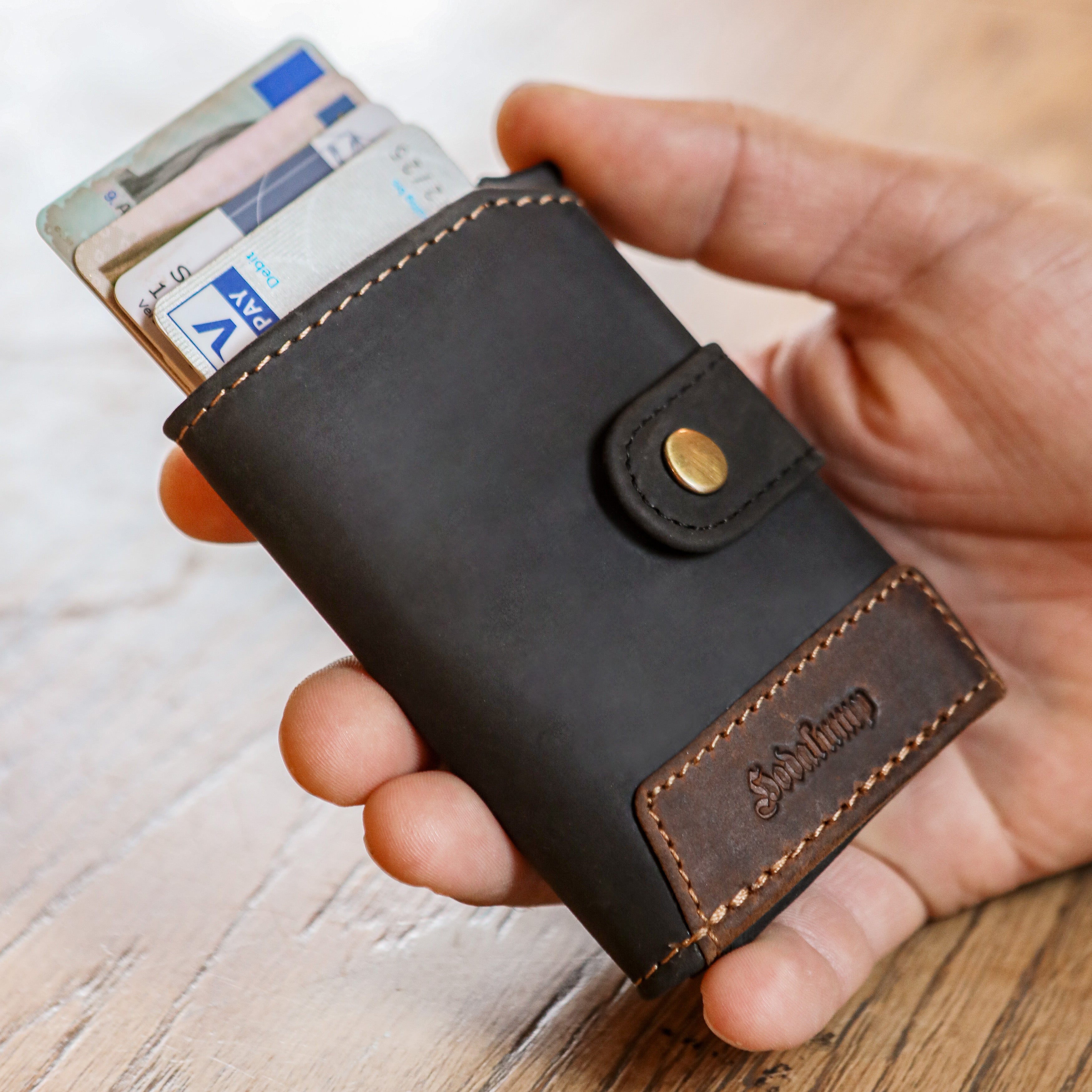
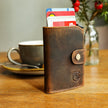
If you are deliberately after something that develops character quickly: the oiled models in the men's wallets and the slim Wallet Benny (€29.95) start almost immediately. If you prefer things to stay even for longer, you are better served by the smoother leathers in the wallets.
How long it takes
There are no fixed numbers for this, because too much depends on the owner. But the sequence is pretty reliable on pieces of open-pored leather used every day:
- After a few weeks the first crease lines show up, where you hold the piece and open it. The rest still looks like new, and it is precisely that contrast that is most unsettling at the start.
- After about six months the handling spots are visibly darker and slightly glossy, the edges have rounded off, and the shape has adapted to your trouser pocket.
- After one to two years the colour is deeper overall and the difference between the handling spots and the rest starts to shrink again — the piece looks more uniform than it did after six months.
- After that very little more happens visually. From here on, care decides whether it stays that way or whether dryness starts to do its work.
On bags the same sequence runs more slowly, because they are handled less — but the differences are bigger in the end: straps and handles develop far more patina than the flat panels.