






A Haferlschuh — the traditional Bavarian shoe with side lacing — is a closed leather shoe whose lacing does not sit in the middle but at the side. That is not a detail, it is the entire defining feature. Everything else — profile sole, sturdy leather, low shaft — it shares with other shoes.
And because that one thing is so hard to describe, most articles about Haferlschuhe drift into folklore fairly quickly. What follows instead is what the cut actually does for you, when the shoe works, when it doesn't, and how to land on the right size.
What defines a Haferlschuh
The side lacing is the starting point. On an ordinary lace-up shoe the eyelets meet over the instep and the leather is pulled towards the middle from both sides. On a Haferl the lace holes sit on the outer and inner side of the shoe, and the upper stays unbroken across the instep.
Two things follow from that. First: there is a closed panel of leather over the instep instead of a seam with a gap. The shoe holds the foot better there and lets less water through. Second: the shoe opens up wider than a centre-laced one. If you have a high instep, or your feet swell over the course of the day, you will notice that straight away.
The Bayern Haferlschuh at €79.95 is made from cowhide, solidly stitched, and has a grippy profile sole. It rates 4.45 from 20 reviews — solid rather than flawless, which fits a shoe that needs breaking in.
What a Haferl is not: a hiking boot. The shaft ends below the ankle, there is no ankle support and no Vibram construction. It will do for a farm track and a mountain hut, but not for a via ferrata.
Wearing Haferlschuhe today — without looking like you're in costume
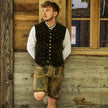
This is the question people ask most often, and the answer is unspectacular: the shoe is far less conspicuous than its reputation suggests. As long as you don't pair it with traditional Bavarian dress, nobody reads it as a traditional shoe at all.
What works:
- With dark jeans. The simplest combination there is. A brown leather shoe with a profile sole worn with straight dark jeans is a perfectly ordinary autumn shoe. Let the hem sit just on the shoe, not stacked up above it.
- With chinos. Beige, olive, navy. Here the shoe carries the outfit, because it is the only strong element in it.
- With corduroy trousers in winter. Coarse fabric with a chunky shoe — those belong together.
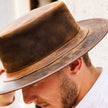
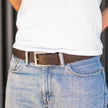
What creates the costume effect is never the shoe on its own, it is the sum of the parts: Haferl plus checked shirt plus hat plus embossed belt. Take two of those away and what is left is a man in a good leather shoe.
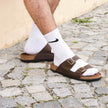
One more point about socks, because it often goes wrong: with long trousers you want dark, smooth socks in the colour of the trousers. Not white, not ribbed, no sports socks. That is the difference between a shoe and a fancy-dress outfit, and it costs nothing.
What else you wear them for
The Haferl started life as a work shoe, and it shows. Profile sole, firm upper leather, no delicate seams. That gives you the situations in which it genuinely is the better shoe:
- Beer festivals and beer tents. Twelve hours standing on a floor that is wet sooner or later. A profile sole grips where a smooth leather sole slides.
- Walks and farm tracks. Not a hiking boot, but a lot more shoe than a trainer.
- Autumn and winter in town. Closed leather, no mesh, no perforations.
- Barbecues, yard parties, Kirchweih — the village church fair. Anything where it gets muddy in between and you don't want the shoe to show it.
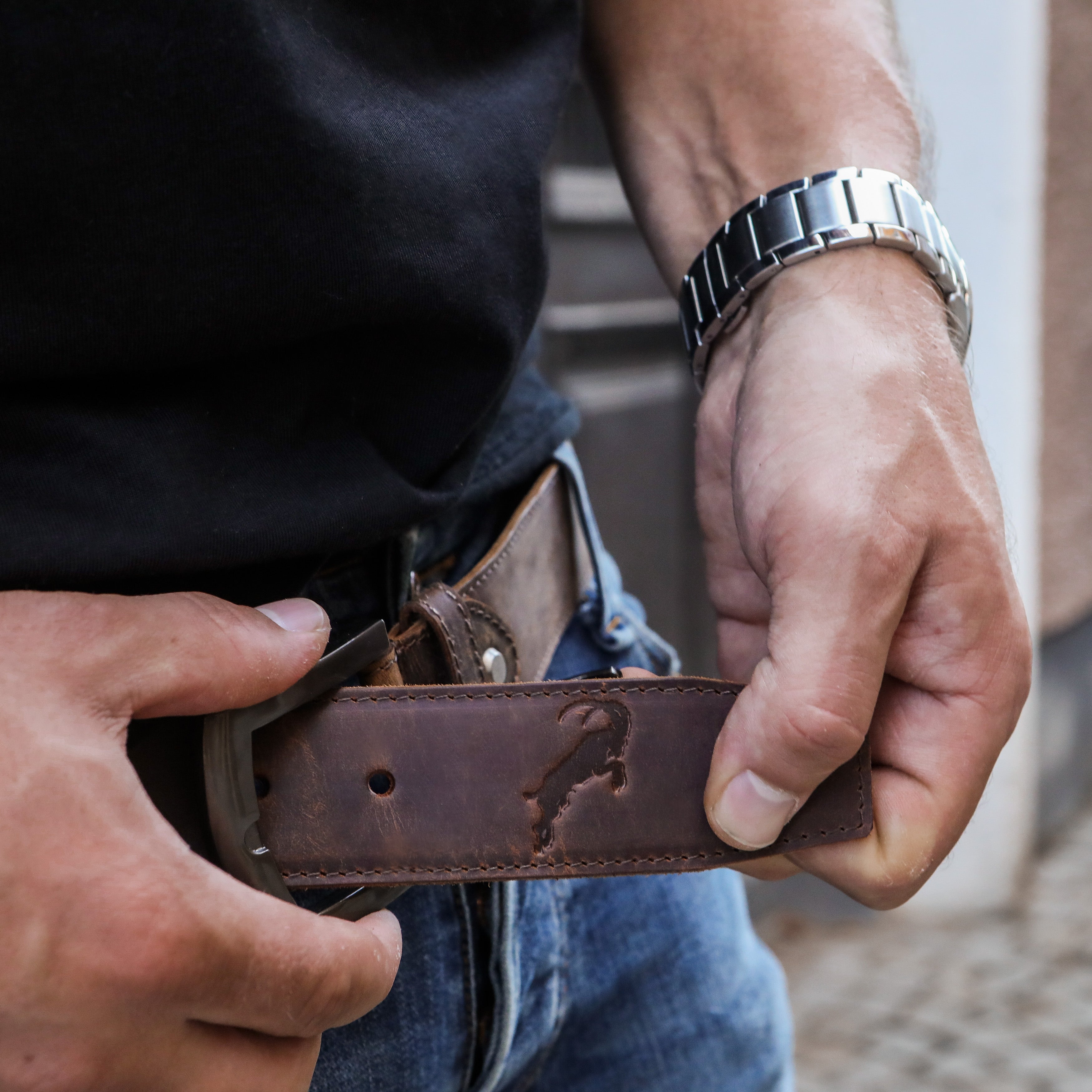
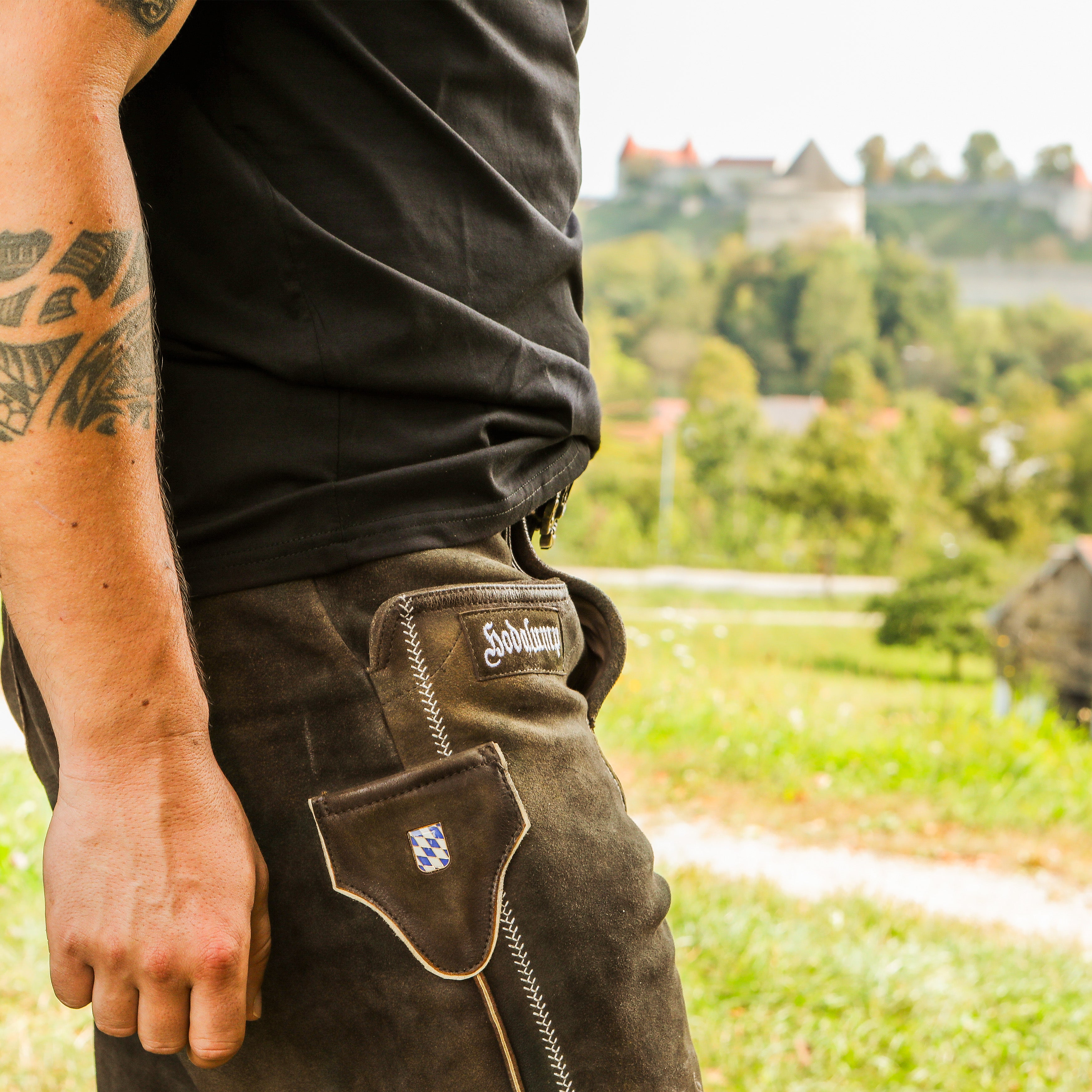
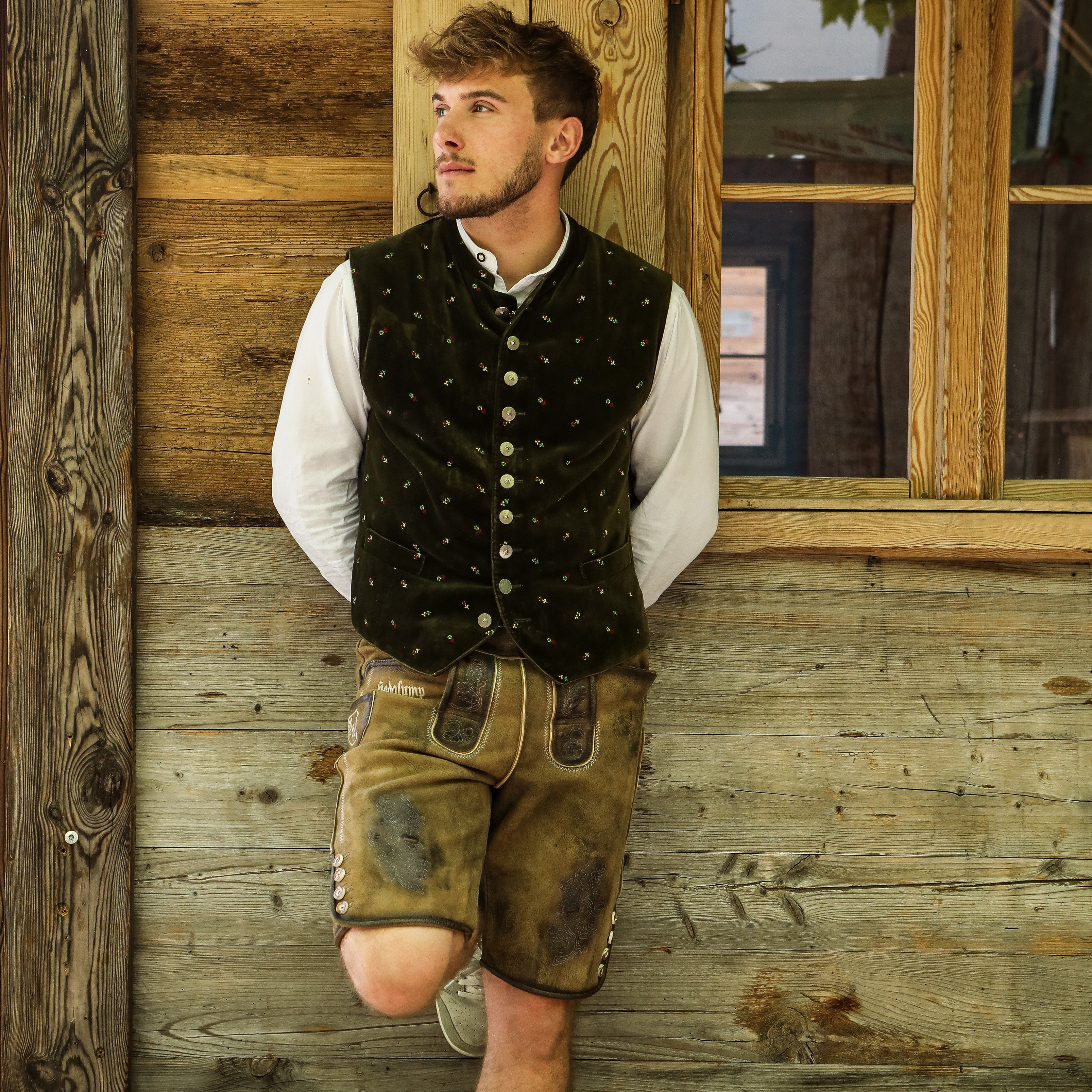
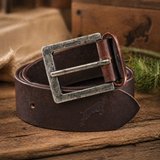
And with lederhosen, of course. If you are reaching for lederhosen anyway, the Haferl is the one shoe nobody will question. The Hodalump Lederhose at €149.95 already comes with a belt; further models are listed under leather belts, among them the brown belt at €29.95, 4 cm wide, in waist sizes 85 to 115 cm.
Haferl or a standard leather lace-up — which one when
Both are closed leather shoes, and in plenty of situations it makes no difference which you pick. There are three cases, though, in which the difference counts.
A high instep. If lace-ups press down on the top of your foot, the Haferl is the better choice. Because the lacing sits at the side, the tension is spread differently and the shoe opens up wider. That is why some people never want another kind of shoe after their first Haferl.
Wet or uneven ground. Profile sole against smooth leather sole — no contest there. Beer tent, gravel path, damp meadow: Haferl.
A suit. Here the Haferl loses. A dark suit calls for a smooth, slim shoe; a chunky shoe with a profile sole looks too heavy underneath it. If the occasion demands a suit, the Haferl is the wrong shoe, and the finest leather in the world won't change that.
Which size fits
The Bayern Haferlschuh comes in 41 to 46. The sole lengths are given in the product data, and they are a more reliable guide than any size chart:
| Size | Sole length | Sole width |
|---|---|---|
| 41 | 28 cm | 10 cm |
| 42 | 29.5 cm | 10.5 cm |
| 43 | 30 cm | 10.5 cm |
| 44 | 31 cm | 11 cm |
| 45 | 31.5 cm | 11 cm |
| 46 | 32 cm | 11 cm |
These are approximate measurements, and small deviations are normal. If you are unsure, stand on a sheet of paper, draw round your foot and measure from the heel to the longest toe. The sole is always a little longer than the foot — the figures above are the outer dimensions of the sole, not the internal length.
Two honest points to go with that:
The shoe needs breaking in. Firm cowhide is stiff at first and only moulds to the foot after a few days. Take it out of the box on the morning of the Wiesn — the local name for the Oktoberfest — and wear it for twelve hours, and you will have blisters by the evening. Two or three shorter days beforehand solve the problem.
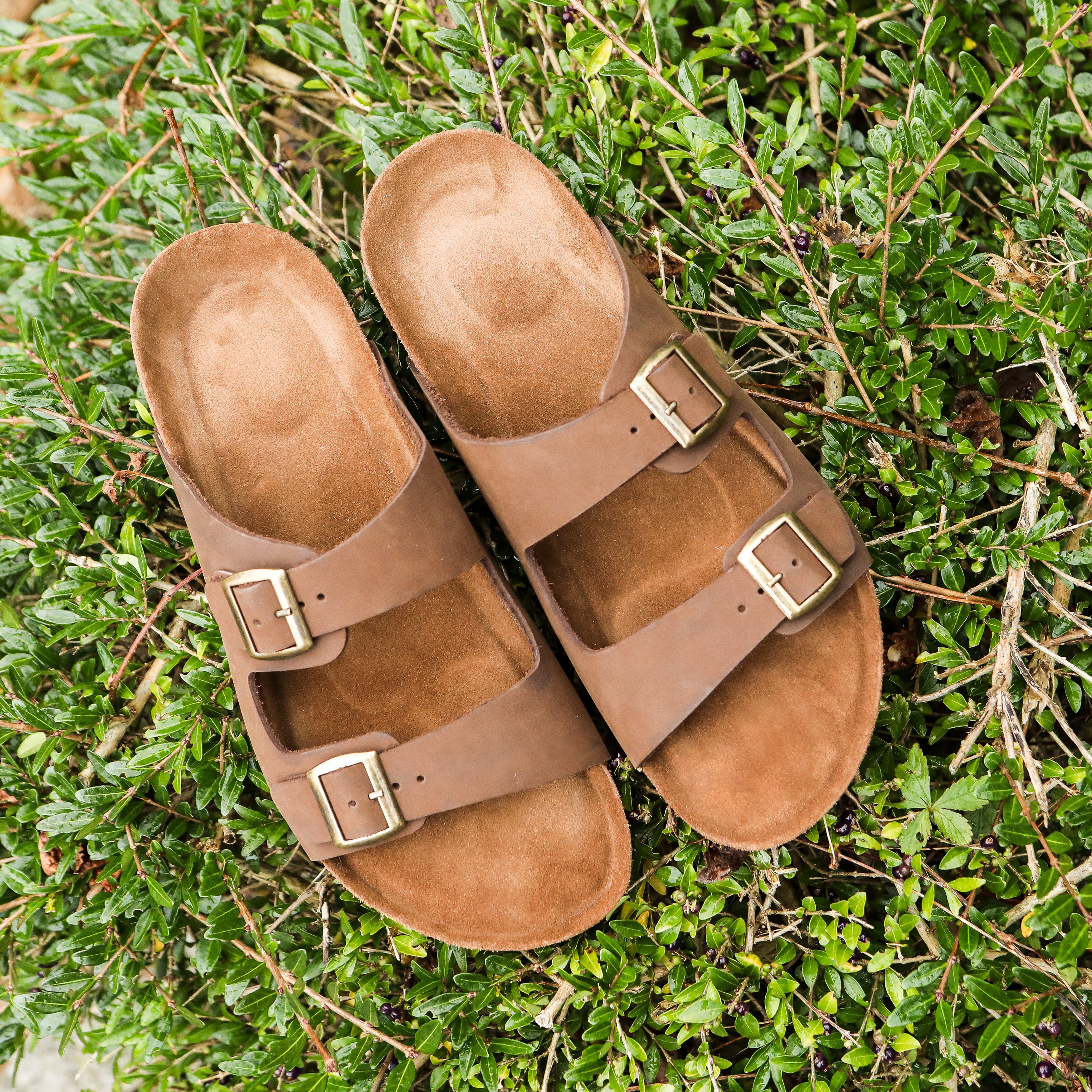
There is no women's version. The range starts at 41. That is too big for most women, and we would rather say so than let an order happen that only comes back. If you are looking for a women's shoe here, you will find one under Sandals and shoes — but not among the Haferl.
Care: what the leather actually needs
A Haferl is a robust shoe, but cowhide dries out. Above all once it has got wet and then been left standing near a radiator.
The routine that works: let coarse dirt dry and brush it off, don't wipe it away wet. Dry wet shoes slowly at room temperature, stuffed with paper, never on the radiator. And grease them once or twice a season, sparingly.
Leather grease costs €8.95. How to apply it without the leather going tacky or blotchy is covered in detail in the article Applying leather grease. The short version: thinly, warm, and better twice a little than once a lot.
One side effect worth knowing about: grease darkens light leather. On a brown Haferl that is exactly what you want — it develops the very patina you buy a leather shoe for. Anyone who wants to preserve the as-new look is buying the wrong shoe.
What goes with it
The table above lists the shoe and three things that go with it — not as a ranking, but as the pieces that together make a complete picture: the trousers, the belt and the grease that carries the shoe through the years.
If you are planning towards a beer festival, you also want a wallet that fits into a lederhosen pocket — flat, no chain, not too wide. What works for that and what gets in the way at the Wiesn is covered in the article Oktoberfest bag for men. The rest of the Wiesn range sits under Oktoberfest.