
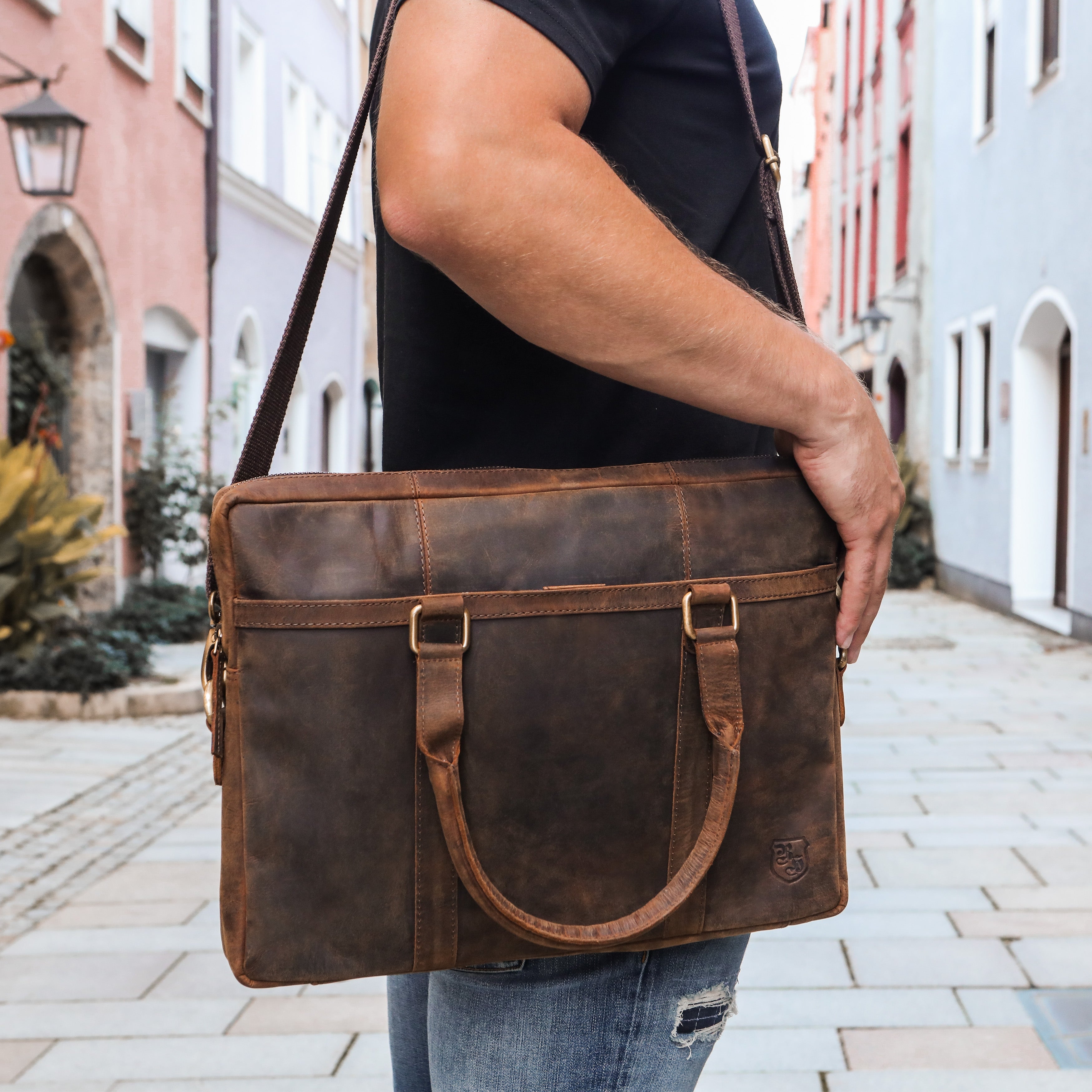

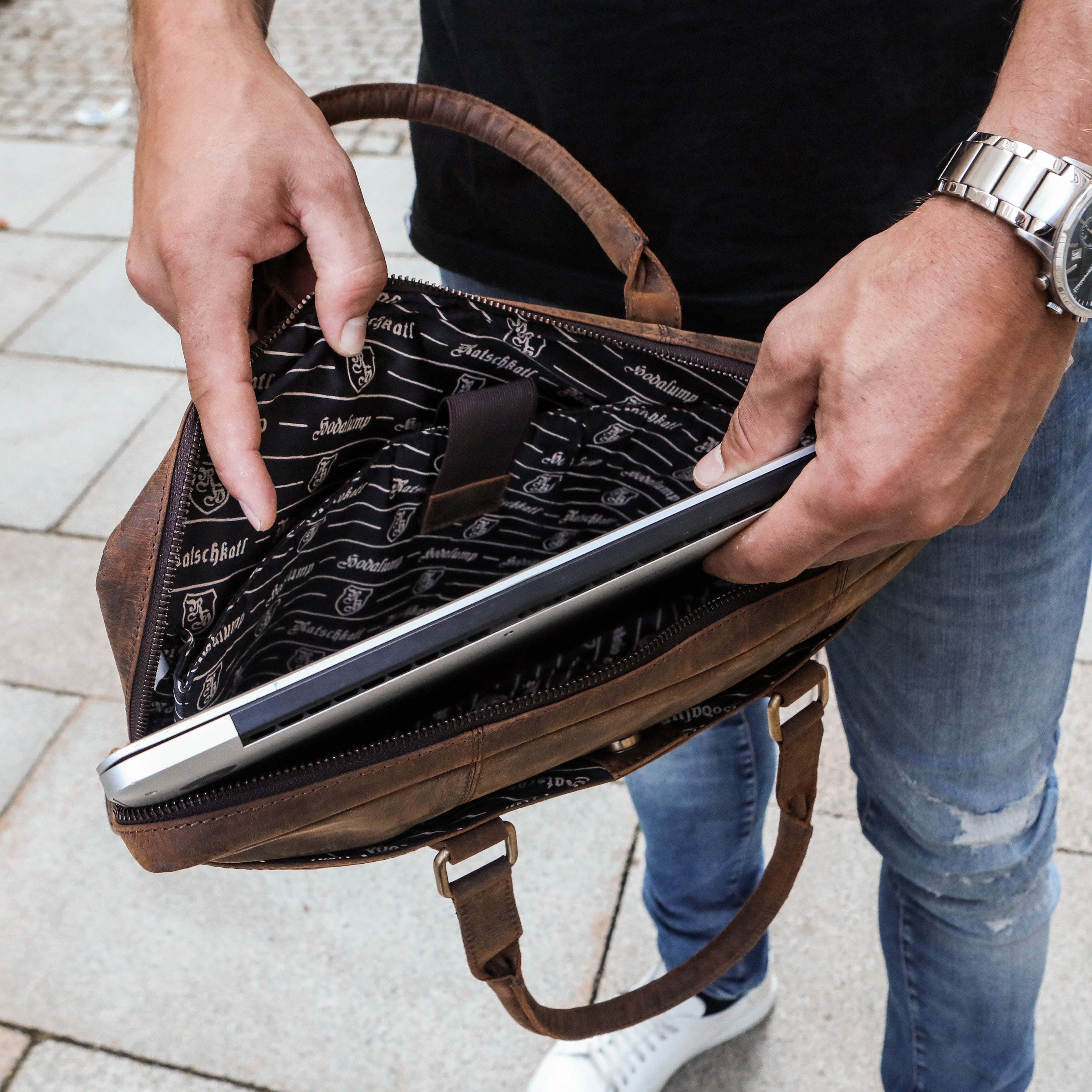
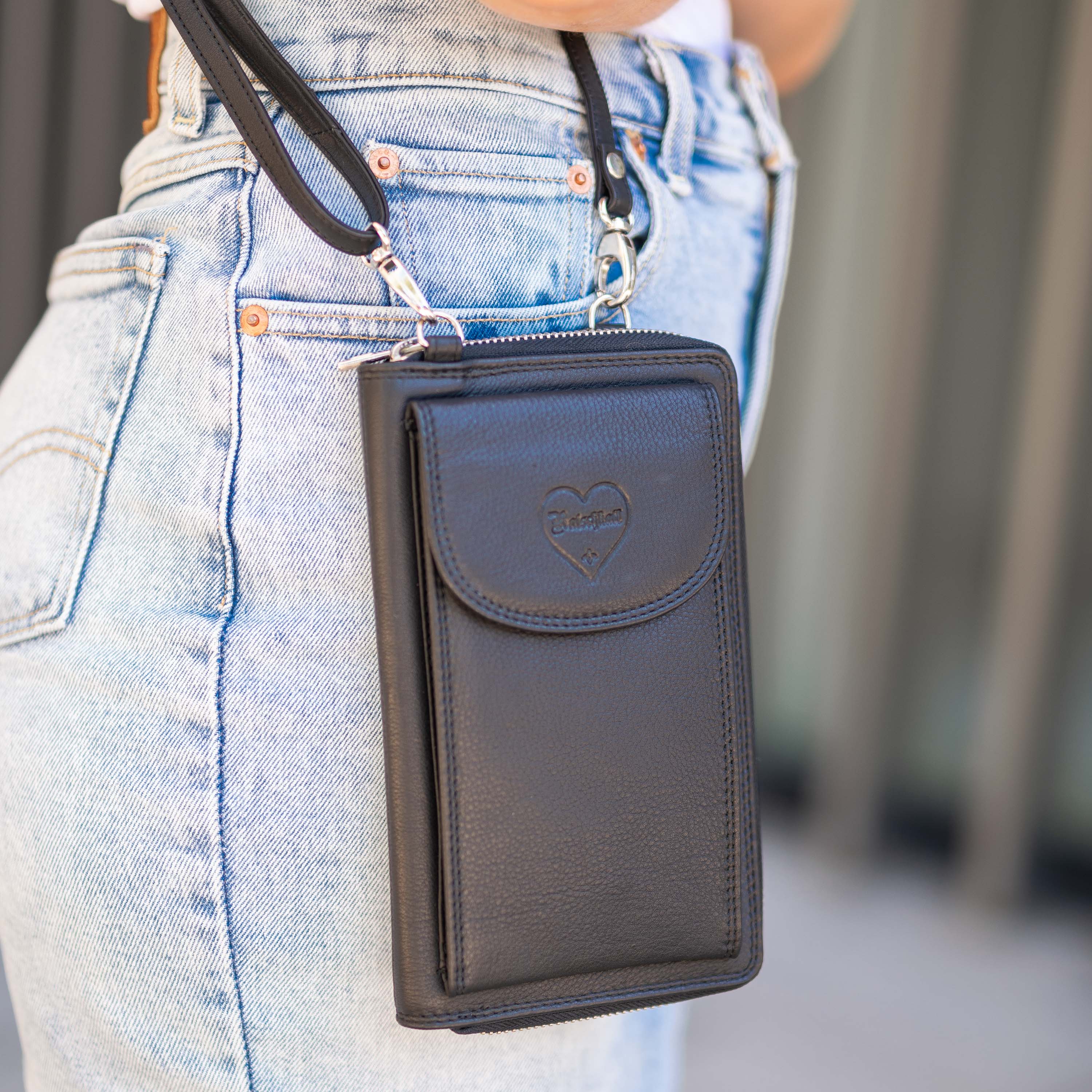

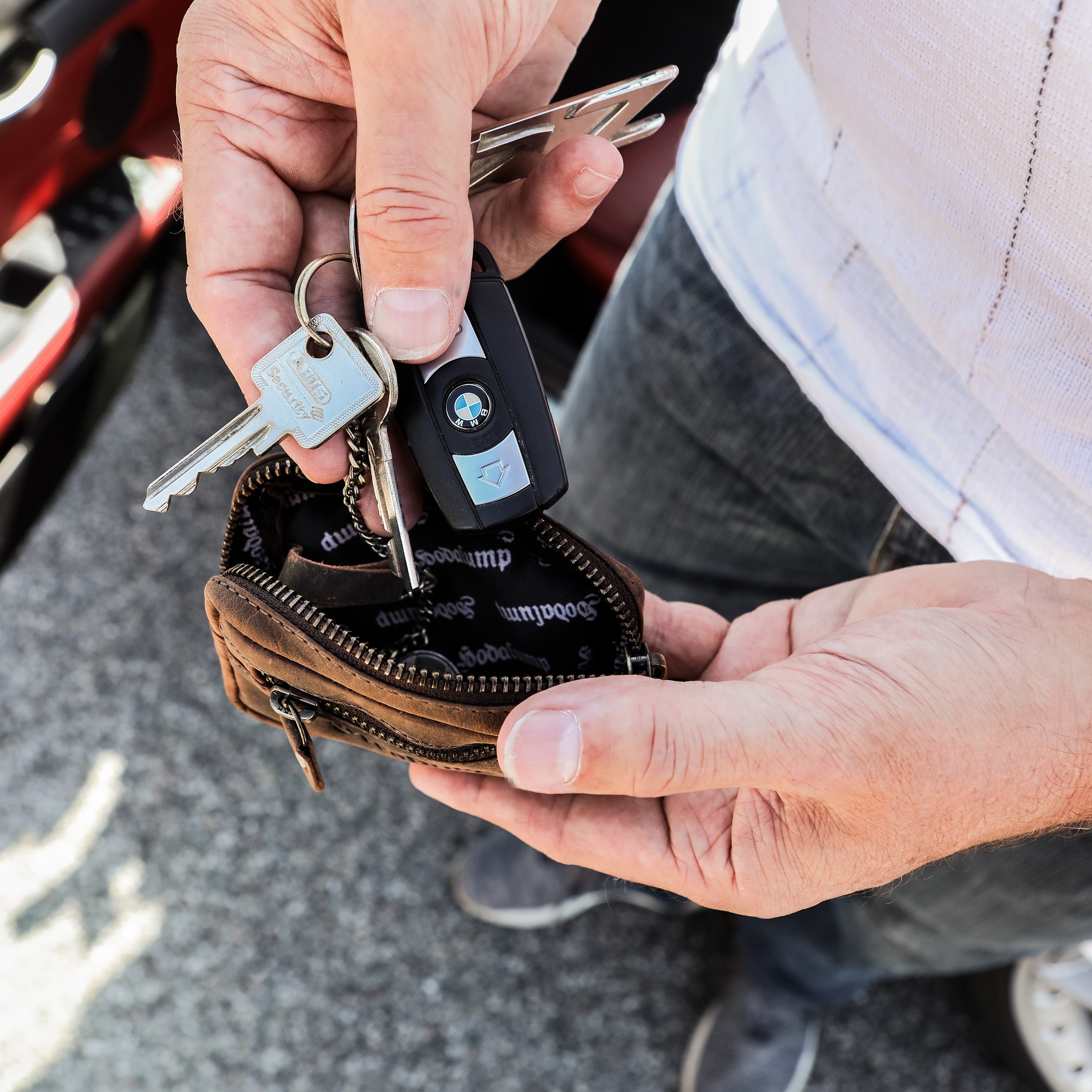









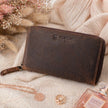

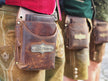




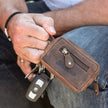

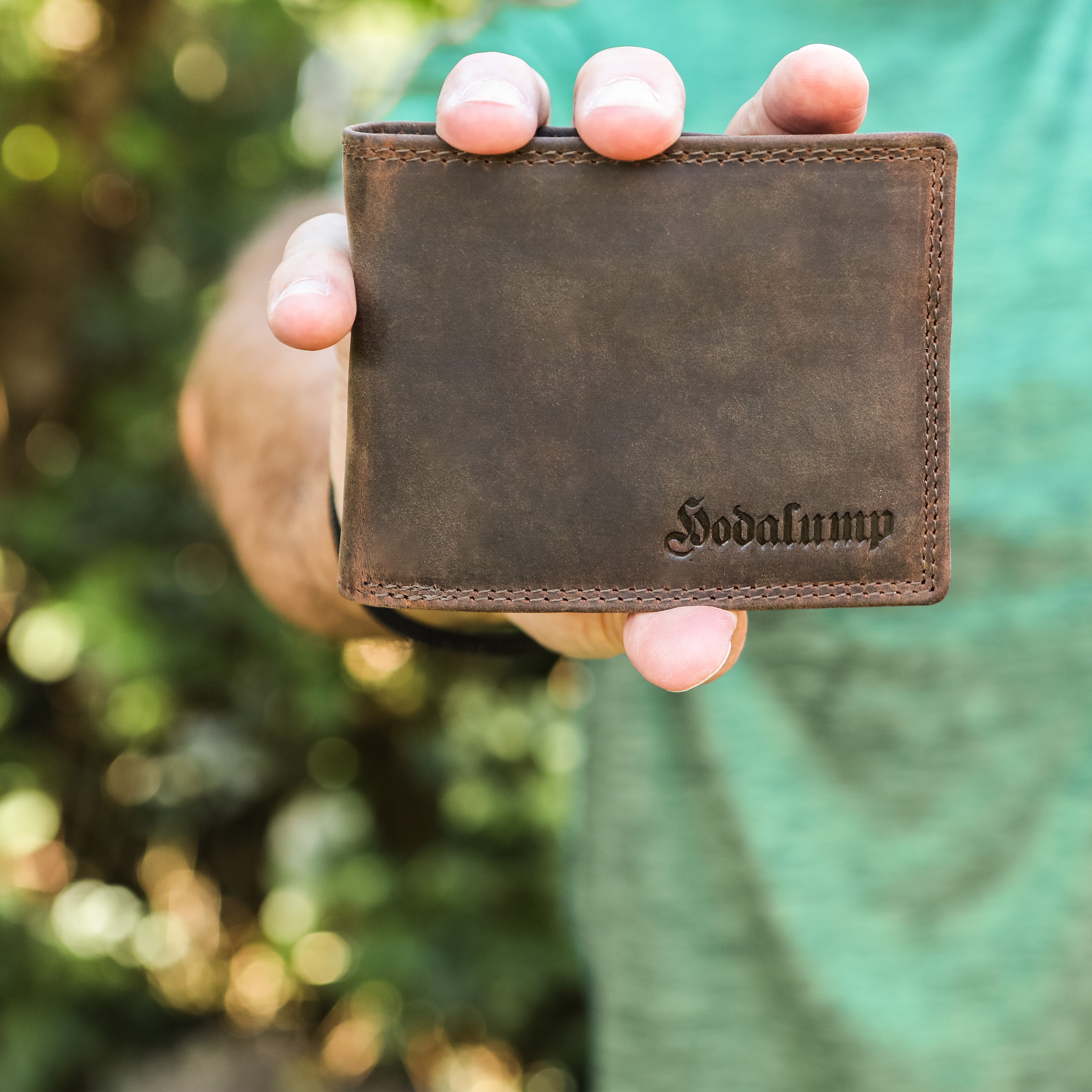






Both fit into a front trouser pocket, both cost between 20 and 50 euros, both get called “minimalist” online. And yet people change their minds again after a fortnight — because they bought the wrong one of the two.
The difference between a card holder and a slim wallet is not a marketing detail. It comes down to a single question: what do you do with small change?
What really separates the two formats
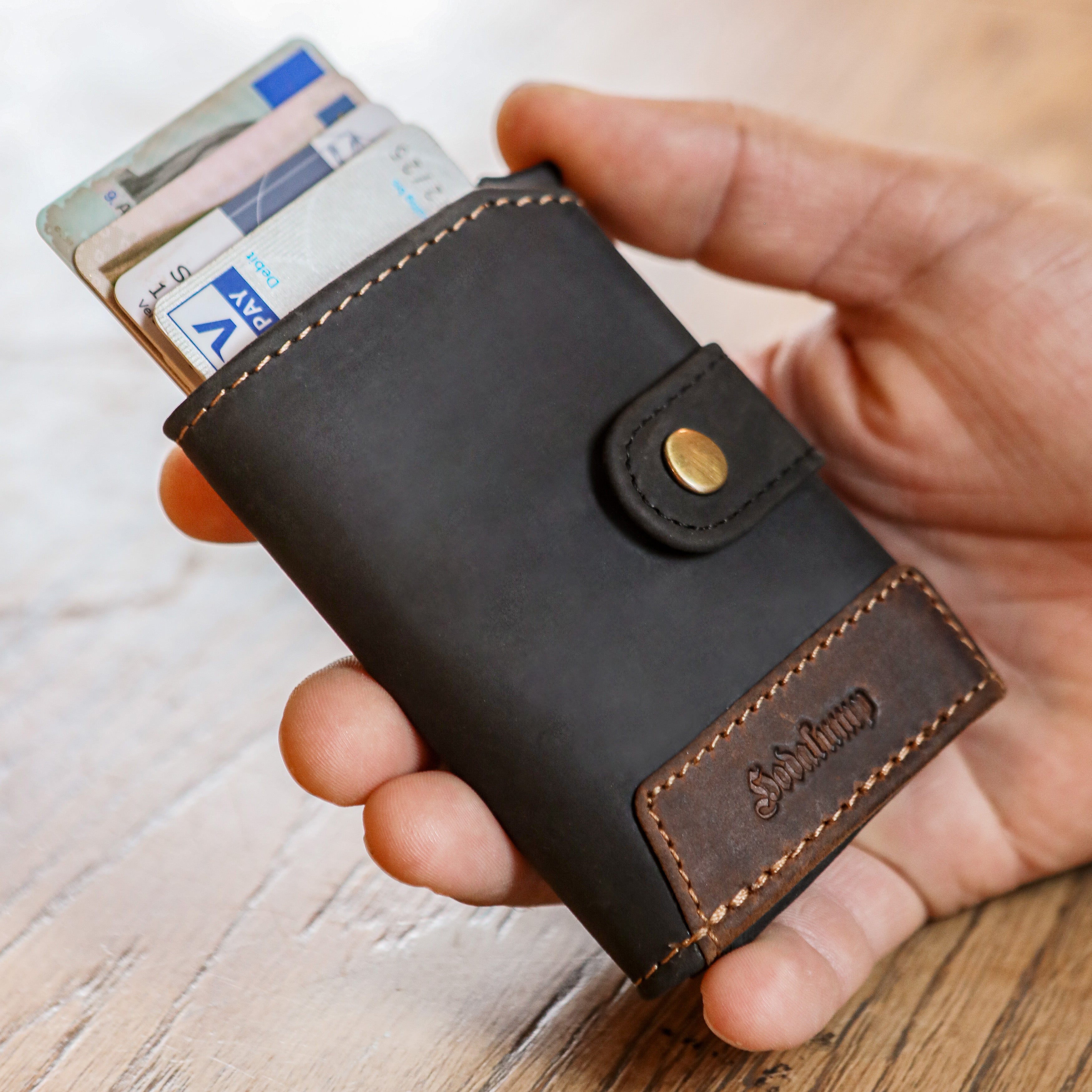
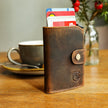
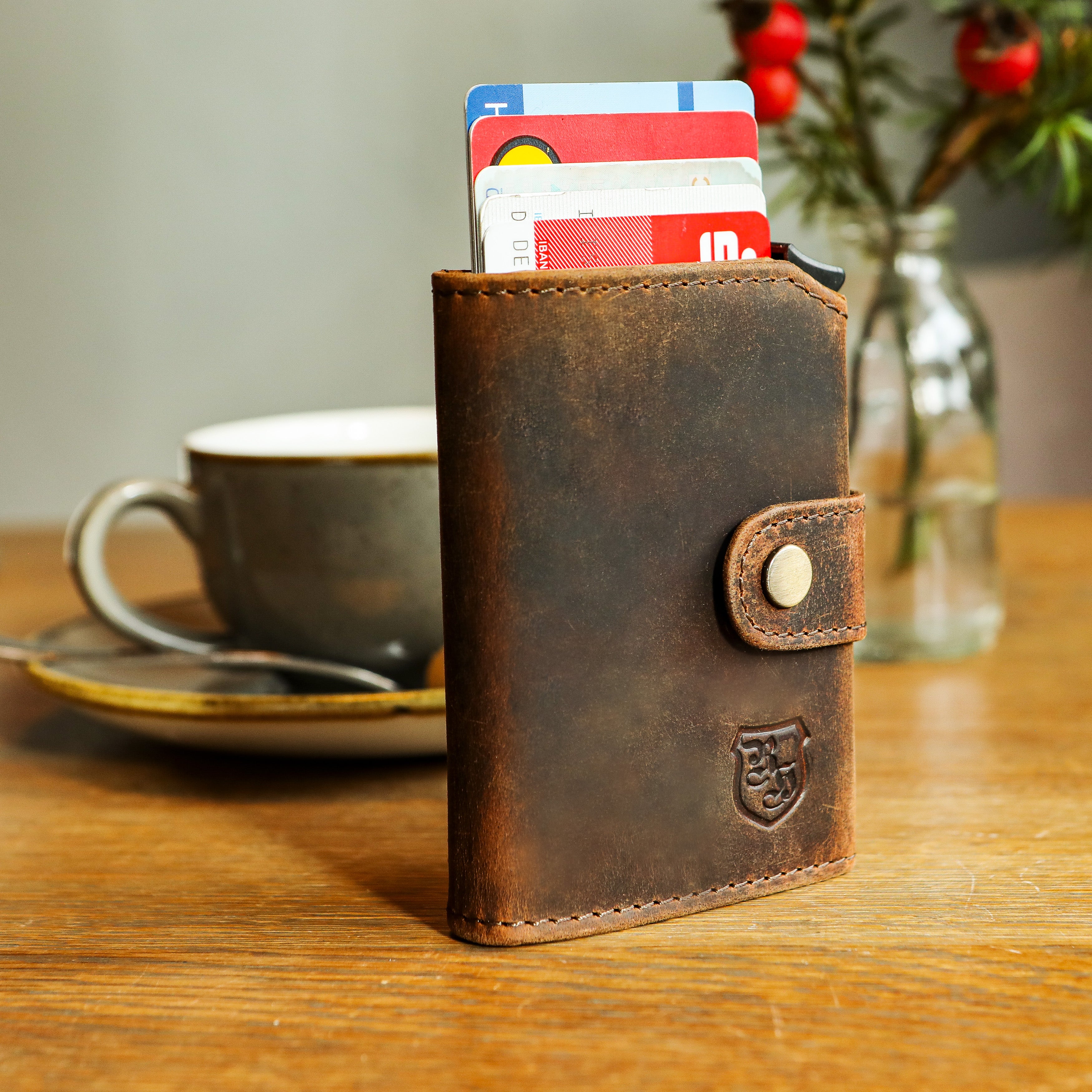
A card holder is built around cards. Slip pockets side by side, plus in most cases a central compartment for folded notes. It is flat, it is stiff, and it makes no claim to be a wallet.
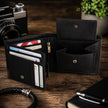
A slim wallet is a shrunken wallet. It has a full-width note compartment, card slots and — depending on the model — a coin pocket. It is a little thicker, but in return you can pay at the bakery counter without coins ending up loose in your trouser pocket.
Both categories are listed separately in the shop: card holders with 16 models, slim wallets with 32. The overlap is smaller than those numbers suggest.
The coin pocket question decides almost everything
Here is the finding that saves the most time: of the card holders in the range, exactly one has a coin pocket. That is the card holder at €39.95 — room for up to ten cards, a coin pocket for small change, a compartment for folded notes, plus RFID protection.
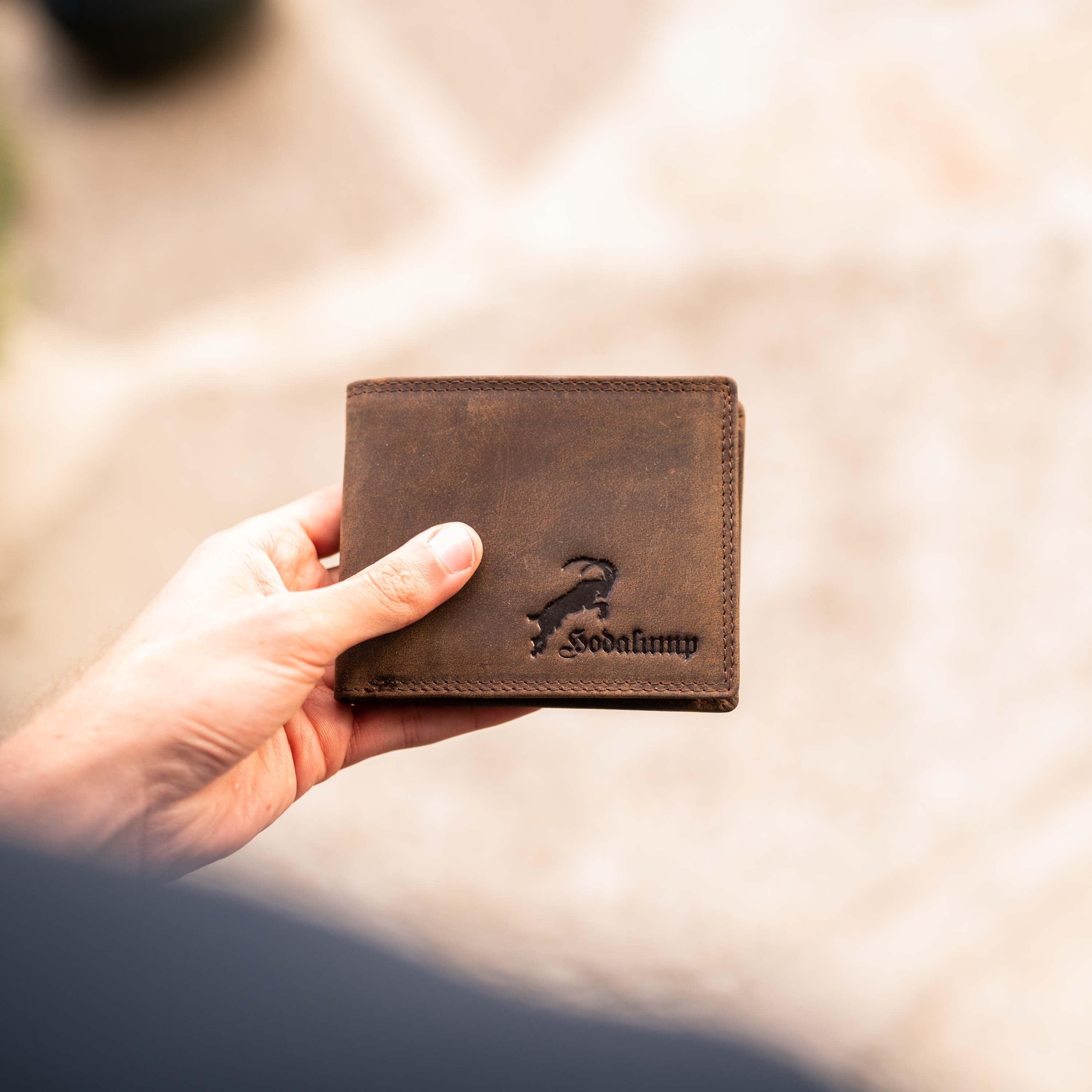
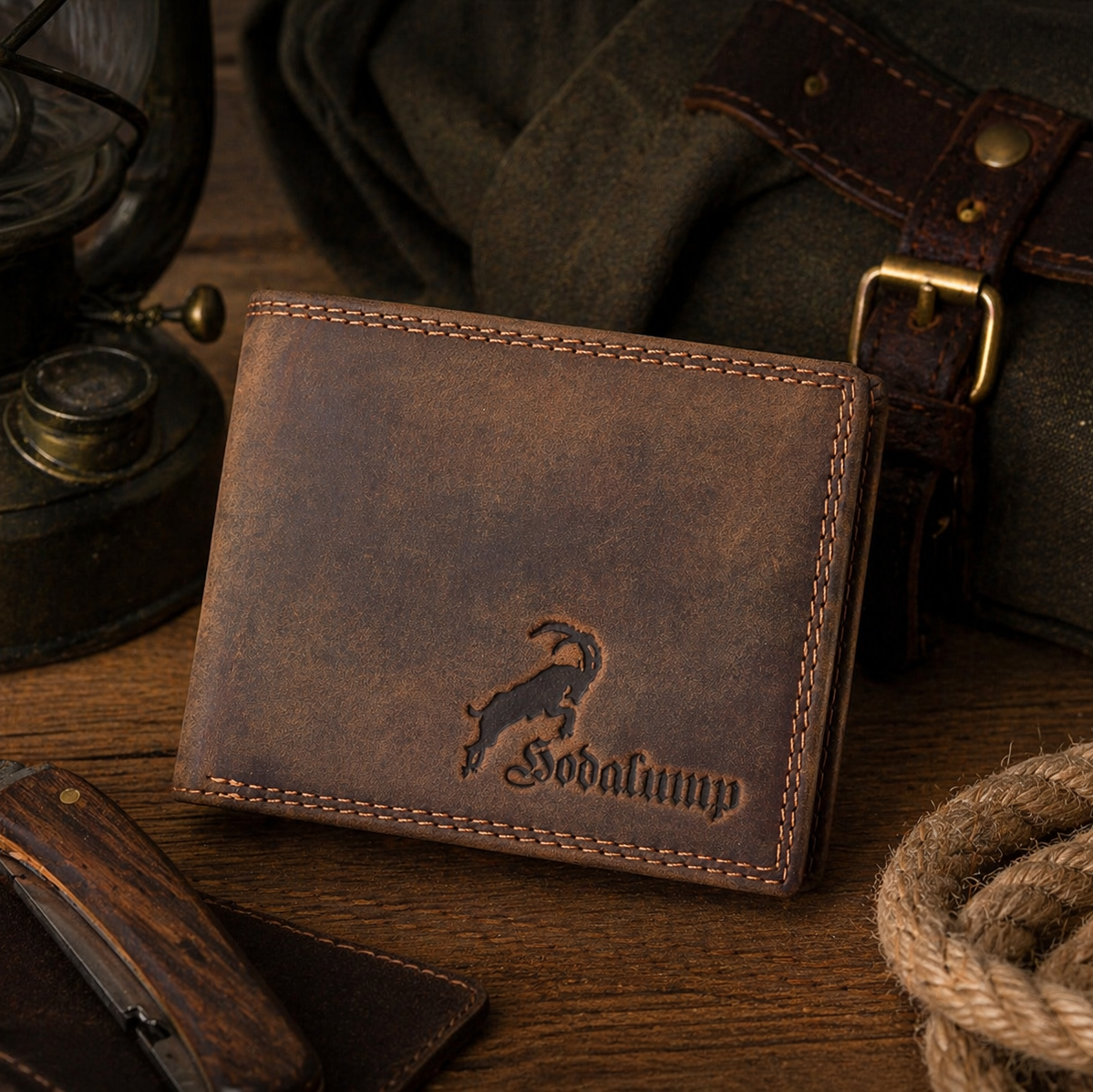
All the other holders — the Hodalump Edition Card Holder at €49.95, the Silver Edition Card Holder at €29.95, the Limit Editions, the Savage Edition, the Bavaria Card Holder at €49.95 — have card slots and a central compartment for notes or receipts. No coin pocket. That isn't a weakness but the design: a coin pocket makes a holder thicker, and these holders want to be ultra-flat.
So if you are looking for a card holder with a coin pocket, the choice in the range isn't wide, it is one. On the other hand, it is the model that solves the job most cleanly.
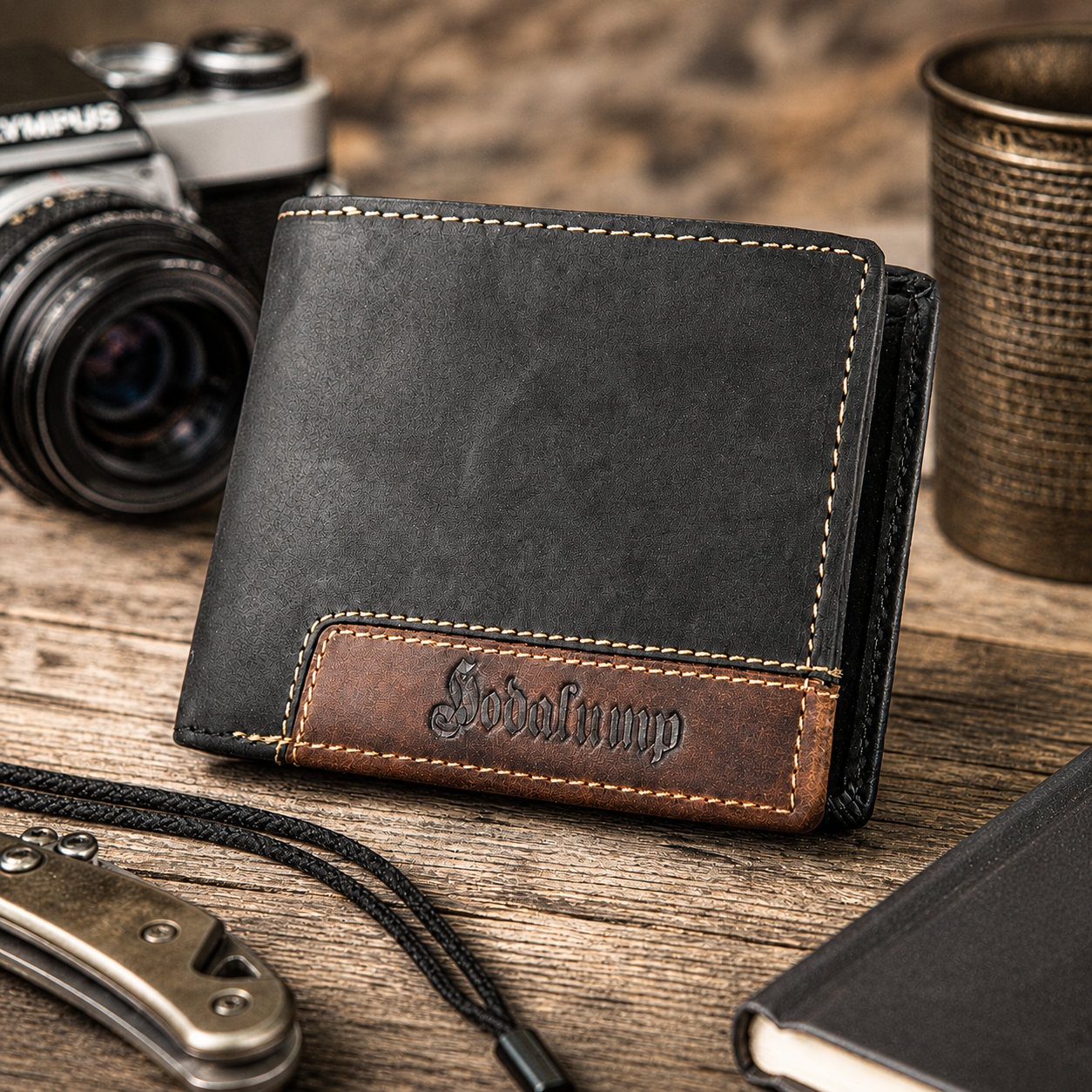
With the slim wallets it is the other way round. The Super Slim Wallet at €19.95 takes a little coin money alongside cards and a few notes. The Franz Slim Wallet at €24.95 has a small coin pocket with a press stud. The Hodalump Slim BLACK Wallet at €34.95 has a separate coin pocket, a large note compartment and several card slots — that is the option for people who really want a whole wallet, just flatter. The Wallets with a Coin Pocket collection gives you the complete overview.
How many cards actually fit in
Numbers instead of adjectives, as far as they are documented: the card holder states up to ten cards, as does the Card Holder Limit Edition 4 at €39.95. The Card Box at €19.95 is designed for seven cards. The Buam Jeans Wallet at €24.95 states six cards plus a note compartment and a coin pocket.
For the remaining models the description says “several” or “enough” — there is no reliable figure there, and none will be invented here.
In practice a different calculation usually does the job. Count up what you need every day: debit card, one credit card, driving licence, ID card, health insurance card. That is five. Anything beyond that is loyalty cards, and those you can leave at home or put on your phone. Anyone who ends up at ten cards isn't looking for a card holder but for a large wallet.
What a metal holder does differently
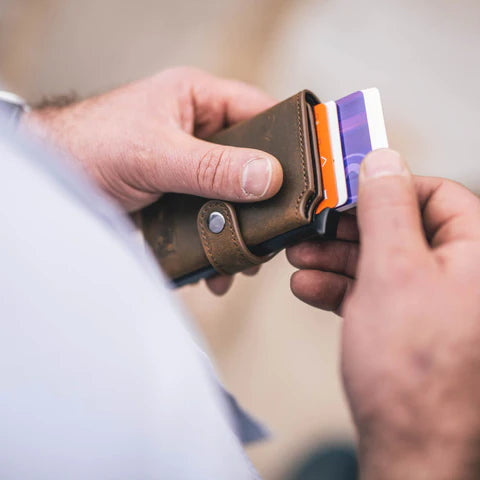
Two models in the range work with a rigid core instead of leather slots. The Card Box at €19.95 is aluminium with a pop-up mechanism: press the button and the cards fan out in steps. The Card Box Lui at €19.95 combines genuine leather with an aluminium core and the same mechanism, plus a compartment for notes or business cards.
The advantage: the cards don't bend and don't fall out. The drawback, which is rarely mentioned alongside it: holders like these are designed for a fixed number of cards. The Card Box says explicitly that the mechanism only runs smoothly if the stack isn't overloaded. If you carry five cards today and nine tomorrow, leather slots give you more flexibility.
RFID: when it matters
Of the models named here, RFID protection is only expressly documented for the card holder. For the other holders and slim wallets nothing is stated — which doesn't mean there is none, only that it isn't documented. If the point matters to you, the Wallets with RFID Protection collection is the right place to start.
The cheap interim solution, if your favourite model doesn't come with protection: RFID blocker card sleeves in a pack of three at €9.95. You put the card inside and the sleeve into an existing slot — though that costs space, and a slim wallet doesn't have space to spare.
Four situations, four answers
You pay for almost everything by card and want to feel nothing in your pocket. A card holder without a coin pocket, for instance the Hodalump Edition Card Holder at €49.95. The three euros in change you need twice a month go loose in your trouser pocket.
You need coins — trolleys, machines, tips. The card holder at €39.95 with its coin pocket, or a slim wallet with a separate coin pocket.
You mainly carry notes and few cards. The Fredl Money Clip Wallet at €34.95. The clip holds the notes flat in the middle instead of folding them. No coin pocket — with this design that is deliberate.
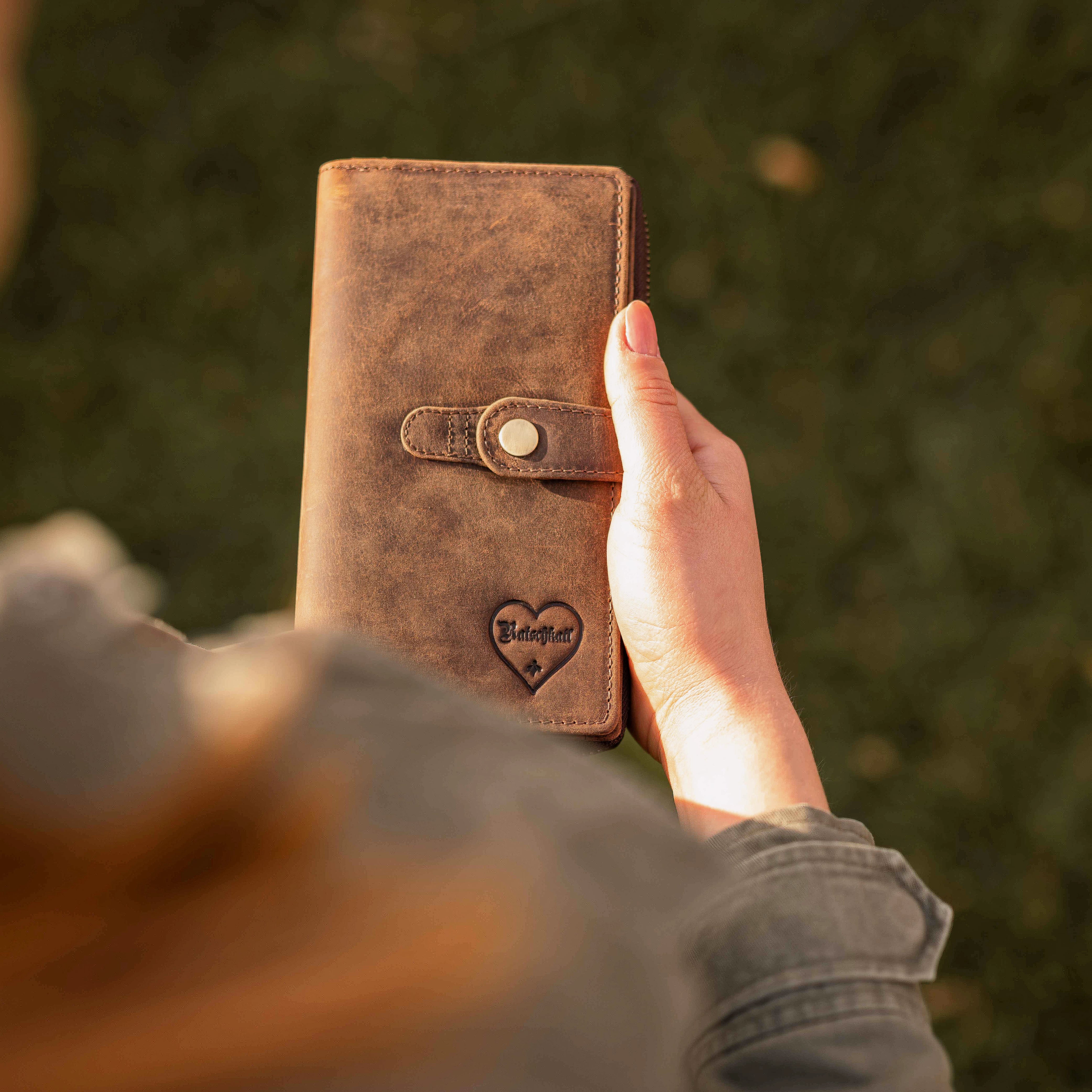
You really want a wallet, just thinner. The Hodalump Slim BLACK Wallet at €34.95 or the Flat Benny Wallet at €29.95 with its flat coin pocket.
What speaks against the small format
So that this doesn't sound like advantages only: small formats have no room for receipts. Whatever you are handed in a shop ends up loose in a jacket pocket or straight in the bin. Anyone who keeps receipts won't get far with a card holder.
Second, a coin pocket in this size class is always a small coin pocket. It holds a day's change, not what builds up over a week. If you regularly pay in cash and get coins back, a slim wallet is the wrong choice — the road then leads to a wallet with a proper coin pocket.
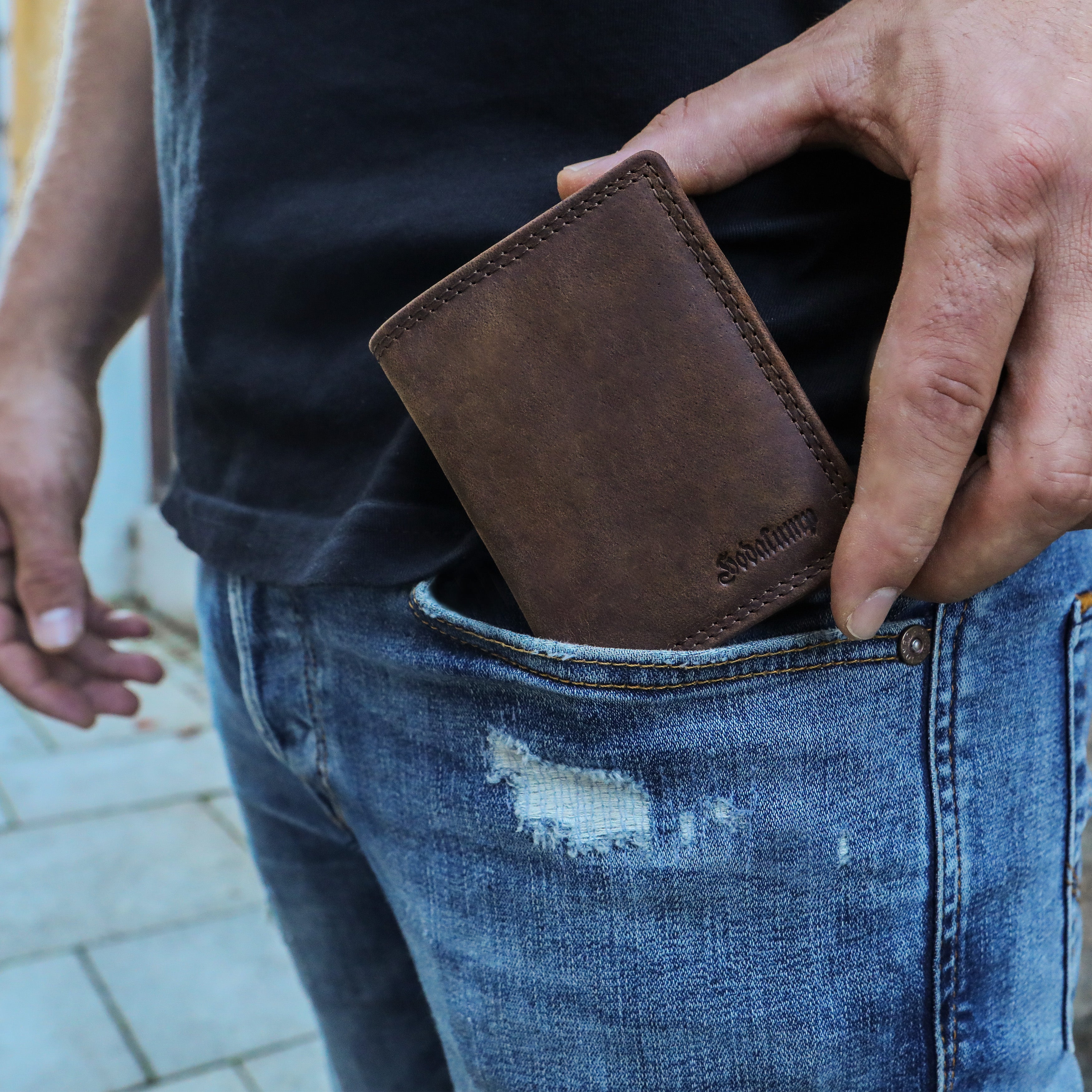
And third: a flat holder is best carried in the front trouser pocket. In the back pocket it bends out of shape, because it has no frame to resist. With the metal models it is the other way round — they don't bend, but they do press.
How to decide in two minutes
Take your current wallet and lay the contents on the table. Count the cards. Count the notes. Weigh up the coins — in the sense of: are there three or thirty? If you end up under six cards, under five notes and almost no coins, a card holder is right. Once coins come into it, you need one of the few models with a coin pocket, or a slim wallet.
What is left after that is a question of material — and that answers itself over time, because leather in this format is in your hand every day. How to keep the result looking good for a long time is covered in the piece on caring for a leather wallet. And if your counting did land you at twelve cards, the comparison of men's wallets will take you further.