
















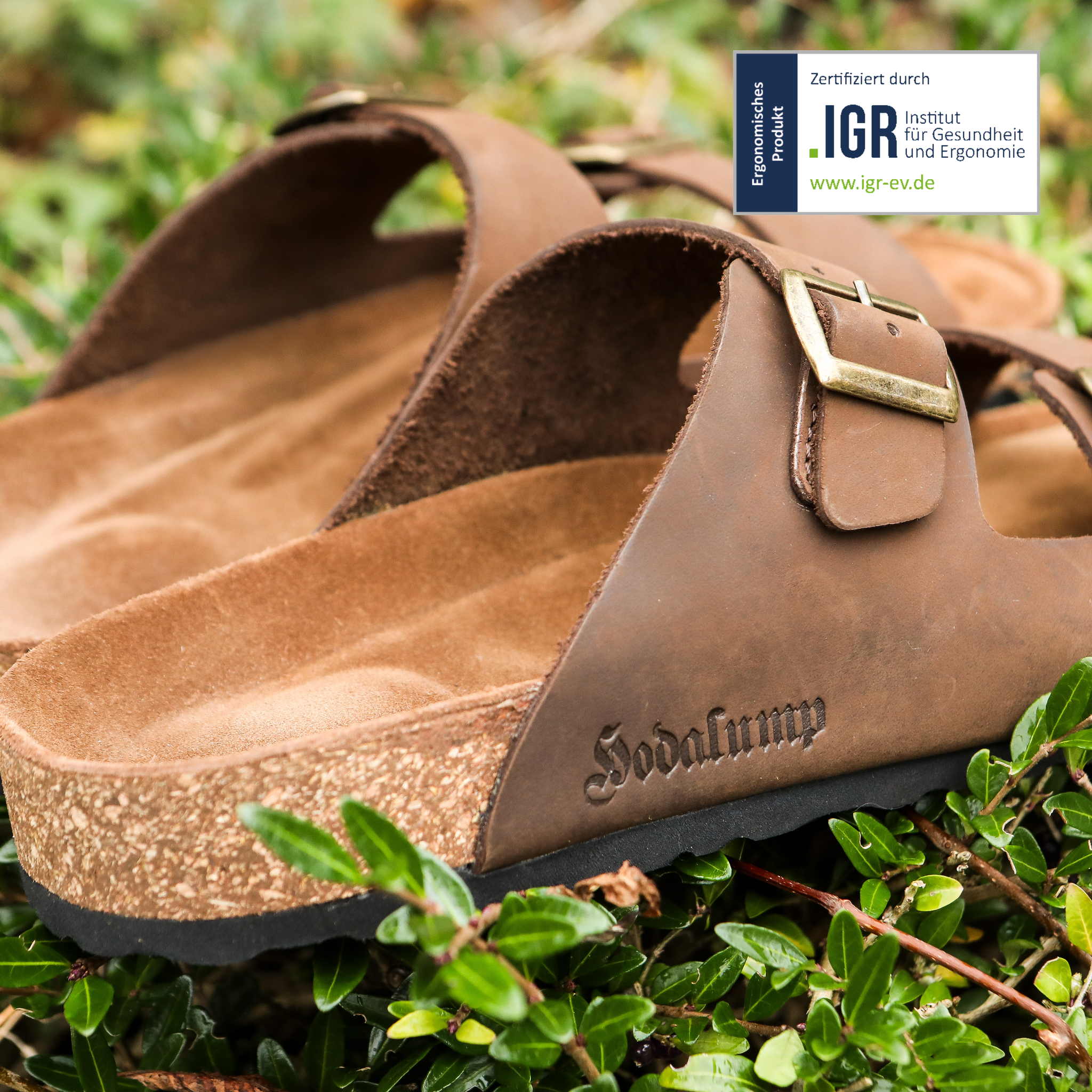



“Genuine leather” appears on almost every label and says almost nothing. It gets interesting one level down: which animal the hide came from, which layer was used and how it was finished. That determines whether a belt breaks along the row of holes after two years or after twelve, whether a bag slumps softly or stands up on its own, whether a scratch disappears after two minutes of hand warmth or stays for good.
Five terms come up again and again: cow, buffalo, goat, Hunter, Nappa. Only three of them are animals. That mix-up is the most common reason why comparisons online do not add up — and why people go home with the wrong leather.
Animal, layer, finish: those are three questions, not one
Every leather description actually answers three separate questions. Once you keep them apart, the rest sorts itself out.
- Which animal? Cow, buffalo, goat, calf, deer. That sets the thickness, the fibre density and the grain pattern — in other words everything you feel before you have even looked.
- Which layer? The upper layer with the natural surface is called grain leather. Thick hides are split through their thickness; what is left underneath is split leather, which no longer has a naturally grown surface.
- Finished how? Oiled, greased, waxed, embossed, buffed. This is where the trade names come from: Hunter, Nappa, pull-up, nubuck, suede.
“Buffalo leather” answers question one. “Hunter” answers question three. Only both together give you a picture, which is why good product descriptions state both — “oiled buffalo leather”, for instance, or “Black Cow Hunter leather”.
Cowhide: the standard, and that is not a criticism
Cowhide is the most widely used leather of all, and for a sober reason: the hide is large, even and thick enough to cut long strips from it that will take a pull. That is exactly what a belt needs when it is bent over a buckle every day. The fibre runs densely, the grain pattern is fine and calm.
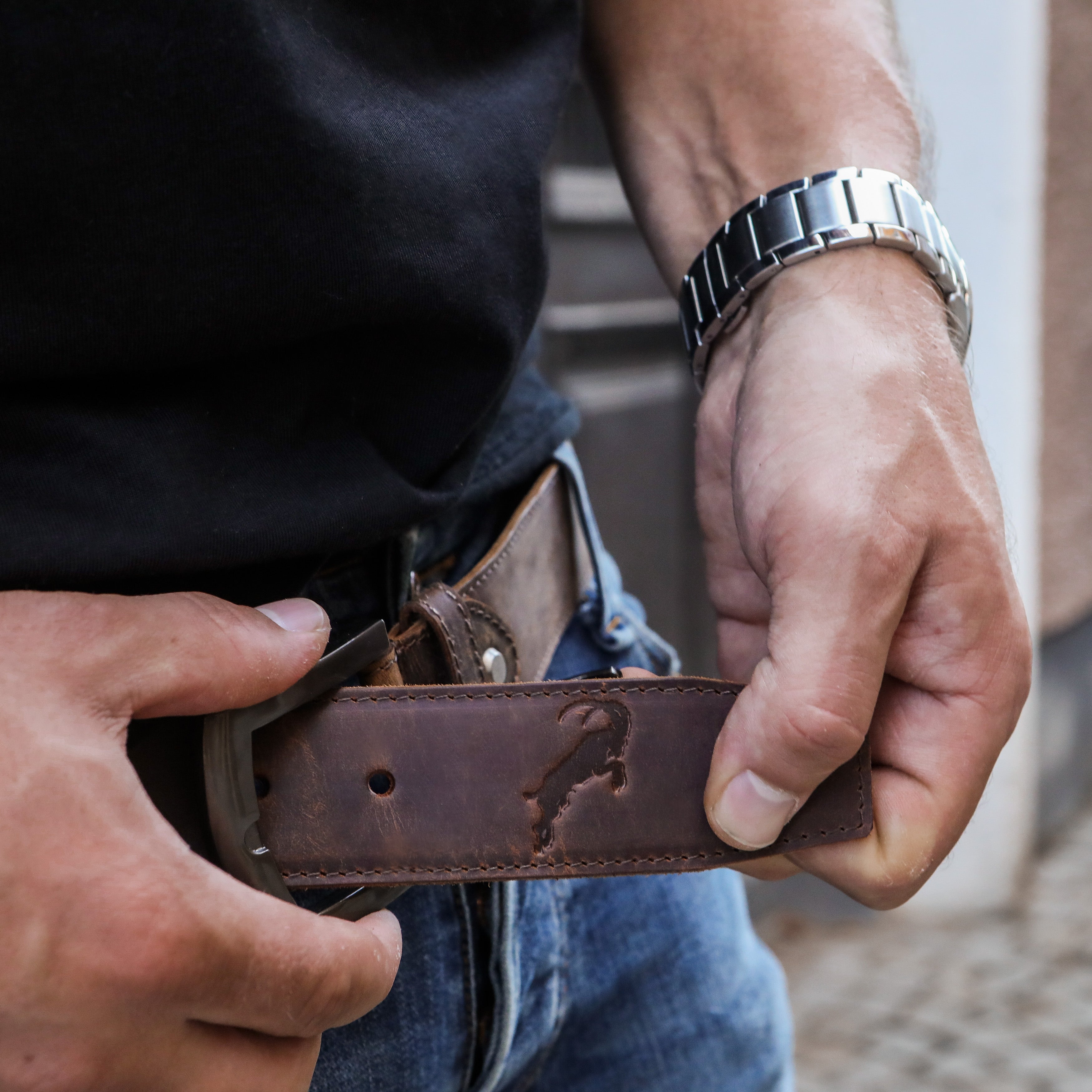
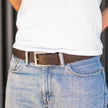
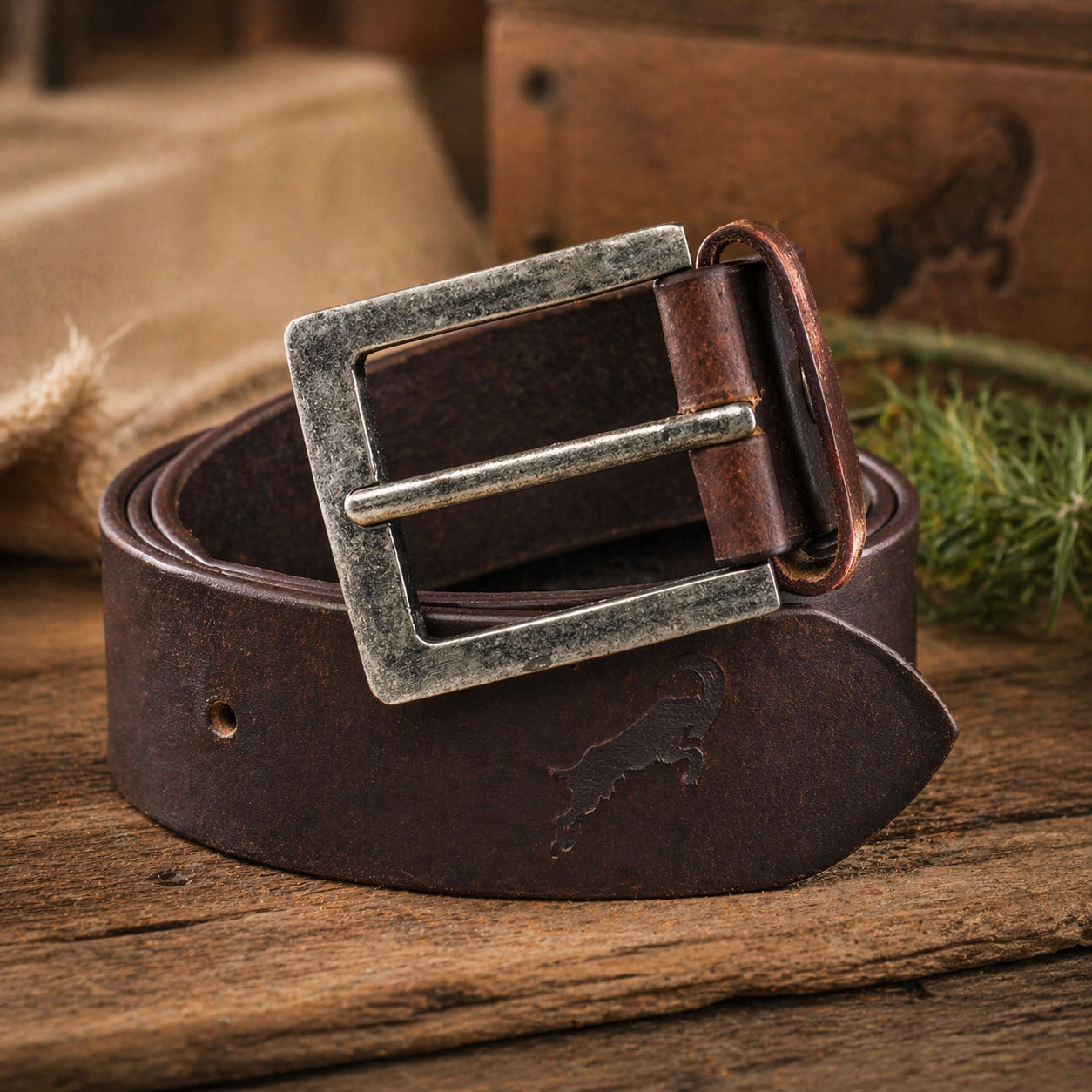
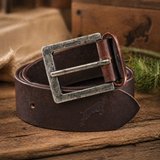
What you get out of it: dimensional stability. A cowhide strap stretches only slightly over the years and takes embossing cleanly — which is why crocodile and leopard textures nearly always sit on cowhide. You will find both in the leather belts, from the plain Brown Belt at €29.95 to the patterned Ratschkatl models.
What you do not get out of it: instant character. Finely finished cowhide looks fairly smooth and anonymous when new. It becomes interesting, but it is not interesting from day one. If you want patina on the first day, you have picked the wrong material.
Buffalo leather: coarse grain, thick build, very tough
Buffalo hide is thicker and the grain is noticeably coarser — that restless, wavy pattern you can spot from two metres away. The fibres lie less evenly, but the structure is extremely tough. The practical side effect is the real point: on a coarse grain a scuff barely shows, whereas on smooth calfskin it looks like a stroke of biro.
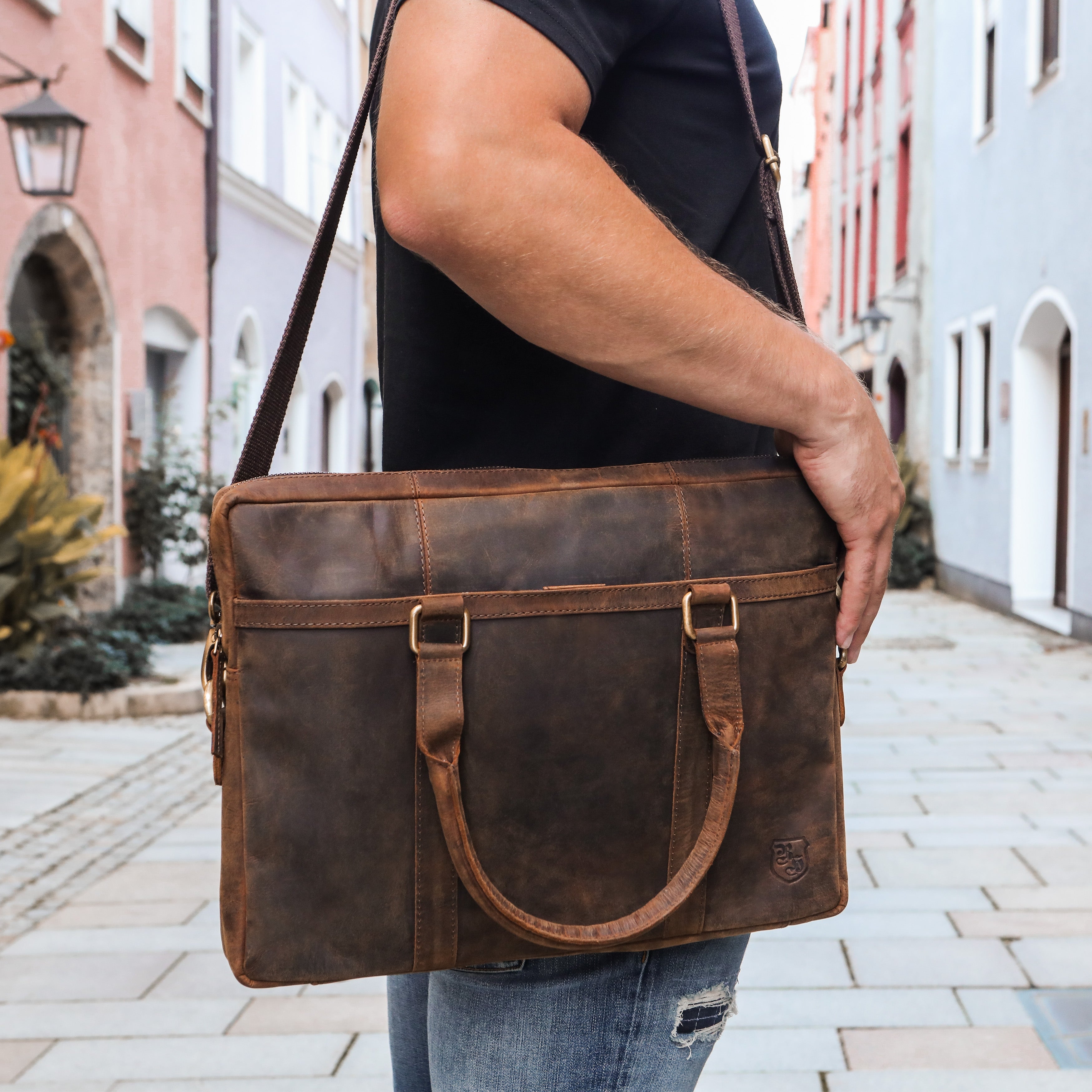
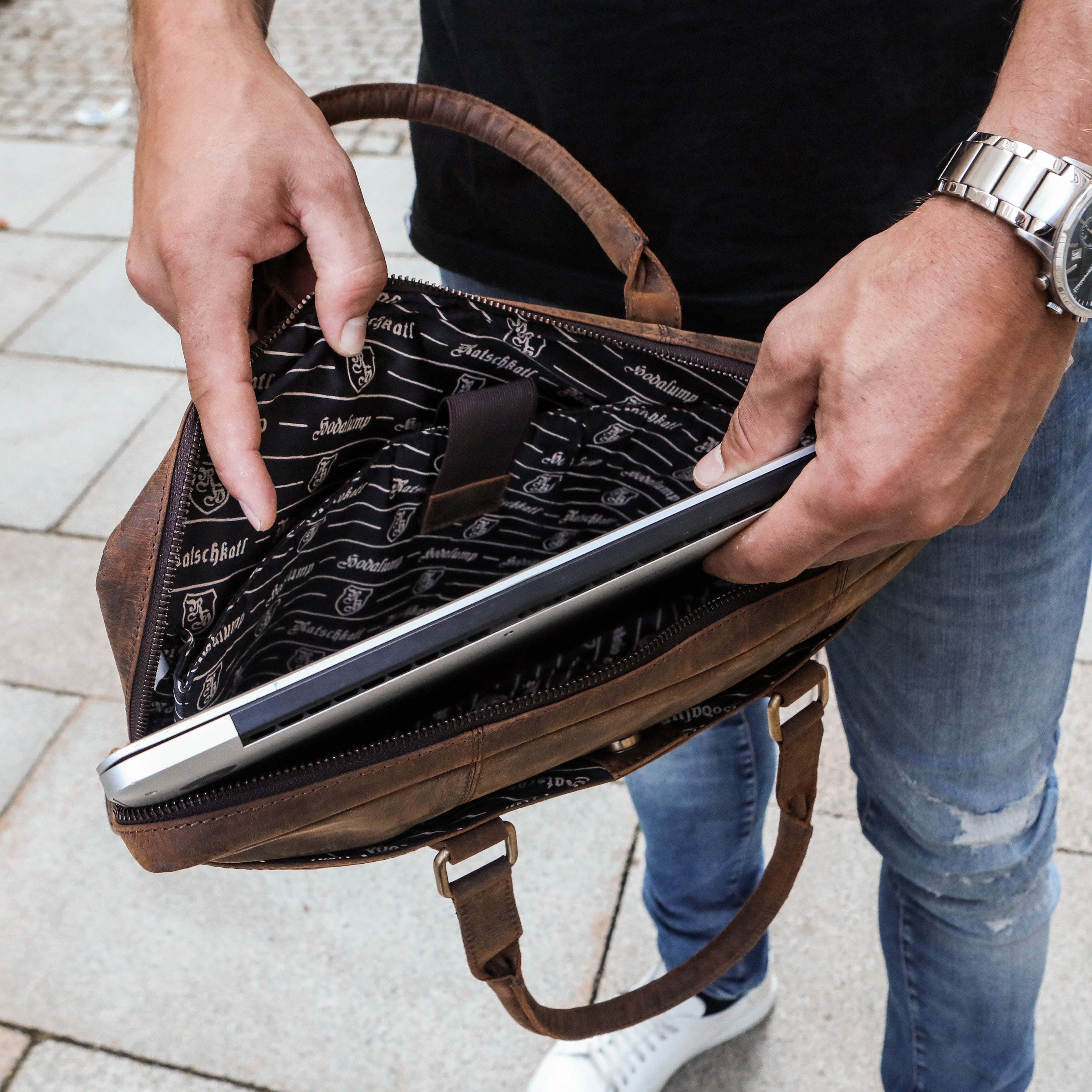
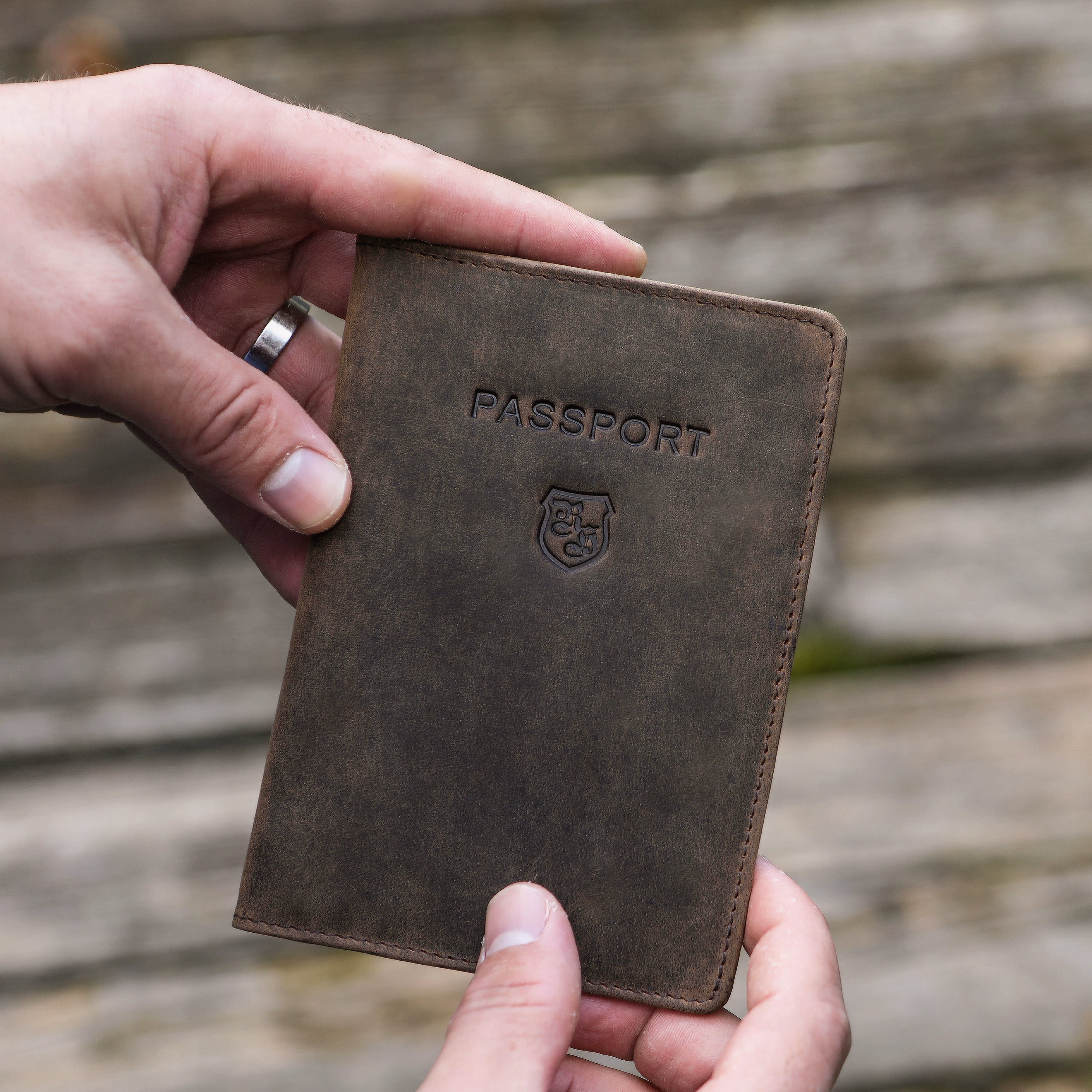
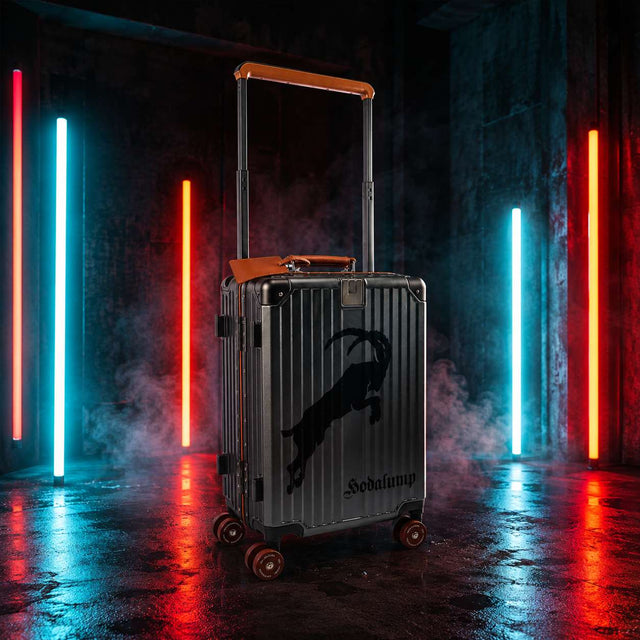
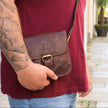
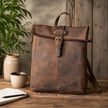
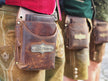
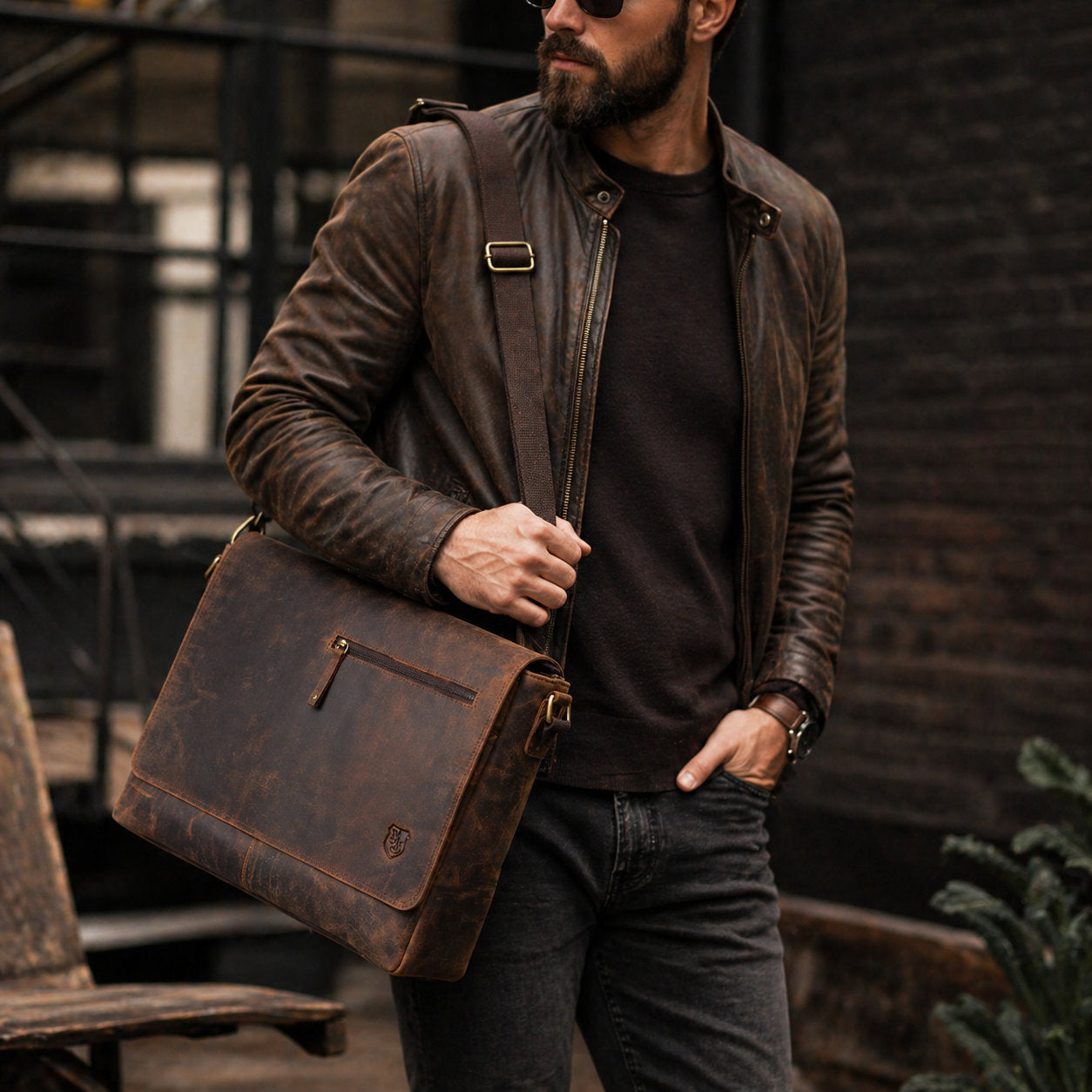
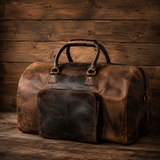
That is why buffalo leather is used where things get carried, knocked and loaded up. The Large Travel Bag (€249.95) is made from it, as is the Cross-Over Bag Laurenz (€89.95), along with the tobacco pouch and the belt with the hidden pocket. On the latter the leather is oiled, which makes it darker and grippier — and explains the note in the product description that it can rub off onto light-coloured fabric. That is not a defect, it is the consequence of the oiling.
The price for that is weight. A large buffalo leather bag already weighs something noticeable when empty. If you are looking for something light, you are better served by the small formats than by the travel pieces.
Goatskin: light, soft and tougher than it looks
Goatskin is thin and stable all the same, because the fibre is very densely interwoven. It feels soft, has a fine, slightly pebbled grain and moulds to you quickly. For clothing that is the decisive property — it has to move with you, otherwise it wears like a plank.
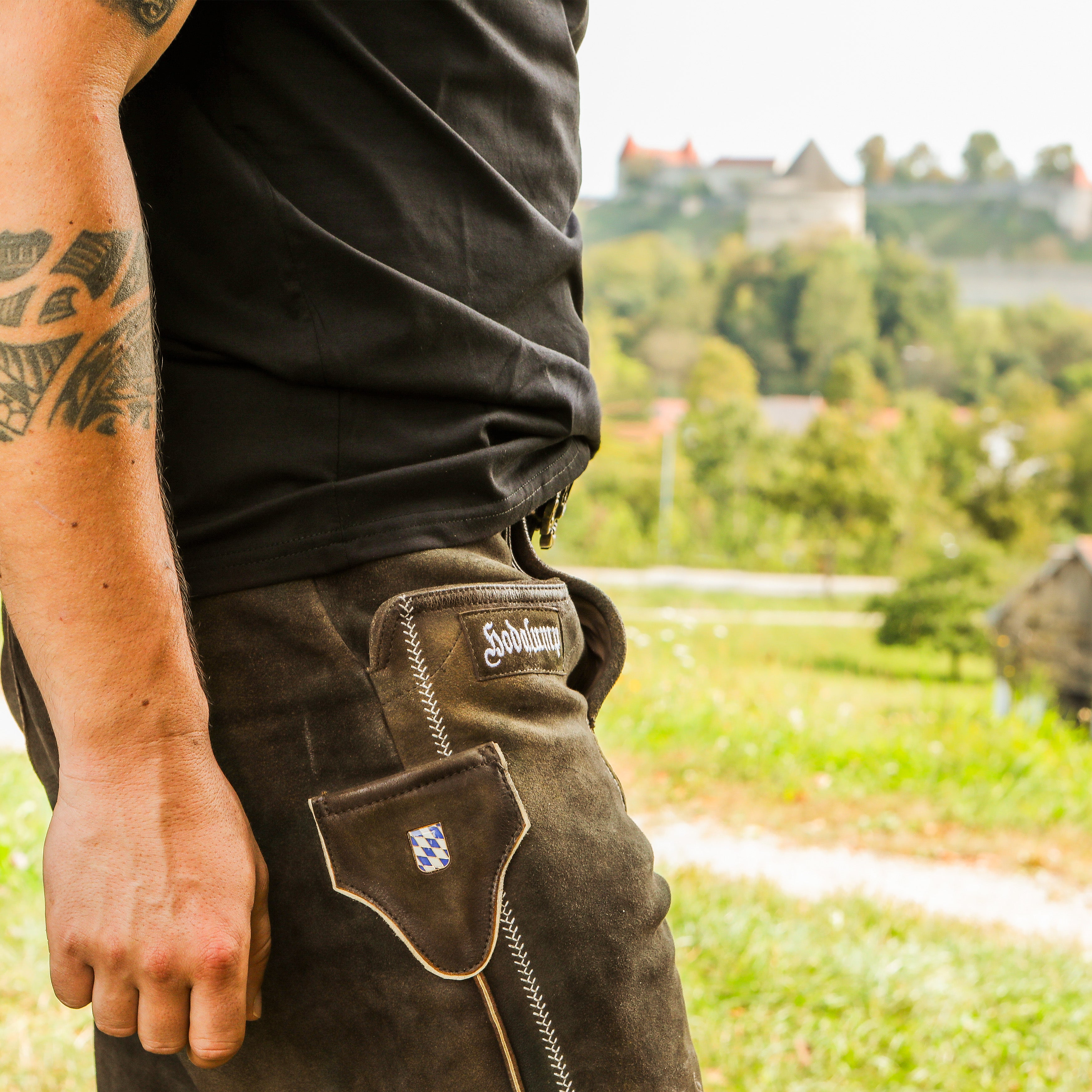
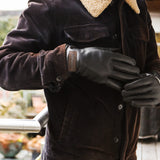
The Hodalump Lederhosen (€149.95) are made from goatskin, and so are the Lederhosen 2.0; both come in sizes 48 to 56, which covers waists from 82 to 110 cm, belt included. The Winter Gloves (€49.95) are goatskin too, for the very same reason: a glove in belt thickness could not be closed into a fist.
An honest gap on that note: with the Ratschkatl Lederhosen (€119.95) the description only says “soft genuine leather”, without naming the animal. We know no more than that, so we are not going to claim any more. And if you are specifically after deerskin — softer, more willing to stretch, the classic for traditional leather trousers that take on the shape of the wearer over the years — you will not find it here among the lederhosen.
What actually is Hunter leather?
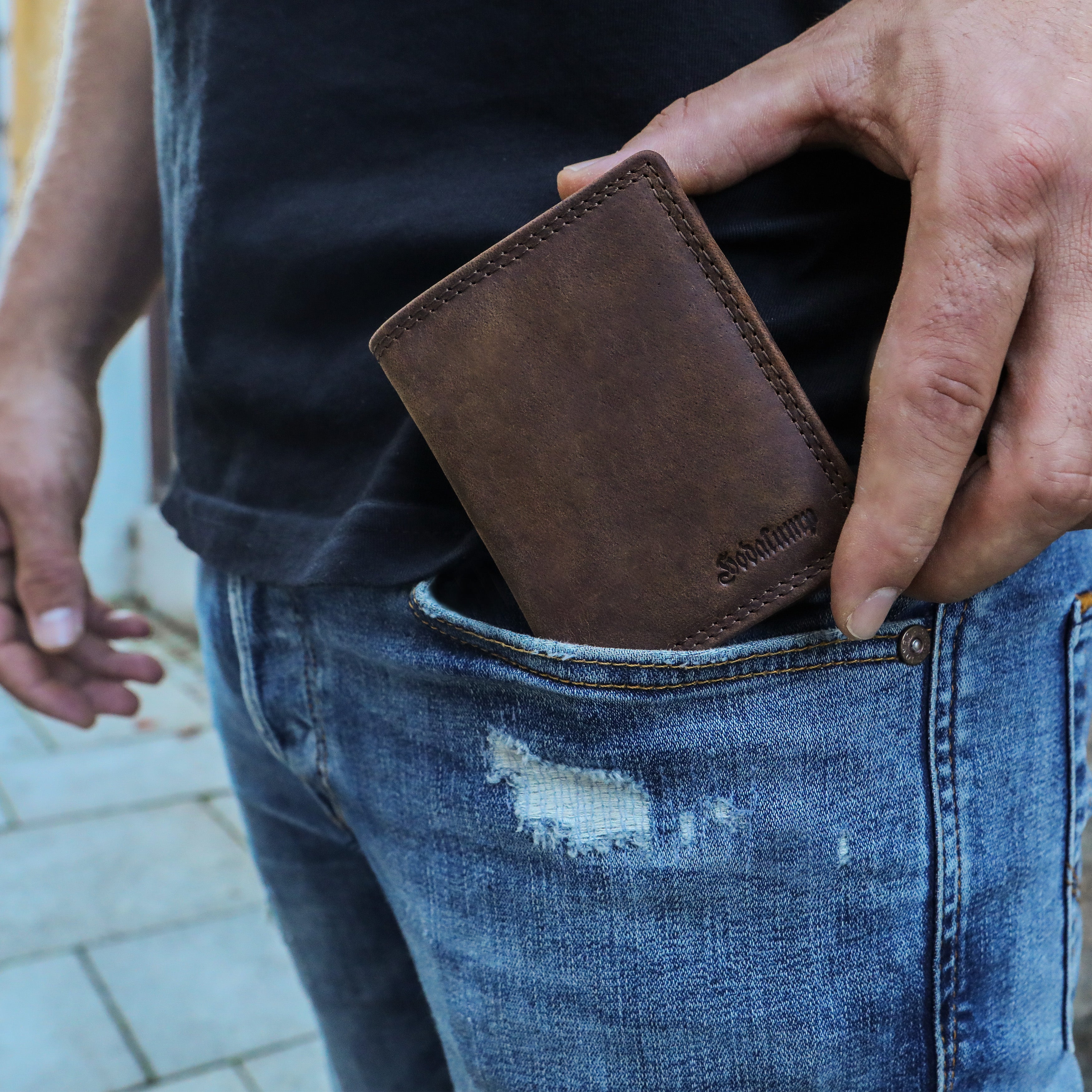
Hunter is not an animal. It is a finish: cowhide or buffalo leather that is dyed all the way through and saturated with fats and oils instead of being given a covering layer of pigment. The surface stays open-pored and matt. The vintage look is therefore not a printed pattern but a side effect of the treatment.
The most striking feature is the pull-up effect. Bend a piece of oiled leather sharply over your finger: the oil migrates away from the bend and the edge visibly lightens. Let go and it flows back, and the pale streak almost disappears. After that test you will recognise oiled leather in two seconds. It also explains why Hunter leather starts to look “used” so quickly: every crease shows, every sitting position leaves a mark.
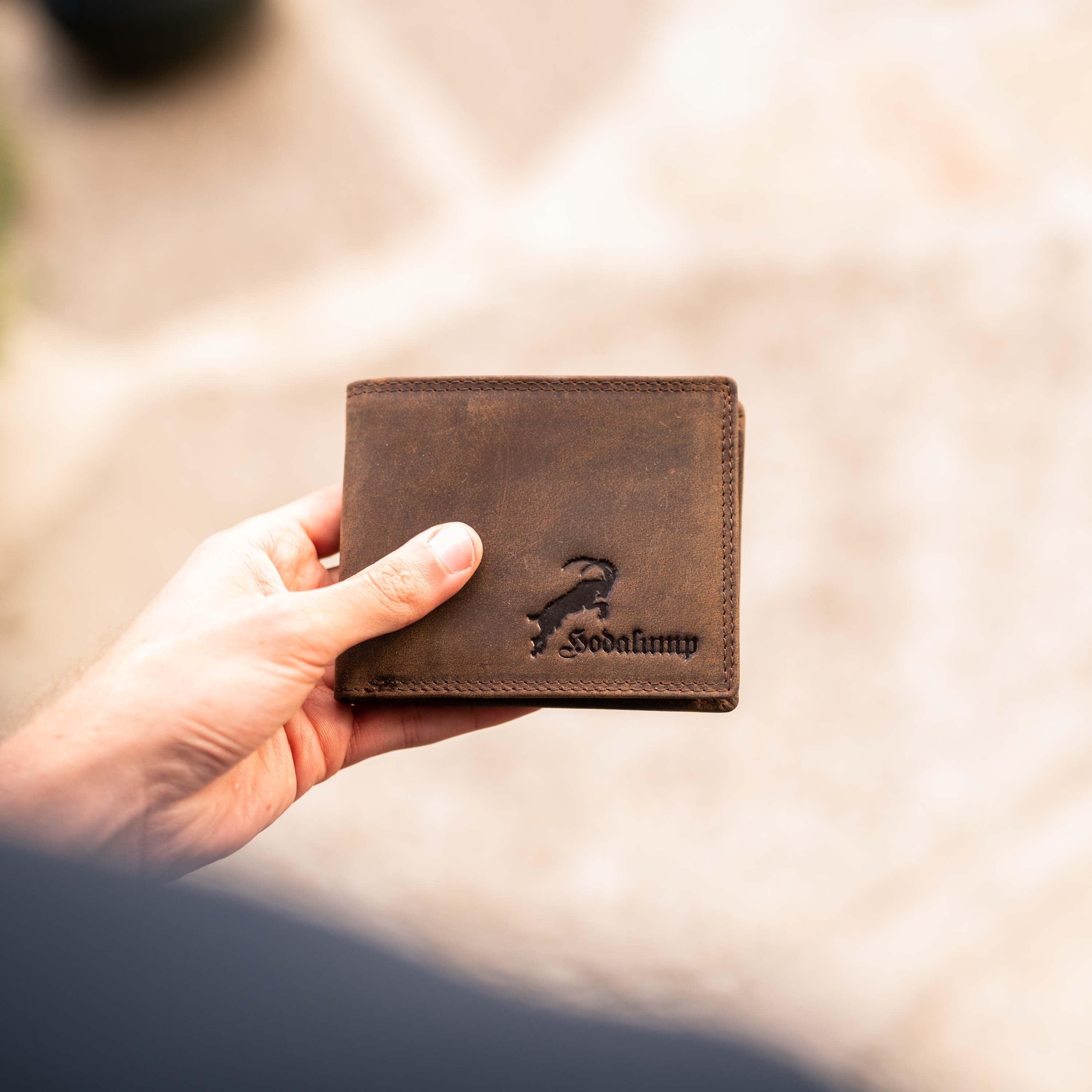
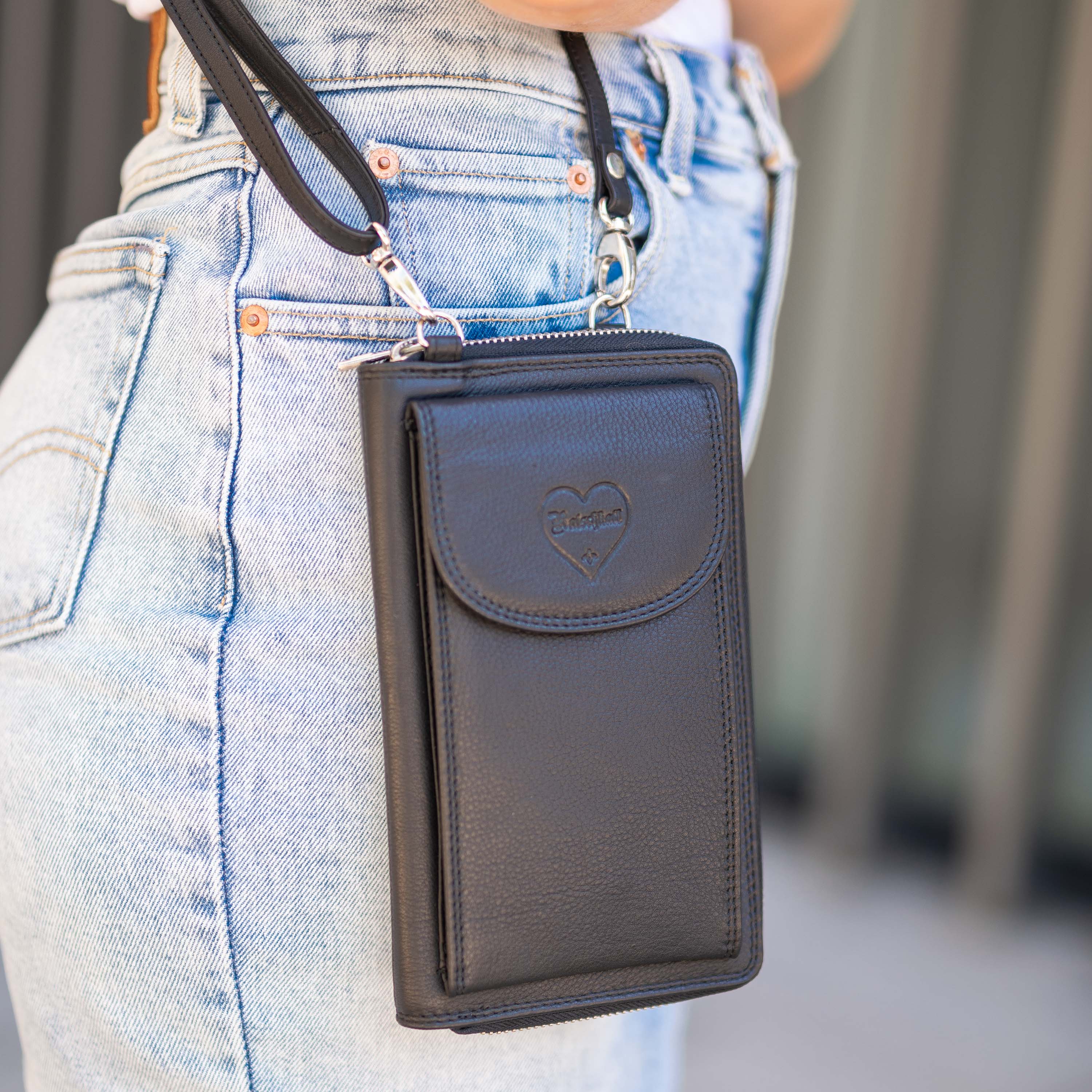
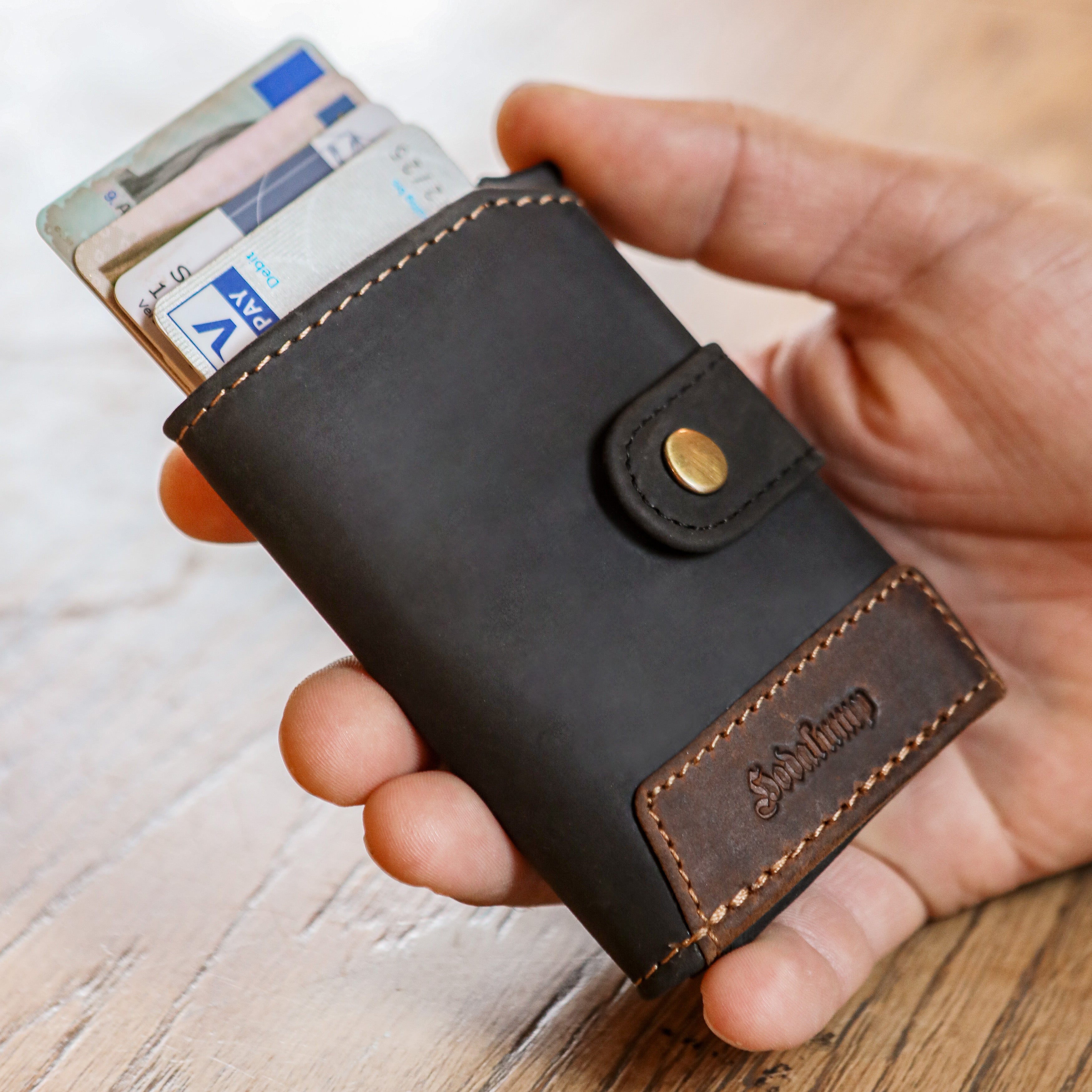
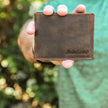
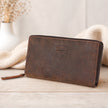
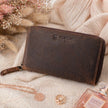
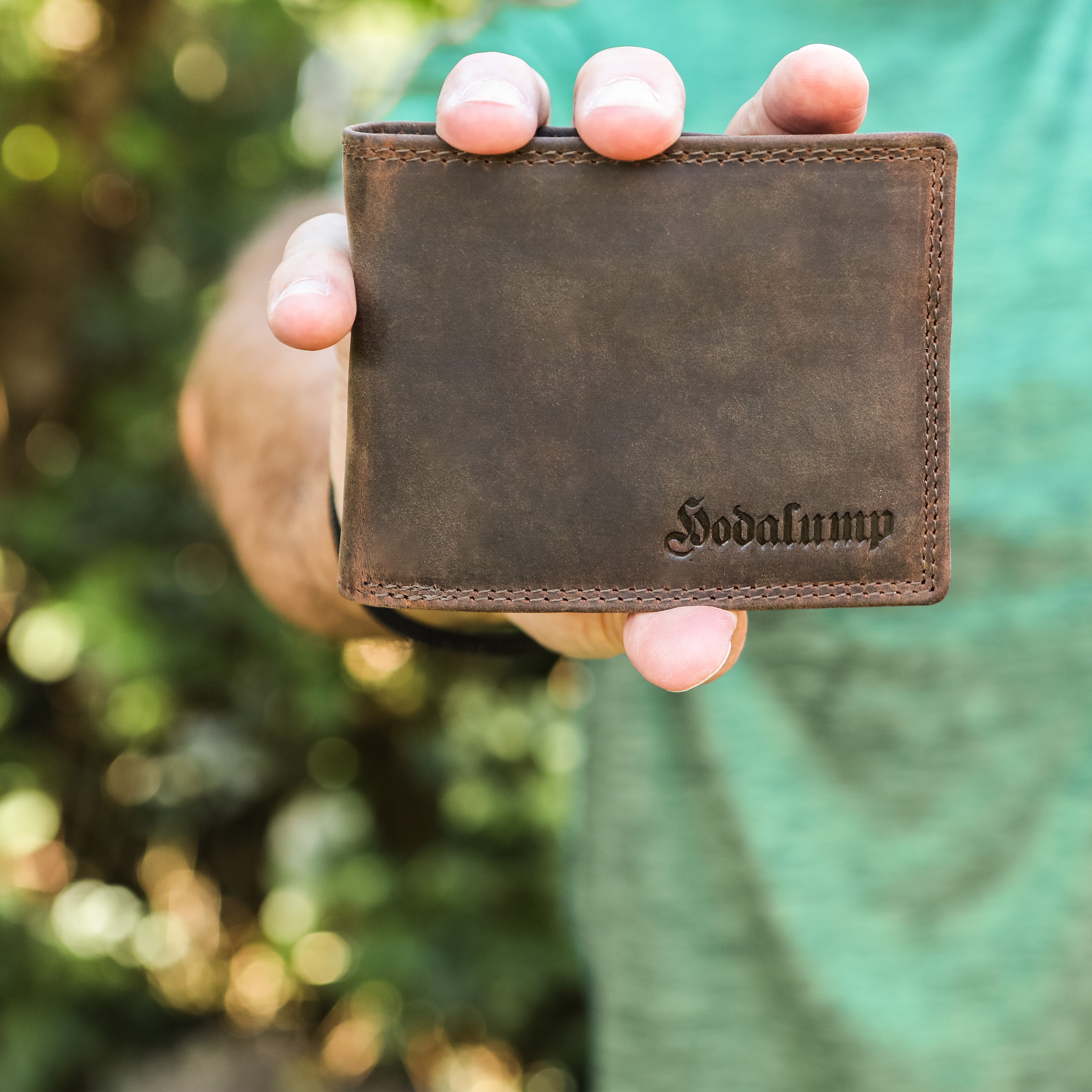
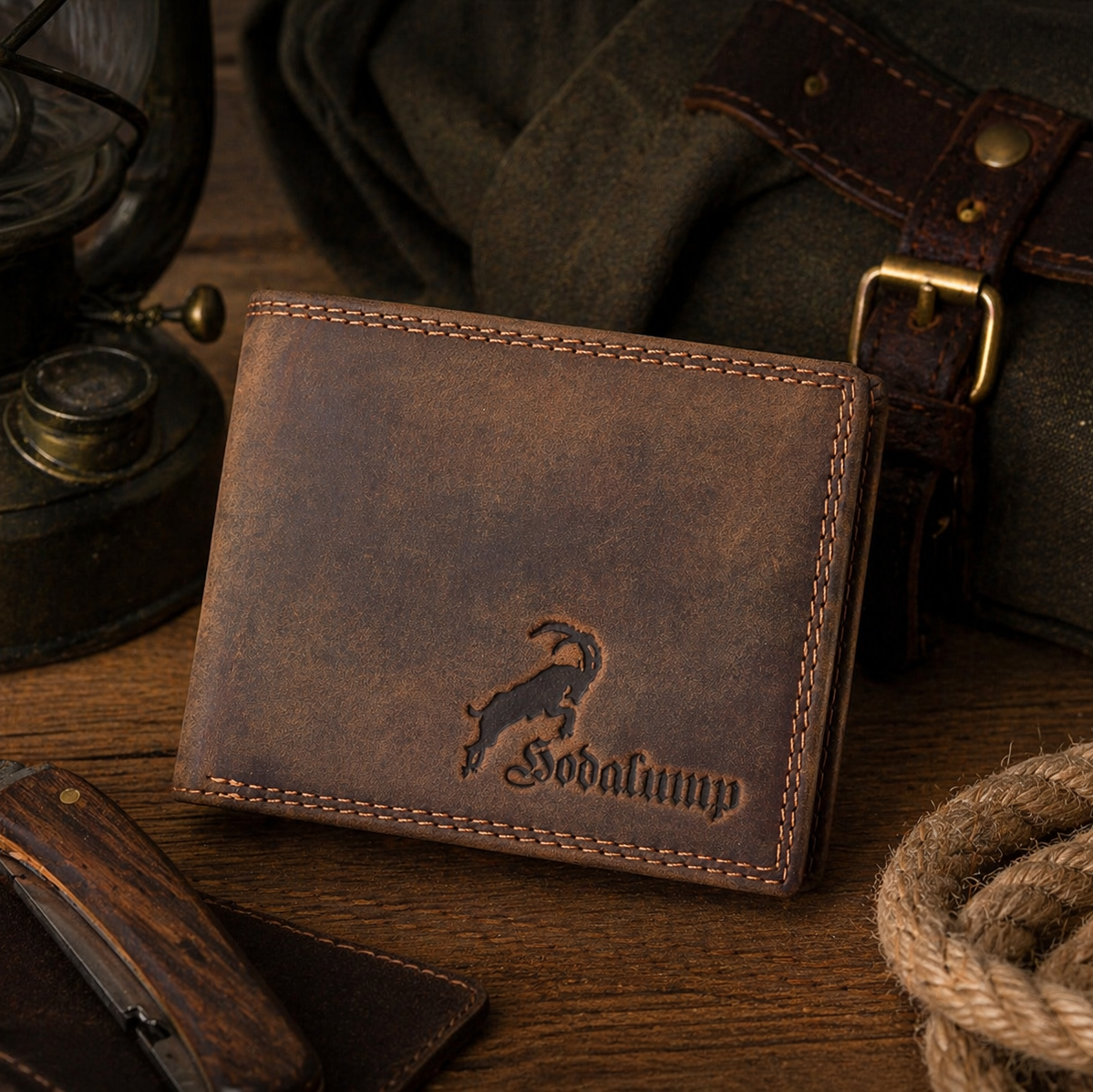
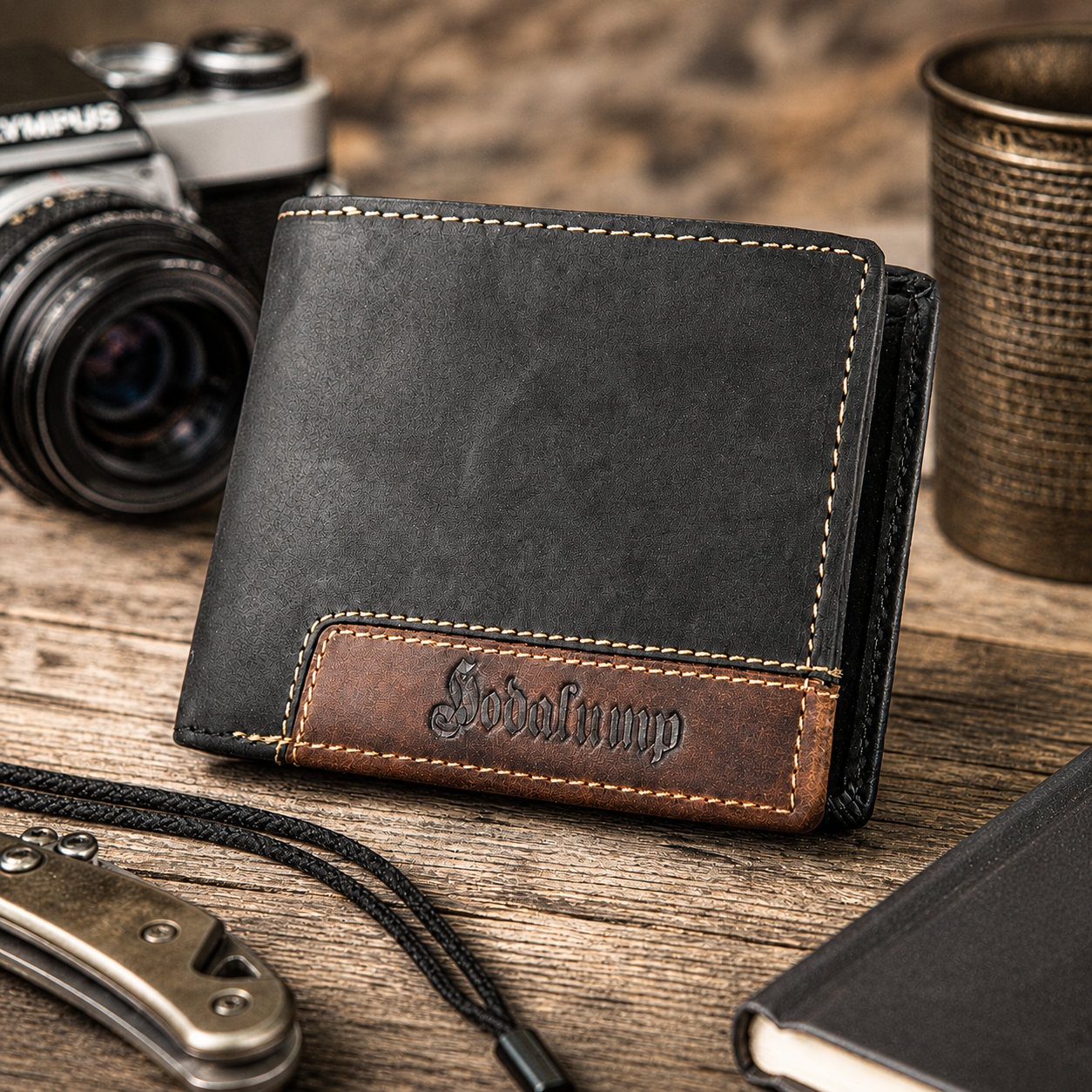
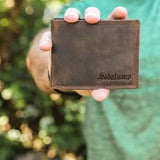
In the range this look goes by the name “Hunter Vintage” — on the Hodalump Classic Wallet (€39.95), for example, and in black as the Classic Wallet Lugge, where it is listed as Black Cow Hunter leather: matt, lightly oiled, with the same tendency to develop a patina. There is nothing more than that in the data. The tanning method and the material thickness are not documented, so they are not stated here either.
Nappa, nubuck, suede: these are not animals either
Nappa describes a softly finished smooth leather with the grain surface intact, usually from lamb, calf or goat. So the term says something about feel and surface, not about the animal. It does not appear in the descriptions here — what you will find runs under cow, buffalo, goat and Hunter.
Nubuck and suede (both loosely called “suede” in everyday speech) are buffed surfaces. Nubuck is finely buffed on the grain side, suede coarsely on the flesh side. Both feel velvety, both soak up water and grease instantly and stain accordingly easily. Treat something like that with leather grease and you mat the nap down — it goes dark and greasy and never comes back. That is one of the most common and most annoying care mistakes there is.
Which leather for which purpose
| Leather | Feel and grain | Behaves like this | Suits |
|---|---|---|---|
| Cow | fine, even, dimensionally stable | stretches little, takes embossing cleanly | belts, straps, embossed surfaces |
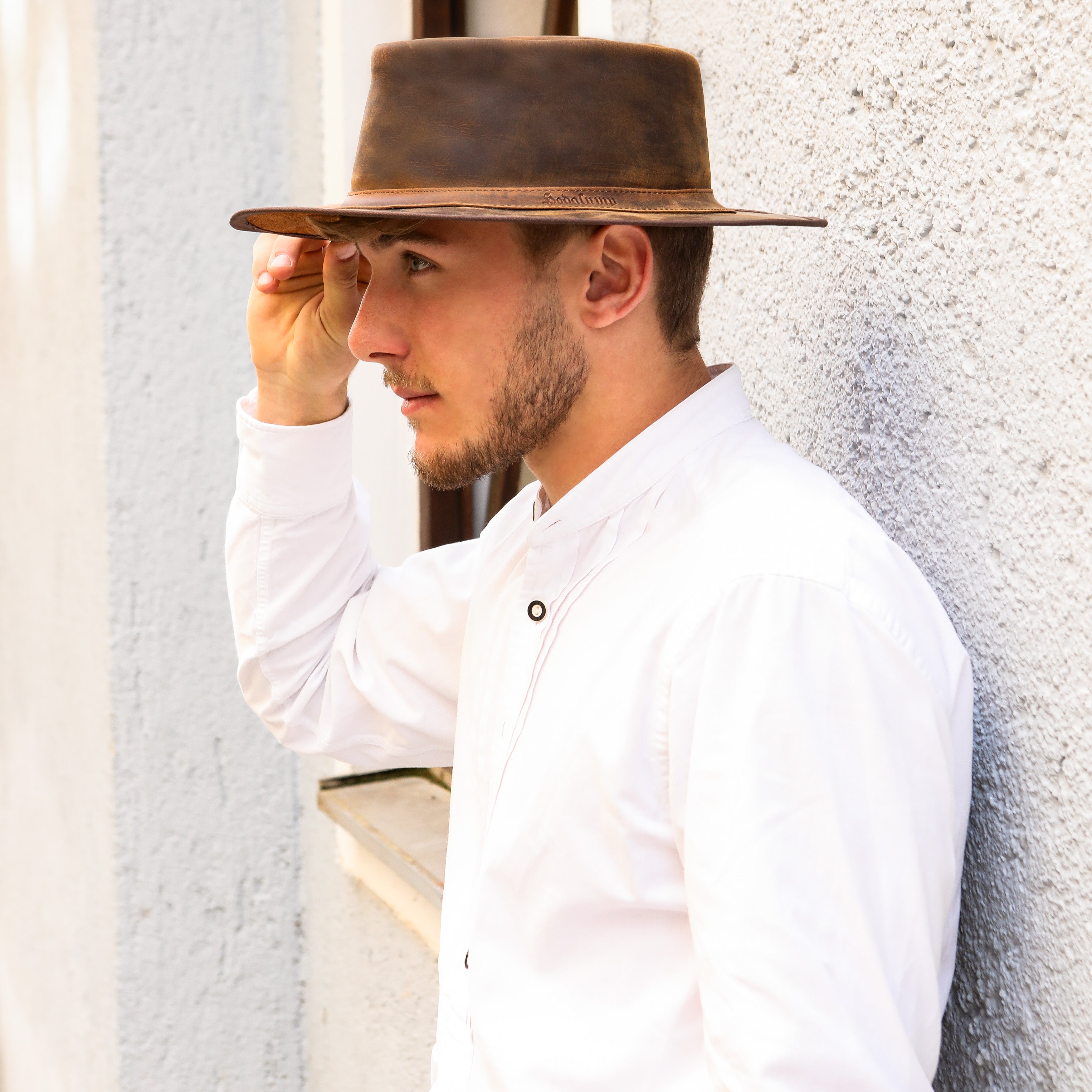
| Buffalo | coarse, restless, thick | very tough, heavy, hides scratches | bags, luggage, hats |
| Goat | finely pebbled, soft, light | follows your movement, stays stable regardless | clothing, gloves |
| Hunter (finish) | matt, open-pored, oiled | lightens when bent, develops patina fast | wallets, cases, belts |
| Nubuck / suede (finish) | velvety, buffed | soaks up water and grease instantly | nothing that gets wet regularly |
The right-hand column is not a rule but a probability. A cowhide bag is perfectly fine, it just looks new for longer. And a buffalo leather belt lasts beautifully, it simply sits chunkier.
Care depends on the finish, not on the animal
This is the practically most important conclusion of the whole article, and it is constantly confused. Not “buffalo needs grease and goat does not” — but rather: an oiled, open-pored leather takes up grease and wants it, a buffed one cannot take any. Leather grease (€8.95) is meant for smooth, oiled leathers: traditional leather trousers, wallets, belts, bags. How thinly to apply it and how long to let it soak in is covered in the guide Applying leather grease.
If you are now clicking your way through the range: the material is stated in the product description, not in the title — and where it only says “genuine leather”, the animal is simply not specified. The materials sit closest together in the men's wallets, where Hunter Vintage sets the tone, and in the leather bags, where buffalo leather dominates.