





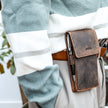
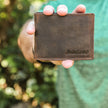
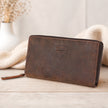
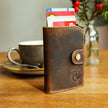
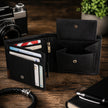
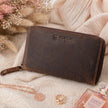




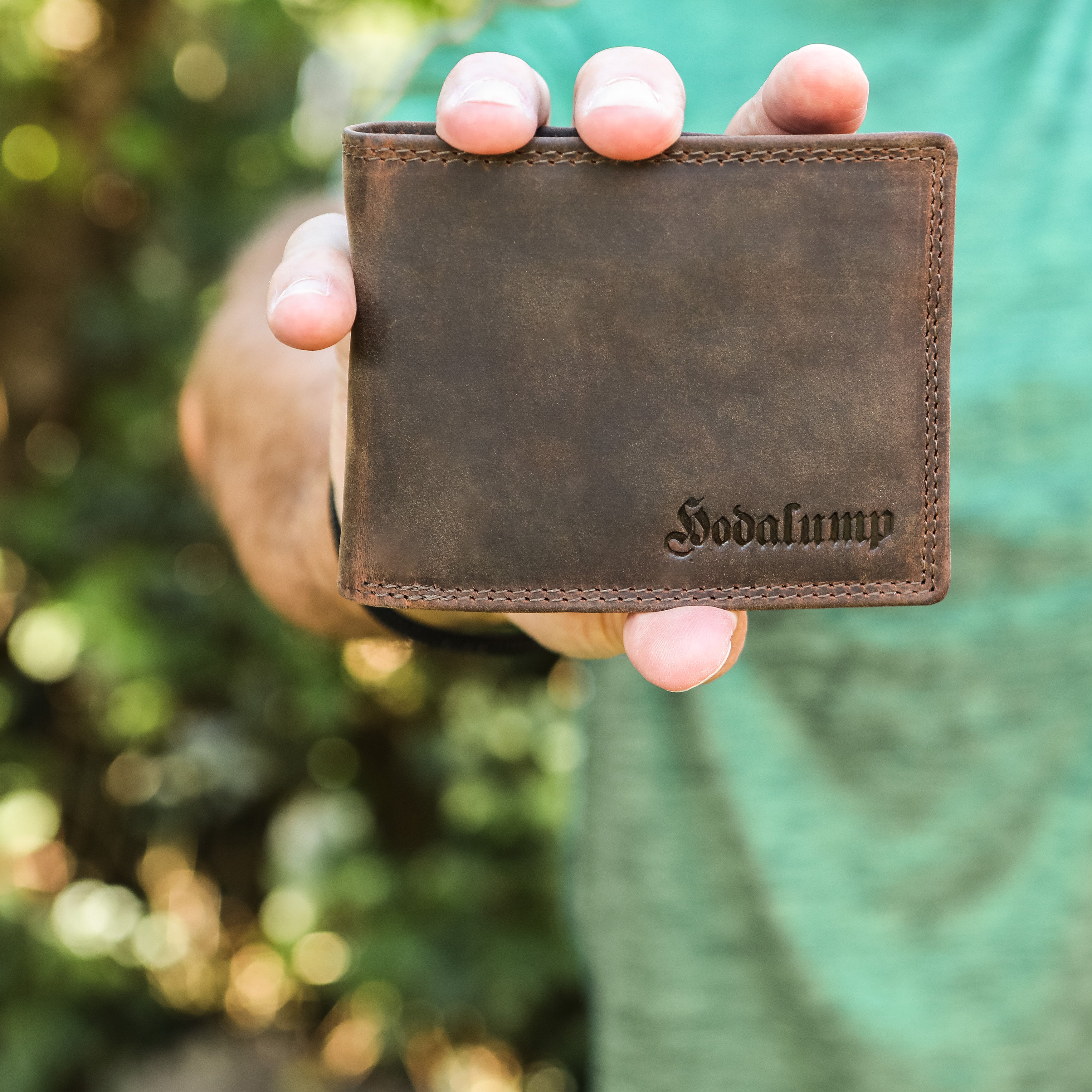
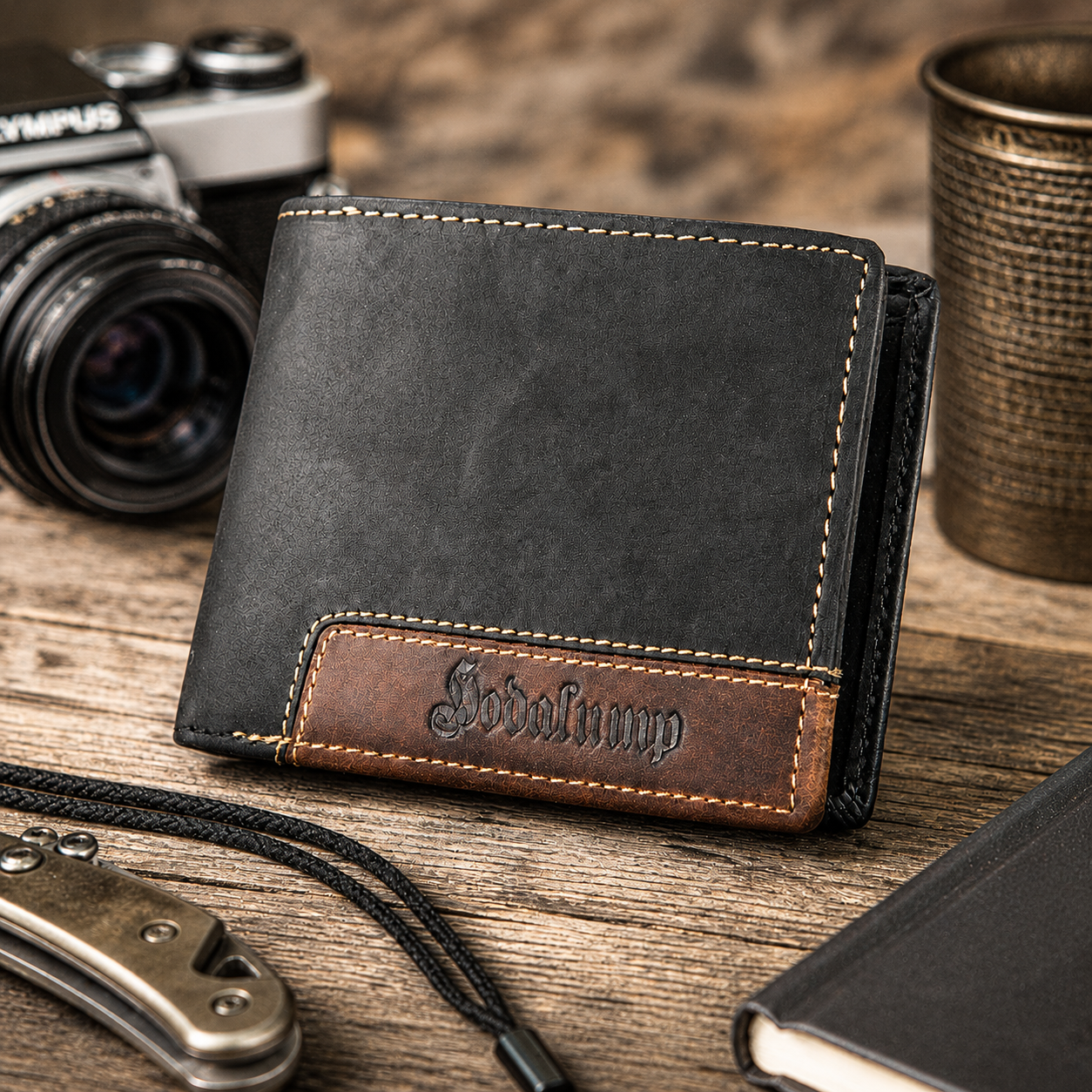
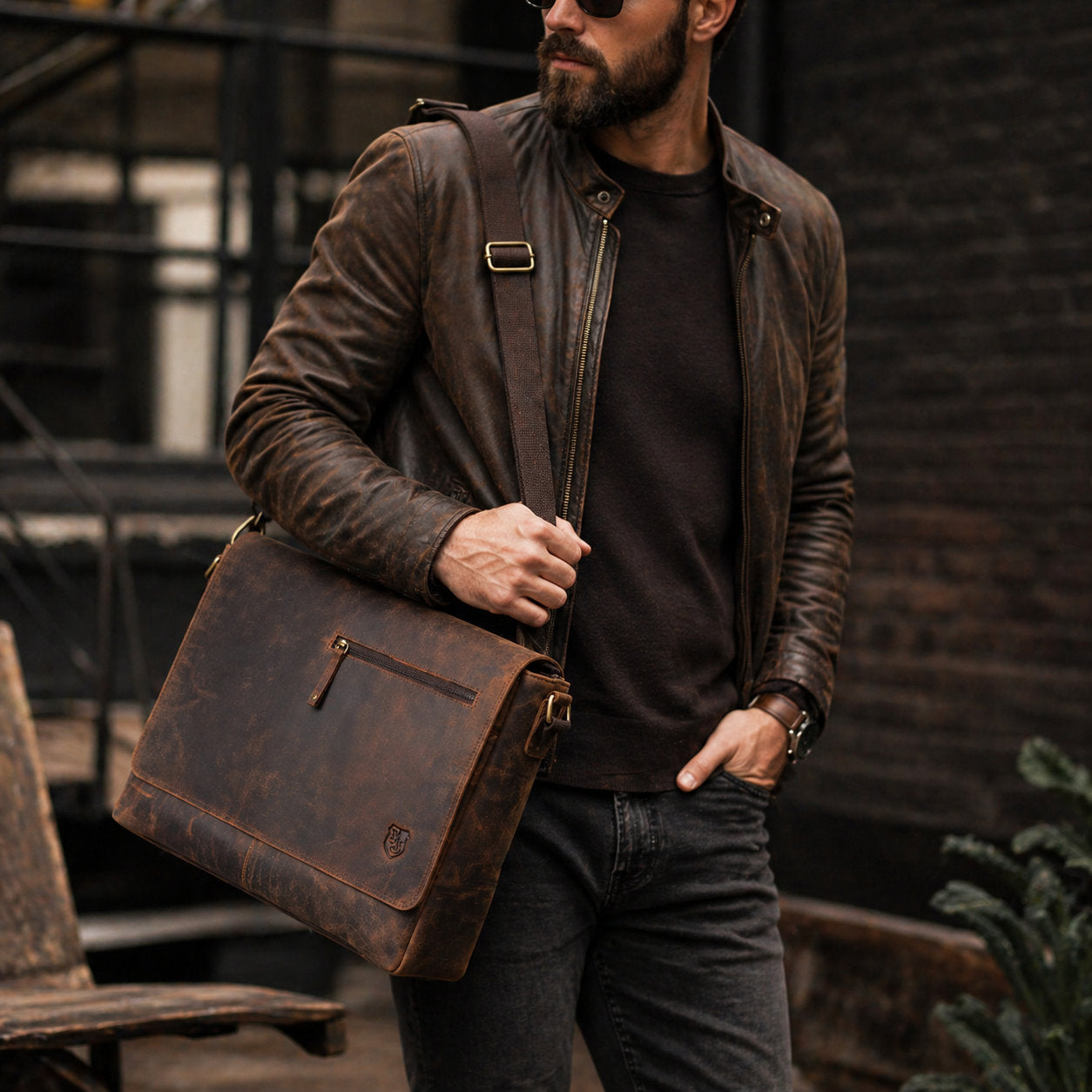
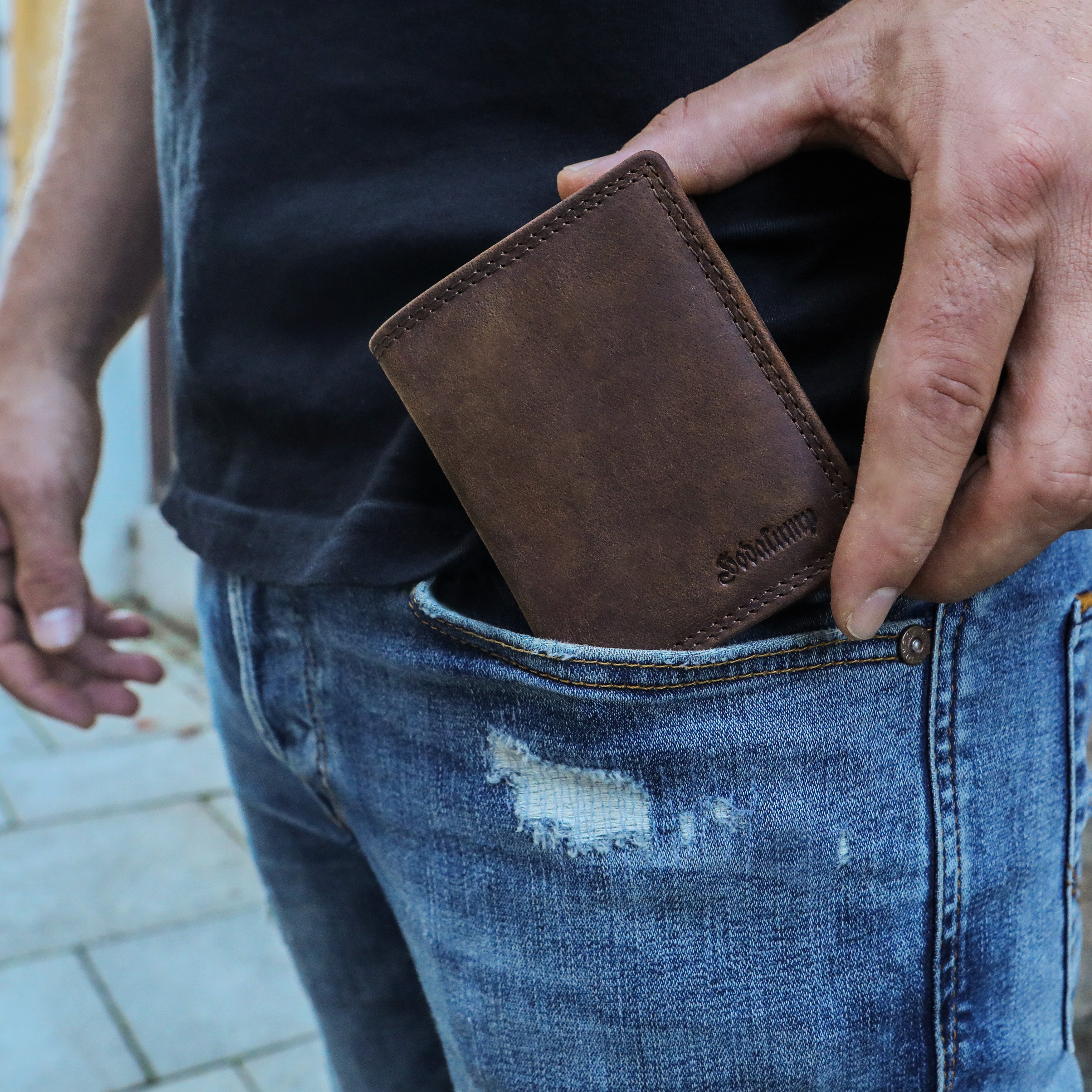


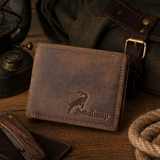
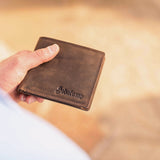
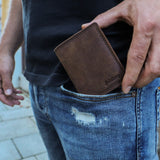
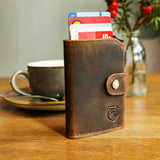
You can recognise a durable men's wallet by four things: full-grain leather instead of split leather or coated material, dense and even stitching on the edges under strain, sealed rather than raw-cut edges and a coin pocket whose base doesn't hang on a single seam. The best value for money usually lies in the €30 to €60 range: below that, the leather is almost always where savings are made; above it, you increasingly pay for brand, design or rare types of leather instead of extra durability. Our recommendation in this range is the Hodalump Classic wallet in full-grain buffalo leather, genuinely handcrafted and rated 4.77 out of 5 stars from 2,167 reviews in the shop.
This guide explains where the money in a men's wallet actually goes. You'll learn what you can realistically get in the four price ranges under €30, €30–60, €60–100 and above, at which five points you can spot durability before you buy, how to calculate cost per year of use, when a higher price stops being worth it and which model from our range suits which everyday life — and which it doesn't. If you're looking for a general overview of styles and test criteria first, you'll find it in our test and comparison of the best men's wallets. Here it's about a narrower question: how much durability do you get for how much money?
What makes a men's wallet durable
A wallet rarely breaks all at once. It wears out at the same spots again and again: at the fold, at the card slots, at the coin pocket and at the outer edge, which rubs against fabric every time you reach into your trouser pocket.
Leather: full-grain versus split leather and coated material
Full-grain leather is the outer layer of the hide with its natural grain. Its fibres are densely interwoven, it best withstands bending and friction and develops a patina over time instead of cracks. Split leather is the layer beneath. It may be sold as genuine leather, but it is loosely fibred and is often covered with a plastic coating and embossed so that it looks like grain leather. This coating is the first to break at the fold.
Online, the product information helps most: if it says “full-grain”, that's a clear statement. If it only says “genuine leather”, it remains unclear which layer was used. Which type of leather suits which everyday life is covered in more depth in our guide to buffalo leather, cowhide and faux leather.
Stitching
The seam is where a cheap wallet gives itself away first. Look for an even stitch length, a strong thread and for the seam to be backstitched or knotted at the ends rather than simply running out. The edges of the card slots are under particular strain, because every card pulls at the leather as it's taken out. If these edges are only glued, they often come loose after just a few months. An extra seam on the card slots isn't decoration, it's protection against wear.
Edge finishing
The outer edge rubs against denim, lining and fingers every time you put the wallet away. A cleanly sanded, dyed or sealed edge stays smooth. A raw-cut edge frays, absorbs moisture and becomes wavy over time.
The base of the coin pocket
Coins are heavy and hard. Every time you sit down, they press on the base of the coin pocket and rub against the seams. Well-built coin pockets have a base made of one piece of leather that's stitched at the sides, instead of a bottom seam exactly where the weight sits. A glance into the opened pocket is enough.
Press stud or zip
With a press stud, the weak point is the leather around the stud: if it's too thin, the stud will eventually tear out. With a zip, it's the teeth and the slider, especially if they're made of lightweight plastic. The press stud is flatter and can be opened with one hand. The zip holds coins more reliably if the wallet tips over in a bag, but adds bulk. For the back pocket, the press stud is usually the better choice.
Price ranges: what you realistically get
Between the price ranges, what you're paying for shifts. The descriptions are based on experience, not rules.
Under €30
In this range you'll find a lot of coated material, split leather and faux leather, often with glued card slots and bound edges. That's perfectly fine for a second wallet, for a festival or for someone who wants to switch every year or two anyway. For daily use over years, it's usually not enough. Full-grain leather is mainly available here in small formats, where less leather is used.
€30–60
This is the range in which the balance of price and durability is most often right. Here, full-grain leather in classic wallet size is realistic, with stitched rather than glued compartments, finished edges and a full-size coin pocket. RFID protection is standard in this range. What you usually don't get here: well-known designer names, rare types of leather or elaborate hand stitching with two needles. For lifespan, that's of secondary importance.
€60–100
From here on, the gain in durability gets smaller. You often pay for a well-known brand, a special design, thicker or specially tanned leather or a more elaborate interior. Some of that extends the lifespan, much of it is a matter of taste. This range is worth it if a particular detail matters to you, not as general insurance against wear.
Over €100
Above €100, you're primarily buying brand, exclusivity or rare material. A wallet made of exotic leather or bearing a fashion house's logo doesn't last twice as long as a solid full-grain leather wallet from the mid-range. Anyone buying here should know they're paying for something other than durability, and that's legitimate.
Cost per year of use: a thinking aid
More telling is what the wallet costs you per year that you actually use it. The following calculation is purely an example with round assumptions. It doesn't promise any lifespan, because that depends heavily on how full it is, how it's carried and how it's treated.
Suppose a coated wallet for €20 looks so worn after two years that you replace it. Then it costs you €10 per year. A full-grain leather wallet for €50 that you use for eight years costs you a little over €6 per year. A designer wallet for €200 that also lasts eight years costs you €25 per year. With your own figures, the same formula applies: purchase price divided by realistic years of use.
The example shows two things. First, the mid-range beats the cheap range as soon as the leather lasts significantly longer, even though it costs more than twice as much at purchase. Second, the expensive range hardly closes this gap through durability, because it would have to last many times as many years. Its added value lies elsewhere.
When more expensive isn't worth it
A higher price is only worth it if it reaches the spots where a wallet wears out. In four cases, that's generally not so:
When you're mainly paying for the name. A brand logo doesn't extend the lifespan. With expensive wallets, check the same five points as with cheap ones: leather, stitching, edges, coin pocket base, closure. If they're no better than in the mid-range, the surcharge is a matter of taste.
When you hardly use cash. Anyone who pays almost exclusively by card or smartphone doesn't need a large note compartment or a coin pocket. A small full-grain leather card holder has fewer seams, fewer folds and therefore fewer spots that can wear out. Here you often get more durability for less money than with a large wallet.
When you change wallets often anyway. Then no wallet gets to use up its lifespan, and the cheap one is the more sensible choice.
When the wallet is permanently overfilled. No leather can withstand twenty cards being squeezed into twelve slots in the long run. A more expensive model won't help here; a larger one will, or a look at what really needs to go in.
Five models in the value-for-money check
The table above puts five models from our range side by side, each from its own review group. All five are in the under €30 or €30–60 ranges. All details come from the product data.
Hodalump Classic wallet: the recommendation
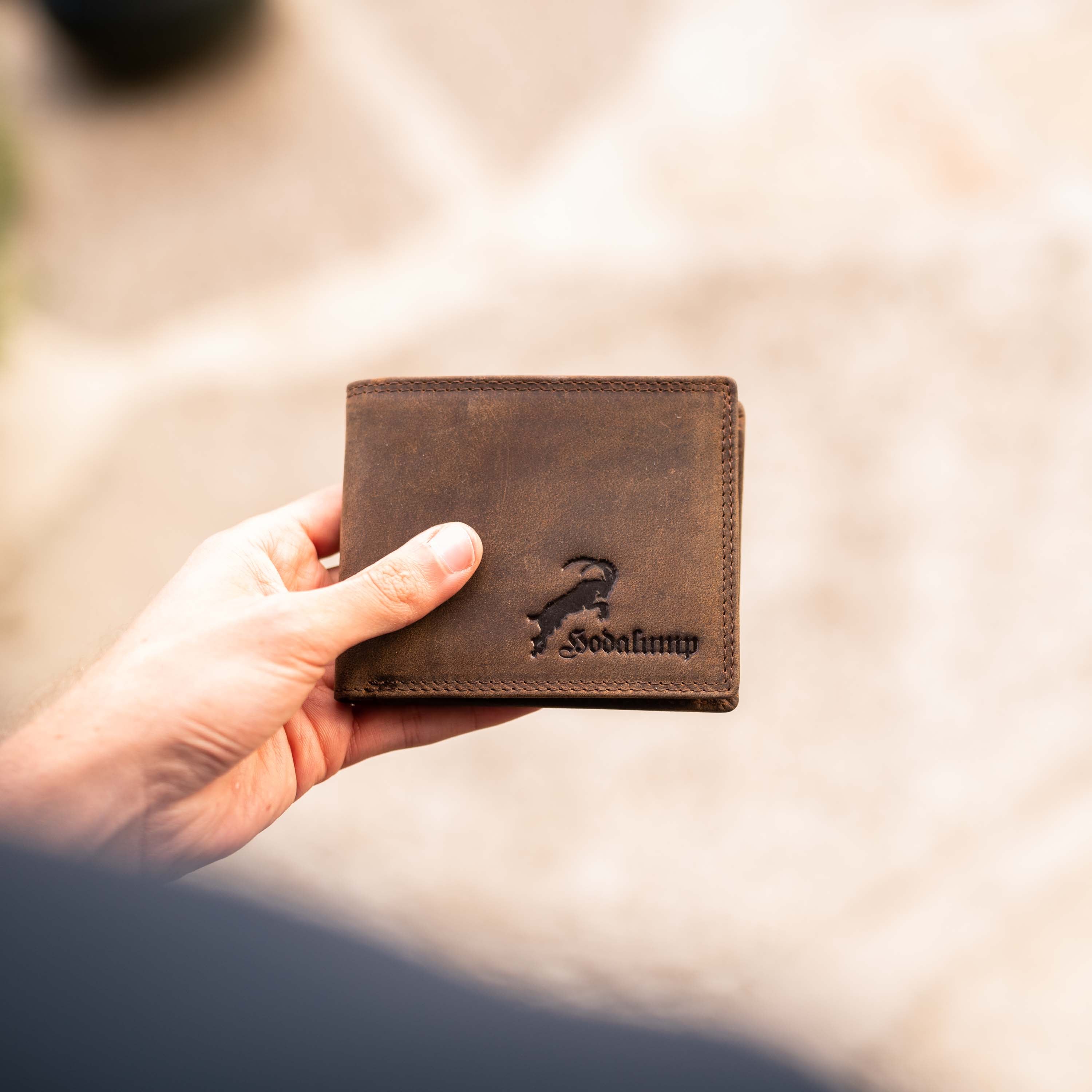
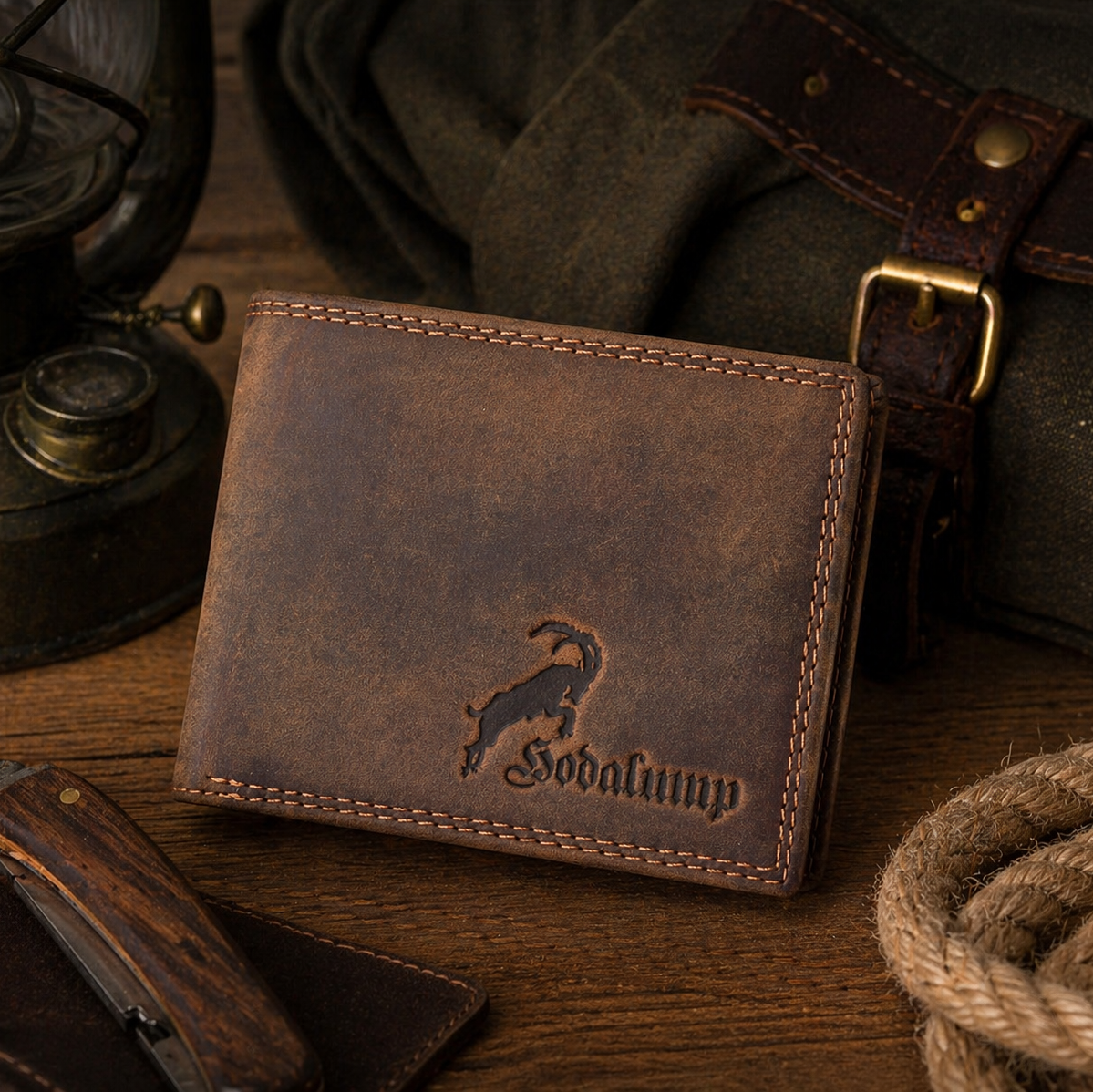
The Classic is a landscape wallet measuring 12 × 9.5 × 2 cm, made of full-grain buffalo leather with a hunter vintage look. The lining is made of dense polyester, and the RFID protection is TÜV-tested according to the product information. It is genuinely handcrafted and is rated 4.77 out of 5 stars from 2,167 reviews. It suits anyone who wants a classic, flat wallet for cards and notes and plans to keep it for years. It's not a fit for you if you expect smooth, flawless leather, because the vintage look is irregular from the start and becomes more so with every year.
Ibex wallet Xare
The Xare measures 12 × 9.5 × 2.5 cm and, according to the material information, is also made of full-grain buffalo leather, with RFID protection and an embossed ibex. It's in the €30–60 range and is rated 4.77 out of 5 stars from 1,045 reviews. It's the choice for anyone who wants a striking motif; if you prefer it plain, take the Classic.
Classic wallet Kare
At 12.5 × 10 × 2.5 cm, the Classic wallet Kare is slightly larger and, according to the description, offers room for about 12 cards, a separate coin pocket and a divided note compartment. Here it's worth looking at the colour: the brown version is made of full-grain buffalo leather with a hunter look, the black one of nappa cow leather. The black smooth leather looks more elegant but develops less patina than the brown hunter leather. The Kare is rated 4.81 out of 5 stars from 168 reviews.
Slim wallet Franz
The slim wallet Franz is the counterexample to the assumption that good leather can't be had for under €30. It measures just 8 × 9.5 × 1.5 cm, is made of full-grain buffalo leather and has several card slots, a note compartment for folded notes and a small coin pocket with a press stud. It's rated 4.73 out of 5 stars from 266 reviews. It's not a fit, however, if you want to carry notes unfolded or take lots of cards with you.
Card holder
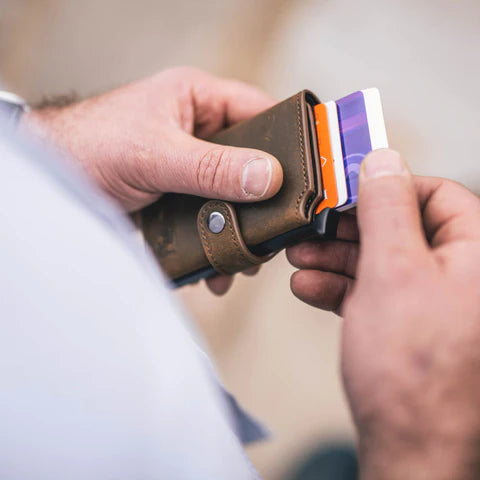
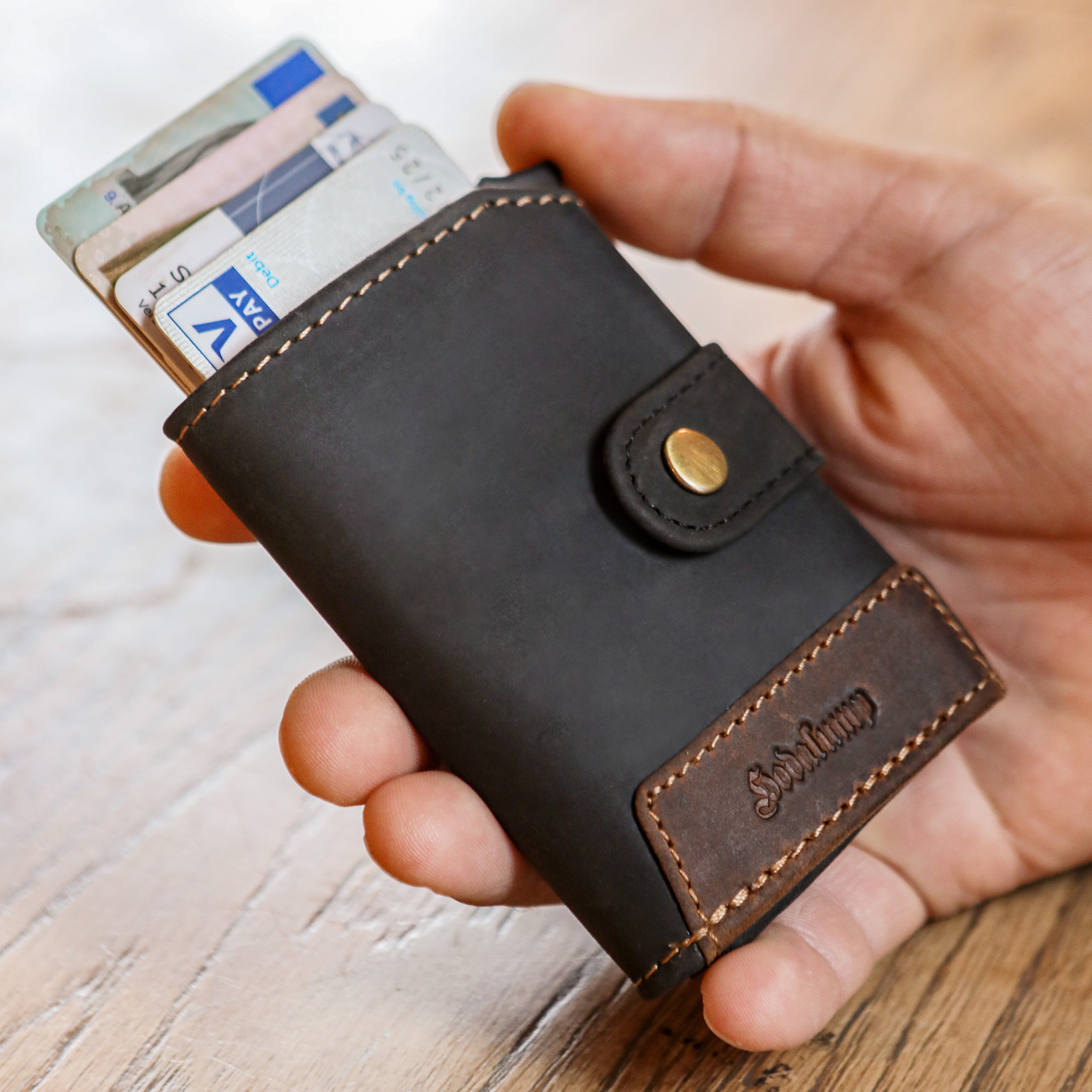
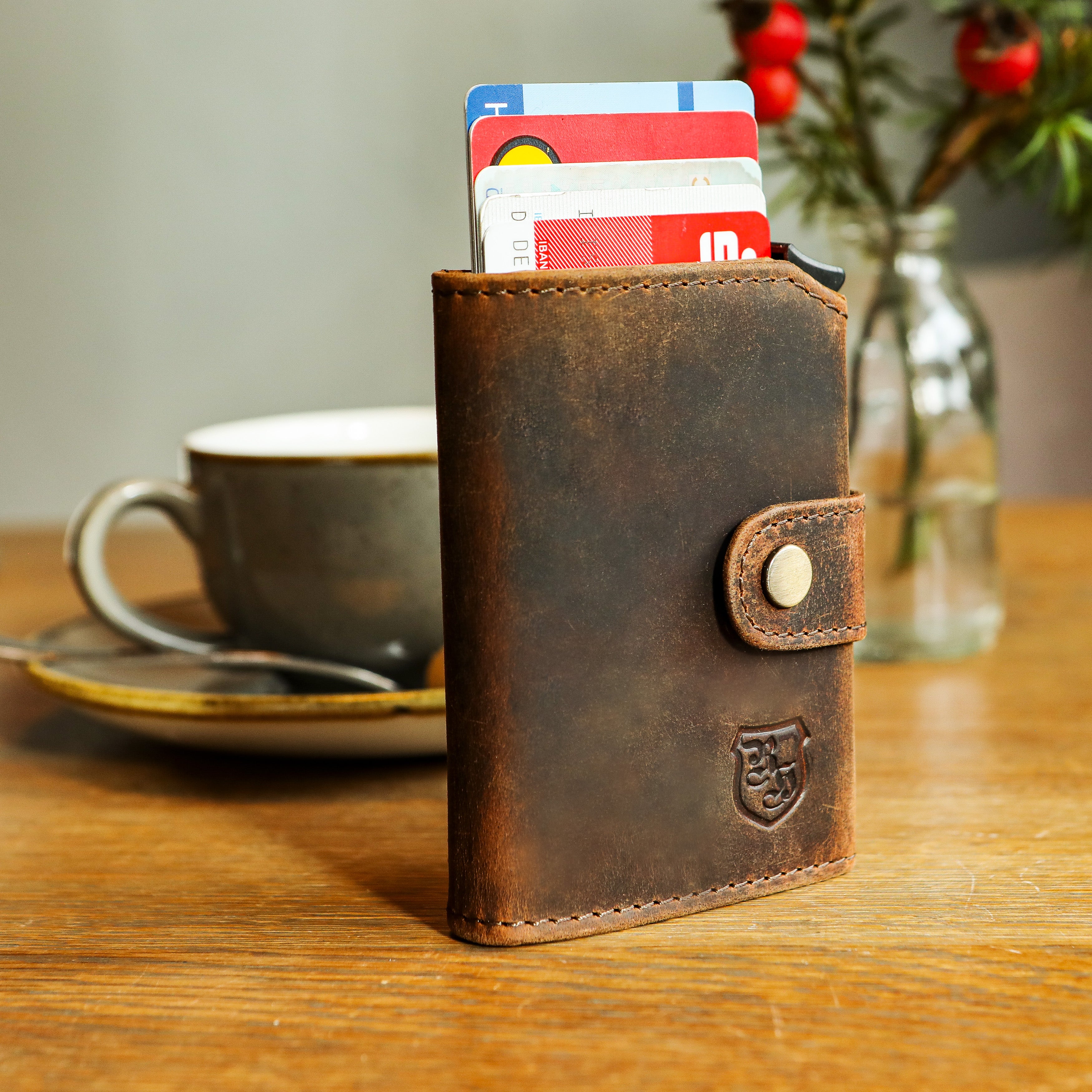
The Hodalump card holder measures 10 × 7 × 2.5 cm and offers room for up to 10 cards, a coin pocket and a compartment for folded notes. It's made of full-grain buffalo leather, and according to the product description the card slots are extra stitched, exactly where card holders wear out first. With 4.66 out of 5 stars from 2,058 reviews, it's the choice for anyone who's almost cashless. For receipts, lots of notes or a large stack of cards, it's too small.
You'll find more styles from slim to large in the overview Men's wallets.
How to get the years out of your wallet
Three habits make the biggest difference. First: don't overfill it. Every extra card strains the fold and the seams of the card slots. Receipts and unused loyalty cards don't belong in it. Second: don't sit on it in your back pocket all the time. The pressure when sitting bends the wallet against its fold direction and strains the base of the coin pocket. Third: look after oiled leather now and then. A thin layer of leather grease or leather balm two to three times a year is enough; dry wet wallets at room temperature and never on the radiator.
If you want to know which types of leather and layouts are generally suited to men's everyday life, you'll find the basics in our comprehensive guide to material, layout and durability.
Frequently asked questions about durable men's wallets
How long does a good leather wallet last?
A full-grain leather wallet with stitched compartments often lasts many years with daily use. There's no fixed number, because how full it is, how it's carried and how it's cared for influence its lifespan more than the purchase price.
Is an expensive wallet automatically more durable?
No. From around €60, durability only rises slowly with the price; above €100 you mainly pay for brand, design or rare material. What matters are leather, stitching, edges, coin pocket base and closure, and these can be checked in any price range.
How can I tell online whether a wallet is made of full-grain leather?
From the material information. “Full-grain”, “full-grain leather” or “full leather” are unambiguous terms. “Genuine leather” alone only says that it's leather, not which layer. If precise information is missing, close-ups help: visible pores and small irregularities point to grain leather.
Press stud or zip on the coin pocket: which lasts longer?
Both last a long time if they're fitted properly. The press stud is flatter and better suited to a trouser pocket; its weak point is the leather around the stud. The zip secures coins better but adds bulk, and cheap plastic teeth are its weak point.
Is RFID protection worth it in a wallet with good value for money?
In the mid price range it costs hardly any extra and is standard there. It should be firmly built in, not enclosed as a loose card. Tested protection, as our models have according to the product information, is a useful extra, but no reason to buy a poorly made wallet.
Why does my leather wallet get darker over time?
Oiled, open-pored leather absorbs skin oils, light and friction and darkens at the spots where it's handled. This patina isn't a defect but a sign that the leather isn't coated.
Conclusion
The best value for money in a durable men's wallet lies in the €30 to €60 range. There you get full-grain leather, stitched compartments and finished edges without paying extra for brand or exotic leather. Under €30, good leather is mainly worth it in a small format; above €60, durability hardly increases with the price. Calculate in cost per year of use rather than purchase price, check the five wear points and don't buy bigger than you plan to fill. Our recommendation is the Hodalump Classic wallet in full-grain buffalo leather; if you live almost cashless, take the card holder, and if you want it slim and affordable, the slim wallet Franz. Behind it is a family business since 1947.