
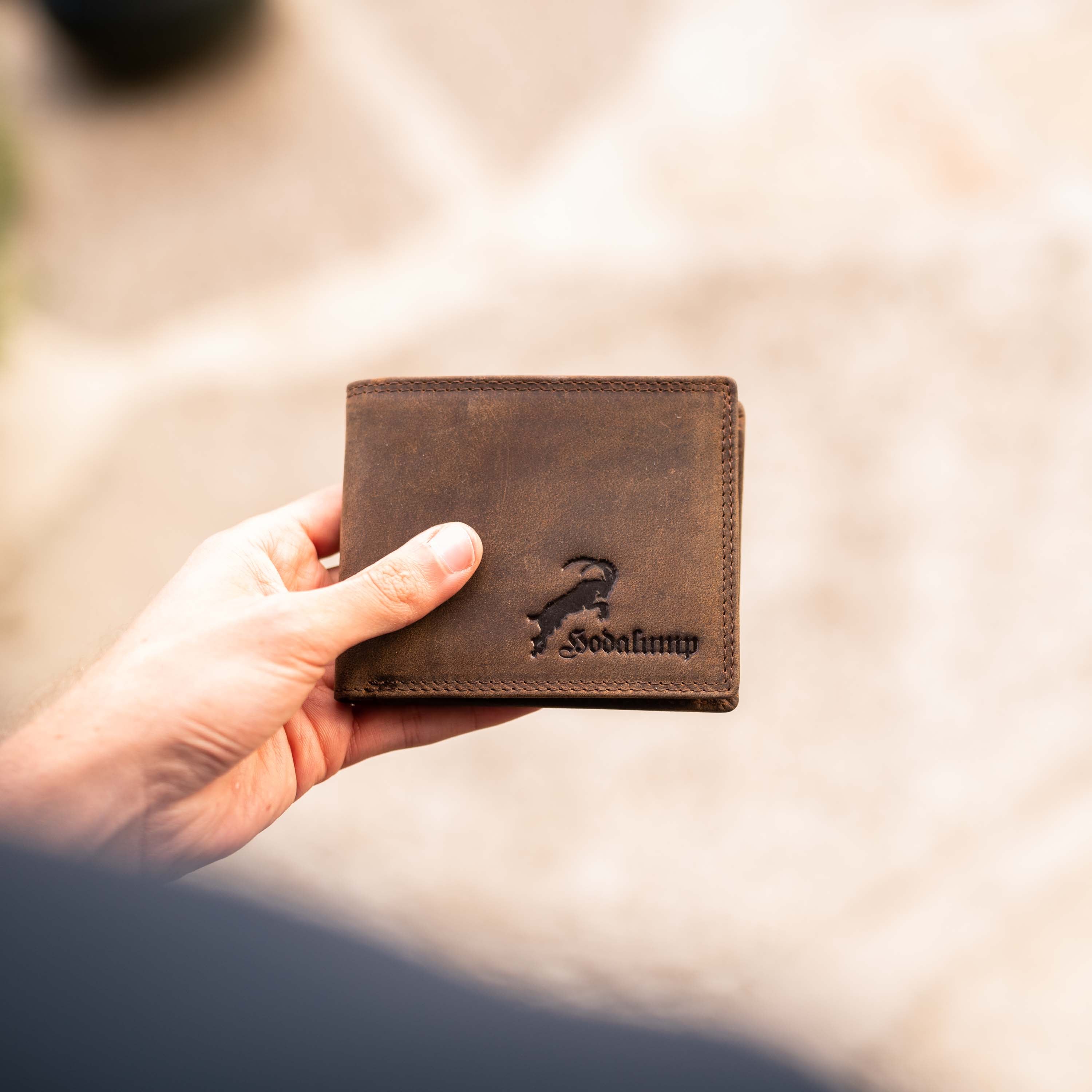
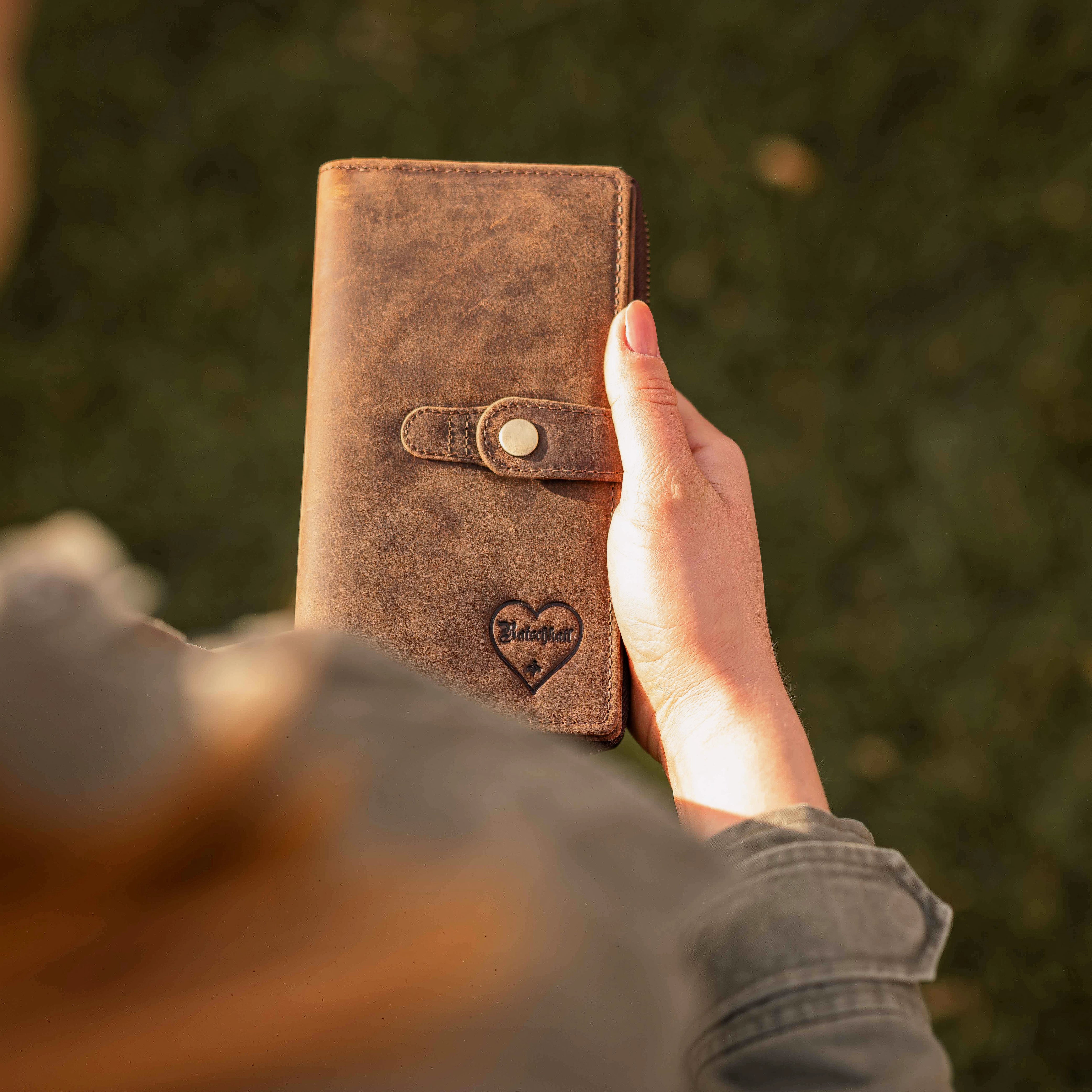
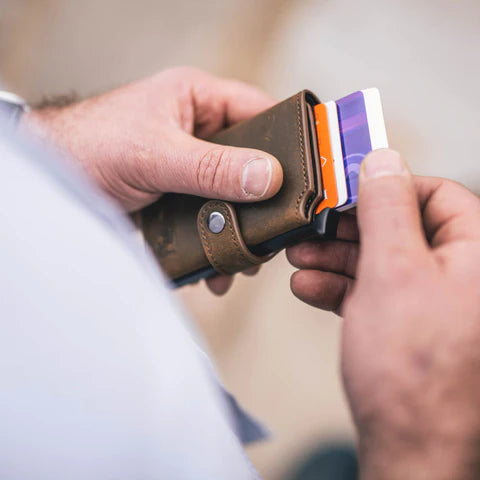
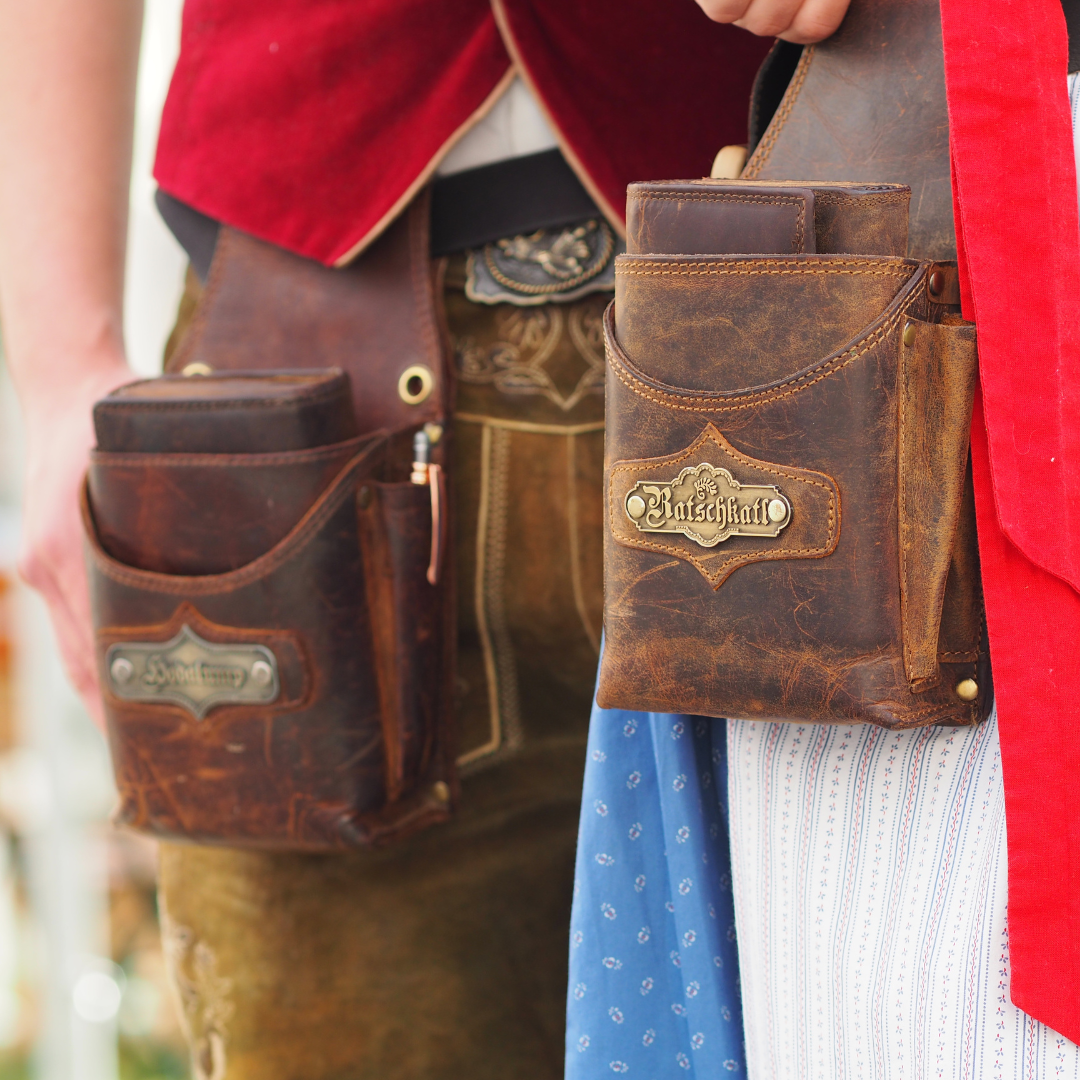
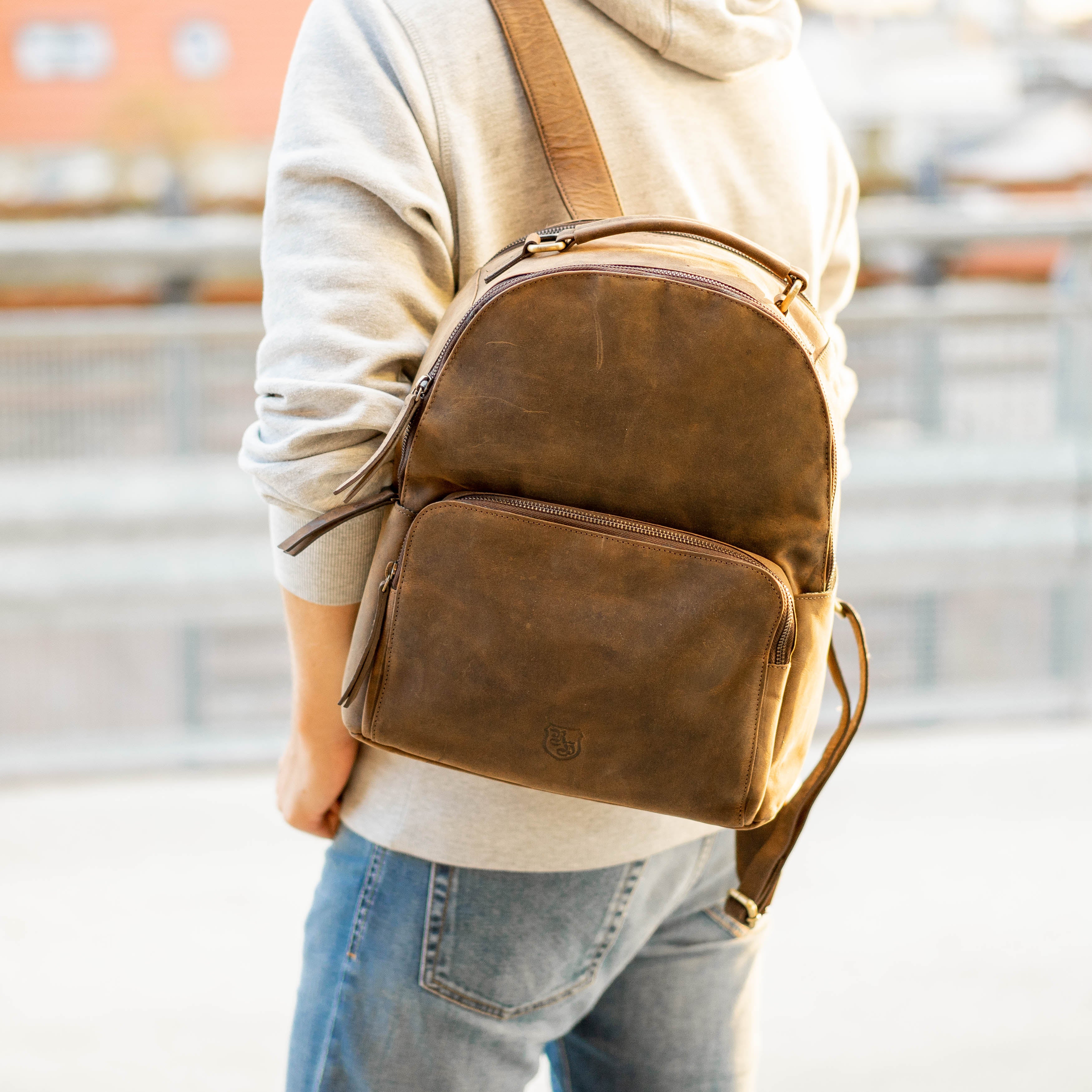
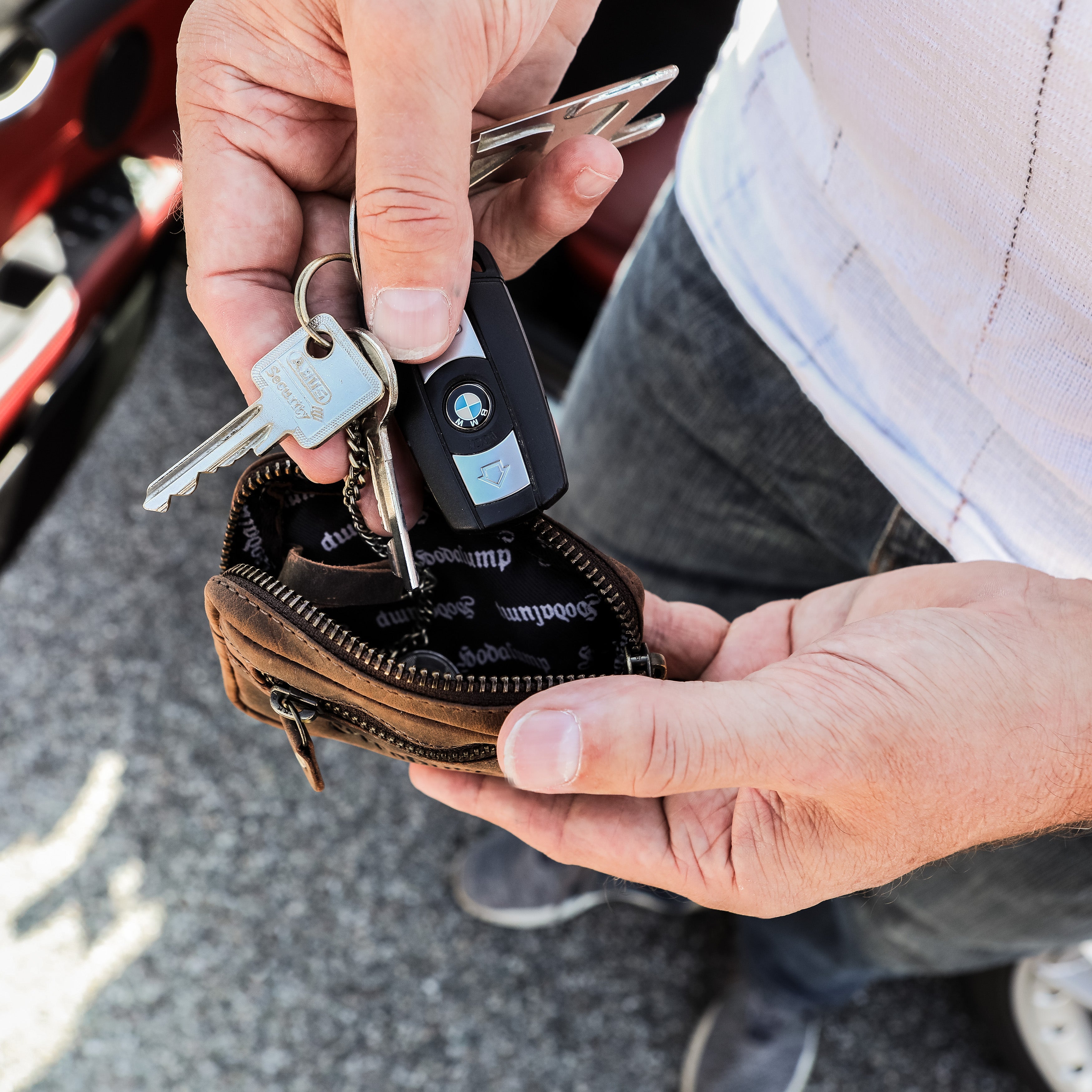
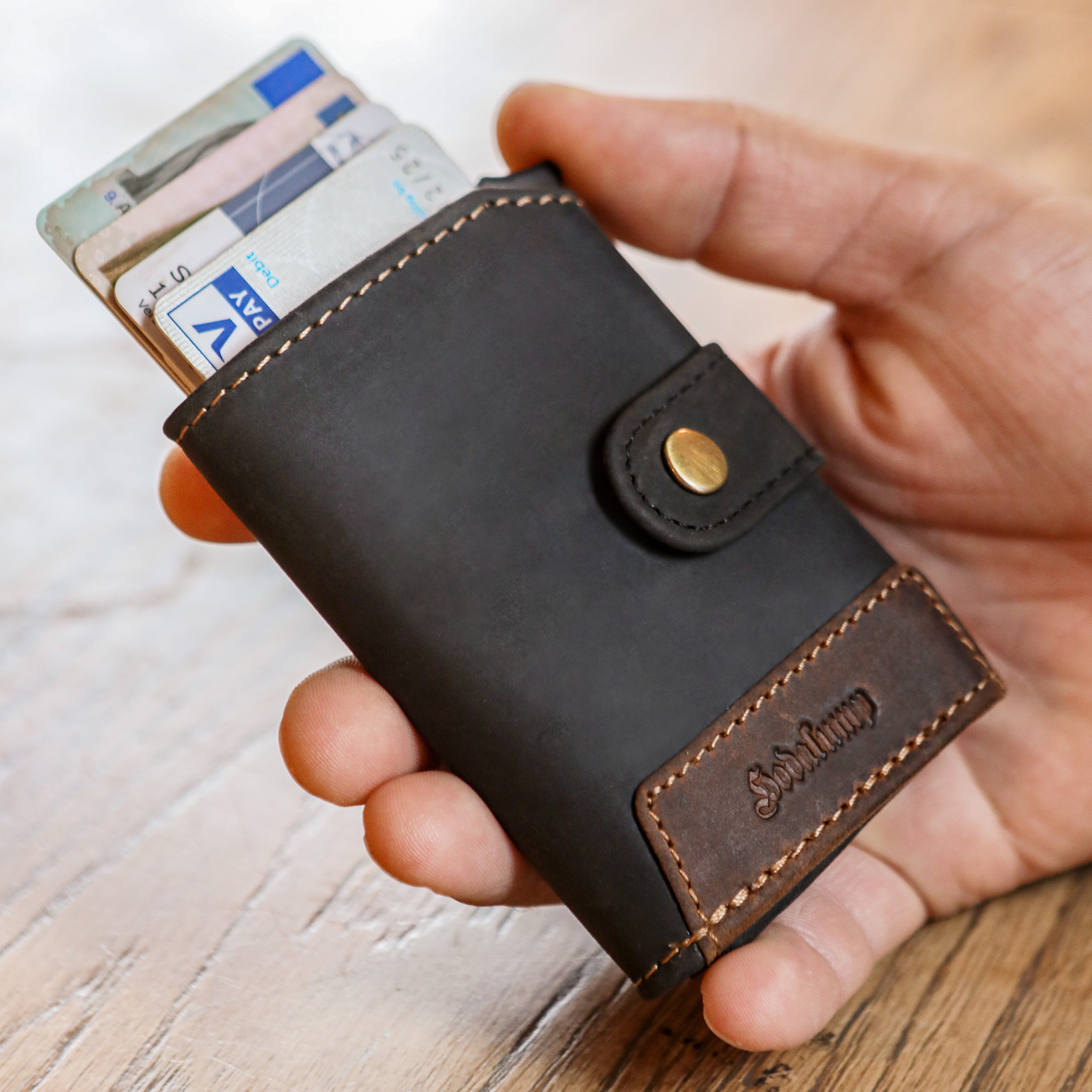
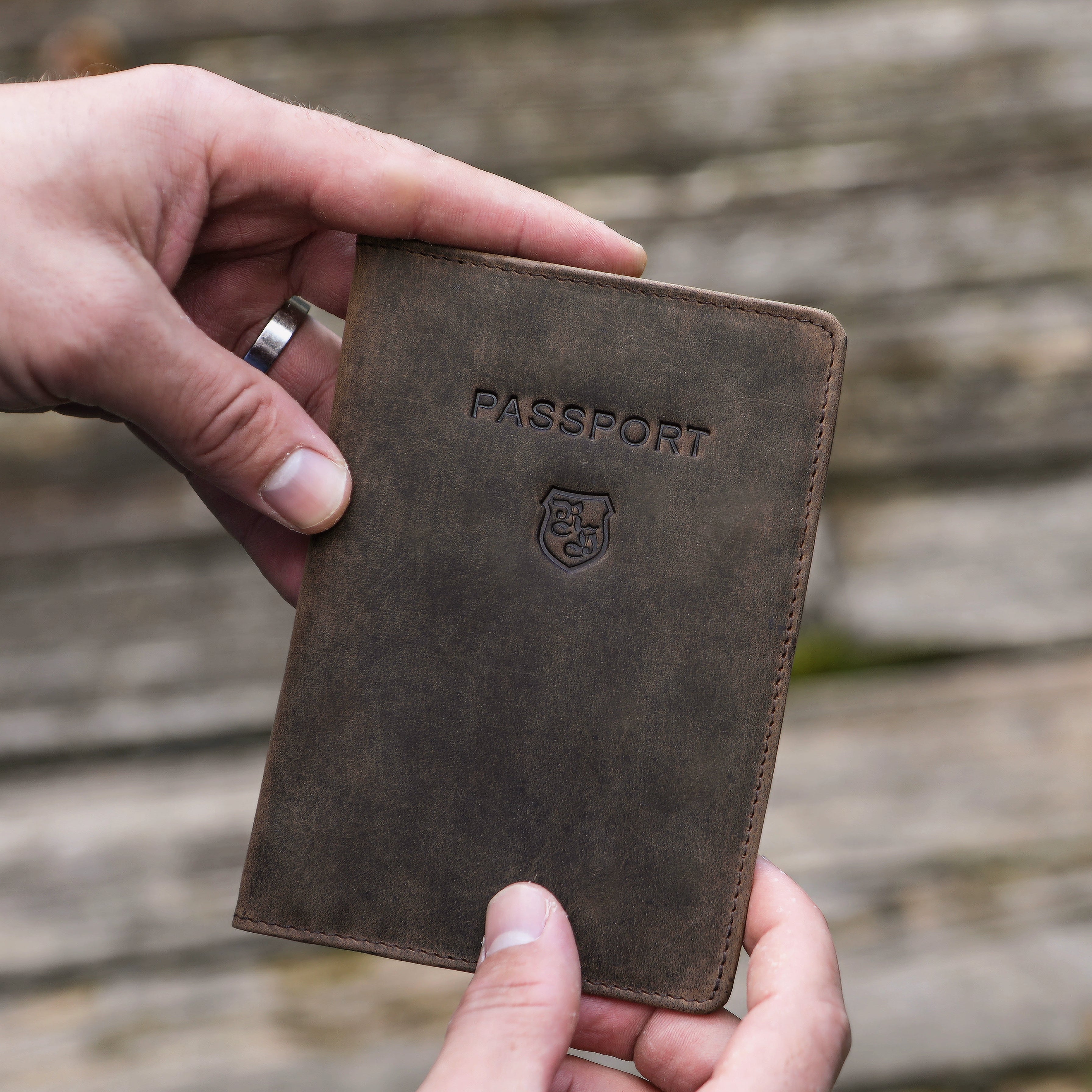






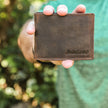
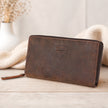
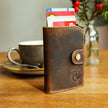
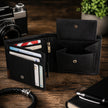
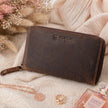

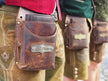



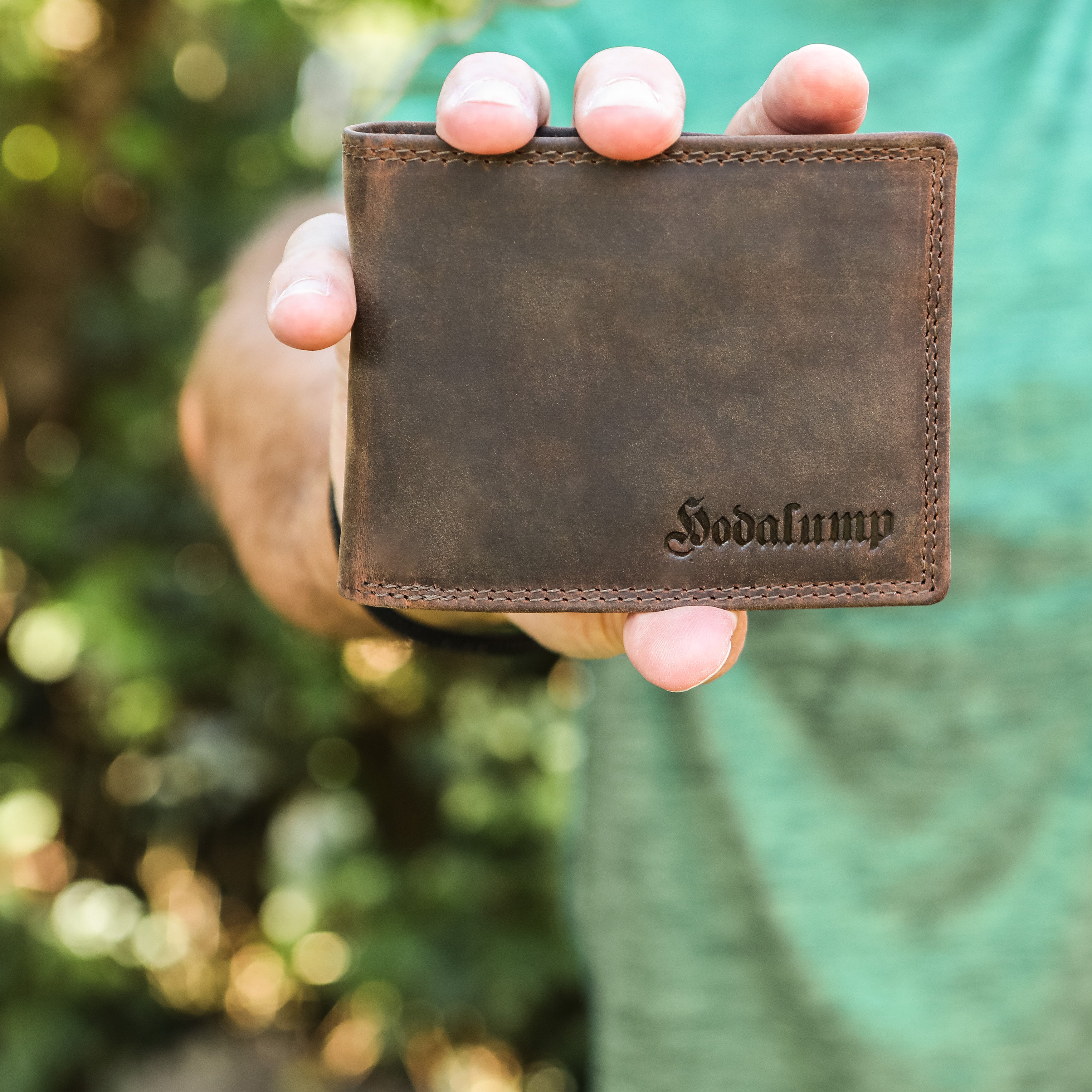
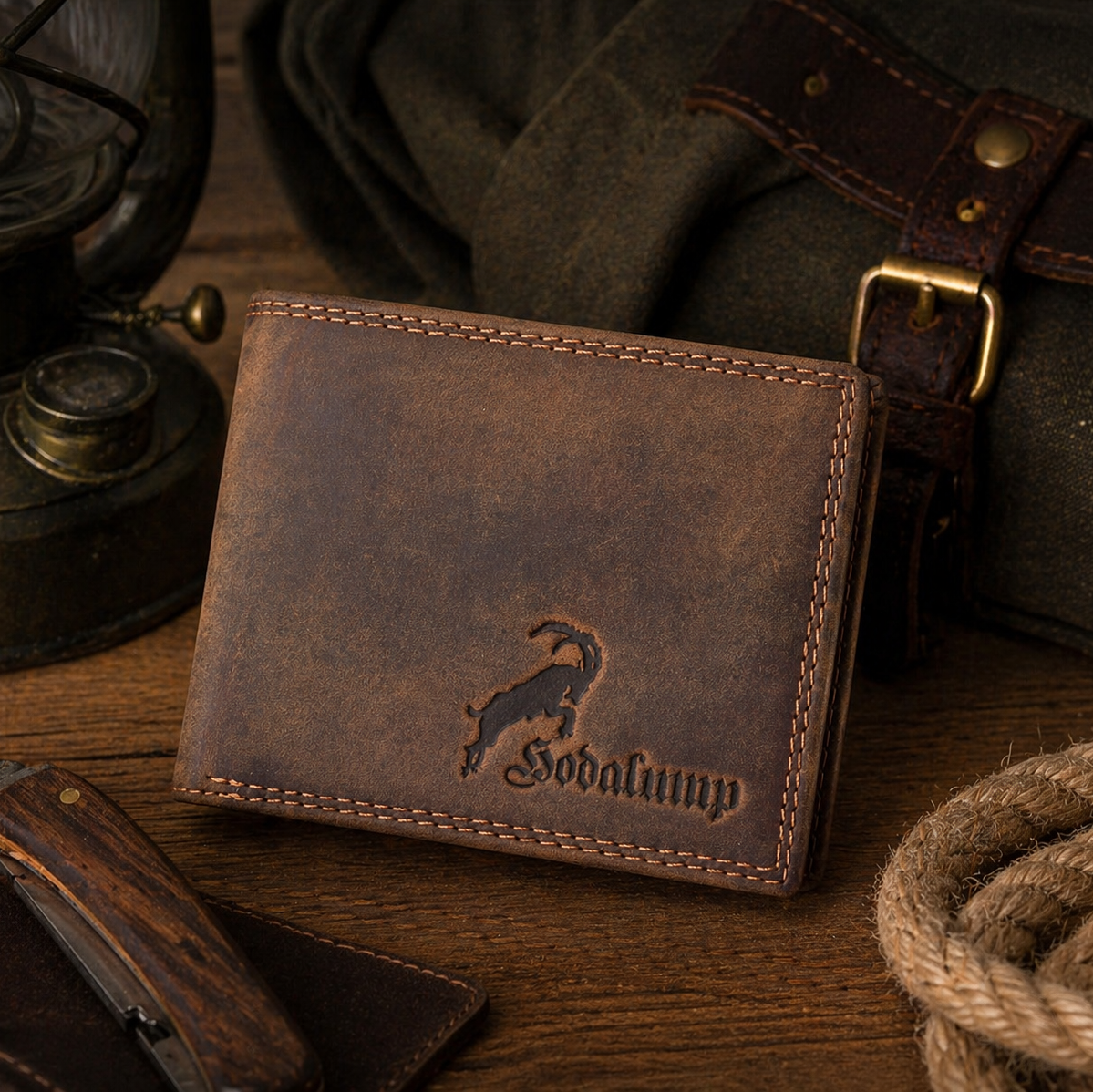
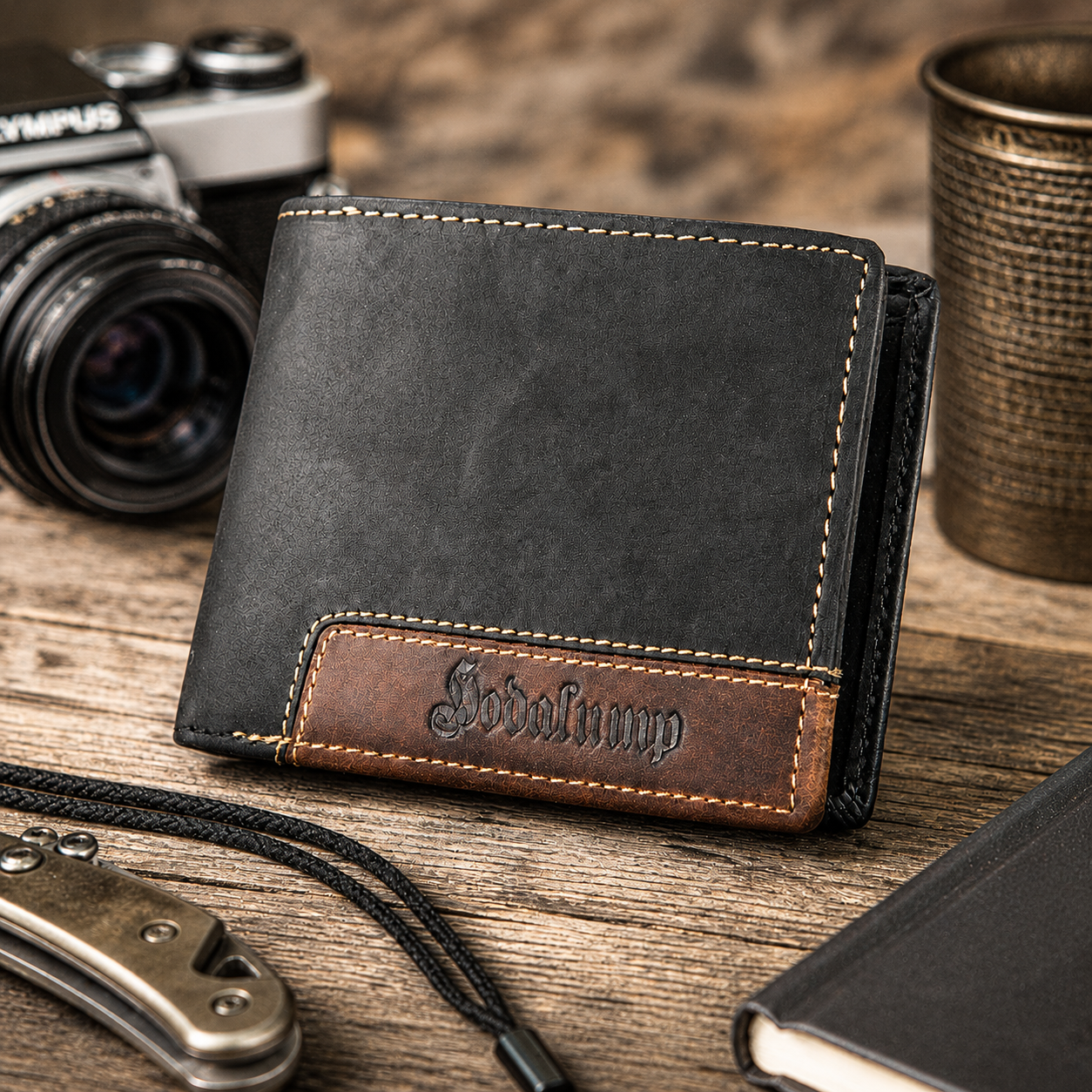


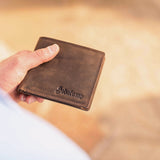
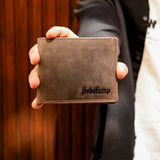
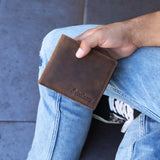
Four designs offer the most space for cards, notes and coins at the same time: the landscape wallet with coin pocket, the portrait wallet, the zip-around wallet and – for a lot of cash – the waiter's wallet. For your trouser pocket, a landscape wallet with 10 to 13 card slots, a divided note compartment and a snap-fastened coin pocket at around 2 cm thick is the best compromise between capacity and comfort. Our recommendation is the Classic Coat of Arms Wallet Lugge: room for 12 cards, a large divided note compartment, a coin pocket with snap fastener and a window for your ID or driving licence, all in 12 × 9.5 × 2 cm.
This guide explains why “lots of space” is always three questions at once: how many cards, how many notes, how much small change – and which of these makes the wallet thick. You will learn which design holds what, when a full wallet gets bulky in your back pocket, how a flap, a zip and a coin tray differ as coin pockets, whether one or two note compartments make more sense and when a large wallet is simply the wrong choice. At the end, five large men's models are listed side by side with card count and dimensions, plus short answers to the most common questions.
Which design holds the most
The design determines capacity more than the number in the product description. Two wallets with the same number of card slots can carry completely differently, depending on how cards, notes and coins are distributed inside.
Landscape with coin pocket
The classic men's wallet folds once in the middle. The card slots sit on top of each other on the left and right, behind them the note compartment runs across the full width, and one half holds the coin pocket with a flap. This design spreads the weight over two halves and therefore stays flatter than any other design with comparable contents. Typical dimensions are 12 × 9.5 cm, with a thickness of around 2 cm when empty. For most men this is the right choice, because it fits jeans, suit trousers and jackets alike.
Portrait
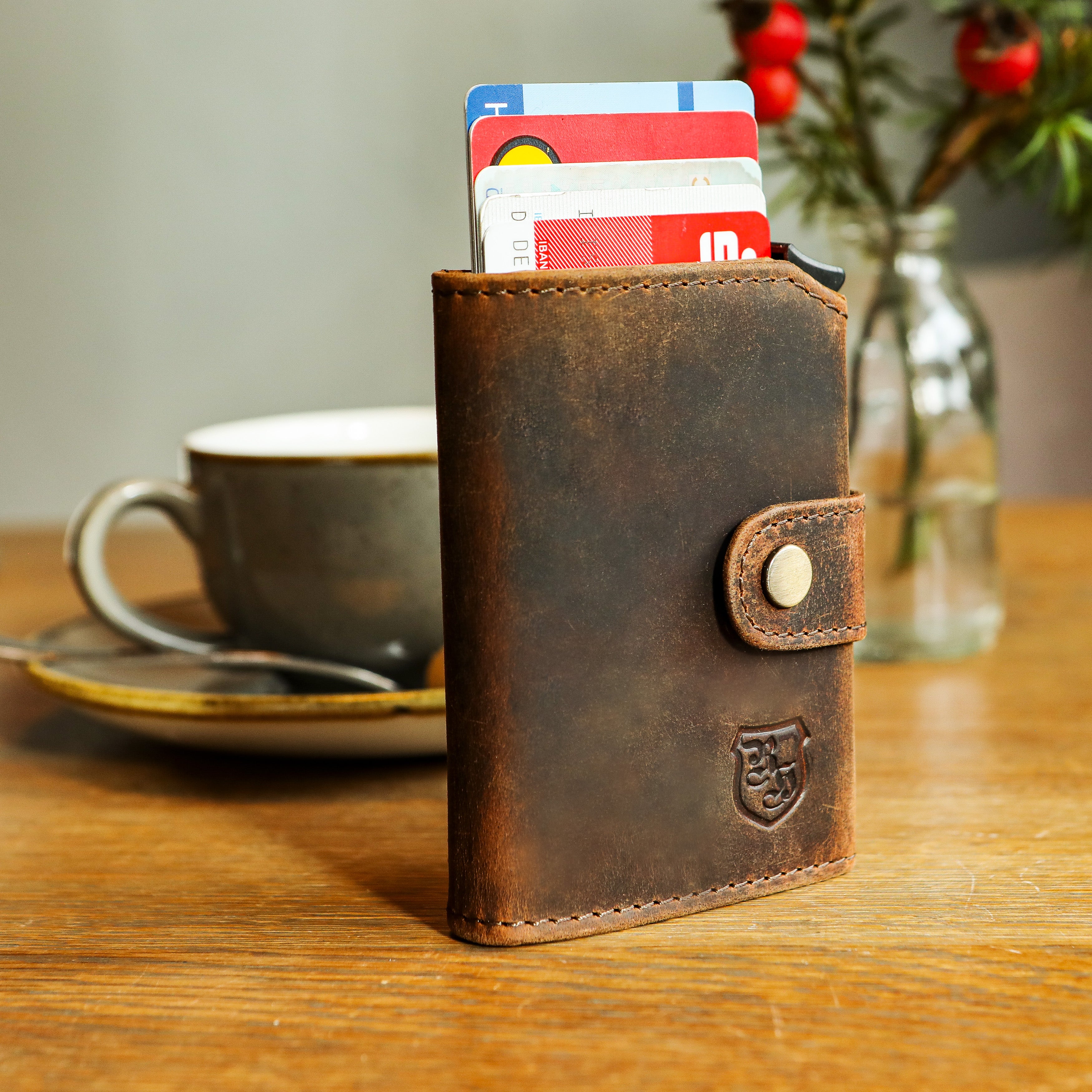
The portrait wallet stands upright and opens to the side. The card slots are arranged one below the other, often with an added window for your driving licence. It holds about as many cards as the landscape format, but is narrower and taller. That is an advantage in a jacket's inside pocket and on a chain, and a disadvantage in short trouser pockets, where the top edge can stick out.
Zip-around wallet
A zip running all the way around keeps even a bulging wallet reliably closed. Nothing falls out if the wallet sits upside down in your pocket. In return, every reach takes two hands, and the zip sets the outer dimensions: nothing more fits inside than what fits between the teeth. For men, this design is more common as a travel wallet that holds passport, cards and notes together.
Waiter's wallet
If you carry a lot of cash for work, in service, hospitality or at the market, you need a different category: waiter's wallets have large coin pockets and several note compartments, but they are made for the apron or the belt, not for the trouser pocket. How a waiter's wallet differs from a server's purse and what really matters day to day is covered in the guide Waiter's wallet or server's purse.
Capacity versus thickness: when the wallet gets bulky
Every wallet that holds a lot gets thicker when full. That is not a question of quality, but of physics. Three things determine how thick your wallet ends up.
Cards
By standard, a bank card is 0.76 mm thick. Twelve cards alone therefore add around 9 mm of plastic, plus the leather layers of the slots. Embossed credit cards with raised numbers add a little more. That is why the difference between eight and fourteen cards matters more than any other contents. How many card slots you actually need and how to sort beforehand is explained in the guide Wallet with lots of card slots: how many are enough? – here the focus is on how they interact with notes and coins.
Coins
Coins are the real bulk-makers, because they don't stack flat. A 1-euro coin is 2.33 mm thick and weighs 7.5 g, a 2-euro coin 2.20 mm and 8.5 g. Ten coins between 50 cents and 2 euros weigh 75 to 85 grams together and form a bulge in the coin pocket that raises the wallet by several millimetres at that spot. If you regularly bring home a handful of change in the evening, you have a coin problem, not a space problem.
Notes
Banknotes add the least bulk, as long as they lie flat. A 50-euro note is 14 cm long, a 20-euro note 13.3 cm. In a landscape wallet 12 cm wide, notes are therefore always folded once. Ten folded notes are thinner than three extra cards.
The rule of thumb for the back pocket
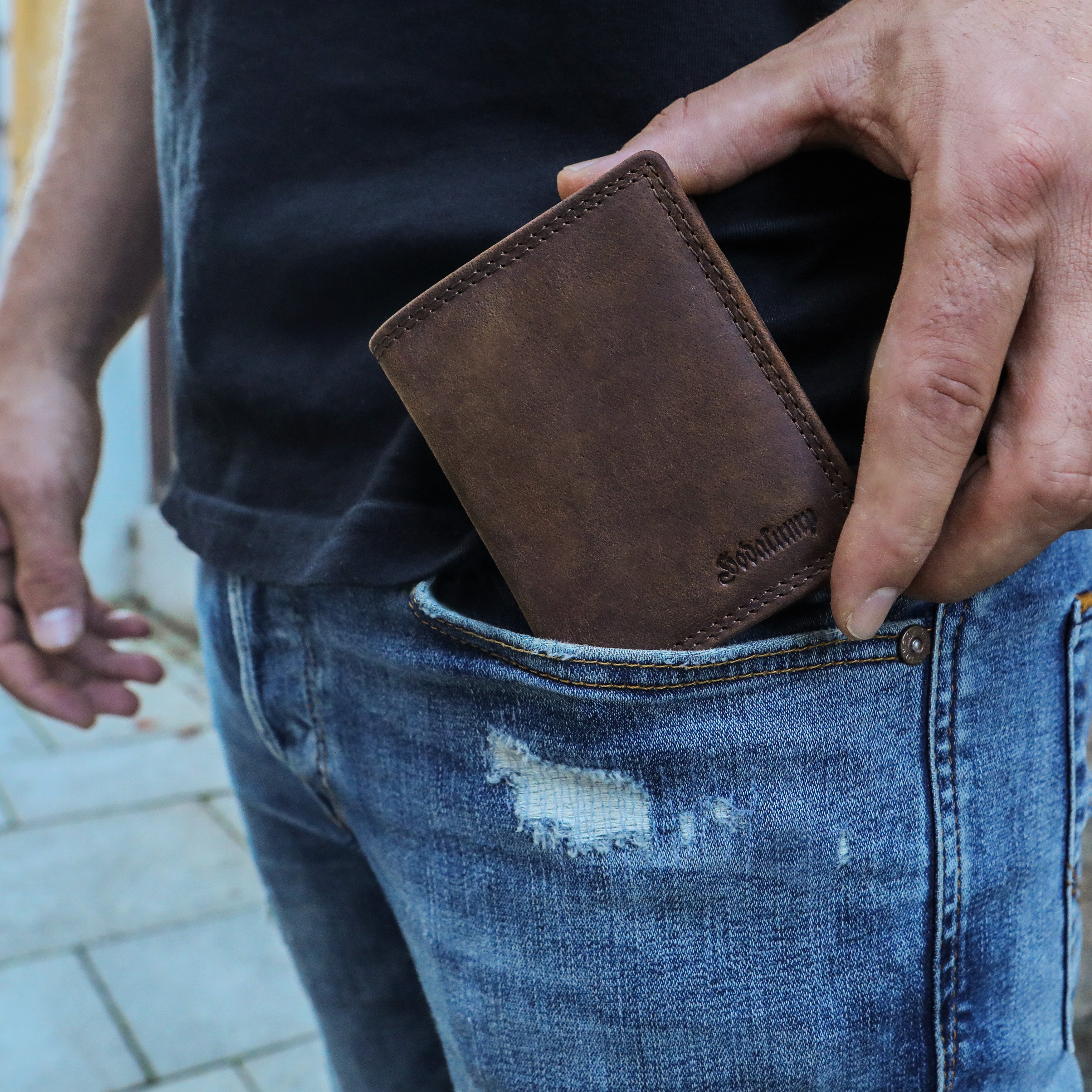
A wallet with a base thickness of around 2 cm sits unobtrusively in your back pocket as long as it stays below about 3 cm when full. Beyond that, you noticeably sit crooked, and the leather at the fold is permanently stretched. If you sit for long periods every day, in the car, in the office, on the excavator, you are better off carrying a large wallet in your front or jacket pocket. That is not a weakness of the large wallet, but its proper place.
Coin pocket: flap, zip or coin tray
There are three designs for small change, and they differ less in volume than in access.
Flap with snap fastener
The flap is the most common solution in men's wallets: a leather tab that closes with a snap fastener. It opens with one hand, and at the till you can see at once what's inside. The drawback shows when the pocket is full: the more coins, the harder the snap closes, and at some point it presses permanently on the flap. For the usual five to ten coins a day, the flap is the best choice. You'll find a selection under Wallets with coin pocket.
Zip pocket
A zipped coin pocket keeps even a lot of change secure, and nothing rattles out if the wallet tips over in your jacket pocket. In return, it is slower: open, search with two fingers, close again. It suits anyone who collects lots of coins and rarely pays cash, for example for the parking meter or the shopping trolley.
Coin tray
The coin tray, also called a tray purse, is a coin pocket that folds open into a hollow. The coins then lie next to each other instead of on top of each other, you see everything at a glance and don't have to rummage. It is the fastest design at the till and the usual solution in waiter's wallets. For everyday use, it also comes as a separate small case, such as the Schüttelbörse coin purse: if you carry a lot of change, you move the coins there, and your actual wallet stays flat.
Note compartment: one, two or with a divider
With the note compartment, it's not about volume, but about order. A single, continuous note compartment holds a lot, but everything ends up together: notes, receipts, the parking ticket. At the till at the latest, you'll be searching.
Two note compartments or one with a divider solve this. The usual approach is to carry notes at the front and receipts or foreign currency at the back. If you collect expense receipts for work or travel a lot, you'll notice the difference every day. A divided note compartment adds hardly more bulk than a single one, because the divider is just a thin layer of leather.
Unfolded notes, on the other hand, don't fit in any men's wallet made for the trouser pocket. That takes at least 15 cm of width, meaning a waiter's wallet or a long breast-pocket wallet for the inside pocket.
Five large men's wallets compared
The following table shows five men's models that hold cards, notes and coins at the same time. Card count, dimensions and leather come from our product data; the dimensions are manufacturer specifications when empty. Ratings and prices are shown in the overview at the top of this page.
| Model | Cards | Note compartment | Coin pocket | Dimensions | Leather |
|---|---|---|---|---|---|
| Classic Coat of Arms Wallet Lugge | 12 | large, divided | flap with snap fastener | 12 × 9.5 × 2 cm | buffalo leather |
| Classic Wallet Lugge Special Edition | 13 | two note compartments | flap with snap fastener | 12 × 9.5 × 2 cm | buffalo leather |
| Classic Wallet Kare | 10 | wide, divided | separate coin pocket | 12.5 × 10 × 2.5 cm | buffalo leather (brown), nappa cowhide (black) |
| Large Wallet Kobi | 11 | one note compartment | flap with snap fastener | 12.5 × 9.5 × 2 cm | buffalo leather |
| Large Wallet Hias (portrait) | 11 | large | flap with snap fastener | 12 × 10 × 2 cm | buffalo leather |
How to read the table
For most men: The Coat of Arms Lugge combines twelve card spaces, a divided note compartment and a window for your ID or driving licence with the flat base thickness of 2 cm. It is the most balanced choice when all three kinds of contents matter about equally.
For the most cards: According to the product data, the Lugge Special Edition has 13 card slots and two separate note compartments with the same outer dimensions. It suits anyone who wants to keep notes and receipts apart.
For more room for small change: At 2.5 cm, the Kare is the deepest wallet in the comparison. According to the product data it has ten card slots, fewer than the others, but going by the dimensions a little more depth. That helps if the coin pocket and note compartment are regularly well filled.
For the portrait format: The Hias stands upright, has eleven card spaces and a window for your ID or driving licence. It fits better in a jacket's inside pocket than in a short trouser pocket.
All five models are made of genuine leather; what sets buffalo leather and cowhide apart in everyday use is explained in the guide Buffalo leather, cowhide or faux leather. The full range, including smaller models, can be found under Men's wallets.
When a large wallet isn't right
A large wallet is no improvement if your everyday life doesn't need it. In four cases it is the wrong choice.
You pay almost exclusively by card or smartphone. Then you're carrying around a coin pocket and a note compartment that are mostly empty and still cost leather and thickness. A flat wallet with a few card spaces and a small coin pocket is enough.
You carry your wallet in your front trouser pocket. There is less room at the front than at the back, and a 2 cm thick wallet presses against your thigh when you sit. Slim models have the advantage here.
You sit on your wallet a lot. If you sit in the car or at a desk for hours and don't want to take the wallet out of your back pocket, you should rather buy smaller than sit crooked all the time.
You really only need four to six cards. Then with any large wallet you're paying for space you'll never use. In these cases a slim design is better; which ones exist and what everyday life they suit is covered in the comparison Slim wallet for men.
Conversely: if you collect larger amounts of cash at work every day, even the largest trouser-pocket wallet won't be enough. The waiter's wallet is made for that, not the men's wallet.
Frequently asked questions
Which men's wallet offers the most space for cards, notes and coins?
For the trouser pocket, a landscape wallet with 12 to 13 card slots, a divided note compartment and a snap-fastened coin pocket offers the most overall capacity while still being a flat 2 cm. Only waiter's wallets hold even more cash, but they are made for the apron or the belt.
How many card slots does a large men's wallet have?
Our large men's models range between 10 and 13 card slots. After sorting out, most men get by with six to eight cards; more than twelve spaces are mainly worthwhile for work cards.
At what thickness does a wallet get bulky in the back pocket?
As a rule of thumb: up to about 3 cm when full, a wallet is barely noticeable in the back pocket. Beyond that you noticeably sit crooked, and the leather at the fold is permanently stretched. Coins and cards account for most of the thickness, not notes.
Is a coin pocket with a zip better than one with a snap fastener?
Not better, just different. The snap fastener opens faster and with one hand, while the zip keeps even a full pocket securely closed. If you often pay cash, go for the snap fastener; if you collect a lot of change and rarely pay, go for the zip.
Do banknotes fit unfolded in a men's wallet?
Not in a wallet for the trouser pocket. A 50-euro note is 14 cm long, while typical men's wallets are 12 to 12.5 cm wide. Only long breast-pocket wallets for the inside pocket or waiter's wallets carry notes unfolded.
Conclusion
Lots of space for cards, notes and coins at the same time almost always means, for men's wallets: landscape format, 10 to 13 card slots, a divided note compartment and a flap coin pocket with snap fastener, packed into around 12 × 9.5 × 2 cm. The portrait format is the alternative for jackets and inside pockets, the zip-around wallet for travel and the waiter's wallet for anyone who handles cash at work. Before you reach for the largest wallet, it pays to take an honest look inside: sort out your cards, empty your change in the evening, and the wallet stays flat enough for your trouser pocket. If you still want to have everything with you after that, the Classic Coat of Arms Wallet Lugge is a good choice – made of buffalo leather, by a family business since 1947.