
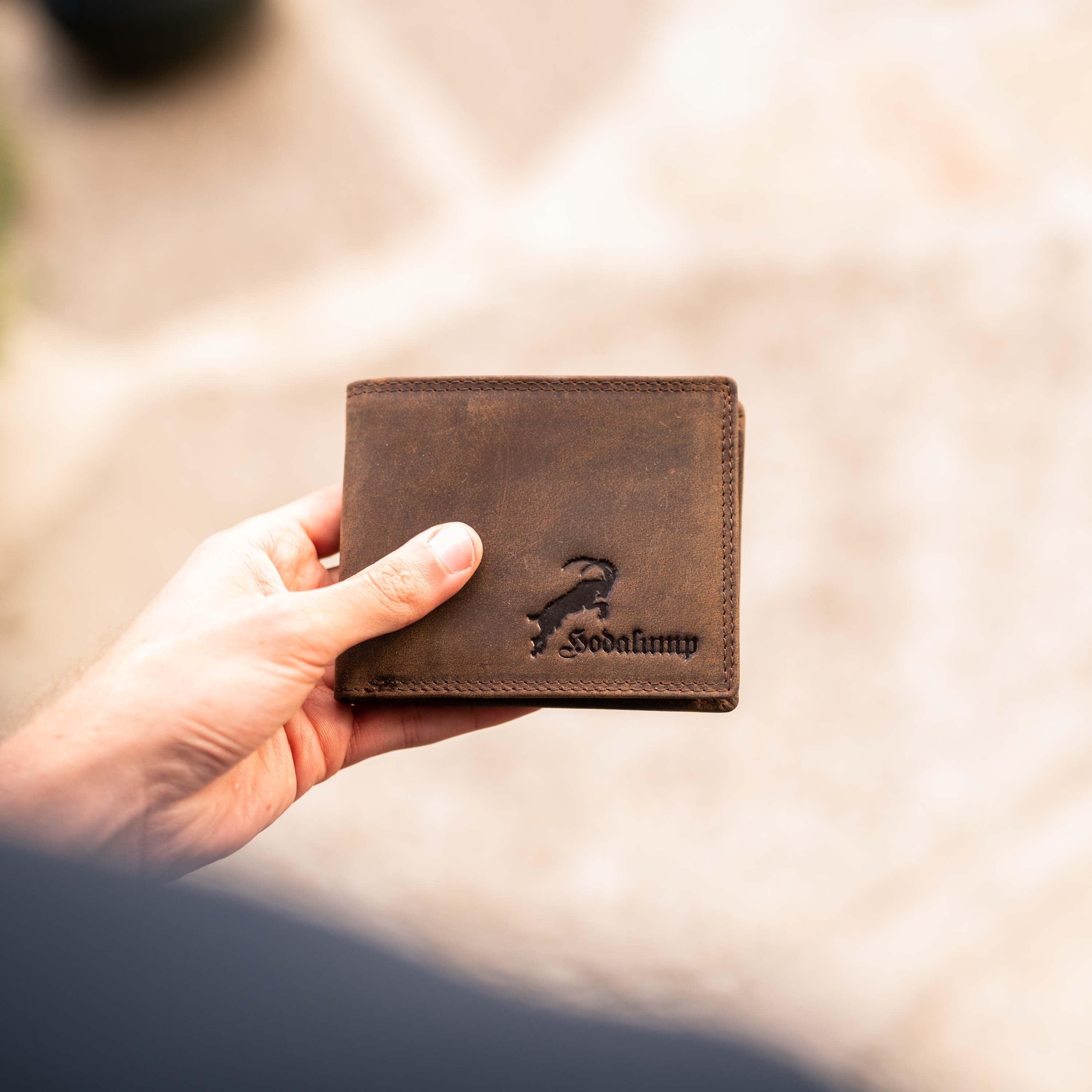
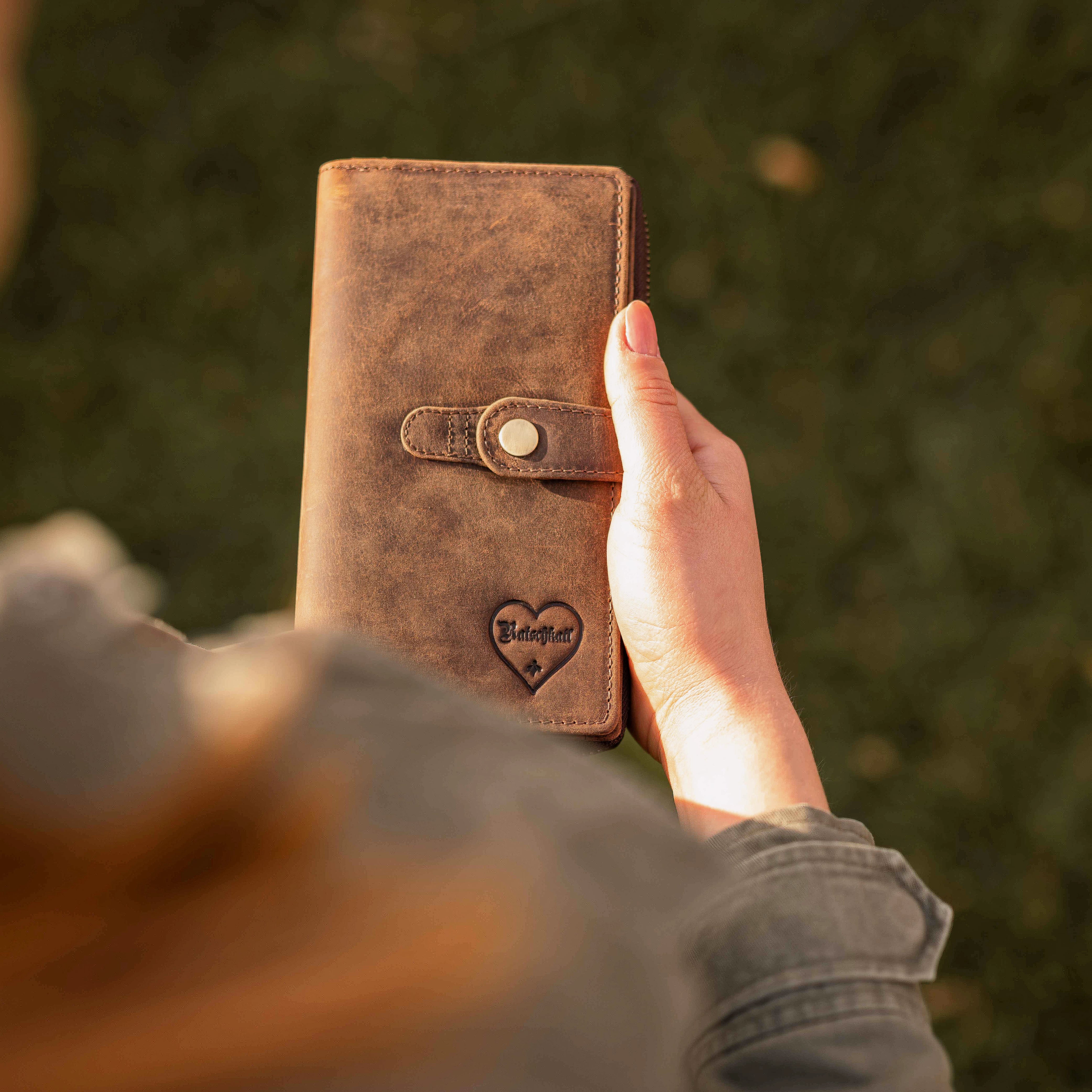
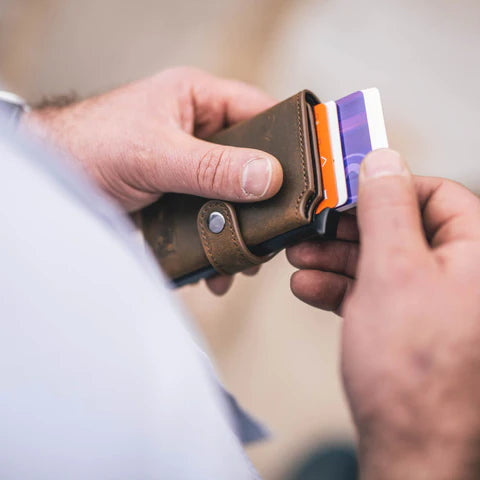










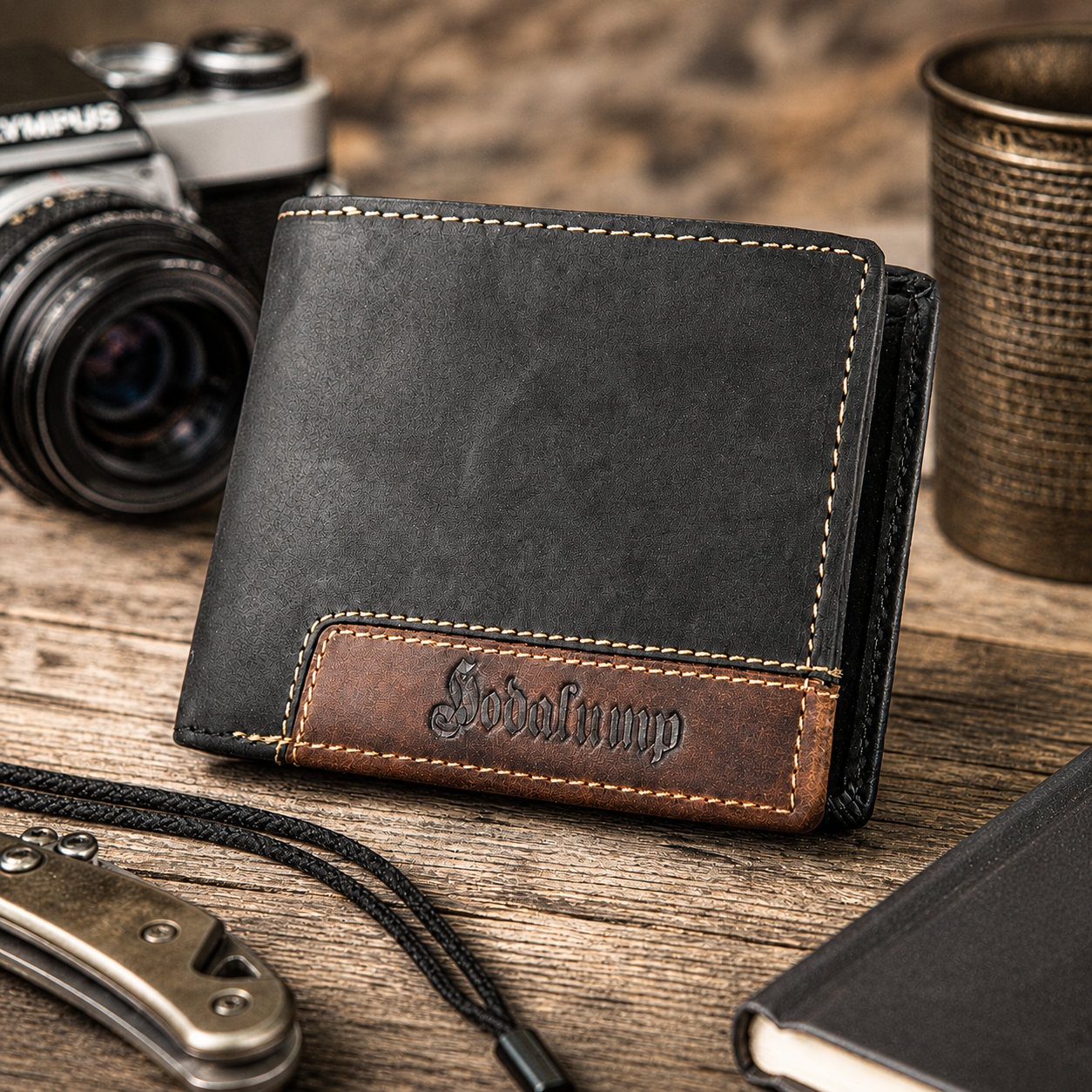


“12 card slots”, “24 card slots” — there is hardly another product category in which such precise numbers say so little. Because the question is not how many slots a wallet has. The question is how many cards you put in your pocket in the morning and take out again in the evening without having used a single one of them.
This article answers both: what the numbers mean and how many slots you actually need.
Count first, then buy
Take your wallet and lay all your cards out side by side. Then sort them into three piles.
- Every day: debit card, one credit card, driving licence. For most people that is three to four cards.
- Regularly: ID card, health insurance card, work pass, the one loyalty card you genuinely show. Two to four.
- Never: everything else. Loyalty cards from shops you visited twice, expired insurance cards, stamp cards.
For almost everyone the third pile is the biggest. It is also the reason why people go looking for twenty card slots — not because they need twenty cards, but because they carry twenty cards around.
After this sorting, most people end up with six to eight cards that genuinely have to come along. A medium-sized wallet is plenty for that. Anyone still at twelve or more after sorting — tradespeople with company cards, field sales staff, people with several accounts — is in the right place with the large wallets.
What a number in a product description is worth
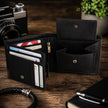
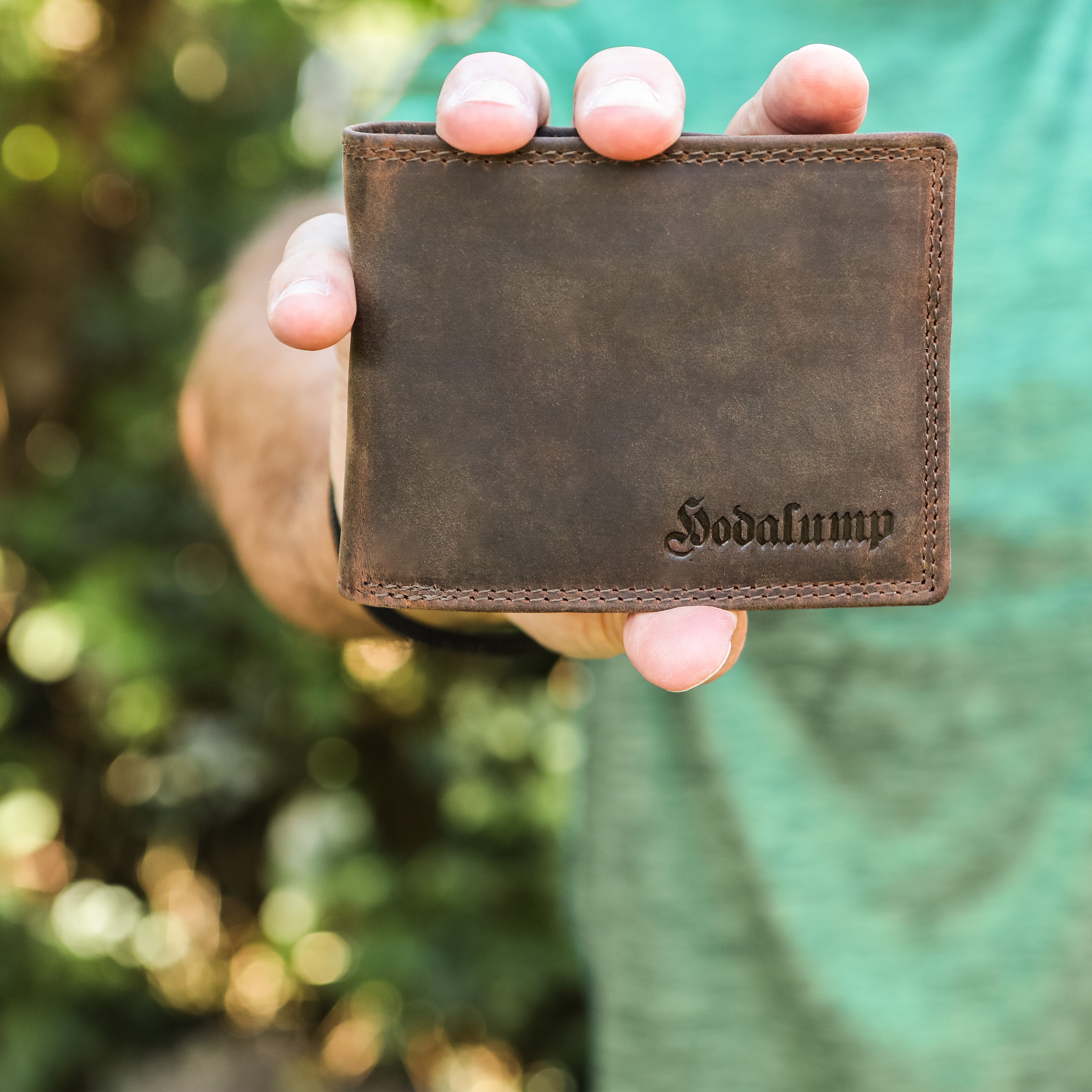
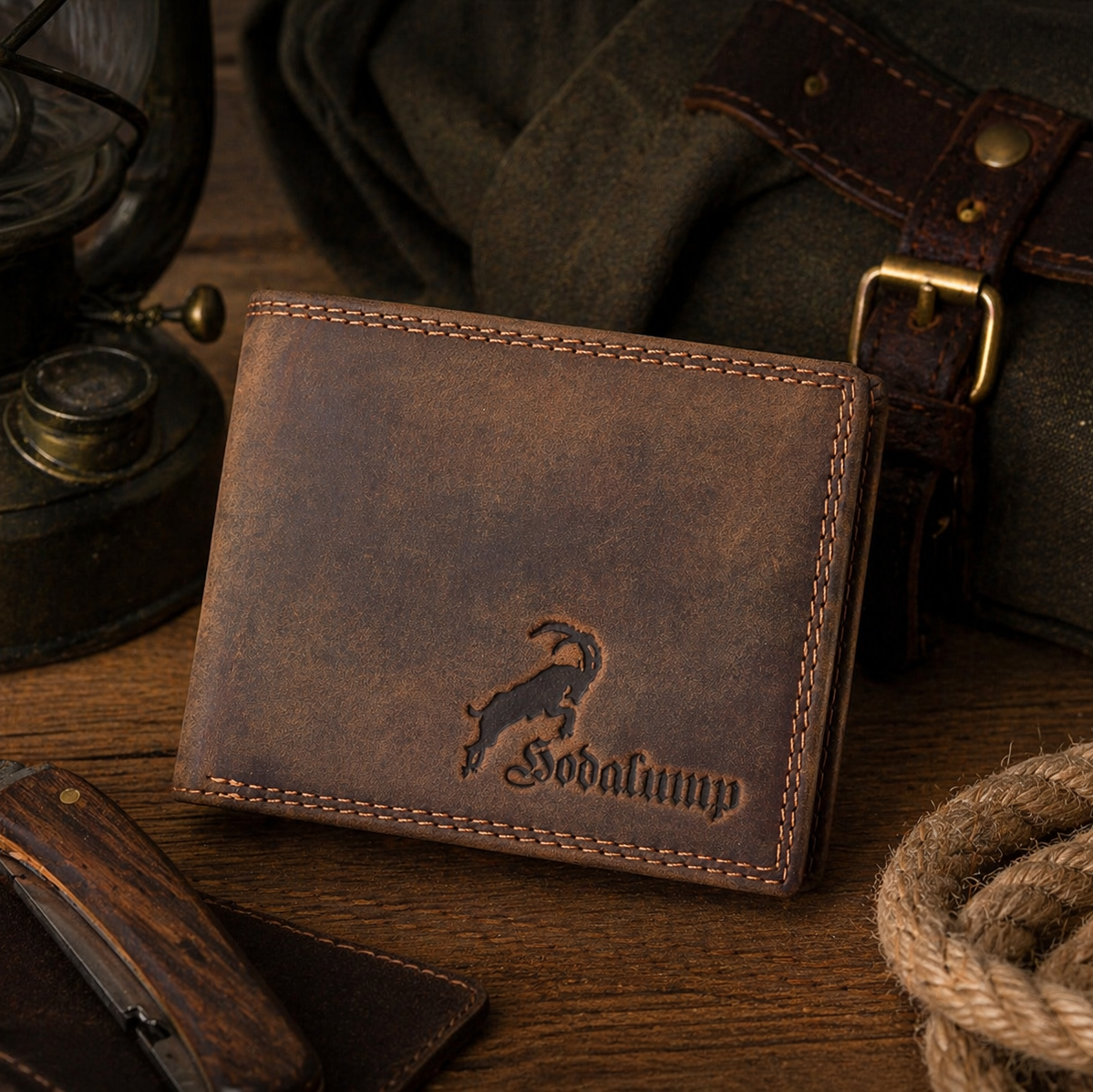
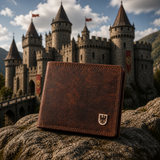
Here is the uncomfortable answer: across the entire range, exactly one wallet has a slot count on record. The Classic Wallet Kare at €39.95 states around twelve card slots, plus a separate coin pocket and a wide, divided note compartment.
For all the others it says “several”, “numerous” or “many”. That is unsatisfying, but it is more honest than quoting a number nobody has counted. If you need an exact capacity, Kare is the model where it is documented.
For context: a number in a product description always refers to visible slip pockets. What else fits behind them depends on how stiff the leather is and how thick your cards are — an embossed credit card takes up more room than a smooth plastic card. So two wallets with the same slot count can feel quite different.
When a wallet gets too thick
Every extra card makes the wallet about a millimetre thicker. At eight cards you will not notice it. At sixteen the wallet is twice as thick as it was when new, and the leather at the fold is working against you: it is permanently stretched exactly where it gets creased every day.
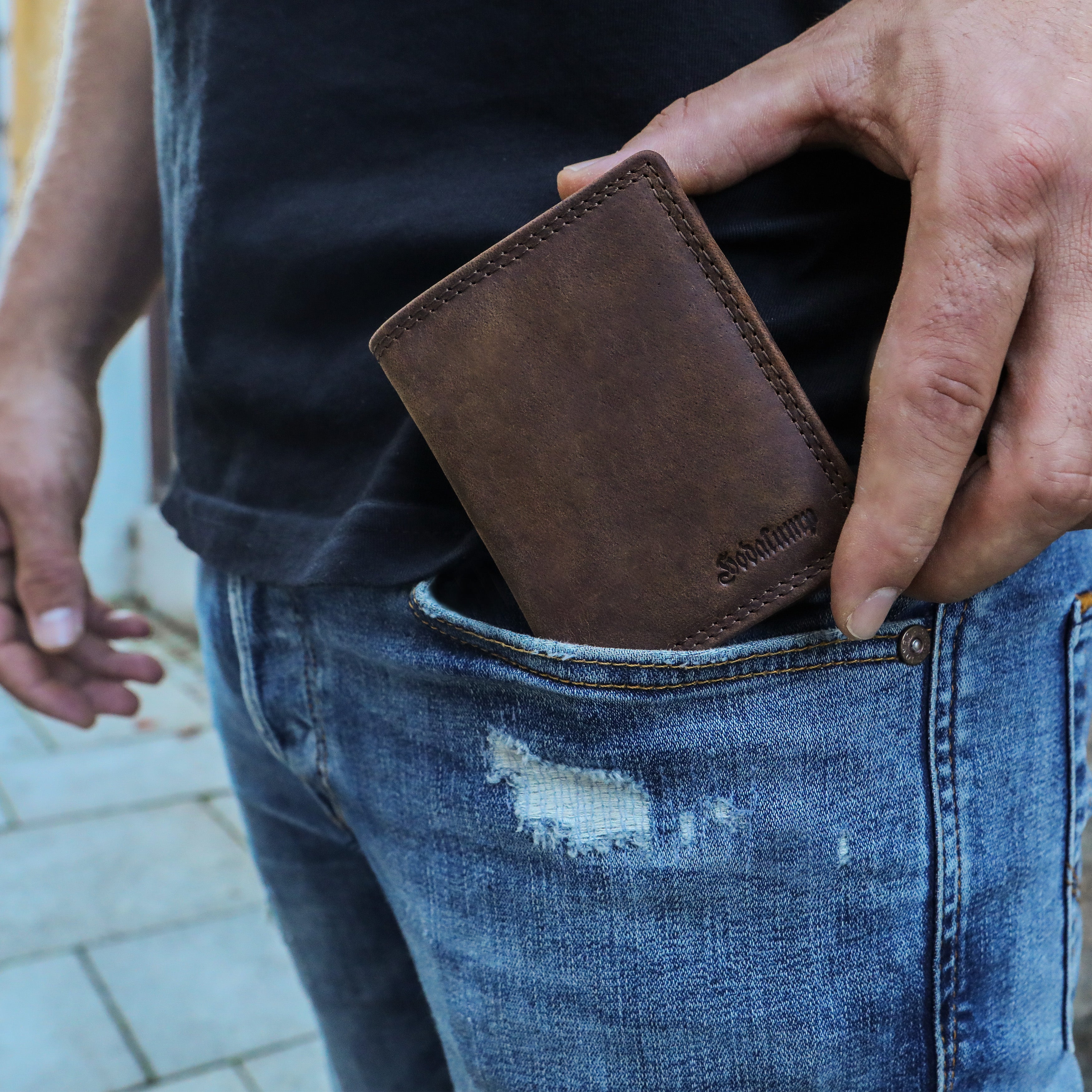
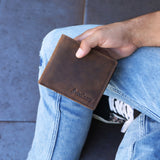
That is why the answer to “many card slots” is not automatically “a thicker wallet”, but sometimes “a different format”. A Large Portrait Wallet Raudi at €39.95 spreads the same number of cards across an upright shape instead of a thick stack. It fits into jacket pockets and handbags, but no longer sits comfortably in the back pocket of a pair of jeans.
Men: which wallets hold a lot of cards
The obvious choice is the Classic Wallet Kare at €39.95 — the number is stated, the coin pocket is separate, the note compartment divided. If you also need a clear window because you have to show your work ID all day long, go for the Classic Wallet Crest Lugge at €49.95: numerous card slots, a large divided note compartment, a coin pocket with a press stud and a clear window for an ID card or driving licence.
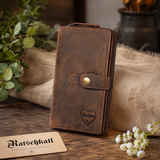
In portrait format there are the Large Wallet Hias at €46.95 with several card slots, a coin pocket with a press stud and a clear pocket, and the Raudi already mentioned. The Large Wallet Kobi at €39.95 is the entry point into the large format. You will find all four in the wallets for men collection.
If you carry plenty of cards but little cash, it is worth a look at the comparison of men's wallets — that article is about format and layout as a whole, not just the number of slots.
Women: same question, different format
With women's wallets the slot question is usually answered before it is even asked — large women's wallets almost always have plenty of card slots. The real decision is the closure.
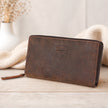
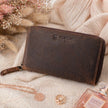
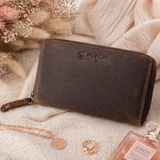
The Large Wallet Soferl at €59.95 is built for overview: the credit card slots are arranged so that you can see all of them at once. The Classic Wallet Large Gretl at €79.95 has a zip that runs all the way round, a coin pocket with its own zip and an extra compartment for receipts or your smartphone — nothing falls out, but you need two hands. The Medium Wallet Babsi at €49.95 is the option for anyone who finds a large wallet too bulky.
If you are still undecided about the format, the article Large women's wallet with lots of compartments has the detailed comparison; more models are in the women's wallets collection.
Zip or press stud
The more cards there are in a wallet, the more important the closure becomes. A press stud is quicker, and it gets harder to close once the wallet is well filled. A zip that runs all the way round holds everything together, even when the wallet is upside down in a handbag — but every time you open it, it costs you a second longer.
The same goes for coins: a press stud on Hias, Kobi and Crest Lugge, a zip on Large Gretl and Raudi. If you carry a lot of change, you are better off with the zip. If you fish coins out twice a day, go for the press stud.
What you can move elsewhere instead of buying bigger
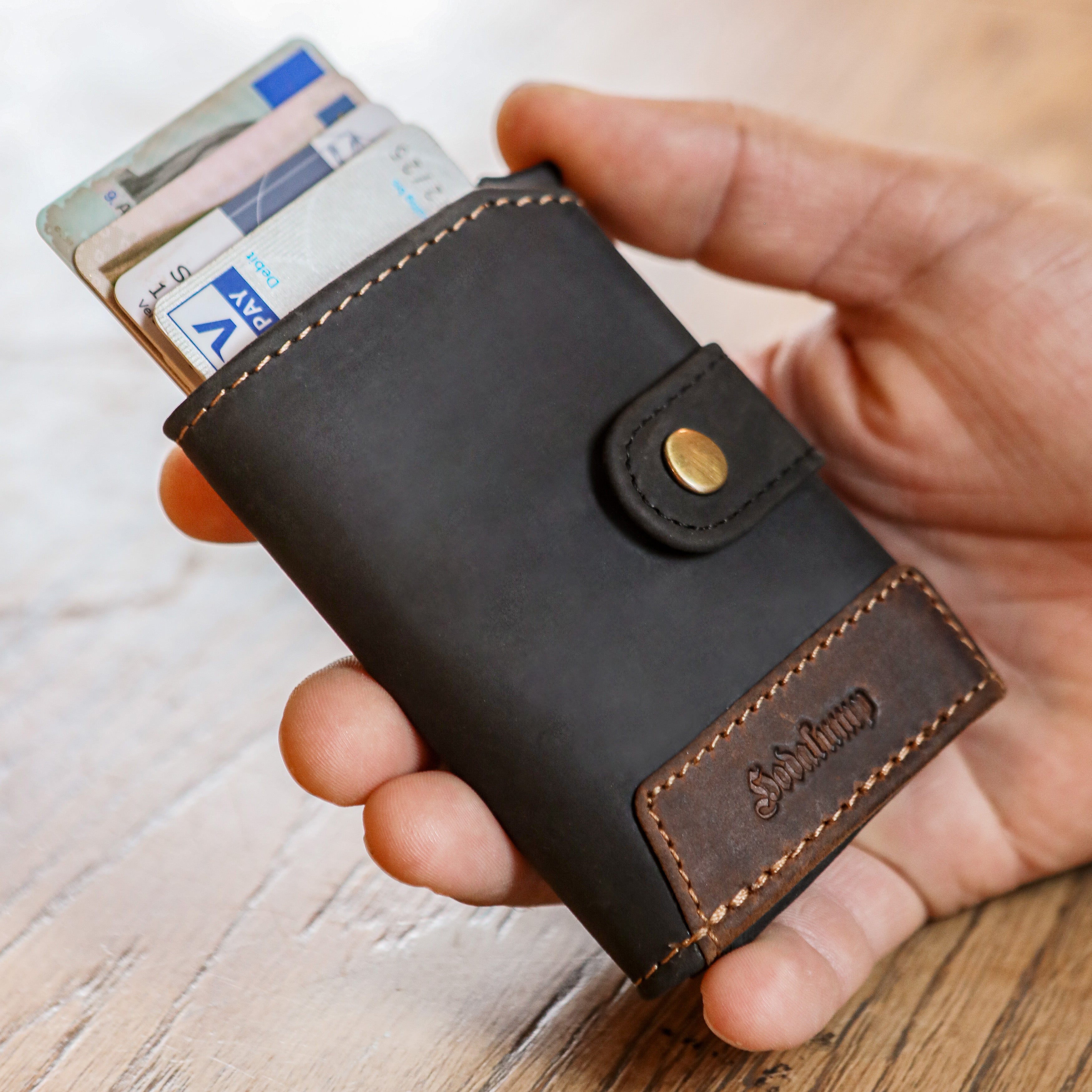
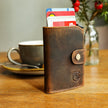
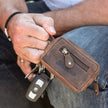
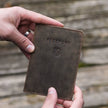
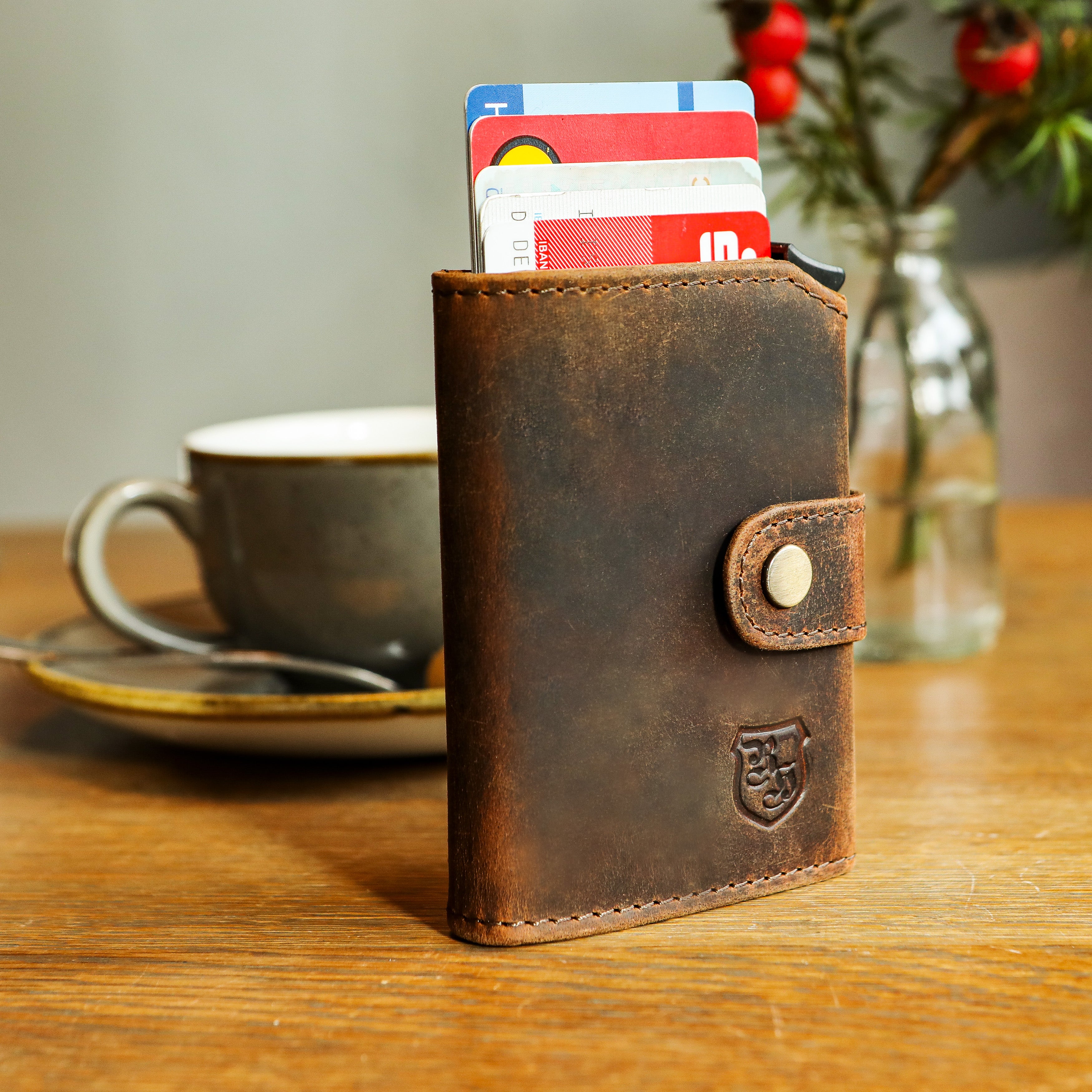
Before you reach for the biggest wallet: some of those cards do not have to live in the wallet at all. Cards you need less often but still want with you fit into a second, small case — the Card Holder Hodalump Edition at €49.95, for example, or the Card Holder Hodalump at €15.95. More models are in the card holders collection.
It sounds like a detour, but it works well: your everyday cards stay within reach in the wallet, the rest sits in the case in your bag or rucksack. The wallet stays slim and you still have your cards with you.
The short answer
Eight card slots cover everyday life for most people. Twelve make sense if you carry several cards for work — and for that there is the Classic Wallet Kare, a model where the number is documented rather than claimed. Almost nobody needs twenty-four card slots; anyone searching for that usually has a sorting problem, not a space problem.
And if the wallet does end up stuffed full after all: leather stretches, but it does not spring back on its own. How to keep a well-filled wallet in shape for years anyway is covered in the article caring for a leather wallet.