













On the baggage carousel every case looks the same. Black, medium-sized, hard shell — and every second traveller reaches for the wrong one at least once. A luggage tag solves that, but only if it can do two things: stand out from a distance and survive the journey. Most fail at both.
This piece sets out what actually matters with a leather luggage tag. And right at the start it clears up a point where a lot of search results mislead people: the difference between a name plate and an engraving.
Name plate or engraving — they are not the same thing
A great many searches for luggage tags include the word “personalised”. Two completely different things are meant by it, and the trade likes to blur them together.
An engraving is burned or pressed into the leather before dispatch. It is permanent, it can't be changed, and it costs lead time. A name plate is something you write on yourself. What it says is decided by you after the purchase — not by production before dispatch.
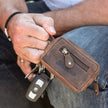
The Luggage Tag with Name Plate at €14.95 belongs in the second category. It has a built-in name plate for you to fill in. We offer no engraving and no personalisation — not on this item and not on any other in the range. If you need a name burned in, you are in the wrong place, and it is better said here than in an order confirmation.
In practical terms the plate has an advantage too. If you lend the case out, change address, or would rather not have your mobile number on your luggage for all time, a plate you write yourself is more flexible than an engraving that stays put.
What a luggage tag has to withstand on the carousel
A tag rarely fails because the material is poor. It fails because it tears in the wrong place. There are three weak points:
- The loop. It gets dragged over rollers during sorting and catches on edges. A thin plastic strap or a wire loop is exactly the point at which the tag disappears. Our tag hangs from a sturdy leather loop.
- The join between loop and plate. If there is nothing there but a punched eyelet, the material tears out.
- The plate itself. An open paper card becomes illegible after the first downpour.
Leather has a simple advantage here: it doesn't snap brittly, it stretches. The tag is made of genuine leather and is intended for suitcases, holdalls and rucksacks — so for luggage without a rigid handle bar as well.
What belongs on the plate and what doesn't
This is the question no product page answers. The short version: enough for someone to reach you, little enough that nobody can find your flat.
- Surname and mobile number are almost always enough to get the case back. Whoever finds it will ring.
- Email address rather than home address. A home address on your luggage tells everyone who reads it that you are not at home right now.
- Destination and hotel only on a second card inside the case, never on the outside.
- For children's luggage, first name only plus an adult's number.
Write with a waterproof pen. Ballpoint on smooth paper smudges as soon as the luggage stands out in the rain.
How to fit the tag so it stays put
The most common mistake is the handle. On the top carrying handle the tag sits exactly where the piece of luggage is grabbed, thrown and dragged across roller belts. The side handle or the D-ring on a holdall is better — the tag lies flatter there and takes less punishment.
Second: pull the loop as short as it will go. The longer the tag dangles, the sooner it snags on something. Third: a tag on its own is not recognition. If you really want to save time at the carousel, combine it with something colourful — a brown leather plate on a black case is only visible from two metres away.
And one honest point: a tag does not protect you against the airline losing your bag. That is what the label attached at the check-in desk is for. The leather tag helps against mix-ups, not against disappearances.
What else belongs in your hand luggage
Anyone thinking about the tag is usually sorting out the whole travel bag at the same time. Two things are especially worth it.
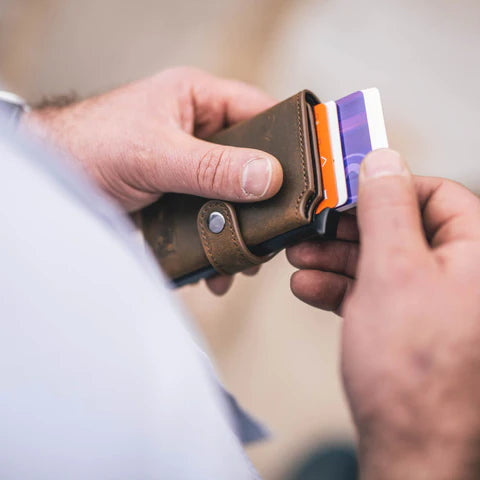
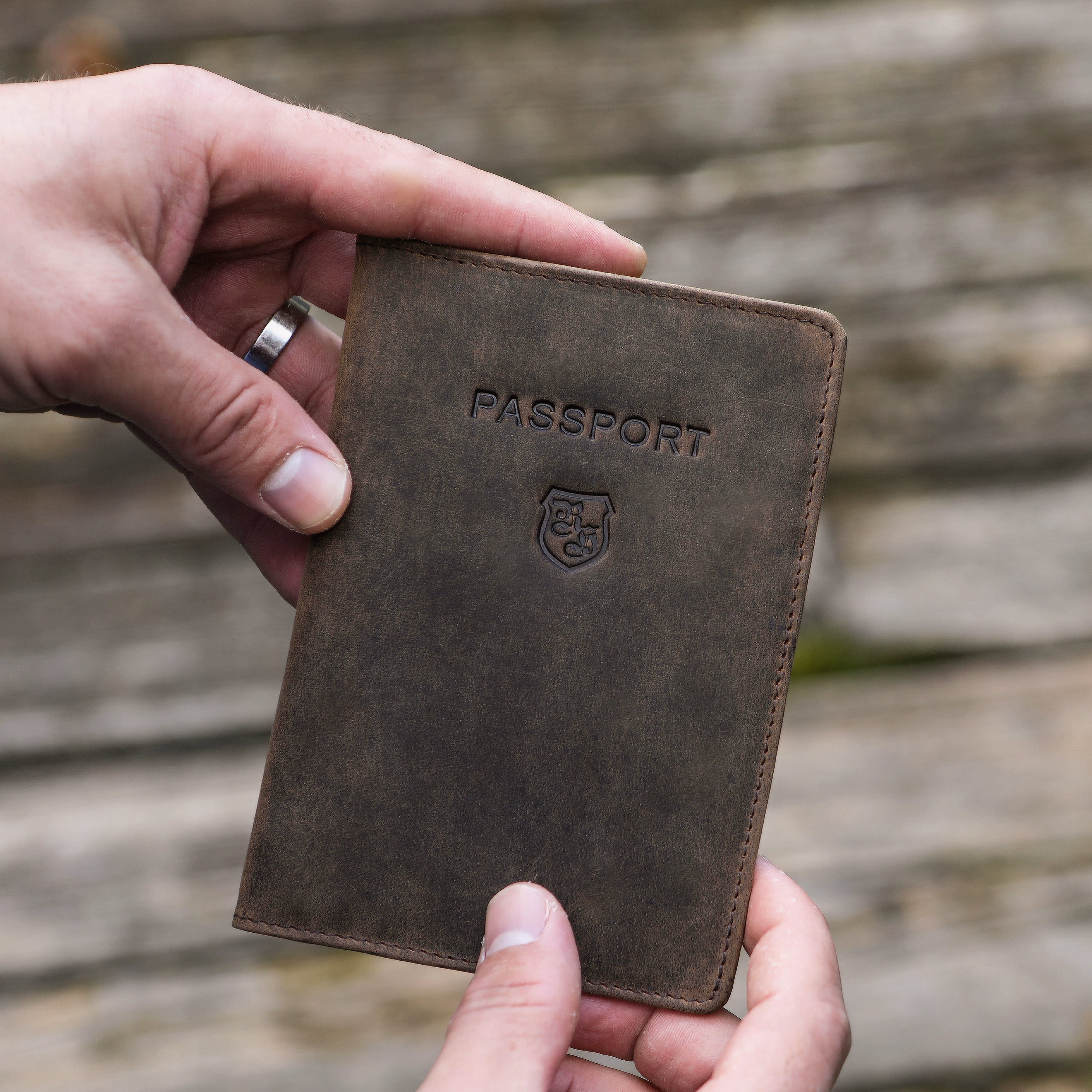
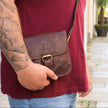
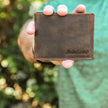
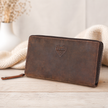
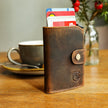
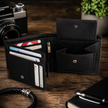
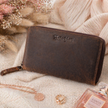
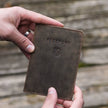
The Markus Passport Case at €24.95 holds passport, ID card, boarding pass, credit cards and a little cash. Its usefulness only becomes clear at the desk: everything you need there is in one hand instead of four pockets. If you want to fit more in, reach for the Henrik Travel Wallet at €39.95 — several card slots, a large slip pocket for the passport, a compartment for notes, a separate one for further documents, all behind a zip that runs right round. Even a smartphone finds a place.
Both sit alongside the rest of the travel items under Travel Cases; the complete travel category is under Travel.
Suitcase, holdall or trolley — what the tag suits
The tag can be used on all three, but the point of it is different in each case.
On a holdall it matters most. Bags look even more alike than cases, and many have no distinctive colour at all. The PET Cabin Travel Bag at €129.95, made from recycled PET, and the Large Buffalo Leather Travel Bag at €249.95 are both in the size class where you look twice at the carousel. Why we work with recycled PET at all is explained in the piece on bags made from recycled PET.
On a hard-shell trolley the tag is more decoration and back-up. The Hodalump Cabin Trolley at €189.95 weighs 4.3 kg for 45 litres and has a combination lock — identification here runs through the combination of colour and lock anyway. A leather plate still makes it more distinguishable than any sticker.
On a rucksack fitting is the most straightforward, because there is almost always a loop or a D-ring that isn't in the grab zone.
Two tags are better than one
That sounds like a sales pitch, but it is simply experience. A single tag sits in one place — and that place often faces downwards on the carousel or lies against the belt wall. Fit two, on opposite sides, and you spot your luggage considerably sooner.
The second reason is more mundane: tags get lost. Not often, but they do. With two of them, identification is still possible after a trip; with one it isn't.
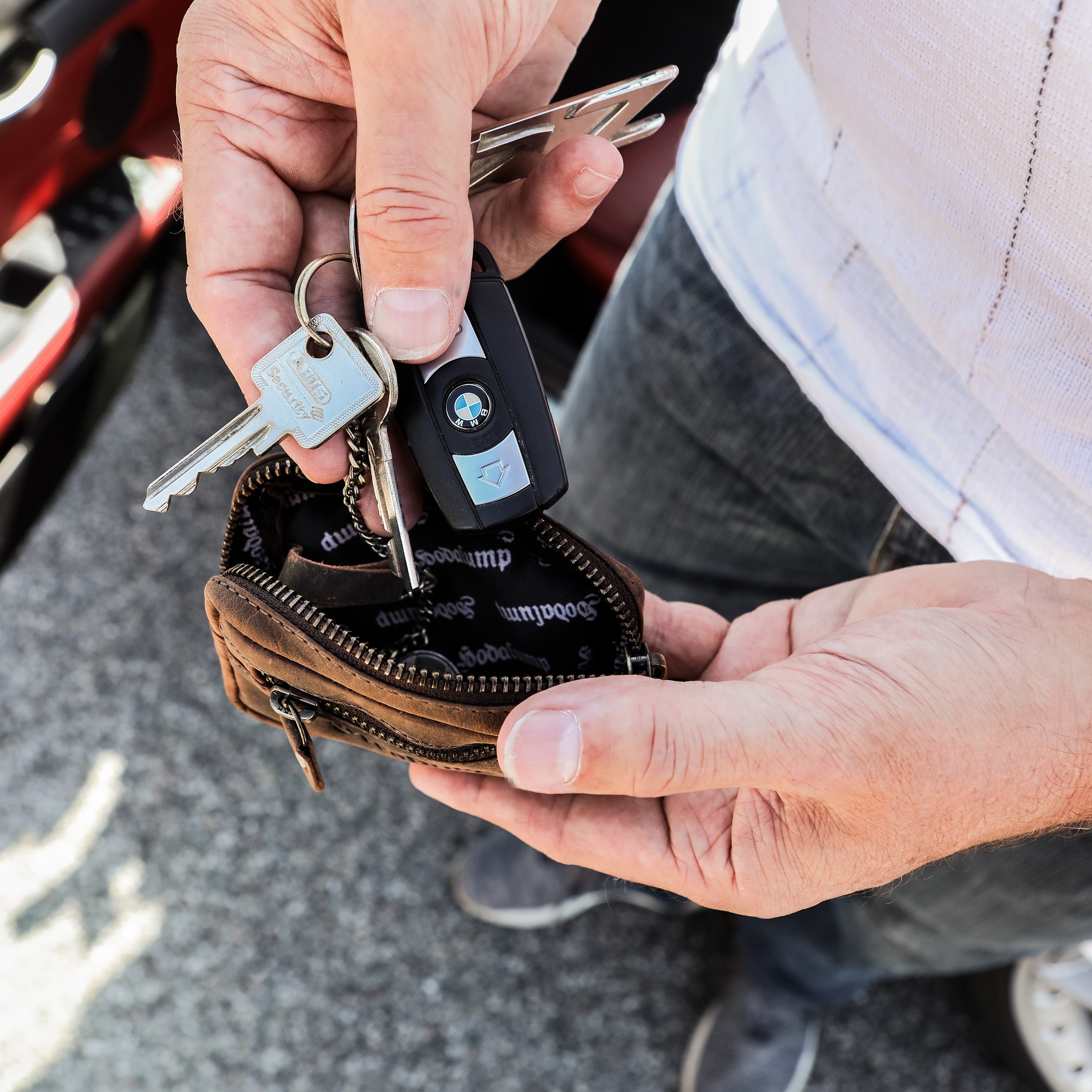
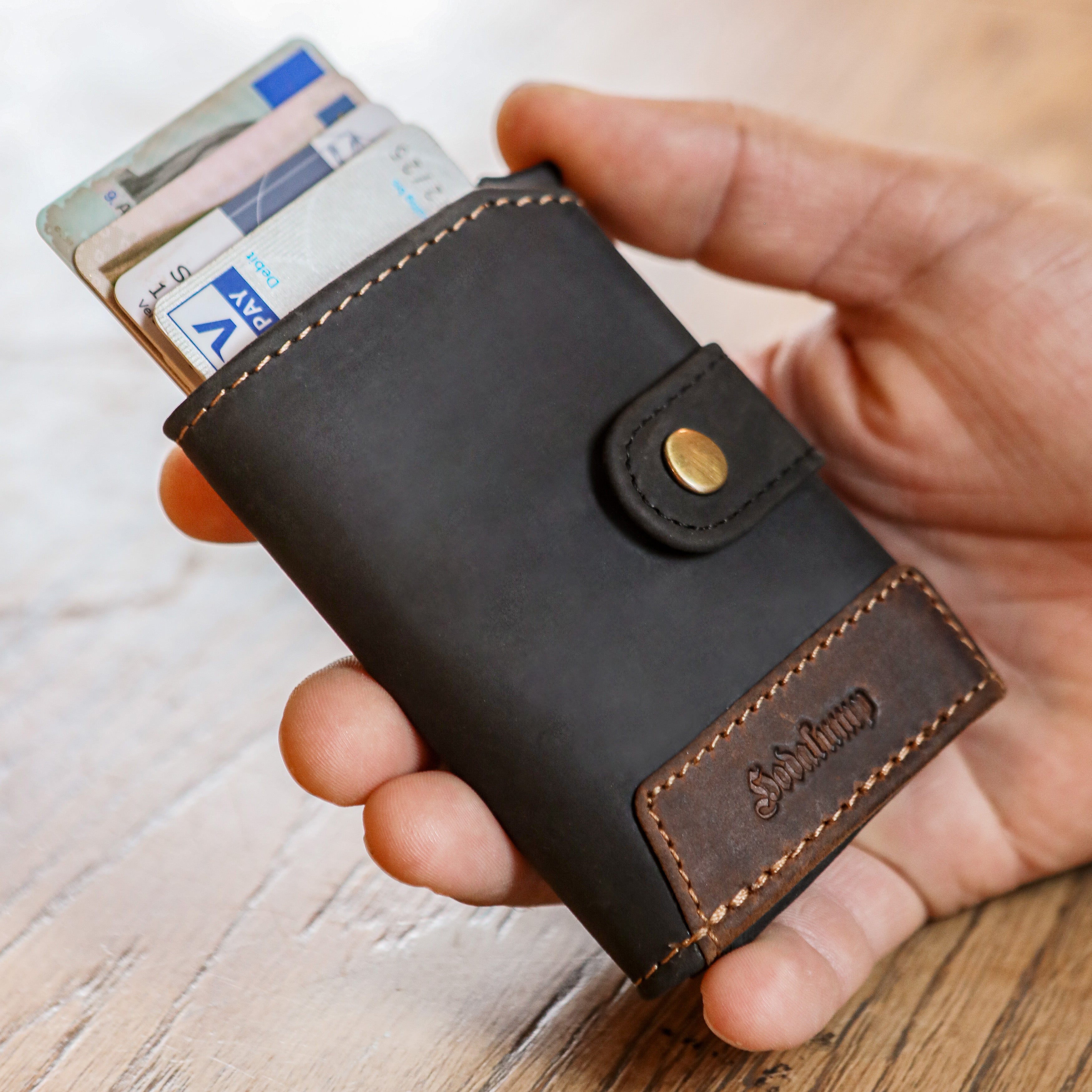
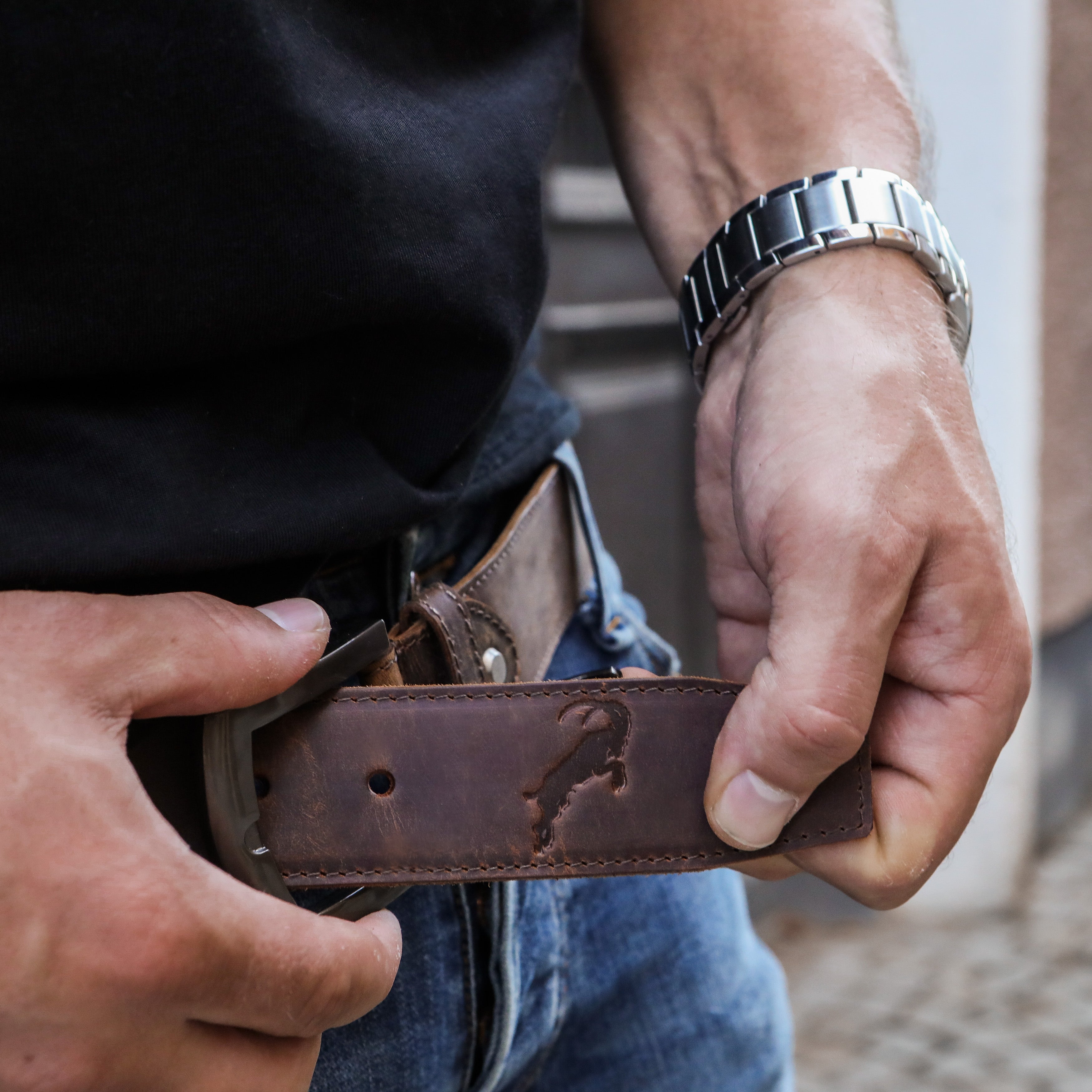
While you are going through the luggage anyway, a look at the leather accessories is worthwhile, because that is where the small things live that nobody thinks about before departure — key wallet, card sleeves, wash bag.
Care: what a tag needs after two years
A luggage tag takes more sun, rain and friction than almost any other piece of leather you own. It lies in the hold, on wet tarmac and in the sun on a baggage cart. It dries out accordingly.
The remedy is unspectacular: once a year, apply leather grease at €8.95, thinly, with a cloth, then let it soak in. That stops the loop going brittle where it bends — which is exactly where it otherwise tears. The full instructions are under applying leather grease.
What you shouldn't do: clean the tag in the washing machine or with washing-up liquid. Both strip the fats out of the leather, and after that no amount of re-greasing will help.
The tag as a present
At €14.95 the luggage tag is one of the few small gifts that has to match neither taste nor size. It fits any piece of luggage, and it gets used the next time the recipient flies.
There is one limitation you should know about: because the plate is written on by hand, it arrives without a name. Anyone expecting a present with the name already on it will notice. You can of course fill the card in yourself before wrapping it — that is then your handwriting rather than our engraving, and honestly, that is the nicer part of it.
In short
A leather luggage tag lasts if the loop and the join are sturdy and it doesn't dangle from the carrying handle. Surname and mobile number belong on the plate; your home address does not. And the key distinction: a write-your-own name plate is not an engraving. We offer the one, not the other — and the one can be changed at any time.