










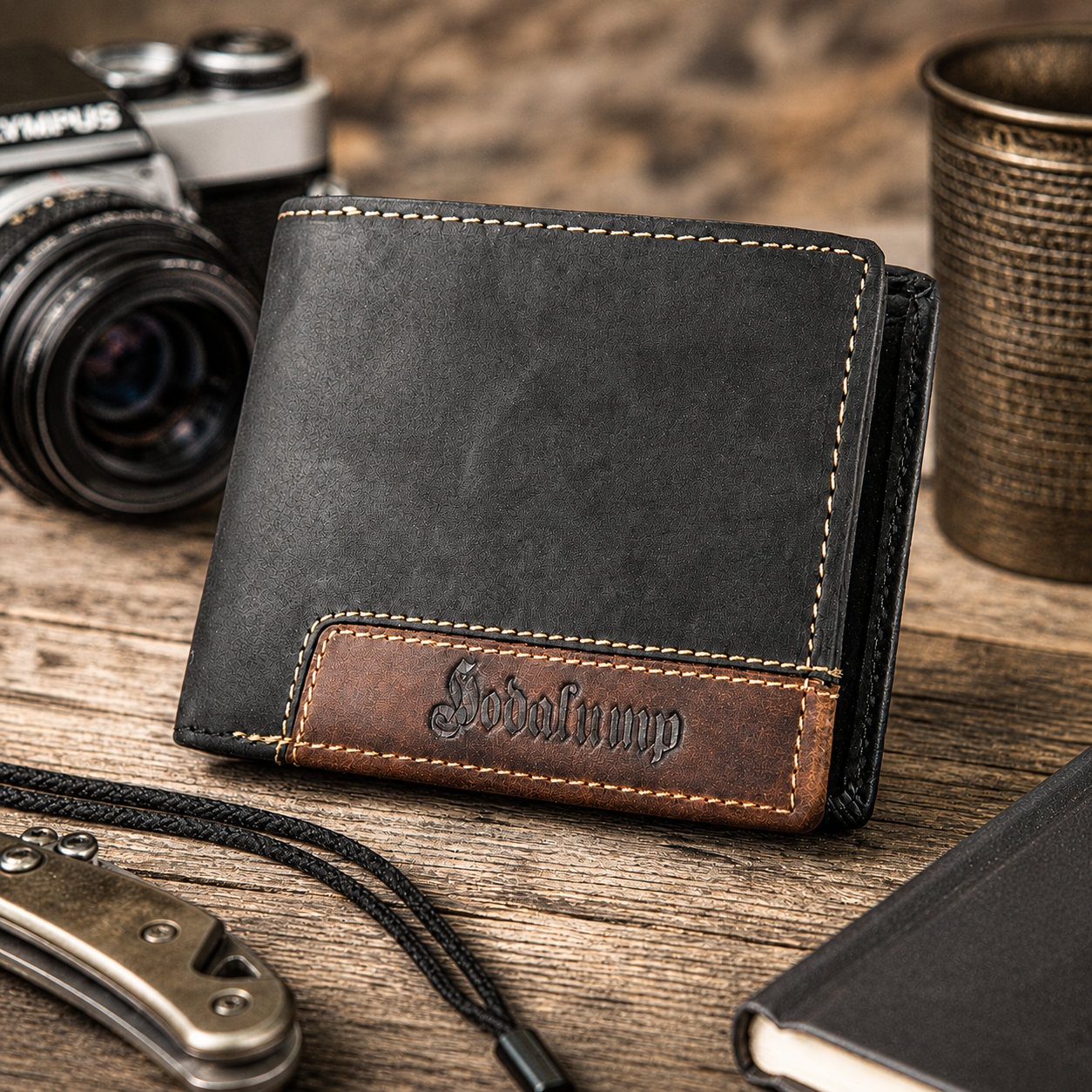
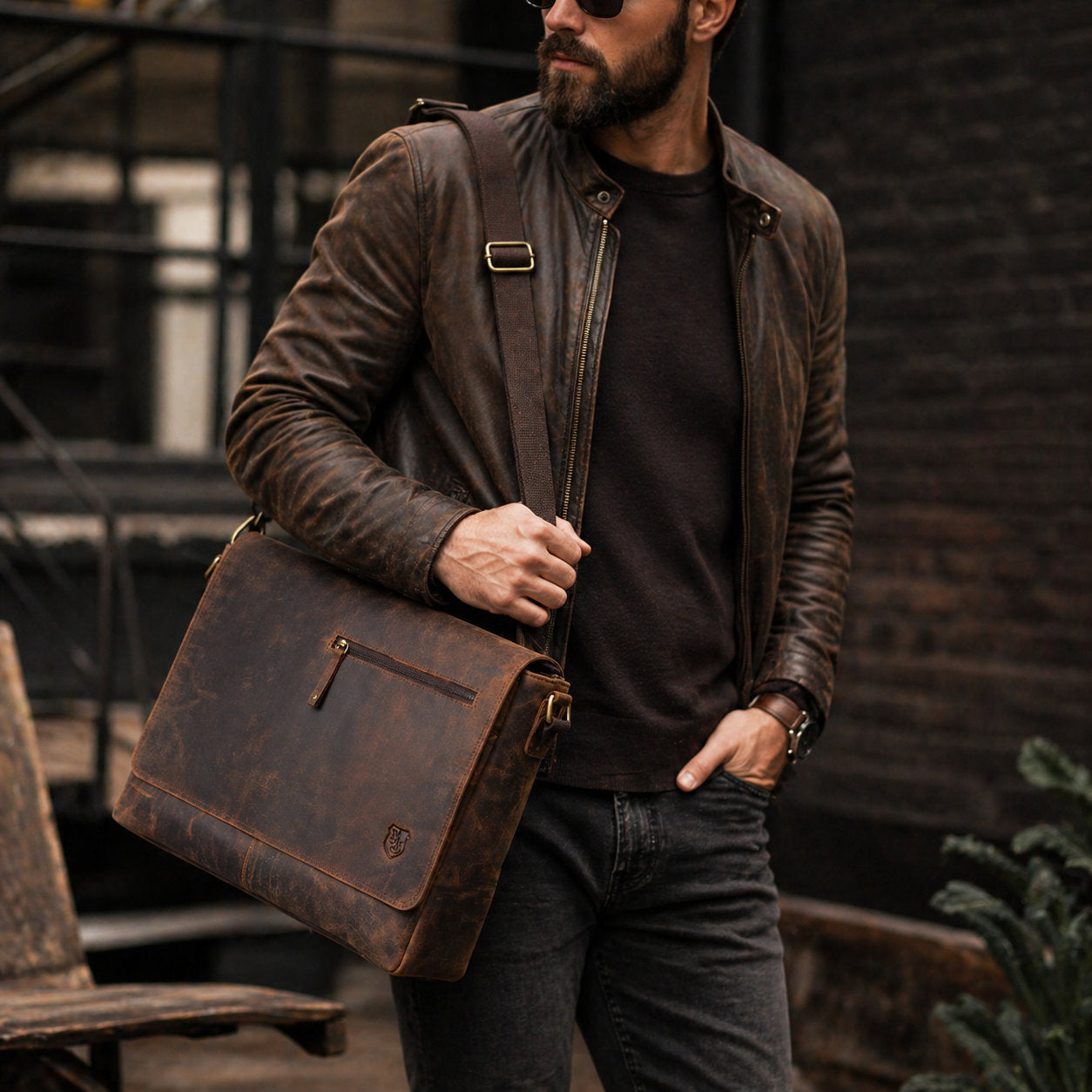
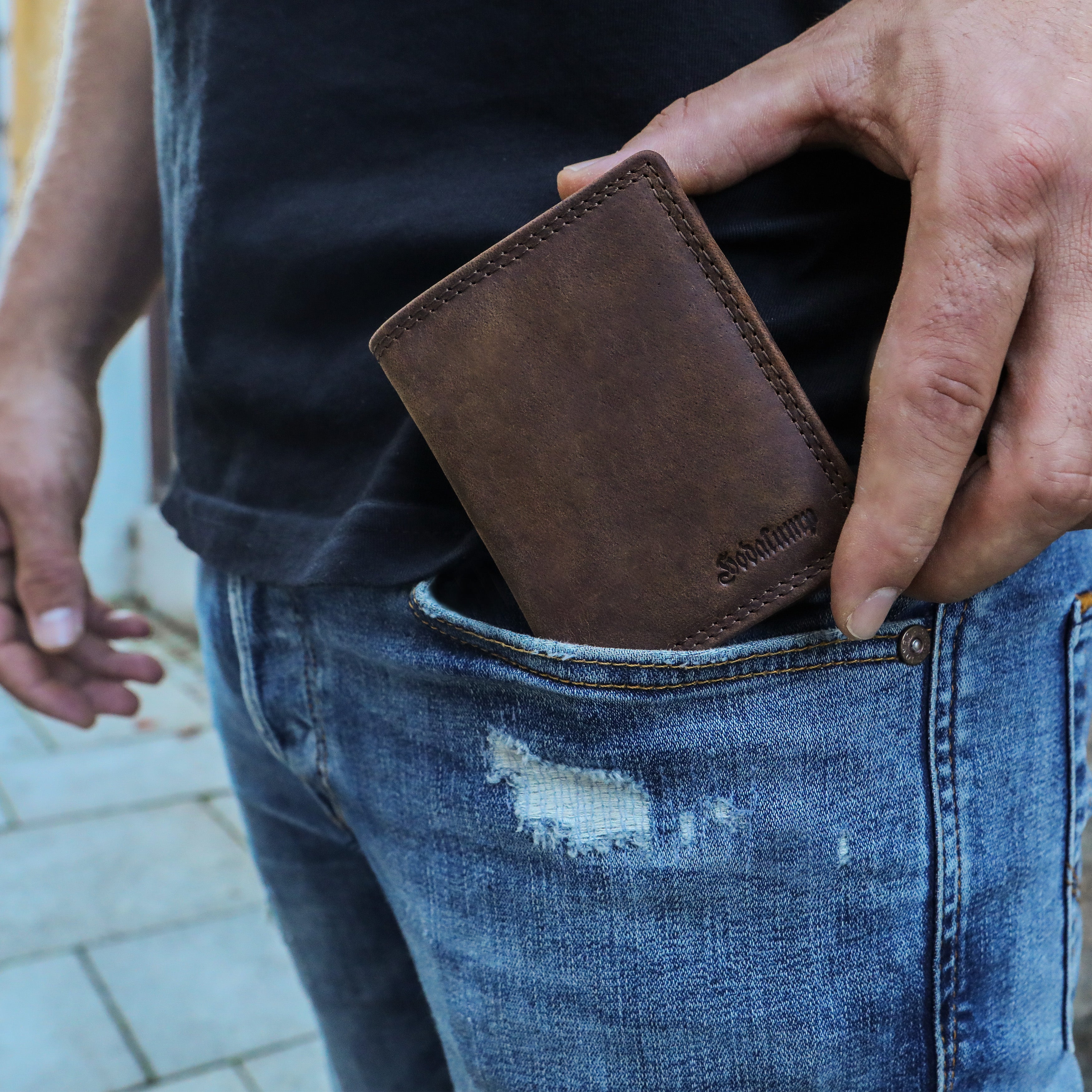


“Genuine leather” is one of the weakest promises a product can carry. The term says only this: an animal hide went into it. It says nothing about whether you are holding the naturally grown surface or the split-off underside with a plastic layer sprayed on top — and between those two things there is easily a decade of service life.
The good news: you do not need a laboratory to tell them apart. Four or five simple checks will do, and anyone can do the most important one in five seconds.
How a hide is built up — and why that explains everything
An animal hide has a dense layer on top with the natural, grown surface. That is the grain layer, and it is the valuable part: tightly packed fibres, a closed structure, naturally water-repellent. Below it the fibre network becomes looser and spongier.
Thick hides can be split through their thickness. One hide then becomes two layers:
- Full-grain leather — the upper layer with the surface untouched. All the pores, creases and small scars of the animal are still there. That is why real leather never looks perfectly uniform.
- Corrected grain leather — the upper layer, but buffed and embossed with a new, even grain. It looks cleaner, but the surface has been damaged.
- Split leather — the lower layer. It no longer has any grown surface at all. To make it look like leather, it is given a top coat and has a grain embossed into it.
All three are allowed to call themselves leather, and all three are leather. They simply hold up completely differently. Split leather cracks where it bends and eventually breaks down into fluff, because there is no closed fibre structure left beneath the applied coating.
The cut edge is the most honest test
If you only check one thing, check this. Find an open edge — on a wallet the edge of a card slot, on a belt the end behind the loop, on a bag the edge of a strap. Then look at it from the side.
- Full-grain leather: a continuous fibre cross-section, often slightly fibrous and fuzzy, in the colour of the leather or lighter. No transition, no layers.
- Split leather: a thin, clearly separate top coat above, and beneath it a noticeably looser, often lighter fibre material. The transition is visible.
- Synthetic leather: a woven fabric. Textile threads, usually lighter and regular, with a plastic layer over the top. The moment you can make out threads, the question is answered.
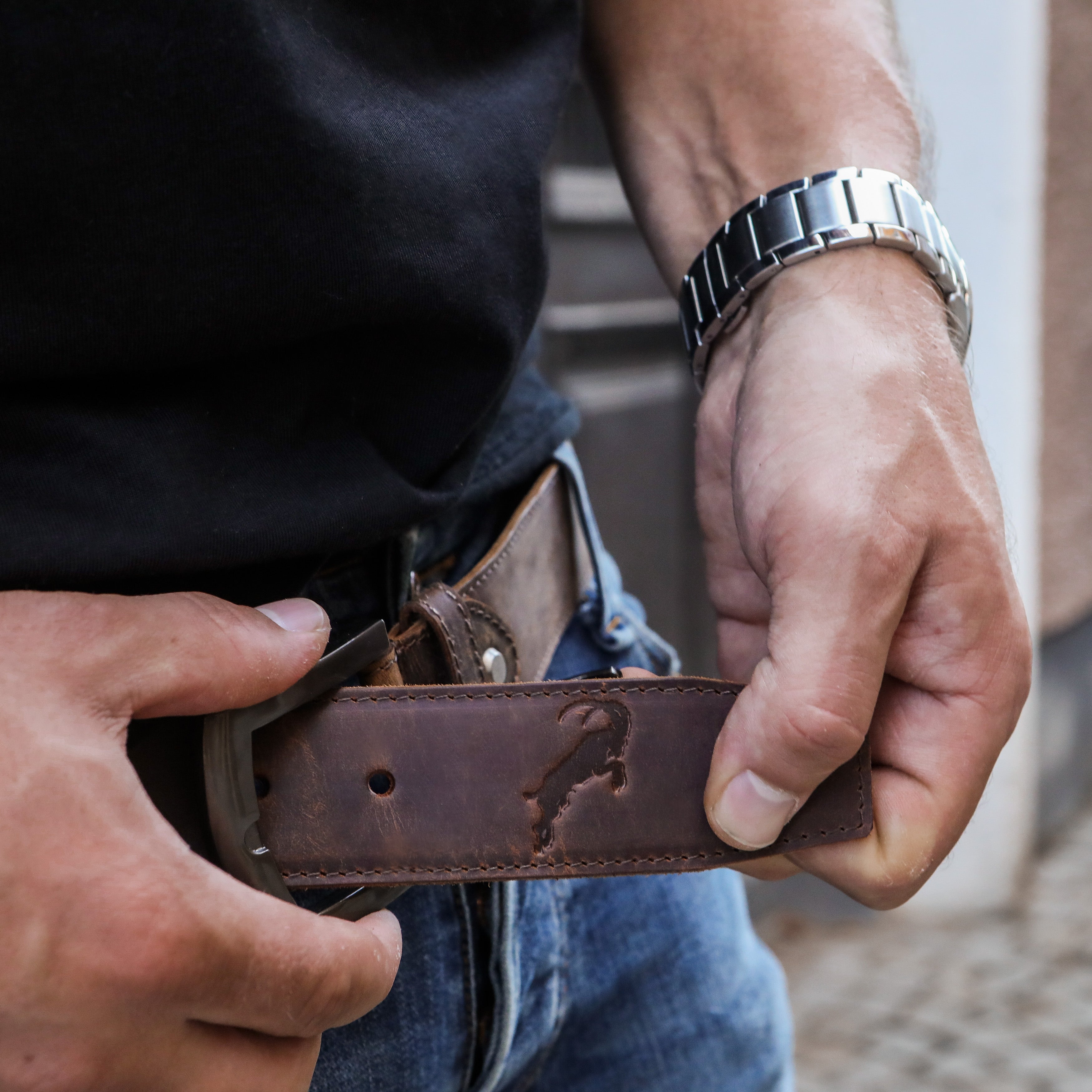
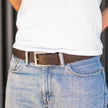
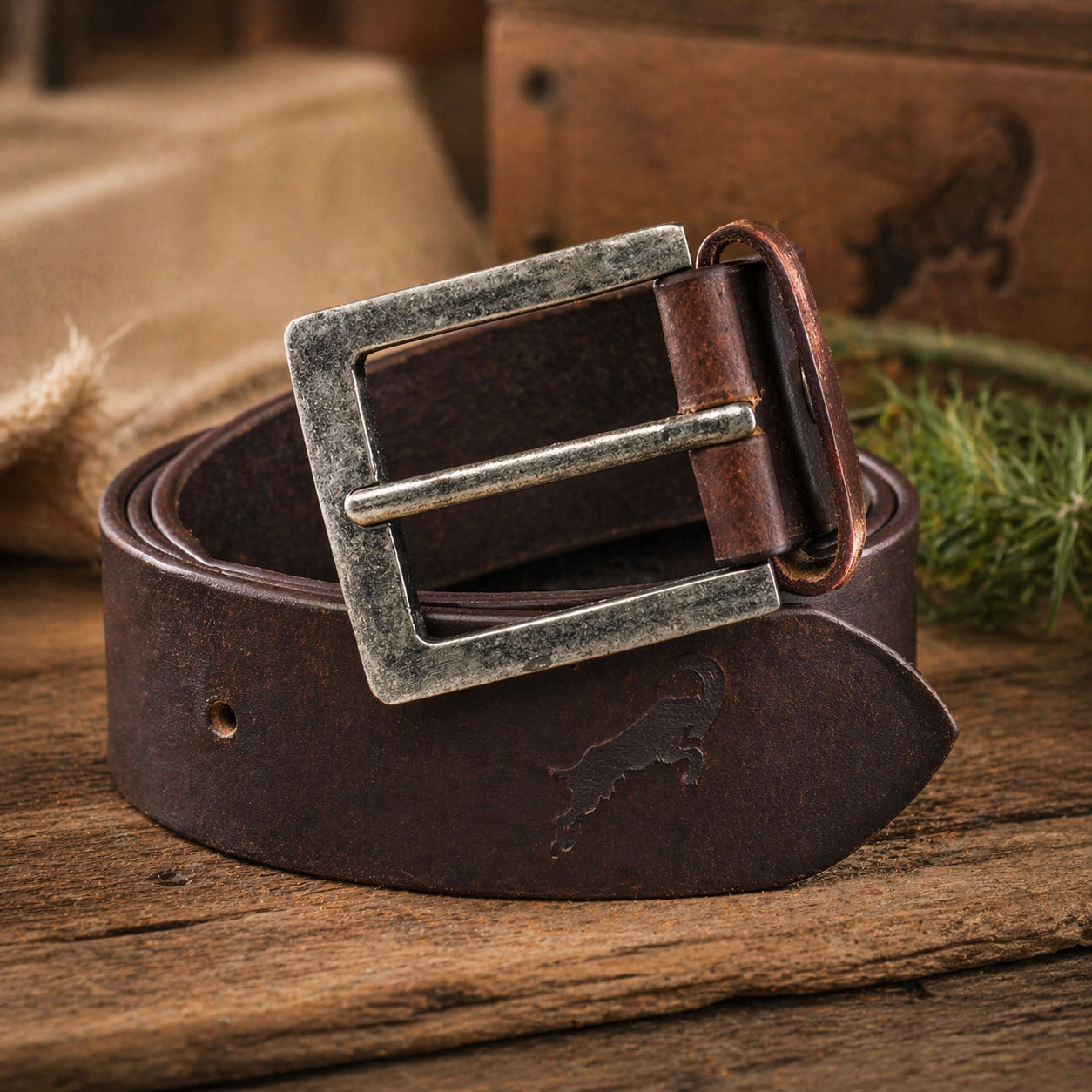
On a leather belt this is particularly easy, because there is always a 4 cm wide cut surface exposed. On card holders, a look at the edge of the outer pocket is enough.
Grain: irregular is a good sign
Synthetic leather and embossed split leather have a grain that repeats. Not obviously, but measurably: if you scan a palm-sized piece and find the same pattern a second time, it came off an embossing roller. A grown hide never repeats itself.
Pores give just as much away. On full-grain leather they are unevenly spread, different in size, sometimes clustered. On an embossed surface they are too even — too tidy for something that grew.
Three tests you can do anywhere
The warmth test. Rest the palm of your hand on the surface for ten seconds. Leather takes up the warmth and gives it back slowly. Plastic stays cool at first, then warms in patches and feels clammy. That is subjective, but surprisingly reliable if you touch both one straight after the other.
The bend test. Bend a piece over your finger. Real grain leather throws fine, irregular wrinkles and the surface shifts slightly in colour. Oiled leathers visibly lighten at the bend and darken again when you let go — that is the pull-up effect and a very clear yes. Synthetic leather creases rather than wrinkles, and the pattern distorts visibly.
The drop of water. A drop on untreated or merely oiled leather soaks in within one to two minutes and darkens the spot. On synthetic leather and heavily pigmented leather it beads and stays put. Careful: do not do this on goods that are not yours, and not on suede — there the drop leaves a ring that stays.
The smell test, by the way, works less well than everyone claims. Modern synthetic leathers barely smell of plastic any more, and leather smells very different depending on the finish. Treat it as supporting evidence, not proof.
The signs at a glance
| Sign | Full-grain leather | Split leather | Synthetic leather |
|---|---|---|---|
| Cut edge | continuous fibres | top coat on a loose core | textile weave visible |
| Grain | never repeats | embossed, recurring | embossed, recurring |
| Drop of water | soaks in, darkens | usually beads | beads |
| Bending | fine wrinkles, lightens | wrinkles, sometimes cracks in the top coat | creases, pattern distorts |
| After years | patina | wear, fluff at the edges | the coating flakes off |
When something is not trying to be leather at all
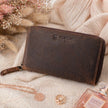
There is one case in which none of this matters: when a material does not present itself as leather in the first place. The Wallet HR (€24.95) is made from recycled PET, is light and water-repellent, and is sold as exactly that — not as “leather look”, not as “vegan leather”, but as what it is. There is more on that in the article about bags made from recycled PET.
That is the distinction that matters: a plastic product that calls itself plastic is perfectly fine. It becomes a problem when synthetic leather is sold using leather vocabulary — and that is exactly what you need the cut edge for.
What that means when buying online
Online the cut-edge test is off the table, so all you have is the description. Three questions help:
- Is an animal named? “Buffalo leather”, “cowhide”, “goatskin” is a concrete statement. “Genuine leather” on its own is not.
- Is anything said about the surface? “Oiled”, “natural”, “matt” points to an open grain that has not been given a covering finish.
- Are there close-up photos of the edges? On a sharp product photo you can often see the fibre cross-section better than you would expect.
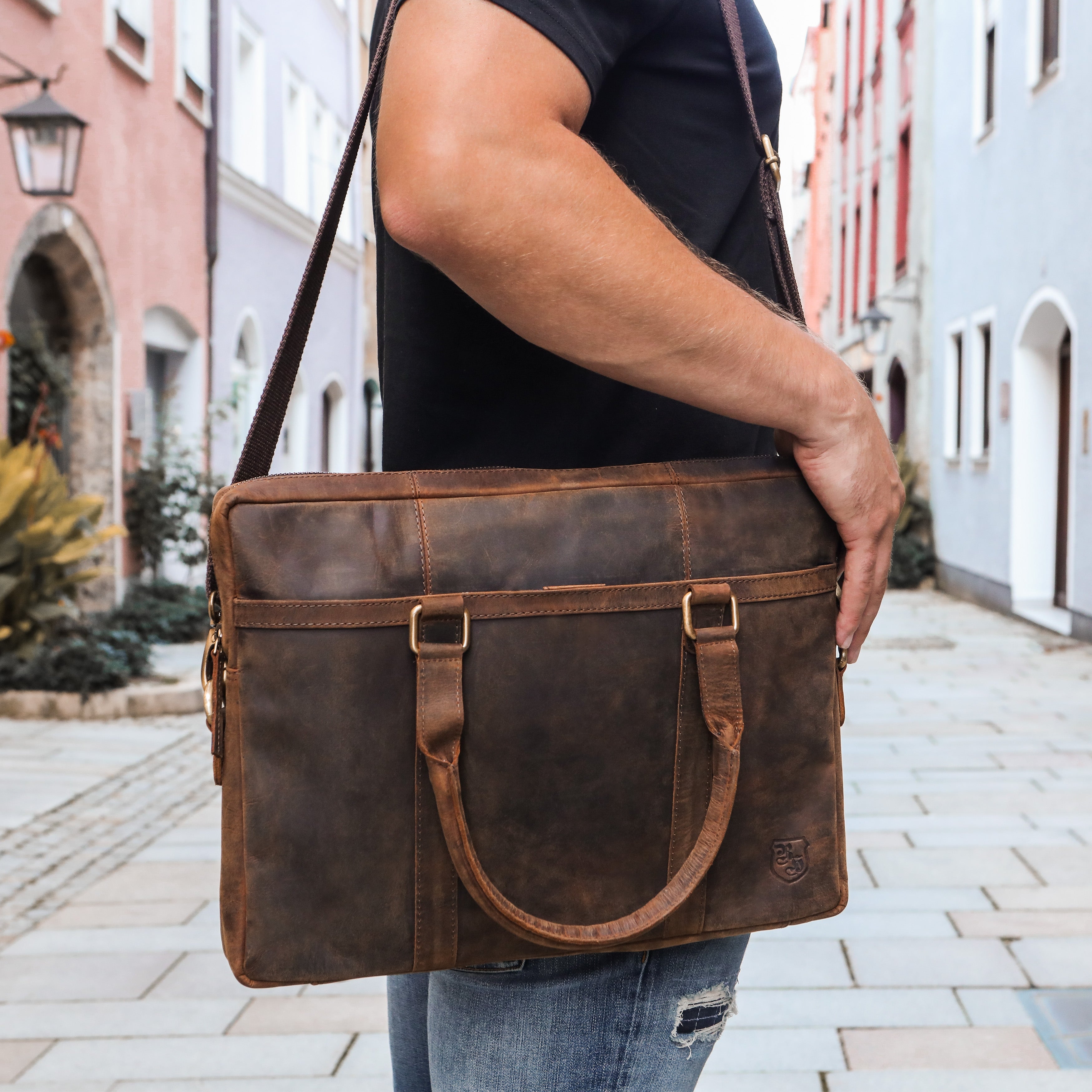
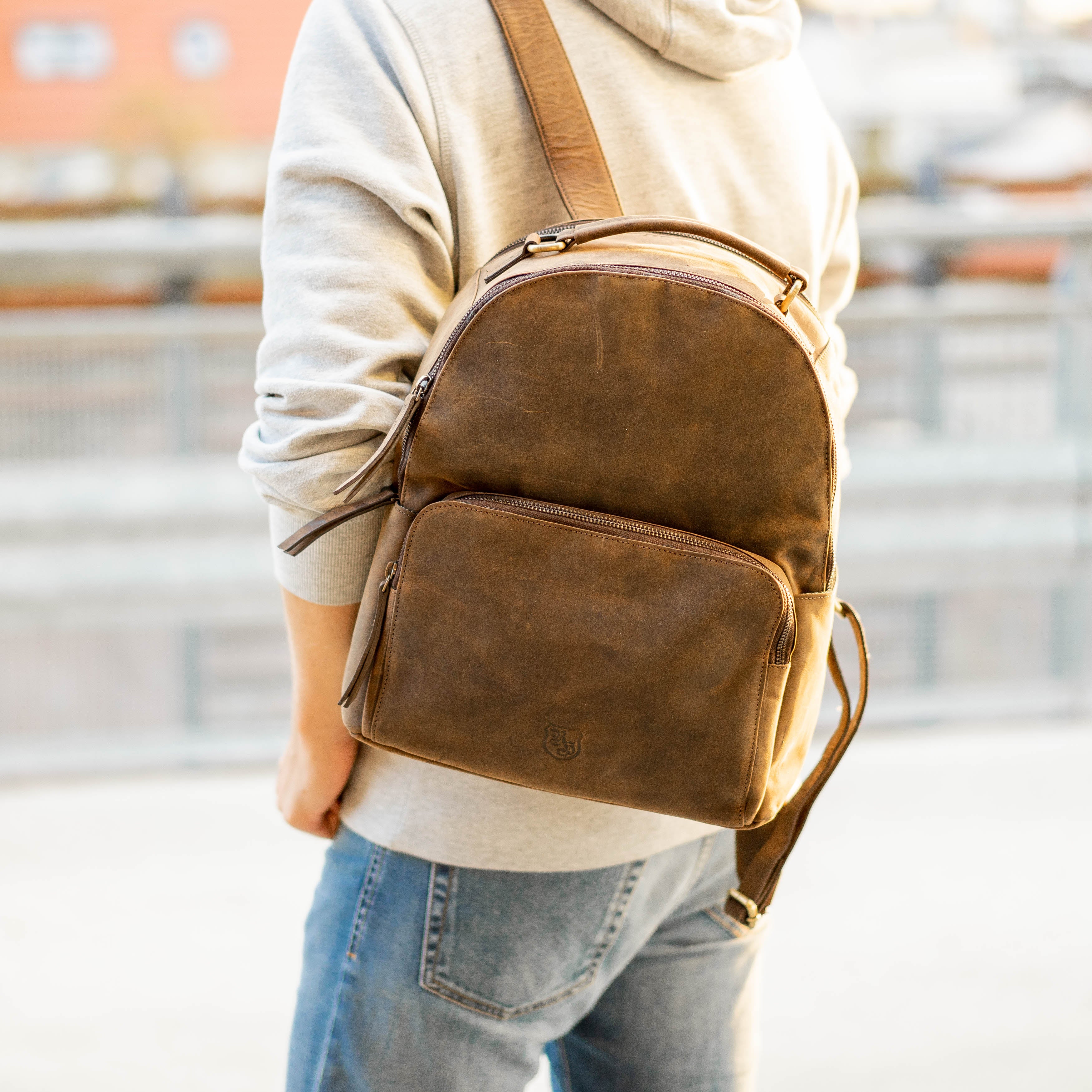
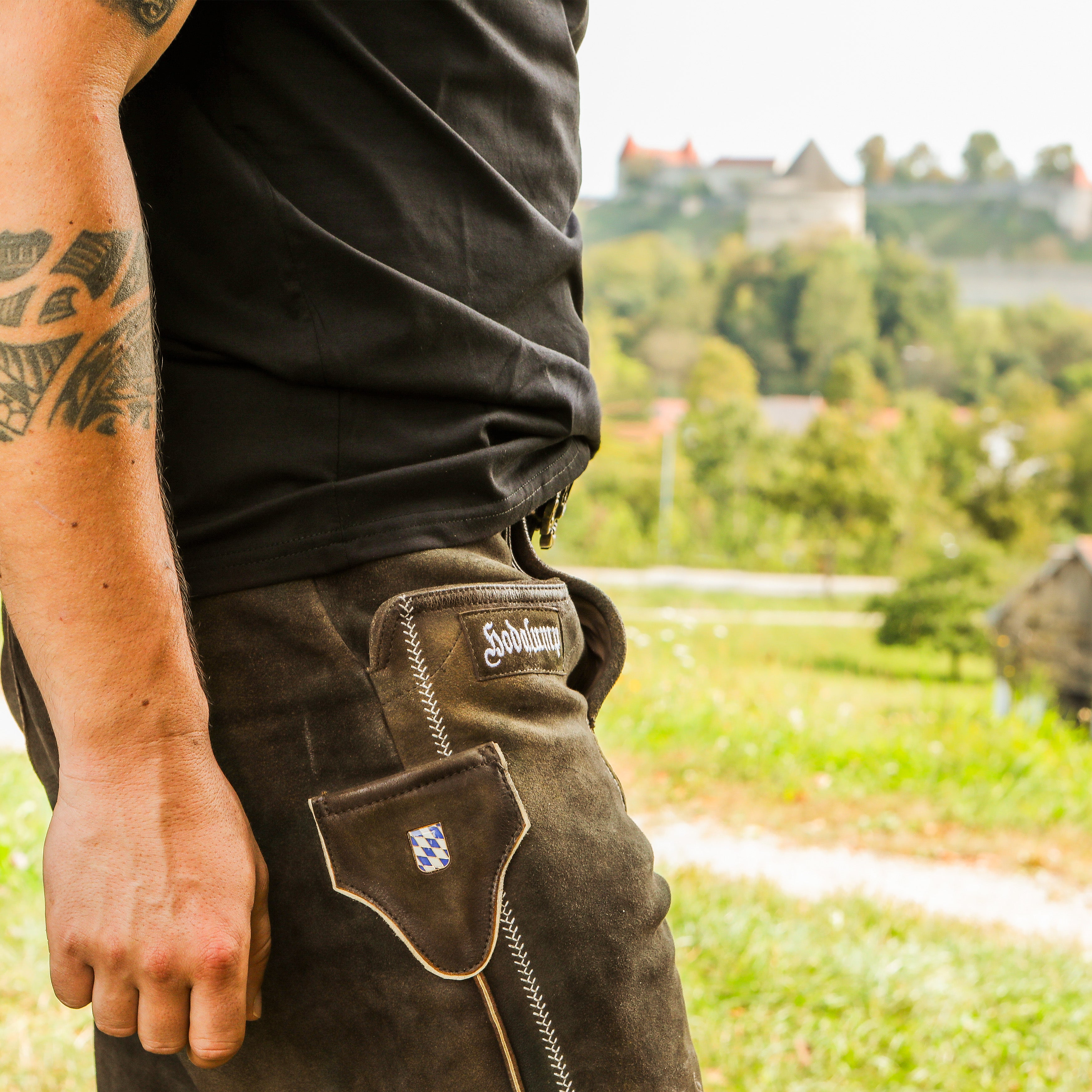
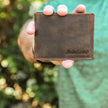
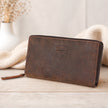
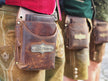
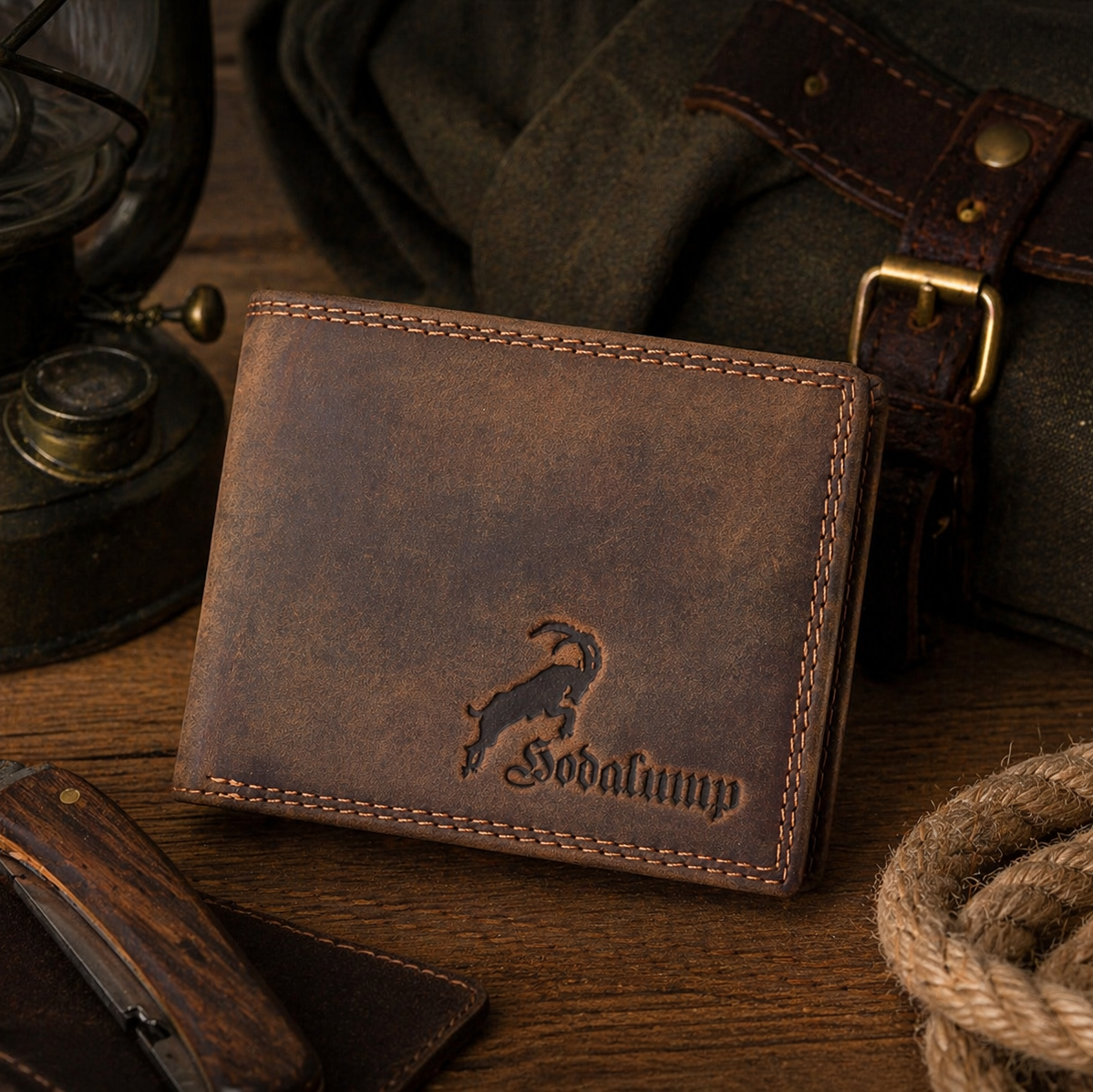
And because that has to cut both ways, here is our own disclosure: where an animal is named in our descriptions, it is named — buffalo leather on the travel bag and the tobacco pouch, goatskin on the lederhosen, cowhide on several belts, Hunter Vintage on many wallets. Where it only says “genuine leather”, nothing more has been specified. Whether a leather is full-grain or corrected is not stated in any of our descriptions — we cannot answer that for you here, and we would rather write that down than claim otherwise.
How you will see after three years what you bought
The most honest test is the slowest. Full-grain leather goes darker and glossier where it is handled, because skin oils and abrasion compact the surface. Split leather loses its top coat at the edges and goes fibrous there. Synthetic leather flakes off — usually first at the point that gets bent the most, which on a wallet means the spine.
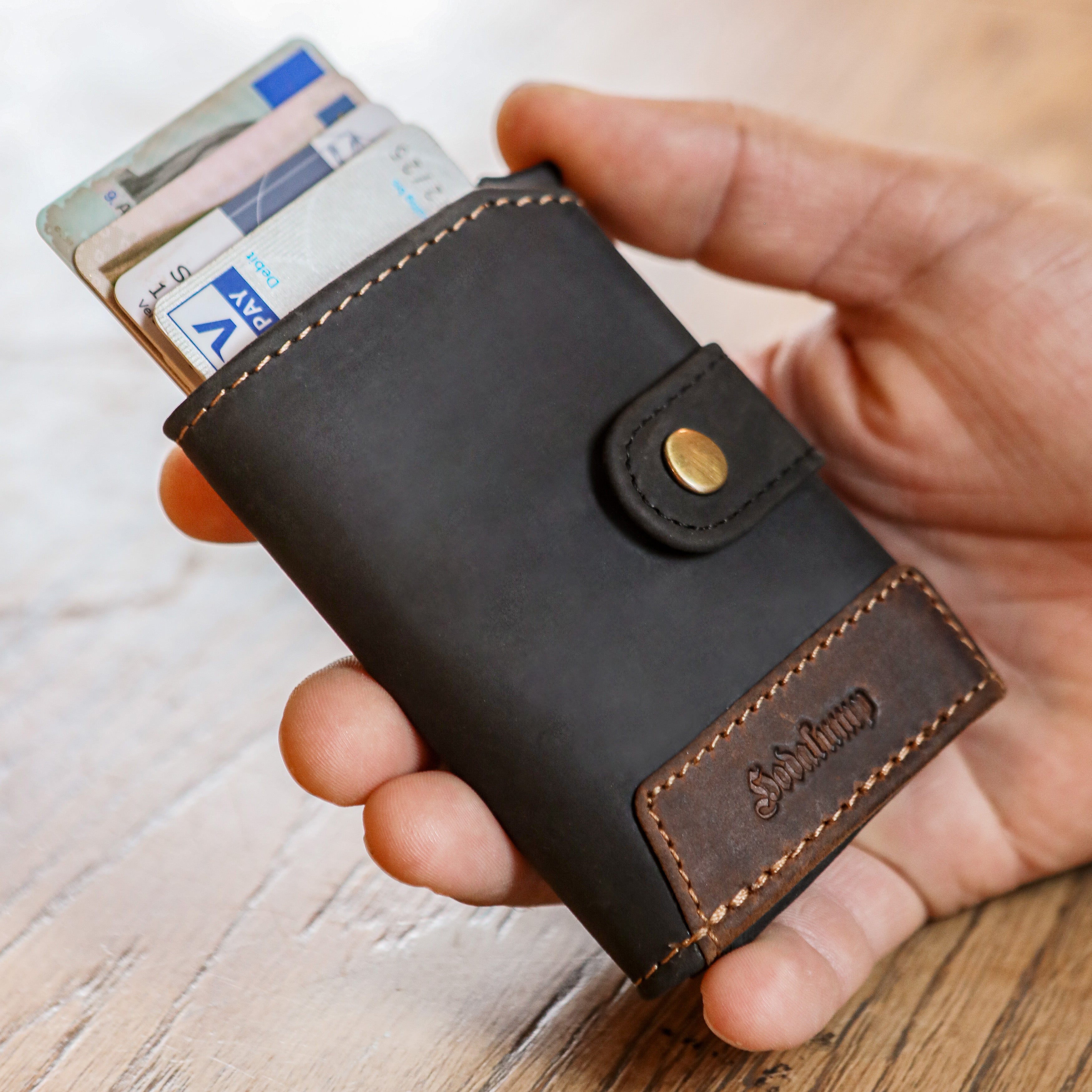
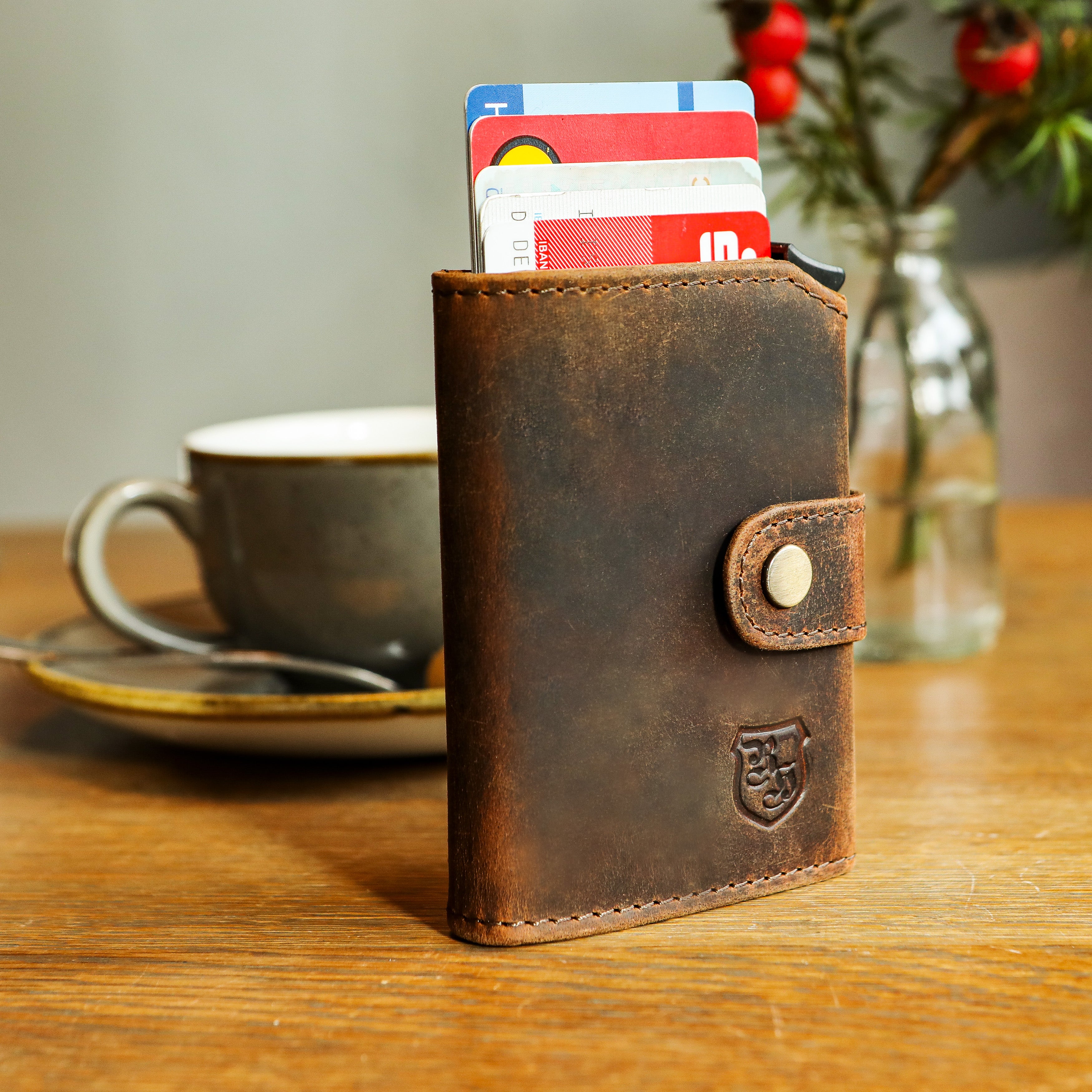
If your wallet goes lighter at the corners after two years and that can be brought back by rubbing in leather grease (€8.95), you bought leather. If a layer peels away, you did not. Which models hold up how in everyday use is covered in the comparison of men's wallets; the selection itself is in the men's wallets.
Four myths that refuse to die
“Real leather smells of leather.” What you can smell are tanning agents and oils, and those vary enormously. A heavily finished leather smells of almost nothing, an oiled one smells intense. Conversely, there is synthetic leather that has been worked with fragrances. Smell separates nice-smelling material from nasty-smelling material, not leather from plastic.
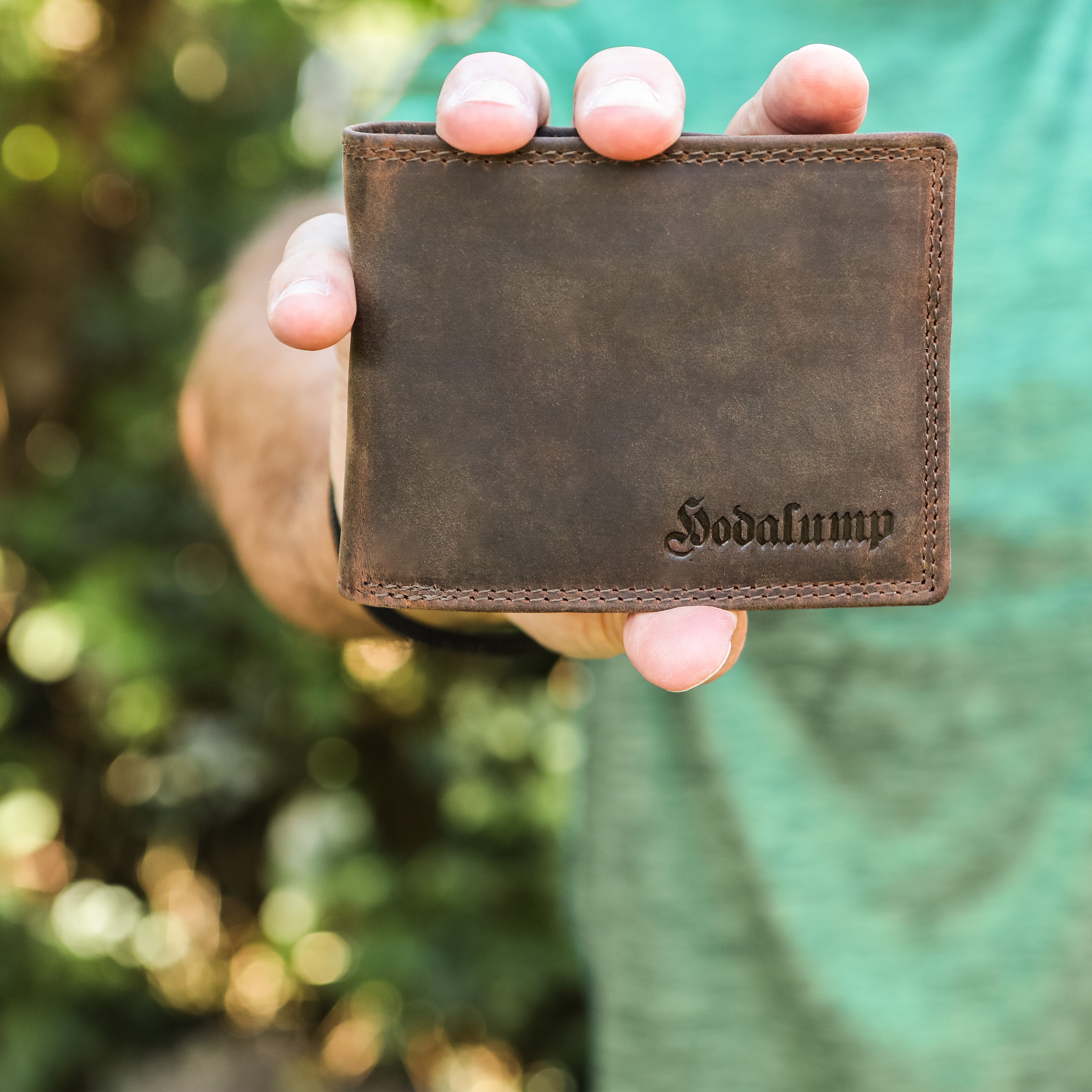
“The smoother the better.” If anything it is the other way round. A perfectly even surface comes about through buffing and embossing — in other words by removing the grown grain. If you see a crease, a tiny scar or an unevenly deep colour on a wallet, that is not a manufacturing fault but evidence that the surface is real.
“Thick leather is better leather.” Thickness says something about the intended use, not about quality. A glove made from 3 mm leather would be useless. What matters is whether the fibre structure is closed — and you see that at the edge, not with a tape measure.
“Scratches are grounds for complaint.” On oiled and natural leathers they are the opposite: proof that there is no covering plastic layer on top. Most of these scratches can be rubbed away with your thumb and a little hand warmth. What remains is part of the patina.