















Two questions come up constantly around wallets: “Which colour brings luck?” and “What colour should a wallet be?” The first comes from feng shui and folk belief, the second from everyday life. Both are fair questions, and they deserve separate answers — otherwise you end up with a recommendation that takes neither of them seriously.
This piece does exactly that: first what is handed down, then what practically speaks for a colour. Clearly marked as to which is which.
What is said about lucky colours
The best-known rules come from feng shui, a Chinese system concerned with the arrangement of rooms and objects. It assigns colours to the five elements of wood, fire, earth, metal and water. Guides then derive wallet recommendations from those assignments.
An important note first: these are traditions and interpretations, not verifiable claims. There is no study showing that the colour of a wallet influences income — and we aren't claiming that either. What follows is an account of what is commonly said.
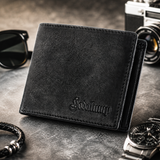
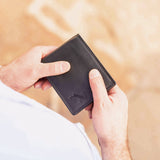
- Black is assigned to the water element. Water stands for flow and increase, which is why black is regarded in many feng shui guides as the safest choice for a wallet — wealth is supposed to flow, but be held.
- Blue also belongs to water. Opinions diverge here: some sources see the same positive flow in it, others warn that money will then drain away rather than stay.
- Gold, yellow and beige are attributed to earth and metal and are regarded as colours of prosperity. In many Asian traditions gold is the prosperity colour par excellence.
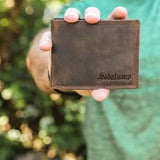
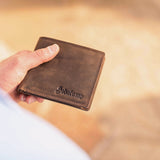
- Brown stands for earth: stability, preservation, steady growth. One of the least criticised colours in these guides.
- Red is the most interesting case, because the traditions openly contradict one another. In general Chinese symbolism red is the colour of luck — red envelopes containing money are a New Year custom. In feng shui guides about wallets, by contrast, red is often advised against: red is fire, and fire burns. Both views exist side by side, and both are seriously held.
- Green belongs to wood and stands for growth — positively regarded in most accounts.
- White is assigned to metal. Some see clarity in it, others emptiness.
Where it falls apart: the rules contradict each other
Spend two hours searching online and you'll find a recommendation and a warning for almost every colour. Red is the most obvious example, blue the second most obvious. That isn't because anyone is being sloppy, but because feng shui is a tradition that has grown over time with several schools — and because a lot of online articles cheerfully mix those schools together.
On top of that: classical feng shui deals with rooms and compass directions, not with objects in your trouser pocket. Applying it to wallets is a modern extension. You can find it appealing, but you shouldn't take it for an inherited rule.
Our view, put plainly: if a particular colour gives you a good feeling, that's a perfectly legitimate reason to buy. A good feeling every time you reach into your pocket is worth more than any assignment of elements. It should just be called what it is — a good feeling, not an effect.
The part you can actually check: what colour does in daily use
Now to the second question. What colour a wallet should be can indeed be answered — just not through symbolism, but through four sober points.
1. How the colour ages. This is the most important point and the one hardly anyone thinks about. With through-dyed, oiled leather the colour sits in the material. When the fold rubs after two years, the same colour appears underneath. With pigmented leather the colour sits on top — there, abrasion goes pale and shows. That's why a brown oiled leather looks interesting after five years, while a light lacquered one just looks worn out.
2. How visible dirt becomes. Pale wallets — white, beige, peach, pink — pick up hand grease and denim dye. That isn't a manufacturing fault, it's physics. Carry a pale wallet in the back pocket of dark jeans and after one summer you'll have a slightly greyed wallet. In a handbag, pale colours hold up considerably better.
3. Whether you can find it again. Sounds trivial, isn't. A black wallet in a black-lined handbag is a daily search operation. A coloured wallet jumps out at you. That's the most practical argument for colour there is.
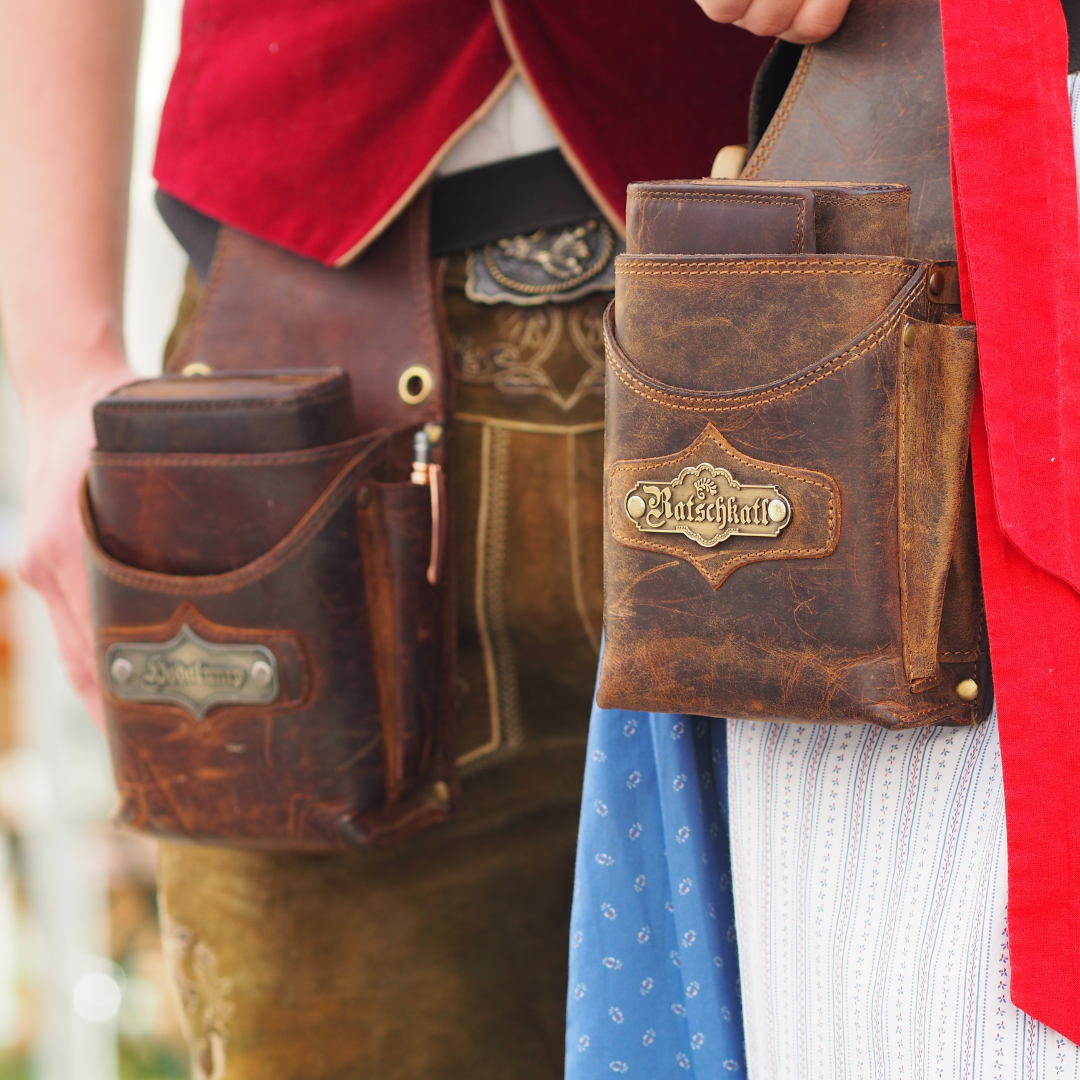
4. What you carry it with. Black goes with everything and draws no attention in a business setting. Brown is warmer, works with jeans and with traditional Bavarian dress, but next to a black suit it can sometimes look out of place. Strong colours are a decision you carry around with you every day.
Brown: the quietly sensible choice
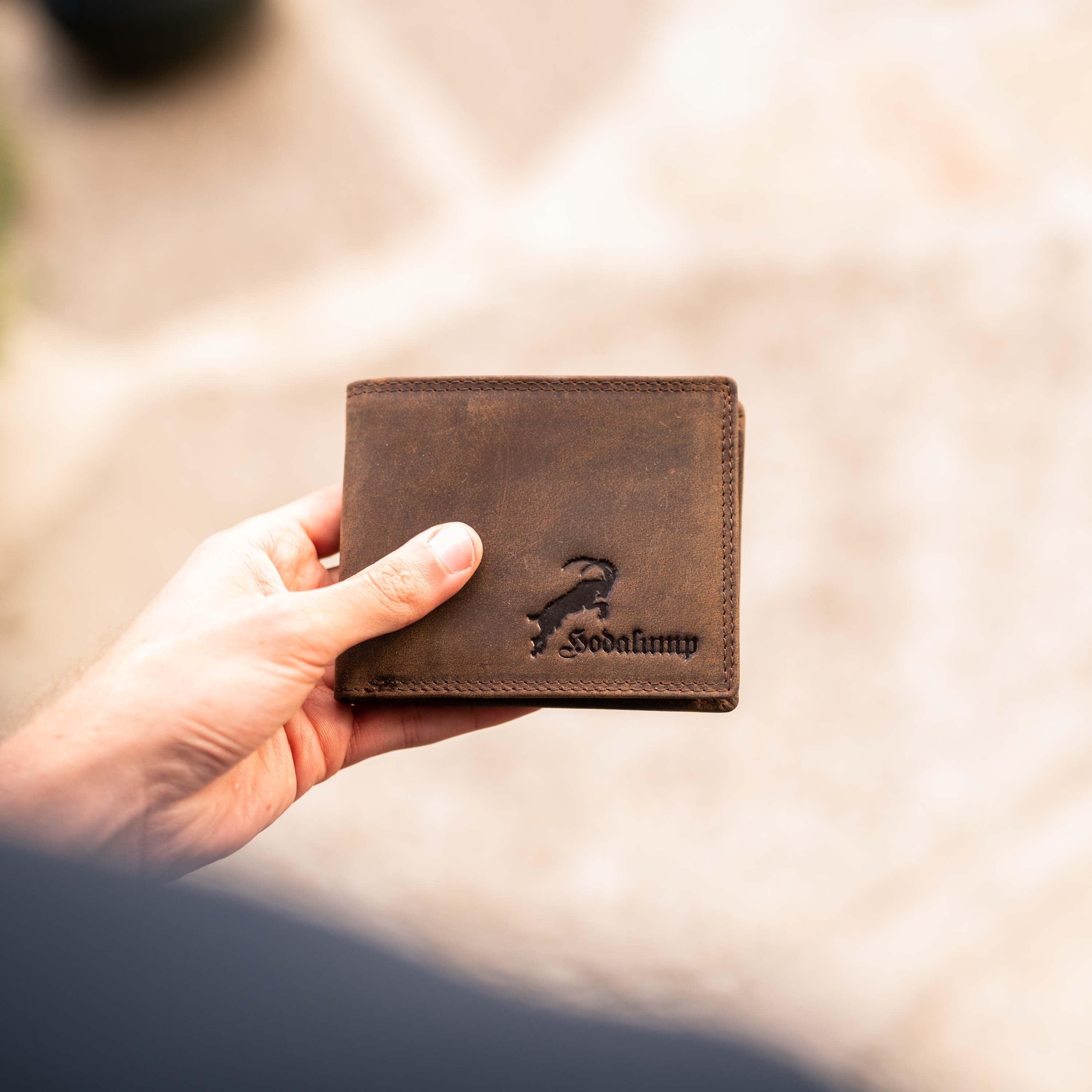
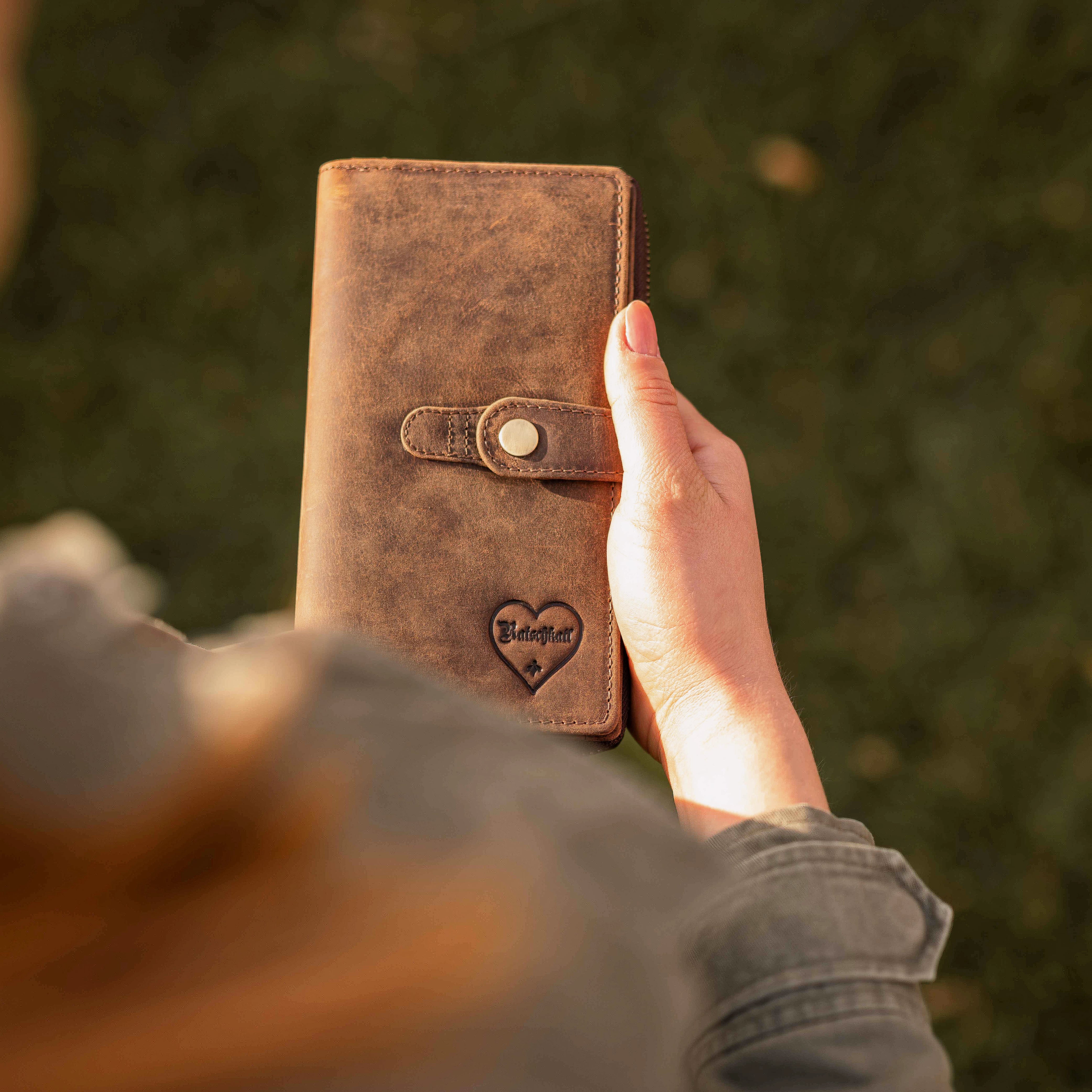
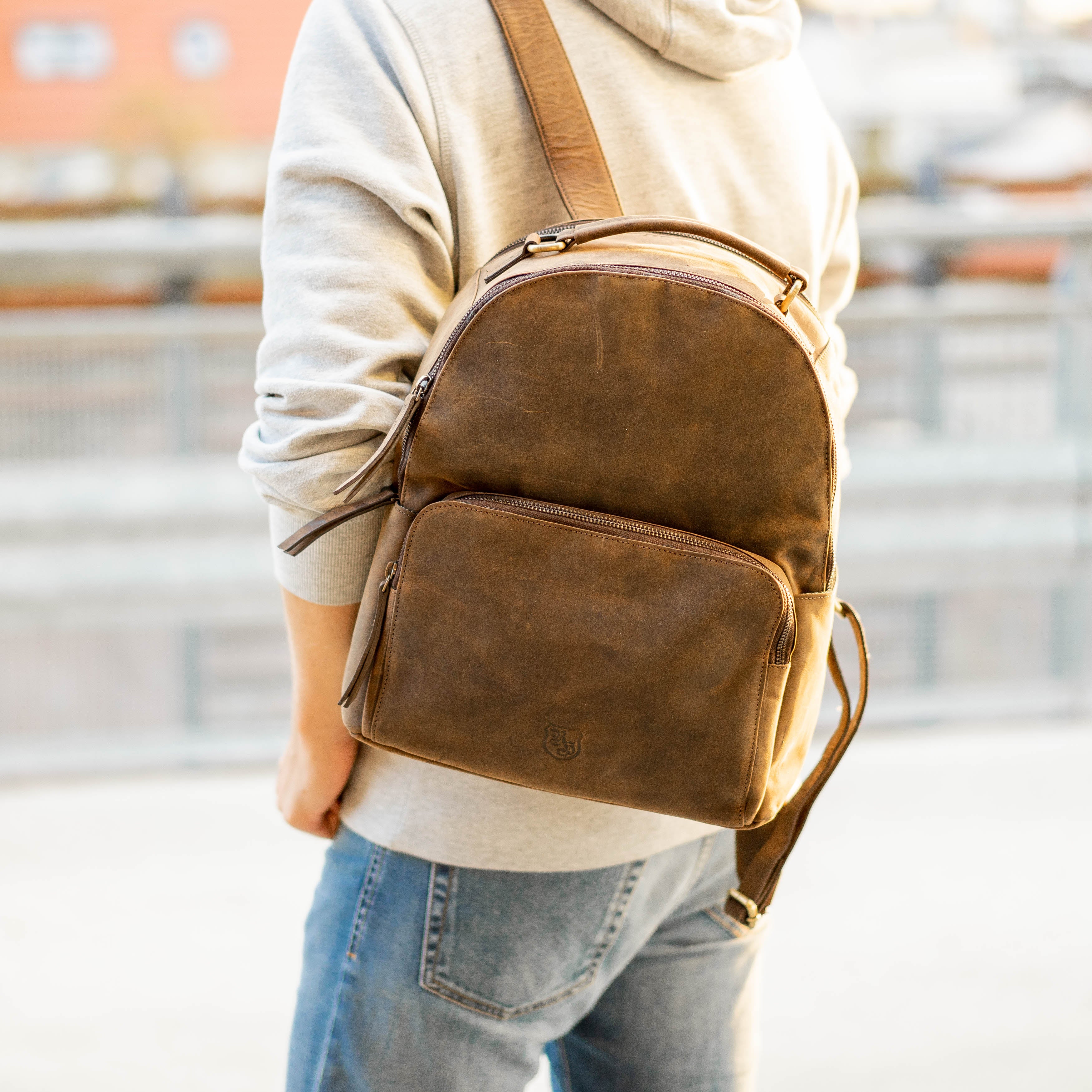
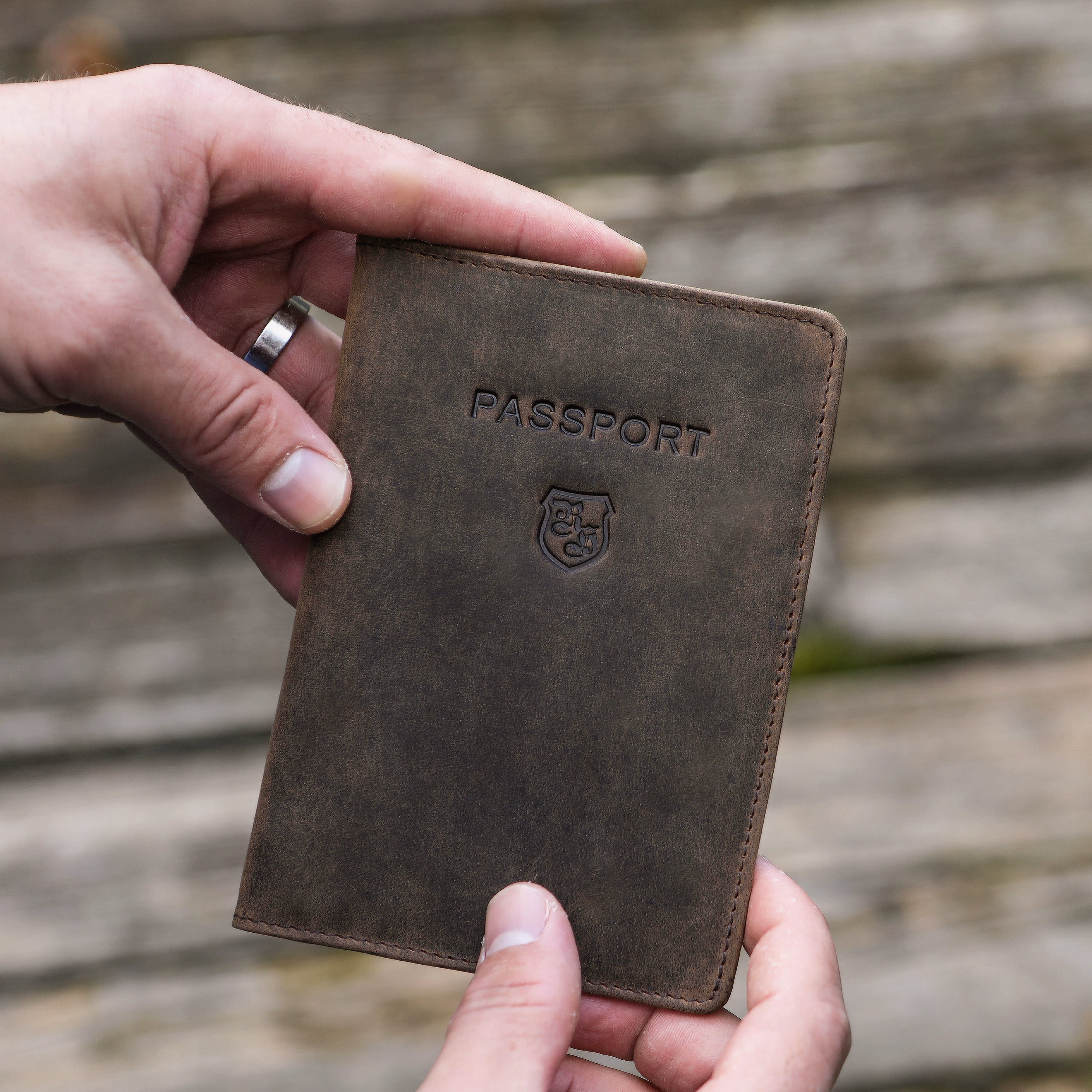
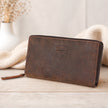
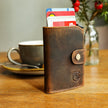
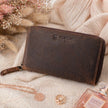
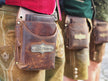
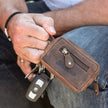
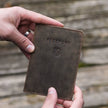
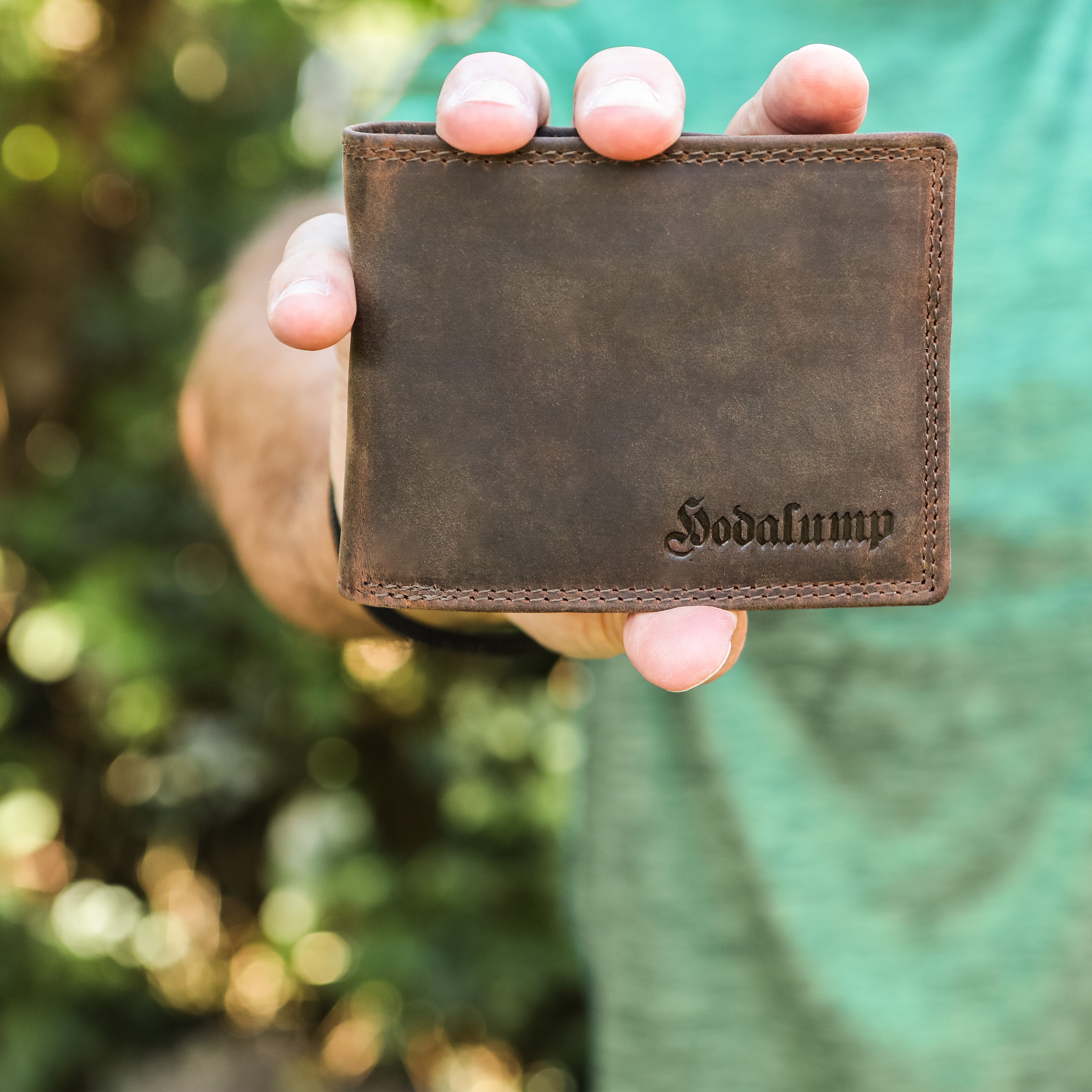
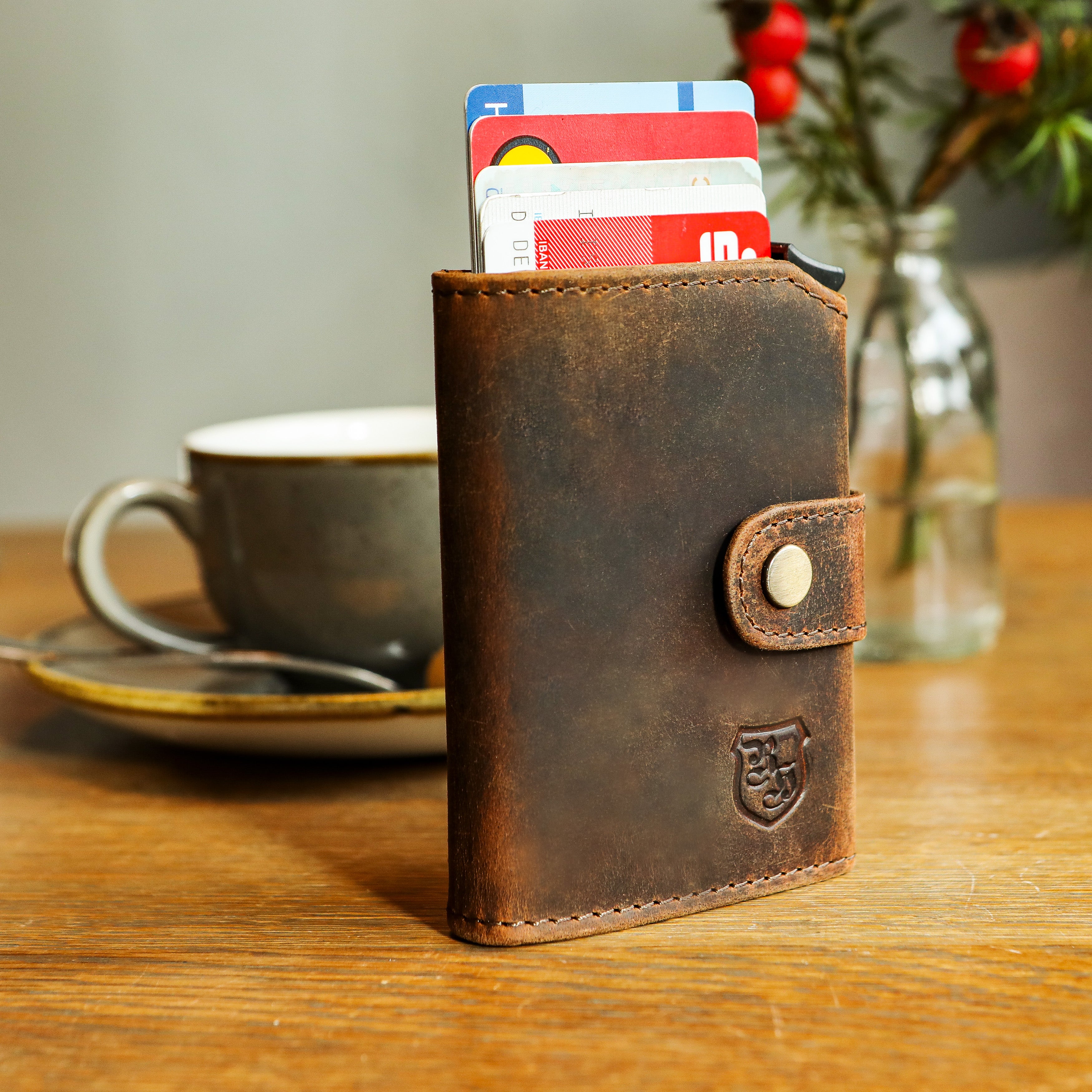
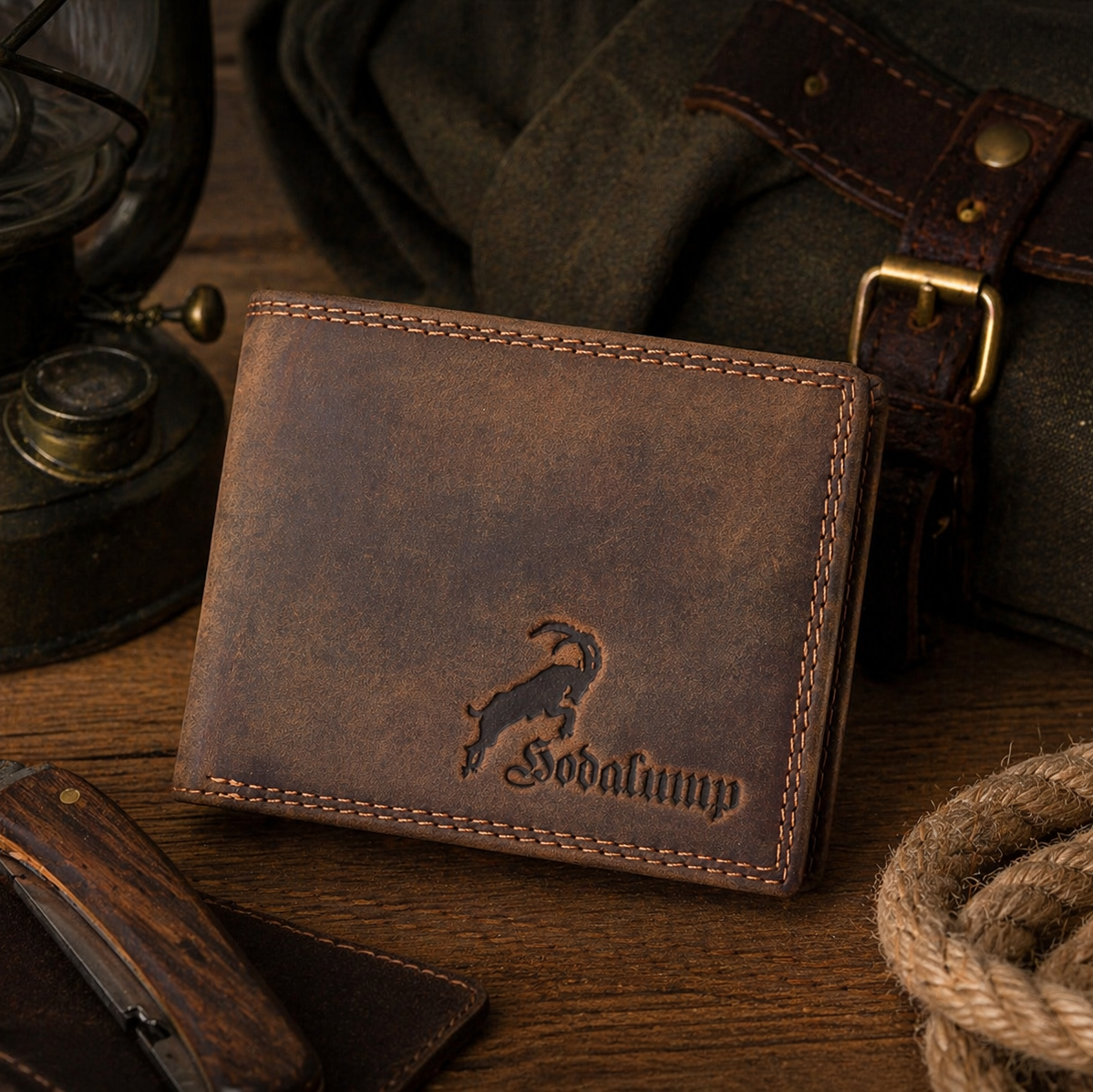
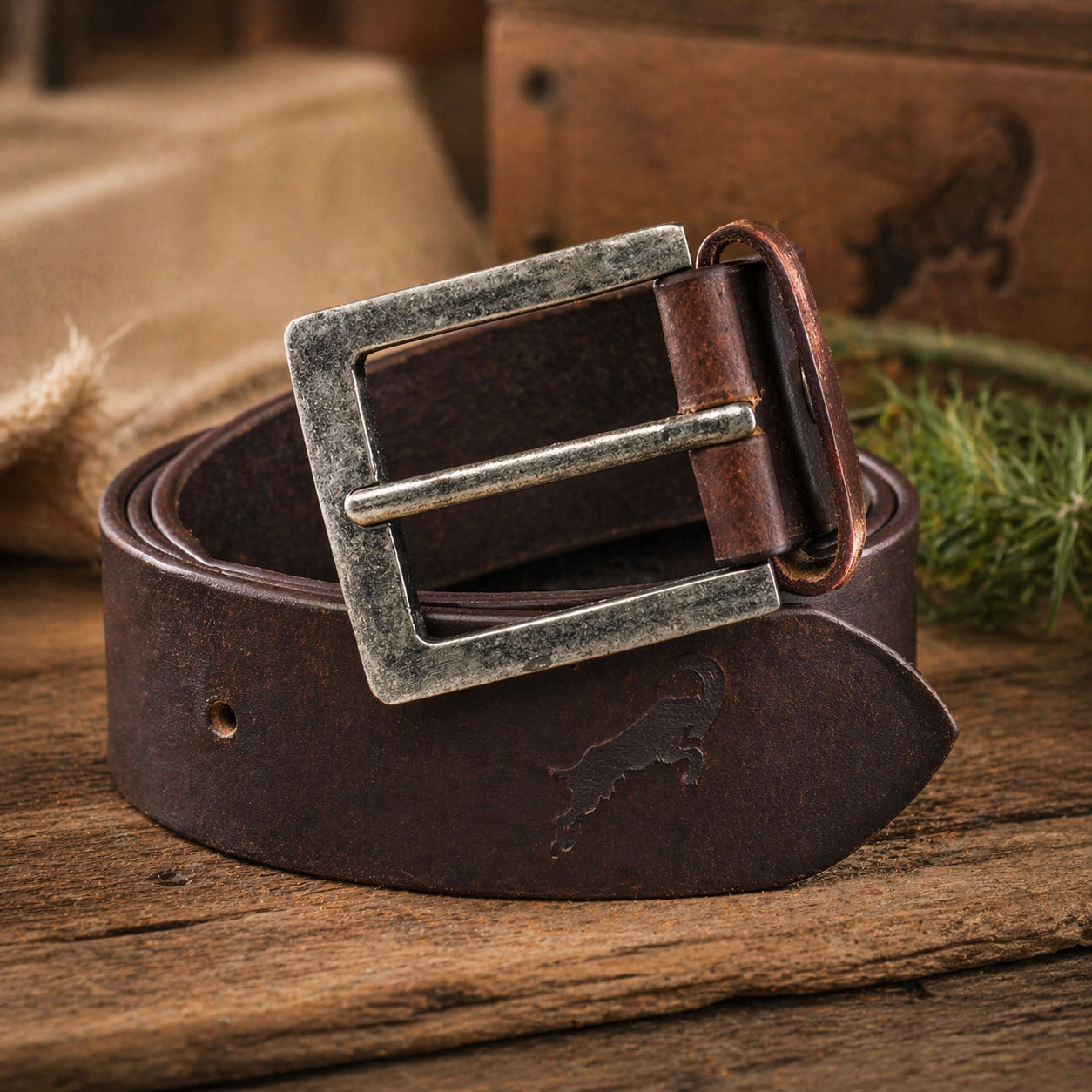
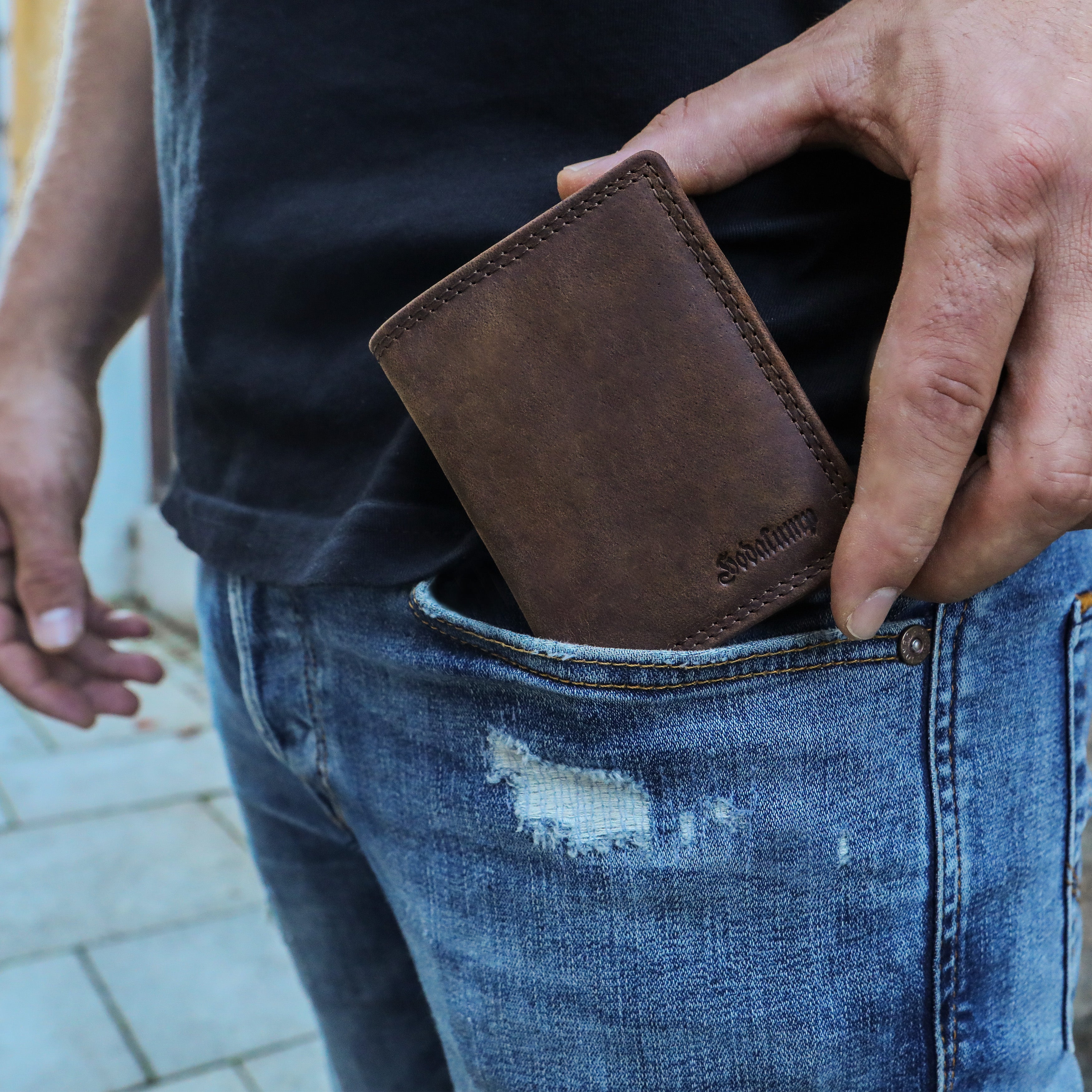
Brown is so widespread on wallets because it does two things at once: it disguises signs of use, and it tends to improve through patina. If you want to carry a wallet for ten years, this is the least complicated route.
Typical examples are the Hodalump Classic Wallet at €39.95 in Hunter Vintage leather, or the Classic Wallet Kare at €39.95, which comes in either brown or black.
Where it goes wrong: brown is not simply brown. An oiled hunter leather darkens visibly over the first few months. If you've picked out one particular brown, it won't stay that brown. If you want a constant colour, you're better off with black.
Black: the colour that tells you nothing — and that's the point
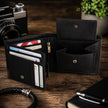
Black ages most discreetly, because signs of use disappear into the dark. It goes with business clothing, with everything else too, and it's the colour nobody asks about.
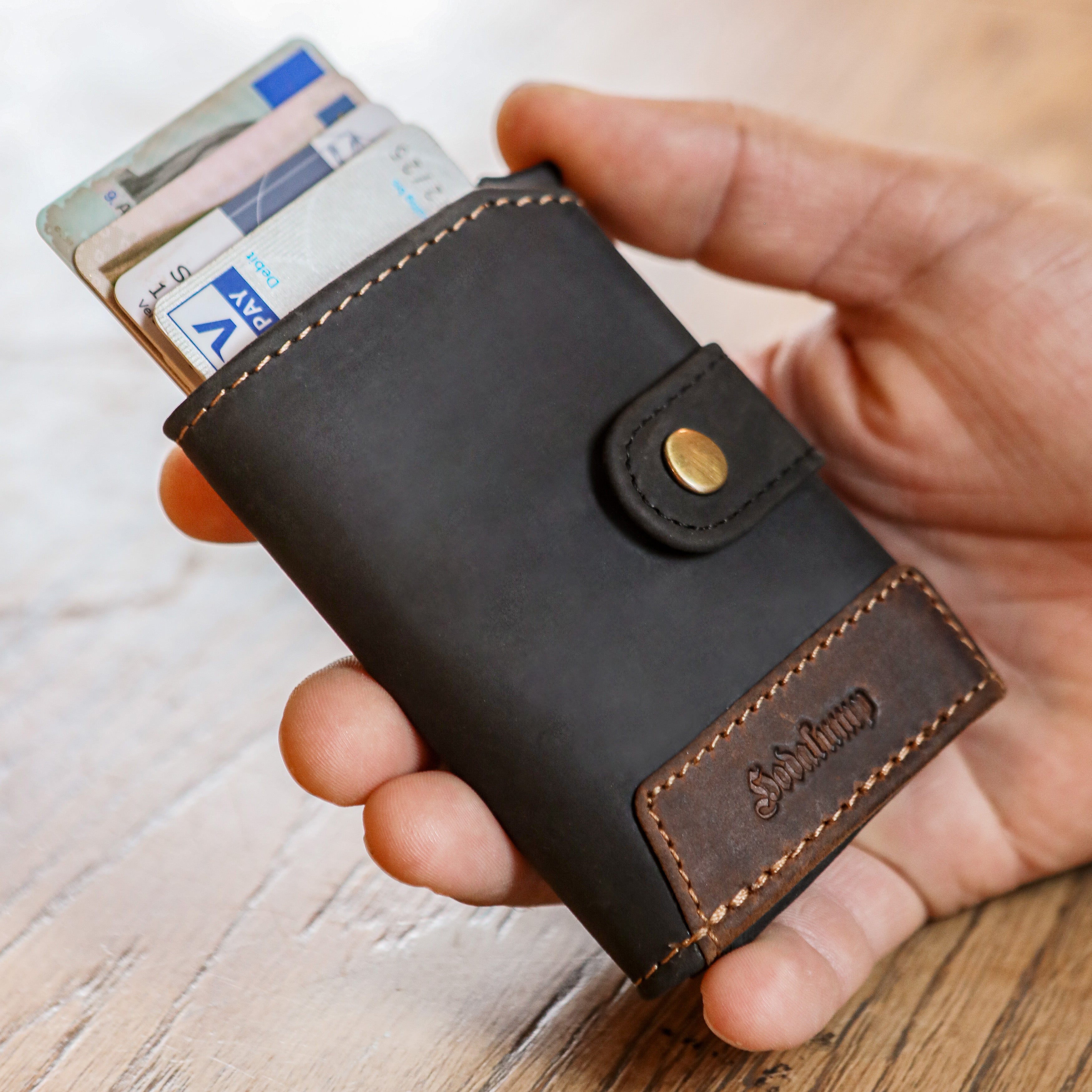
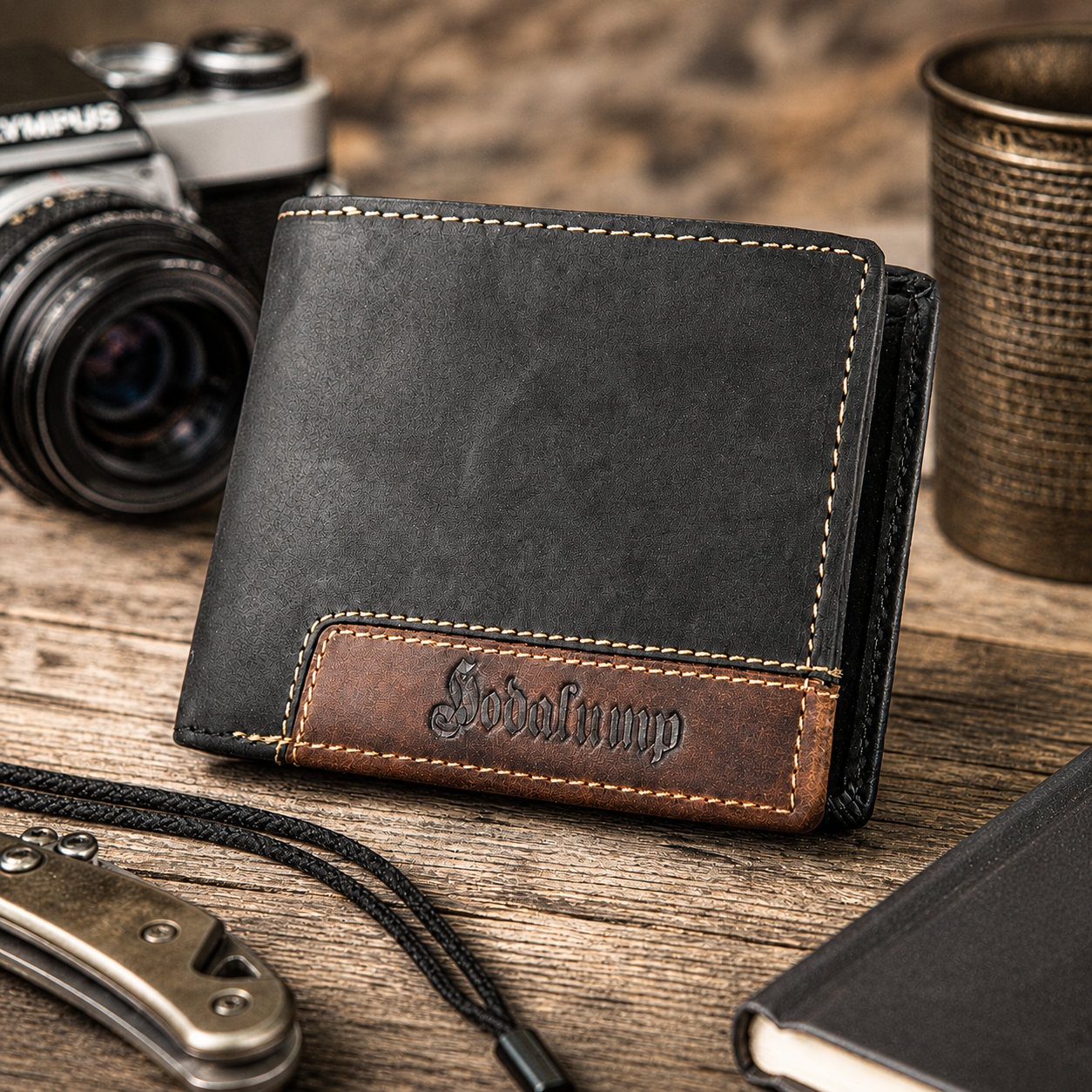
In the range, for instance the Classic Wallet Lugge in black at €39.95 in Black Cow Hunter leather, or the Business Wallet Ibex Edition at €24.95. On the large Soferl wallet at €59.95 and the Slim Wallet Franz at €24.95 you can choose between brown and black.
Where it goes wrong: black inside a black handbag. That's the most common reason people switch to a coloured wallet after two years after all.
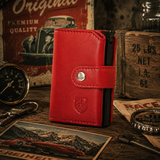
Red: the contested lucky colour
If you go for red because you like it, or because the symbolism means something to you, there's little practical argument against it. Red is dark enough that dirt doesn't show immediately, and striking enough that you'll find the wallet in any bag.
Specifically, there's the Card Holder Red Edition at €39.95 — several card slots plus a central compartment for notes or receipts — and, as a more restrained option, the Hodalump BLACK/RED card holder at €39.95, where red appears only as an accent.
Where it goes wrong: dyed leather in strong tones can transfer colour onto very pale fabrics during the breaking-in period, especially when it gets damp. Anyone combining white linen trousers with rain should know that.
Green, silver, peach: when the wallet is allowed to stand out
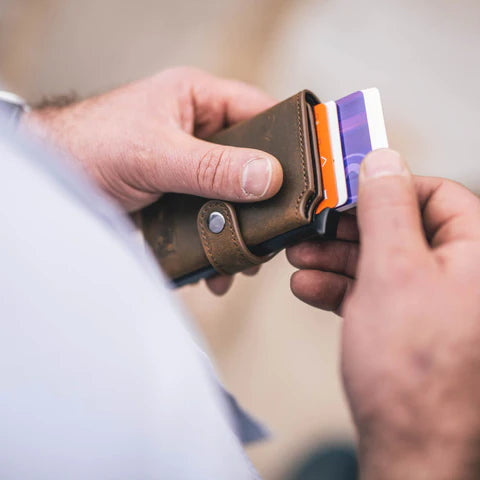
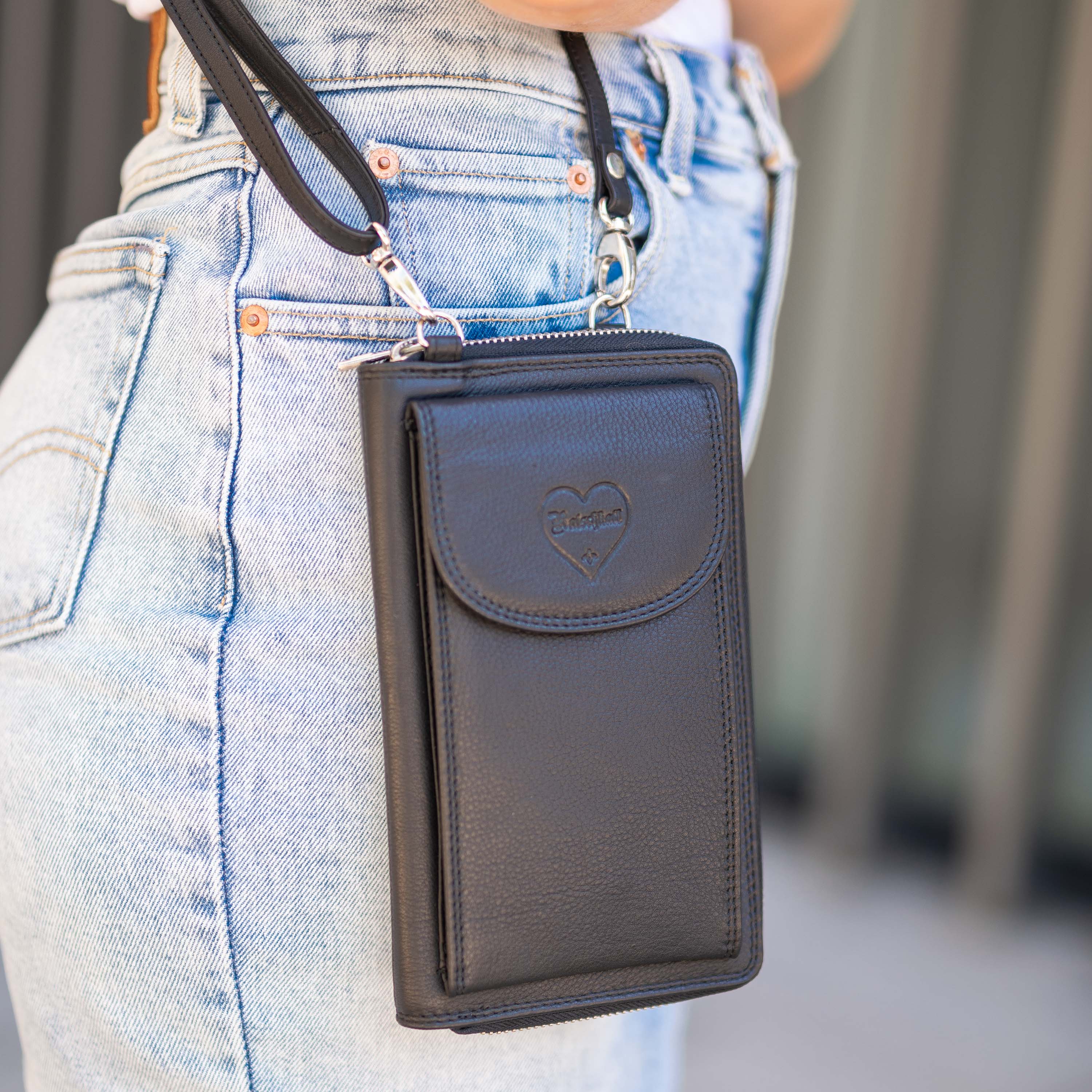
Colour is more the exception in the range, but it's there. The card holder at €39.95 comes in blue-green and light green as well as brown and black — with room for up to 10 cards, a coin pocket and RFID protection. The medium Miri wallet at €46.95 is available in peach, white and black. The pouch wallet from €39.95 — half wallet, half clutch, with a detachable wrist strap — comes in brown, black and pink.
If you like a bit of shine: the women's wallet with gloss finish at €49.95 in cowhide, with several card slots, a large note compartment and a zipped coin pocket. More striking still is the Leo Gretl at €59.95. Further colour options are listed in the women's wallets.
Where it goes wrong: pale and glossy surfaces are honest — they show every scratch and every fingerprint. With peach and white there's the added issue that dark jeans can transfer dye. Both are handbag colours, not trouser-pocket colours.
The short decision guide
| If you … | then |
|---|---|
| carry the wallet in a back pocket | brown or black, oiled leather |
| take it to work in a business setting | black |
| are forever hunting for it in a handbag | something colourful — red, green, peach |
| want it to look new for a long time | black, smooth and pigmented |
| want it to develop character | brown, oiled, hunter |
| believe in a lucky colour | take it — and check the four practical points above as well |
In short
- There are traditions about lucky colours from feng shui and folk belief. Black and brown are usually considered favourable there, gold and yellow as colours of prosperity. On red and blue the sources openly contradict one another.
- None of it is demonstrable. If a colour gives you a good feeling, that's a good reason — but a different one from an effect.
- Four things decide it in practice: how the colour ages, how visible dirt becomes, whether you can find the wallet again, and what you carry it with.
- Brown disguises the most and gains from patina. Black ages most discreetly. Pale tones belong in a handbag, not in jeans.
- Whether the colour sits in the leather or on it decides how the wallet looks after years. More on that in Which leather is best for a wallet and in Patina, water marks, scratches.
- The colour range is manageable: most models come in brown and black, and you'll find coloured versions mainly among the card holders and the women's wallets.