











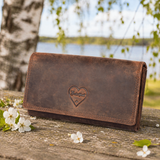
Two questions almost always get asked together: “Which leather is the highest quality?” and “Which leather is best for a wallet?” They sound the same, but they lead to different answers. The first is a question about material and can be answered in general terms. The second is a question about use — and there, the most expensive leather isn't automatically the right one.
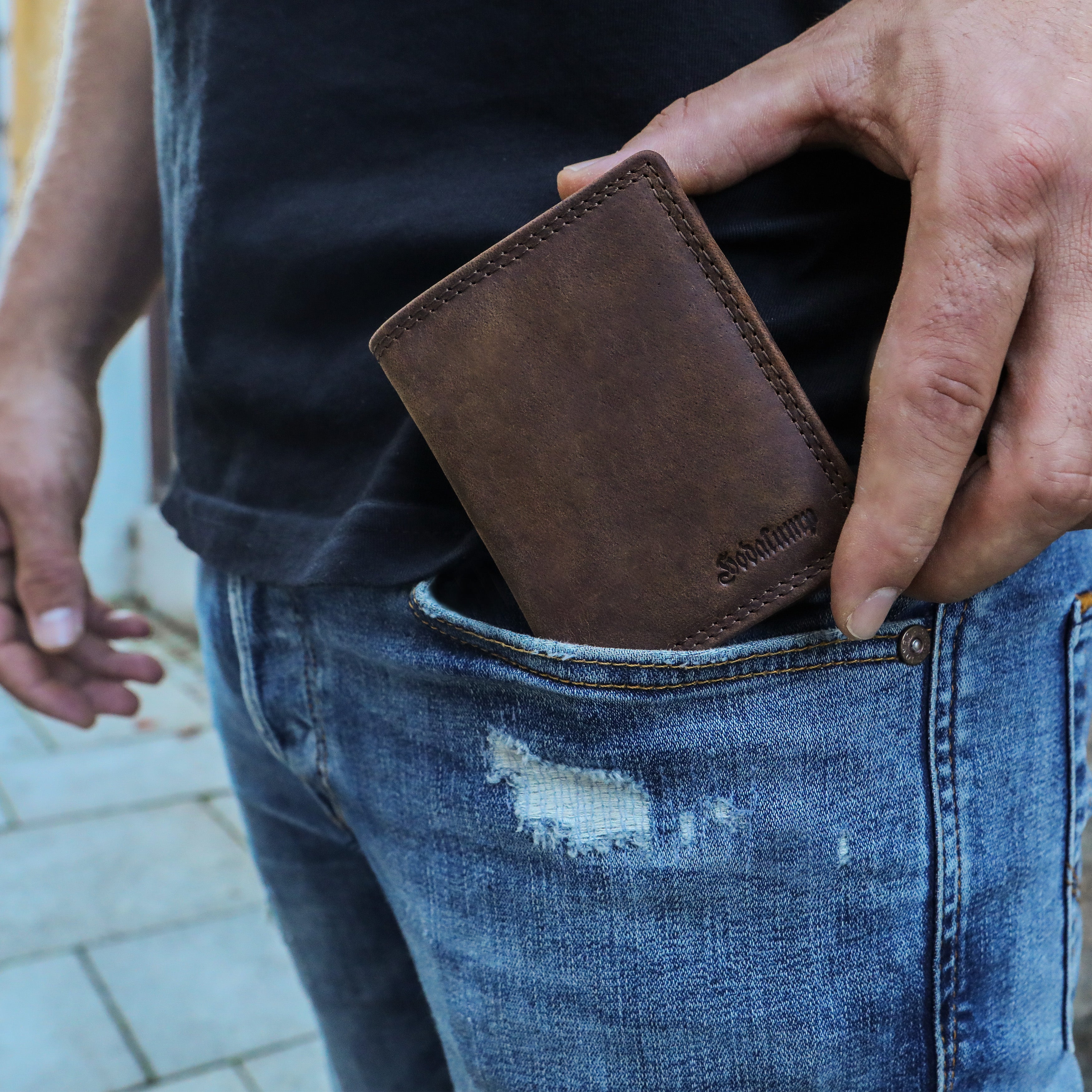
A wallet is a special case. It isn't worn like a jacket and isn't loaded in tension like a belt. It gets folded, pushed into a trouser pocket, sat on and opened up again — every day, in the same place. A leather that would be ideal for a saddle is simply too thick for a wallet.
This piece sorts out both questions. If you're after the differences between the animals in detail, you'll find them in the article Types of leather compared; how to tell genuine leather from split and synthetic leather is covered in How to recognise real leather. Here it's about the ranking.
“High quality” is not a protected term — the hide layer rather more so
A label may say “high-quality genuine leather” without anything following from it at all. “Genuine leather” is regulated, “high quality” is not. The only piece of information that reliably says something about quality is the hide layer. It gives you a genuine ranking, and it goes like this:
- Full grain leather. The outermost layer of the hide, unworked. The grown fibre structure is preserved in full, including pores, insect bites and neck creases. This is the densest and most tear-resistant version — and the one where you can most clearly see that the material was once an animal.
- Top grain leather. The same layer, but the surface has been lightly buffed to remove irregularities. Slightly more even in appearance, marginally less robust at the surface. Perfectly adequate for wallets.
- Corrected grain leather. Sanded down more heavily and embossed with an artificial grain. It looks flawless, but only at the surface. The embossing flattens out over the years.
- Split leather. The lower layer left over when thick hides are split. Without the stabilising grain. It may legally be called “genuine leather” and is still the layer at which wallets typically tear.
- Bonded leather and synthetic leather. Leather fibres with binders, or plastic on a backing fabric. This no longer belongs in the list, but it turns up in it constantly.
So the answer to “which leather is the highest quality” is: full grain leather. That holds regardless of the animal and regardless of the colour.
Where it goes wrong: highest quality doesn't mean best result
Full grain leather at full thickness is often simply unsuitable for a wallet. A 3-millimetre piece of cowhide can't be folded twice without the wallet becoming a brick. That's why leather for wallets is thinned down — skived, as the trade calls it — and that's exactly where part of the theoretical advantage is lost.
In practice this means: a wallet made from thinly skived top grain leather with cleanly finished edges lasts longer than one made from thick full grain stock that permanently works against itself at the fold. If you only look at the label, you buy the worse wallet with the better word on it.
Animal: cow, buffalo, goat — and what belongs in a wallet
Two hides are relevant for wallets, for a sober reason: both can be skived thin without becoming unstable.
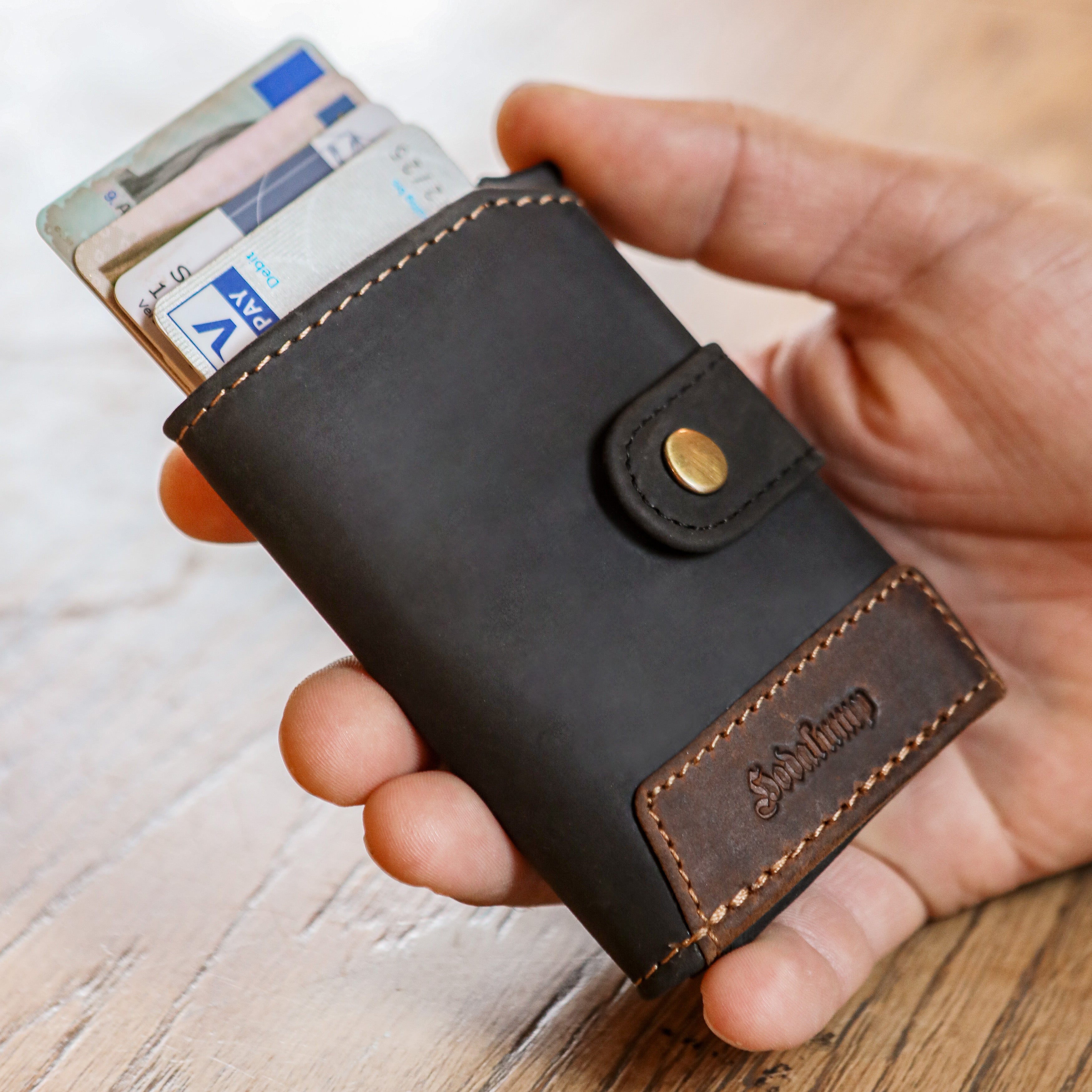
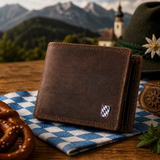
Cowhide has a fine, even grain and a very dense fibre. It holds its shape and stays load-bearing even when skived thin. In the range it's found, for example, in the Classic Wallet Bavaria at €49.95 — several card slots, a divided note compartment, coin pocket with a press stud.
Buffalo leather has a coarser grain and is tougher. The practical advantage isn't the toughness as such but the grain pattern: on a coarse grain, a scuff hardly shows. The Classic Wallet Lugge Special Edition at €39.95 is listed as buffalo leather, with 8 card slots, two large note compartments and a coin pocket with a press stud.
Goat leather is light and soft and therefore excellent for clothing — but tends to be too yielding for a wallet. It lasts, it just doesn't hold itself up. If you want a wallet that still has its shape after two years, you're better served by cow or buffalo.
Where it goes wrong: the animal alone says little unless you read it together with the finish. “Buffalo leather” can be an outstanding full grain stock or a heavily sanded, embossed split. Both are sold under that name.
Hunter leather: why it shows up so often on wallets
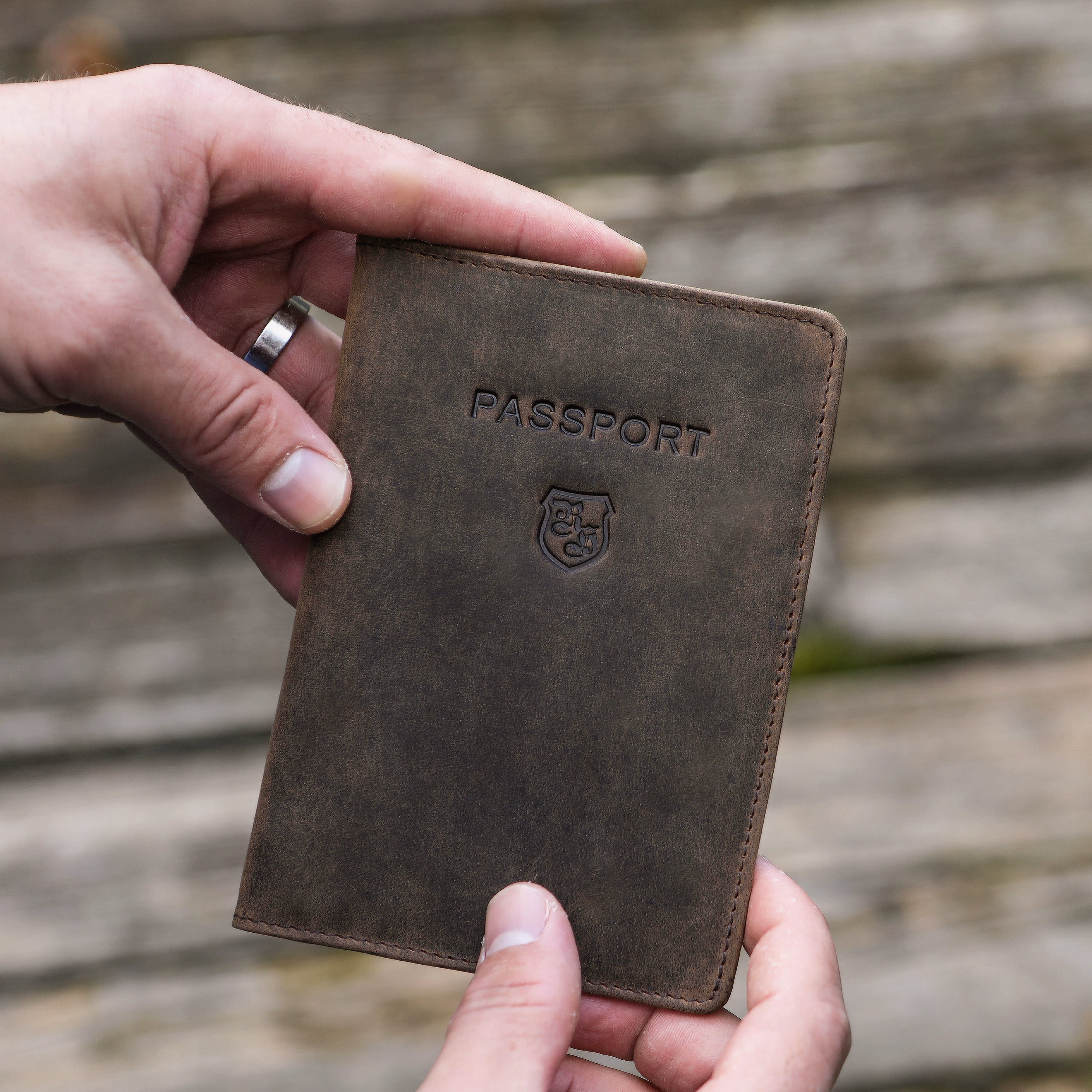
Hunter isn't an animal, it's a finish: cow or buffalo leather is dyed all the way through and impregnated with fats and oils, rather than being given an opaque layer of colour. The surface stays open-pored and matt.
For a wallet that's practical for one concrete reason. The colour sits in the leather, not on it. When the fold rubs after two years, the same colour appears underneath — there's no pale abrasion of the kind you get with pigmented leathers. That's precisely why oiled wallets look “used” after years rather than “ruined”.
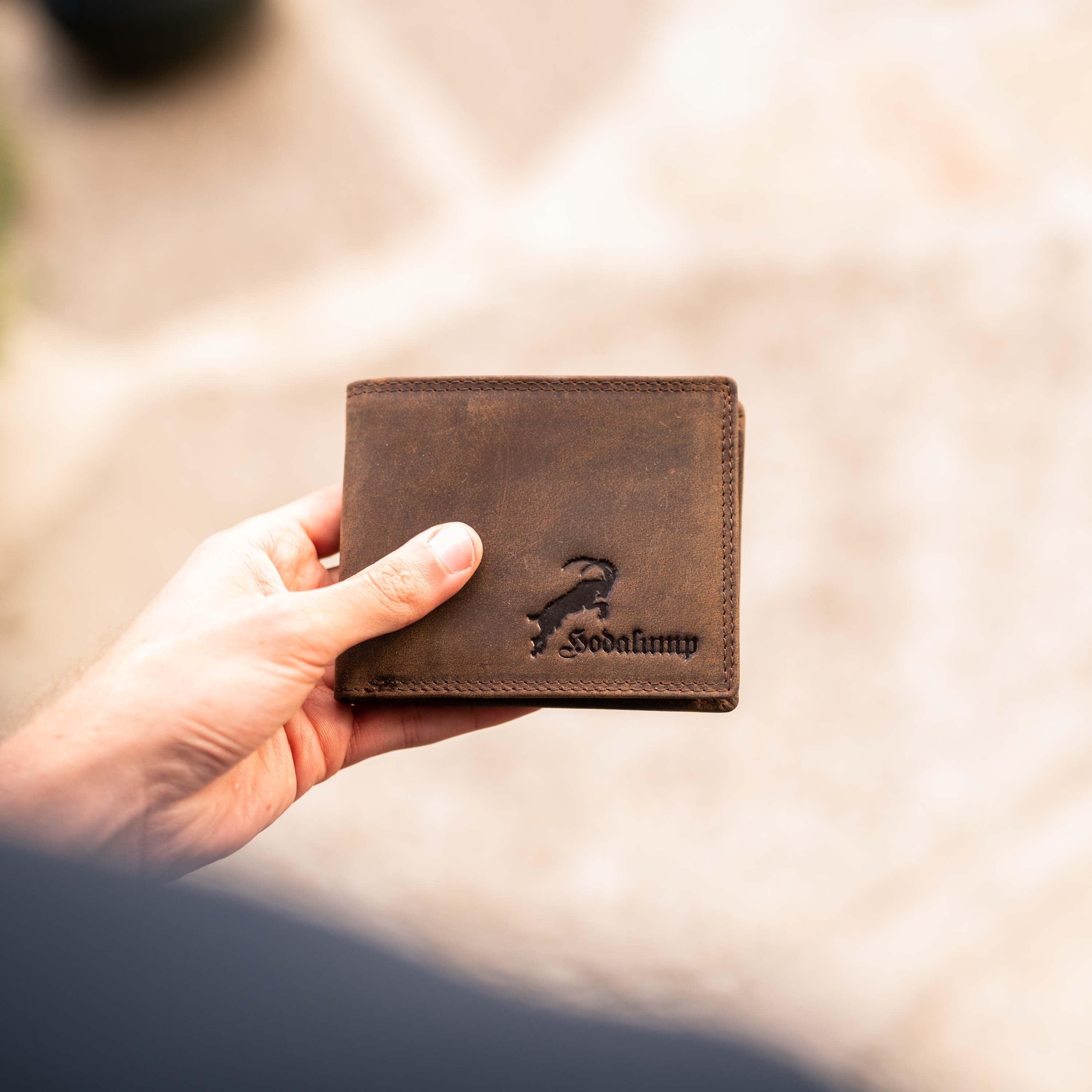
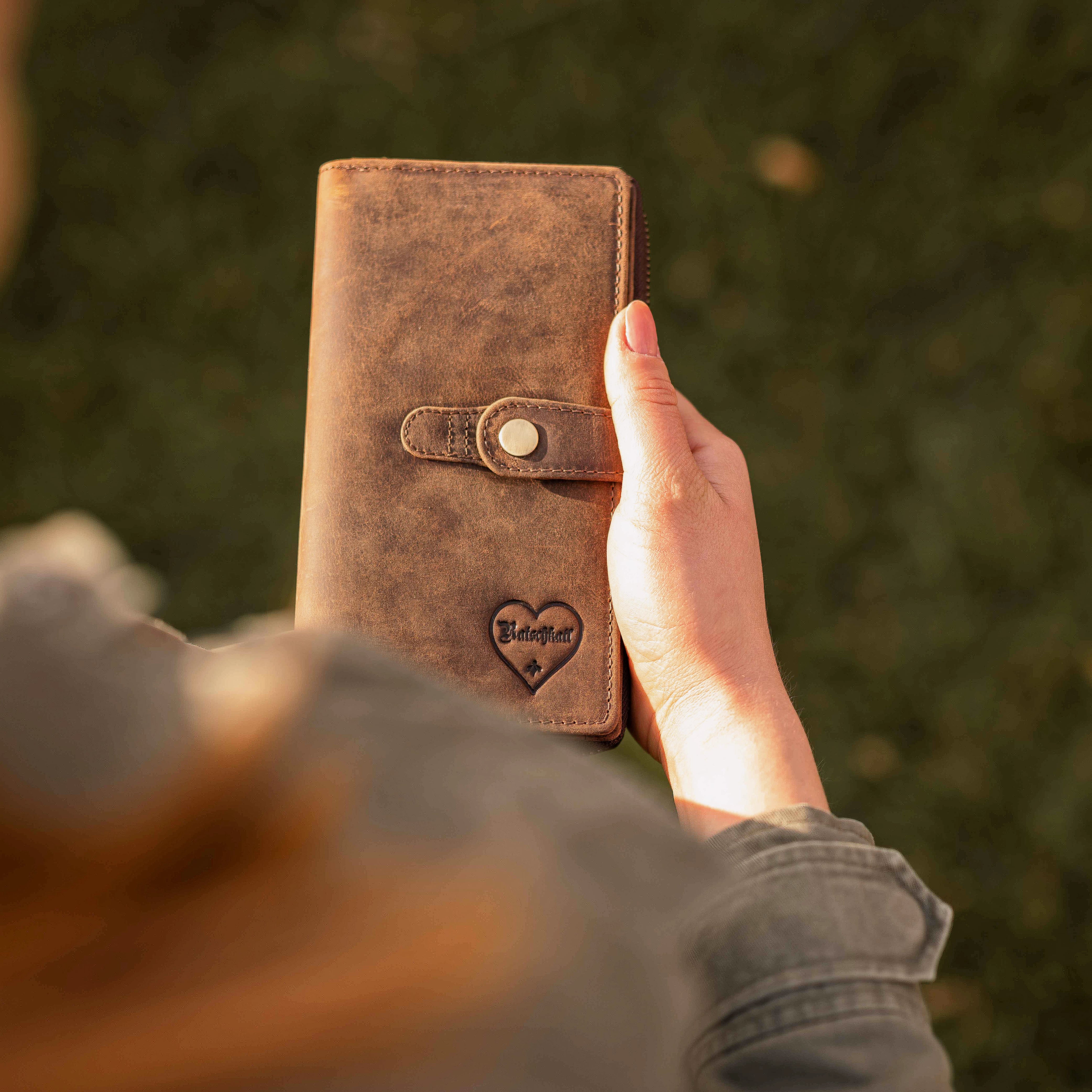
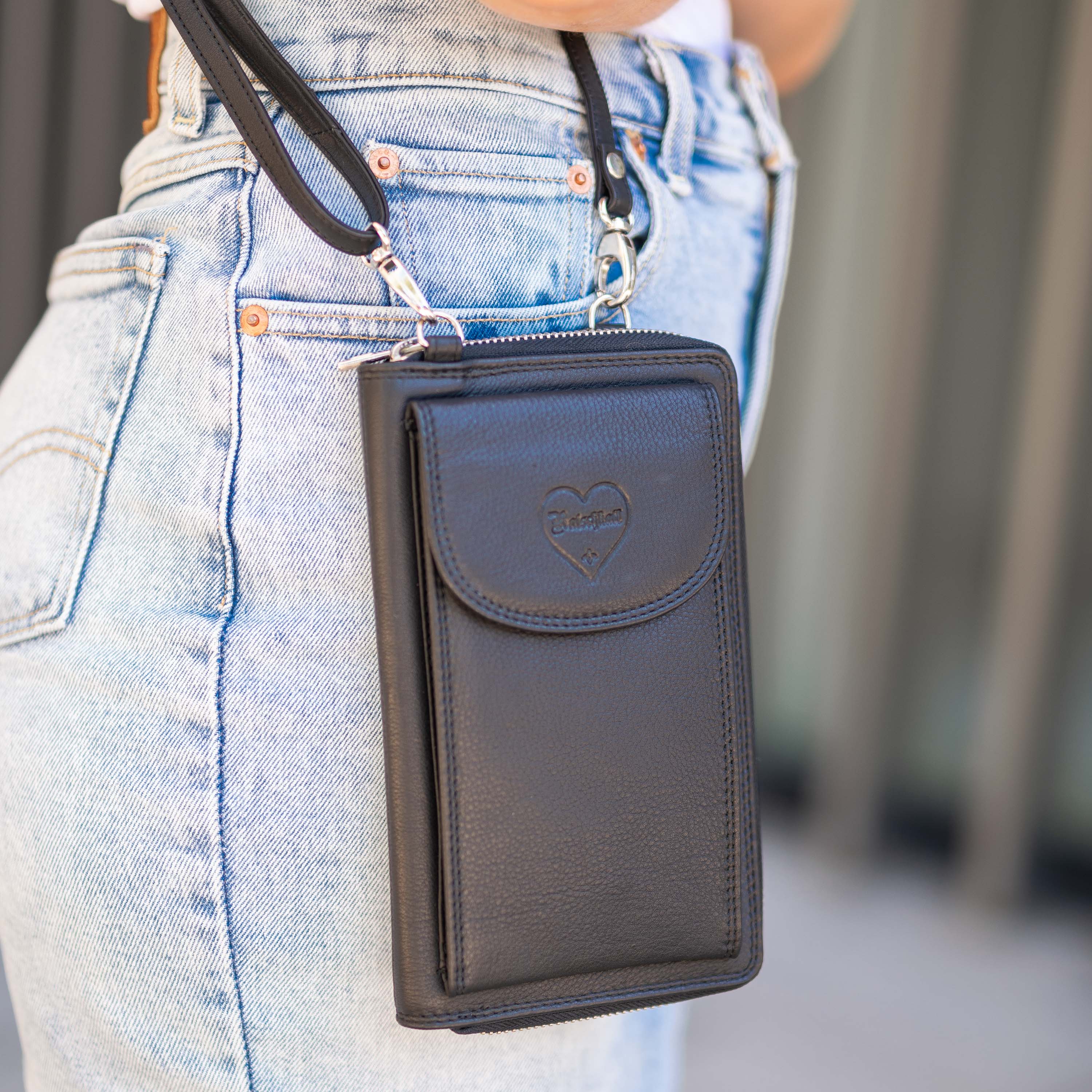
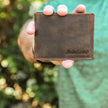
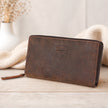
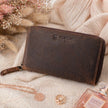
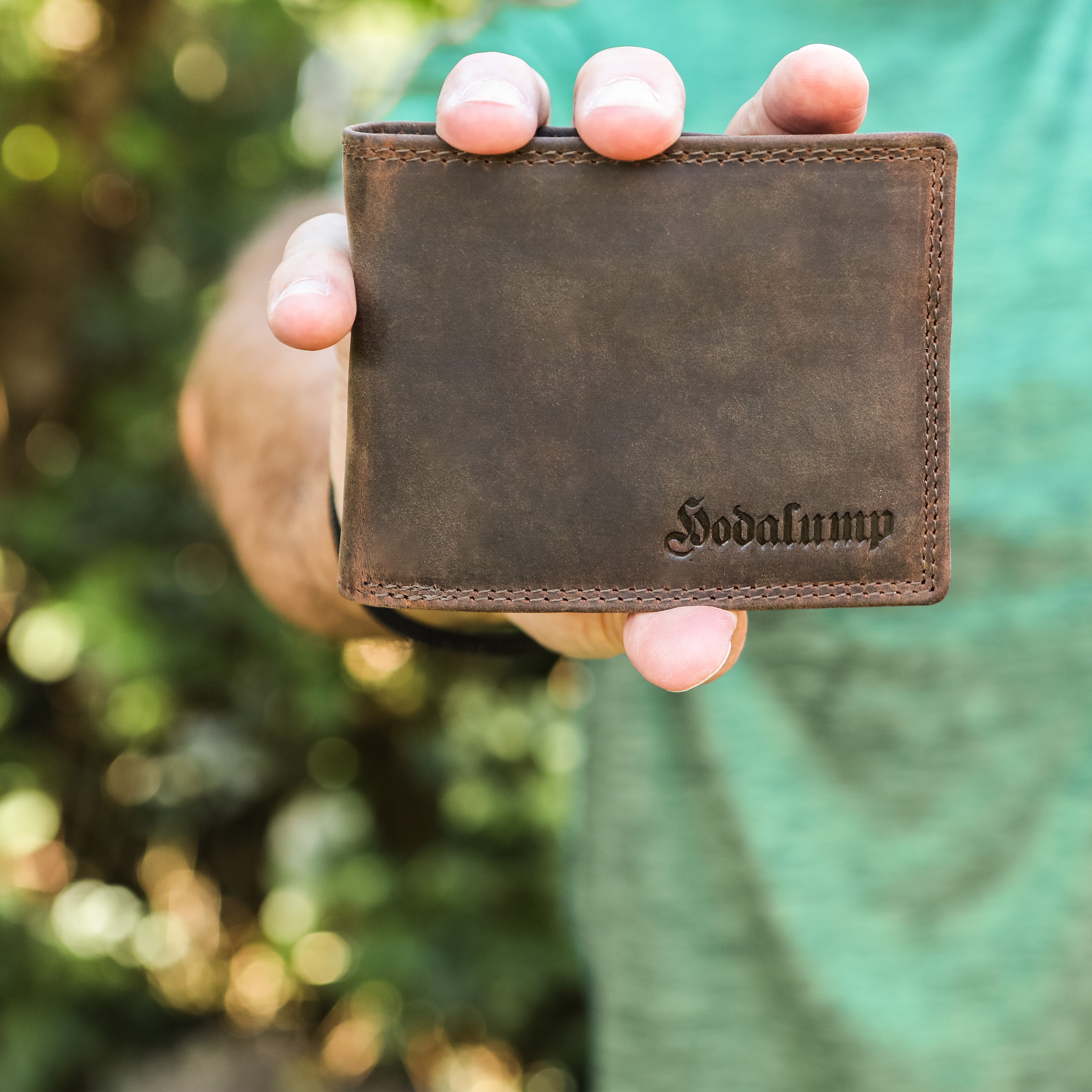
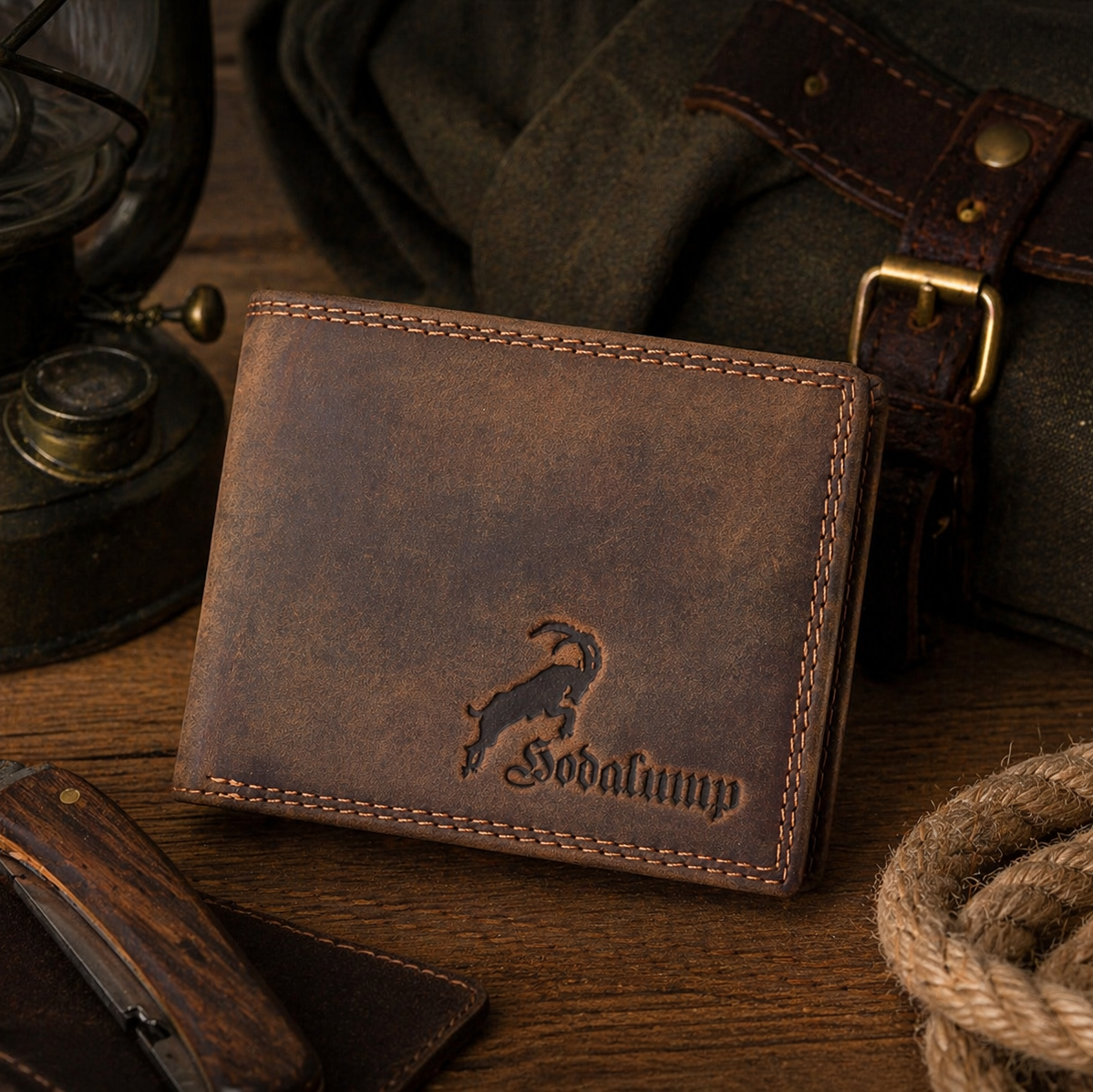
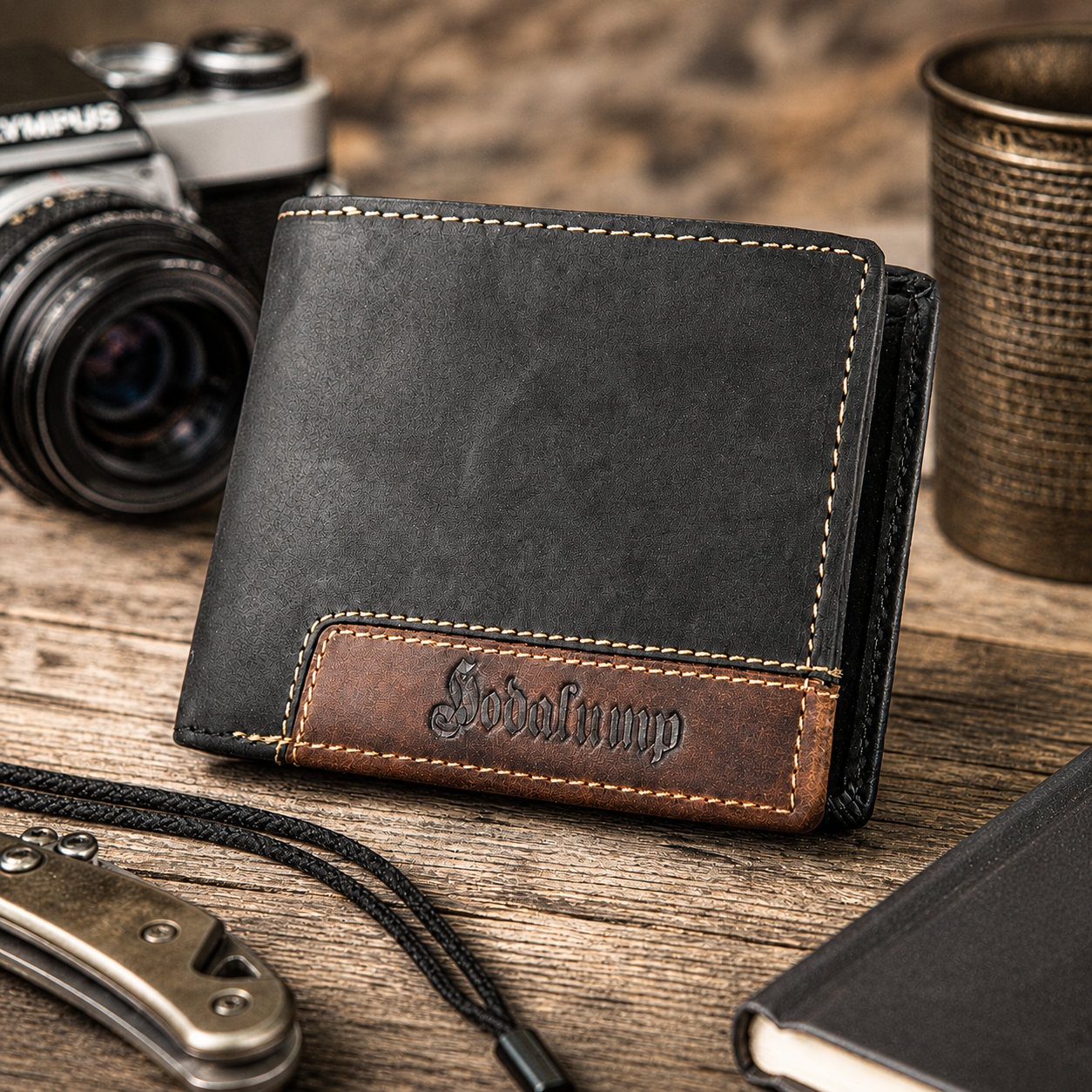
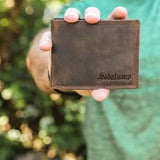
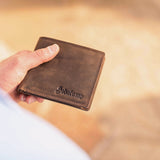
In the range this runs under Hunter Vintage, for instance on the Hodalump Classic Wallet (€39.95) and the Classic Wallet Kare (€39.95, around twelve card slots, separate coin pocket, wide divided note compartment). In black it is listed as Black Cow Hunter leather, on the Classic Wallet Lugge in black at €39.95. On the women's side, hunter leather is found in the large Walli wallet at €59.95.
Where it goes wrong: oiled leather shows everything. Every crease, every fingerprint, every sitting position leaves its mark — from week one onwards. If you want a wallet that still looks like the catalogue picture after two years, a smooth pigmented leather will serve you better. On top of that: freshly oiled leathers can transfer colour onto pale fabric. That isn't a fault, it's a consequence of the oiling.
How to recognise good leather with it in your hand
Four checks that work without tools and take a minute.
- Look at the cut edge. On top grain leather you'll see a dense fibre in cross-section that becomes finer towards the top. On split leather the cut is evenly fluffy, almost like felt. On synthetic leather you'll see a smooth plastic layer on fabric — the clearest giveaway there is.
- Bend it over your finger. Oiled leather lightens at the bend and returns when you let go. If nothing happens, the surface is pigmented or it isn't an oiled leather.
- Look at the grain. Real grain is irregular. If the same pore pattern repeats exactly every few centimetres, it's embossed.
- Smell it. Not scientific, but useful: leather smells of leather, synthetic leather smells of plastic.
All of this is set out in more detail, with the pitfalls, in How to recognise real leather.
What has nothing to do with the leather — and still decides how long the wallet lasts
This is the uncomfortable truth behind the whole leather debate: wallets rarely fail because of the leather. They fail in three other places.
The fold. This is where the material gets creased every day. If the wallet is built up too thickly inside, or the leather isn't skived at that point, a break forms and eventually it tears.
The stitching on the card slots. Every insertion pulls on the thread. Close stitch spacing and a backstitch at the start and finish are worth more here than any material specification.
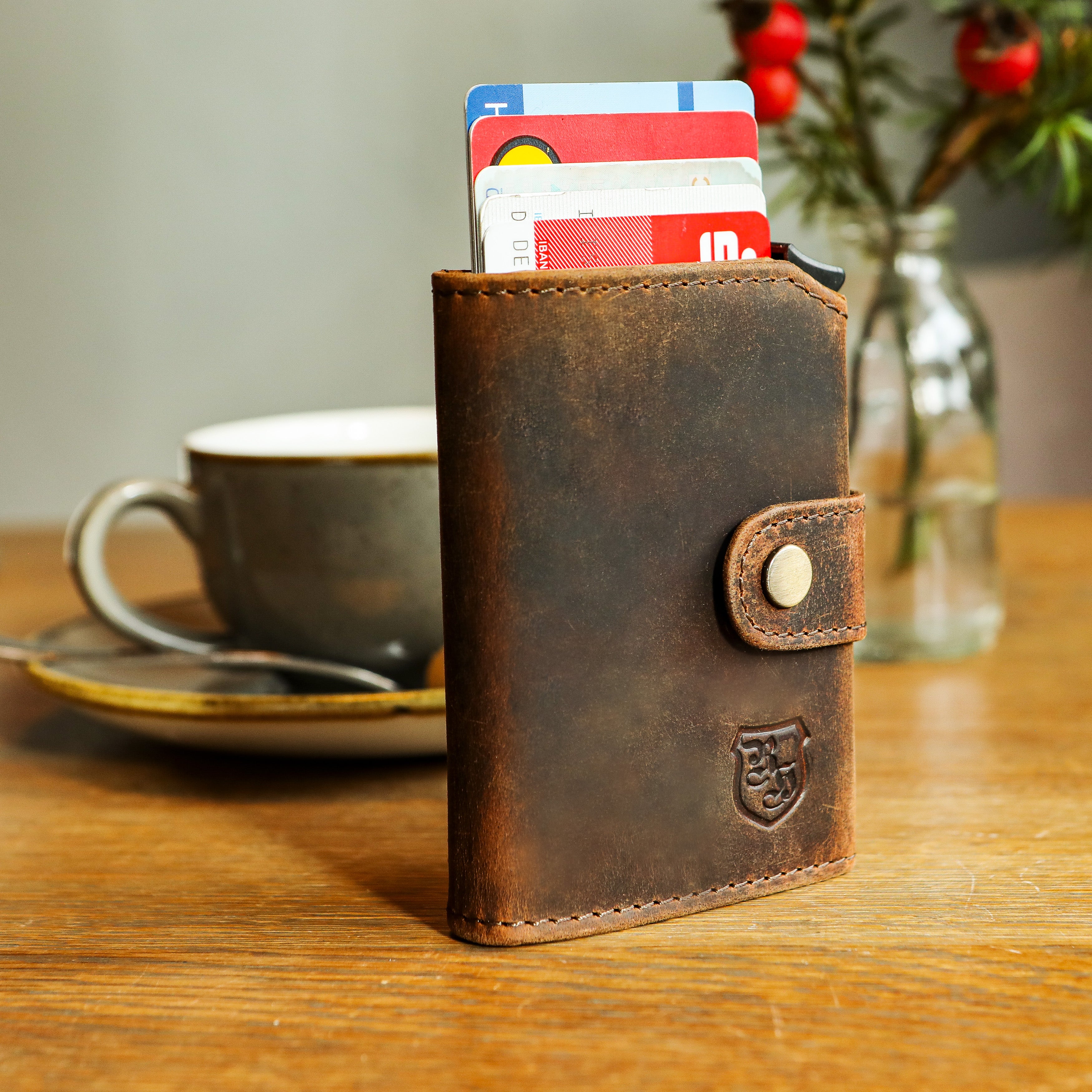
The coin pocket. The press stud or the zip is the only mechanical component in a wallet — and accordingly the first thing to give up. A press stud is quicker to get into but becomes stiff when the wallet is full. A zip holds everything together but costs you a second every time.
The practical answer to “which leather is best”
For a wallet that goes into a trouser pocket every day: an oiled, through-dyed top grain leather from cow or buffalo, skived thin, with cleanly finished edges. Not because it's the most refined material on the shelf, but because it stands up to the loads a wallet is actually subjected to — and because signs of use look good on it rather than shabby.
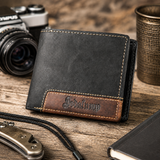
If you want a wallet that stays looking new for as long as possible, the recommendation reverses: then a smooth, pigmented leather in black, such as the Business Wallet Ibex Edition at €24.95. It develops a patina more slowly and is more forgiving of fingerprints.
And if neither matters to you and you only want as little bulk as possible, then the leather question is secondary to the format anyway. There's more on that in the comparison of men's wallets and in Men's wallets: which format for what.
Care is part of the answer
One important point to close on, because it often affects the outcome more than the choice of material: care depends on the finish, not on the animal. Oiled, open-pored leathers take up grease and want it too. Leather grease at €8.95 is made for exactly that. Buffed surfaces — nubuck, suede — on the other hand don't tolerate it; there it mats the nap and won't come out again.
How thinly you need to apply it and how long it should soak in is covered in Applying leather grease. What changes in leather over the years and how much of that is normal is in Patina, water marks, scratches.
In short
- The highest-quality leather is full grain leather — regardless of the animal. The hide layer is the only specification with a genuine ranking.
- For a wallet, the best leather is an oiled, through-dyed top grain leather from cow or buffalo, skived thin. Thick full grain leather is more of a drawback than an advantage in a wallet.
- Goat leather is ideal for clothing and too soft for wallets.
- Hunter is a finish, not an animal. Advantage: the colour sits in the leather, so abrasion doesn't go pale. Drawback: it shows every mark from the start.
- Wallets usually fail not at the leather but at the fold, the slot stitching and the coin pocket fastening.
- If you're undecided anyway, the material details are in the product descriptions — in the men's wallets, the women's wallets or the full overview of leather wallets. Where it only says “genuine leather”, the animal simply isn't stated.