
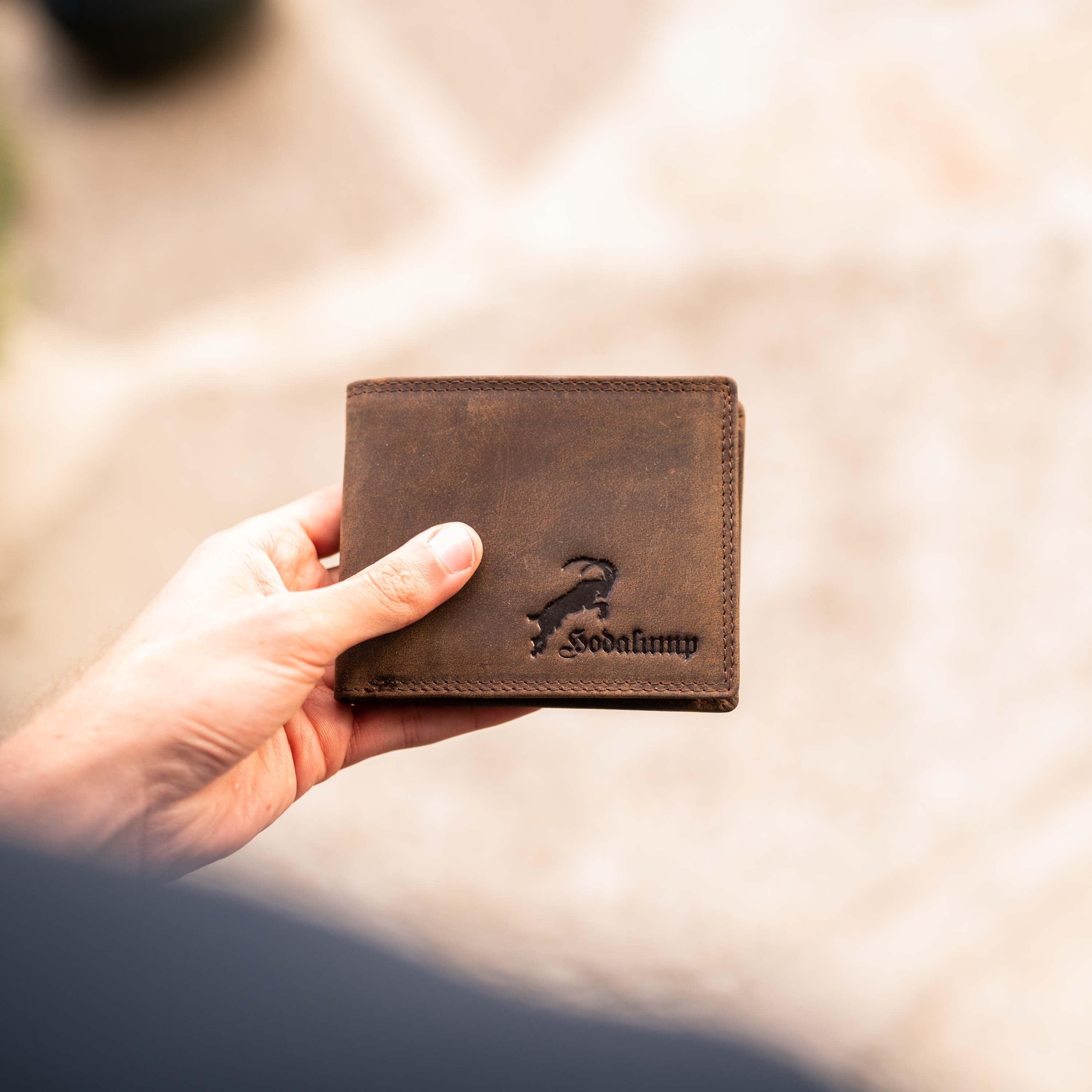
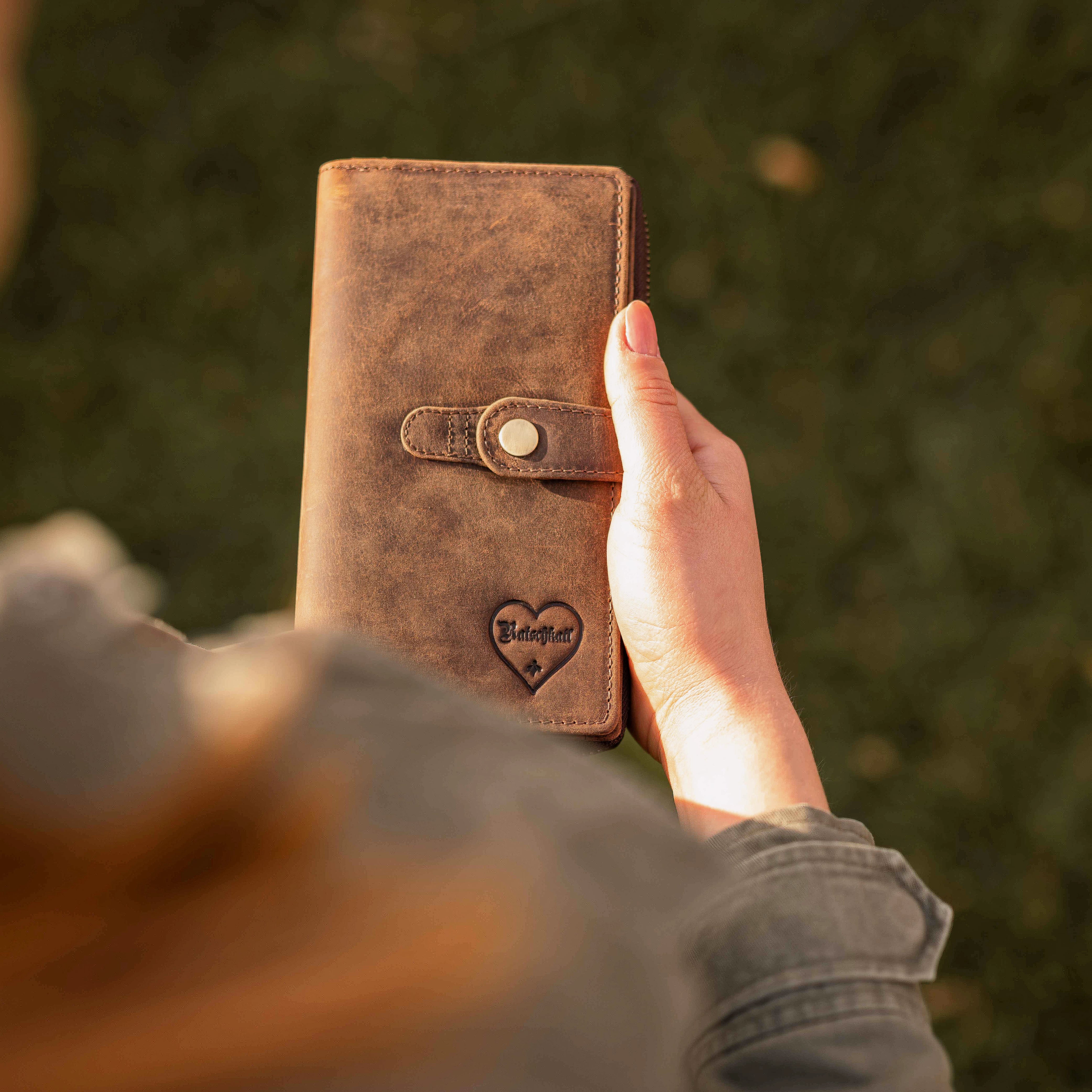
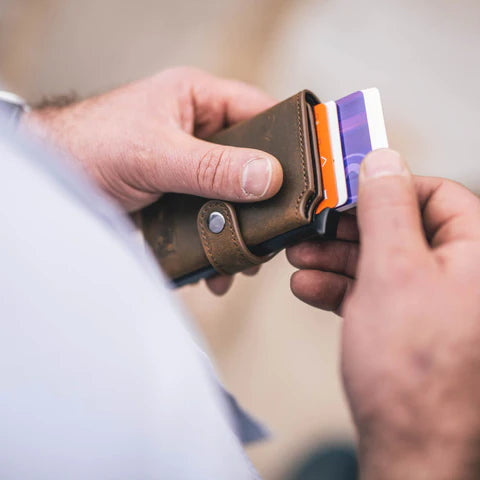
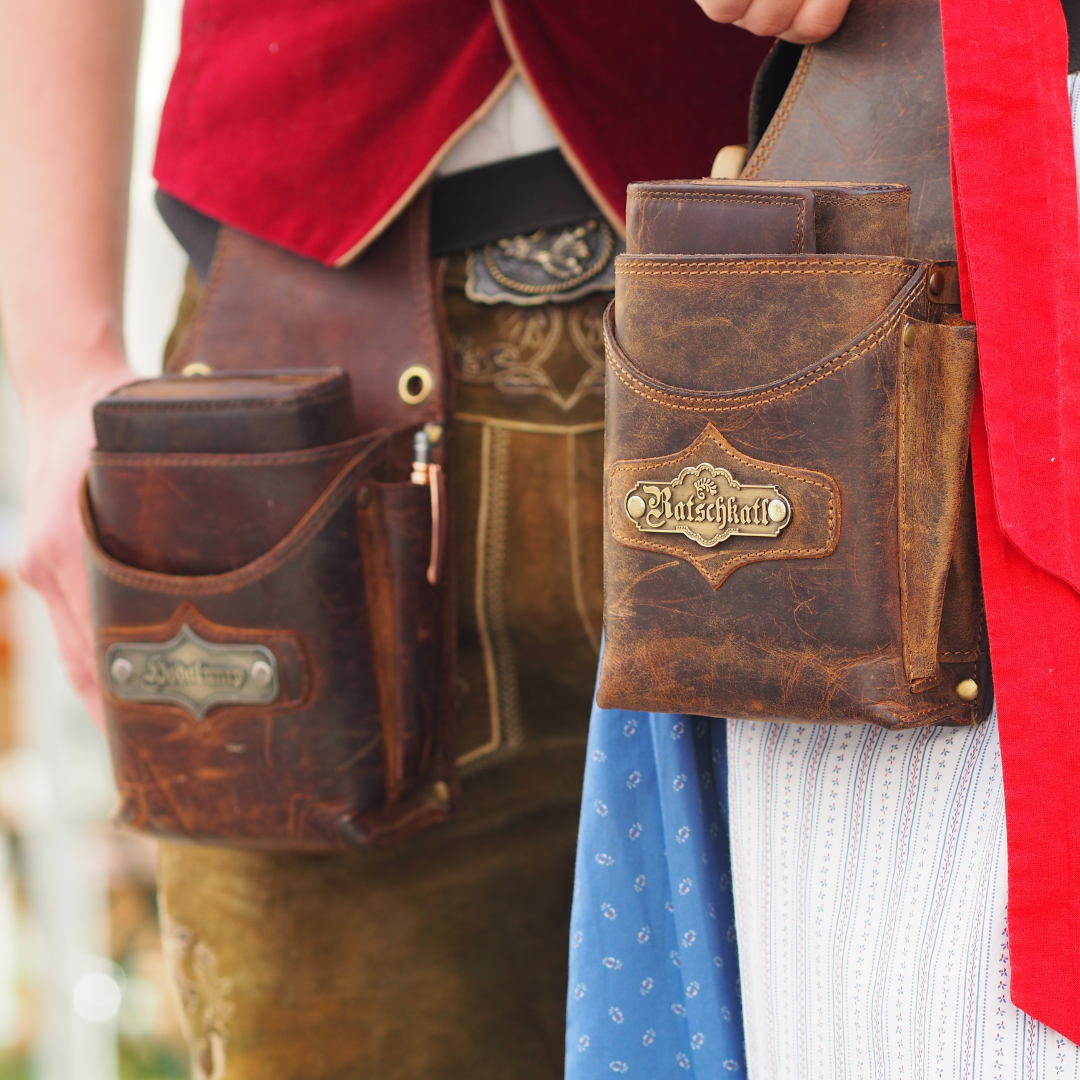










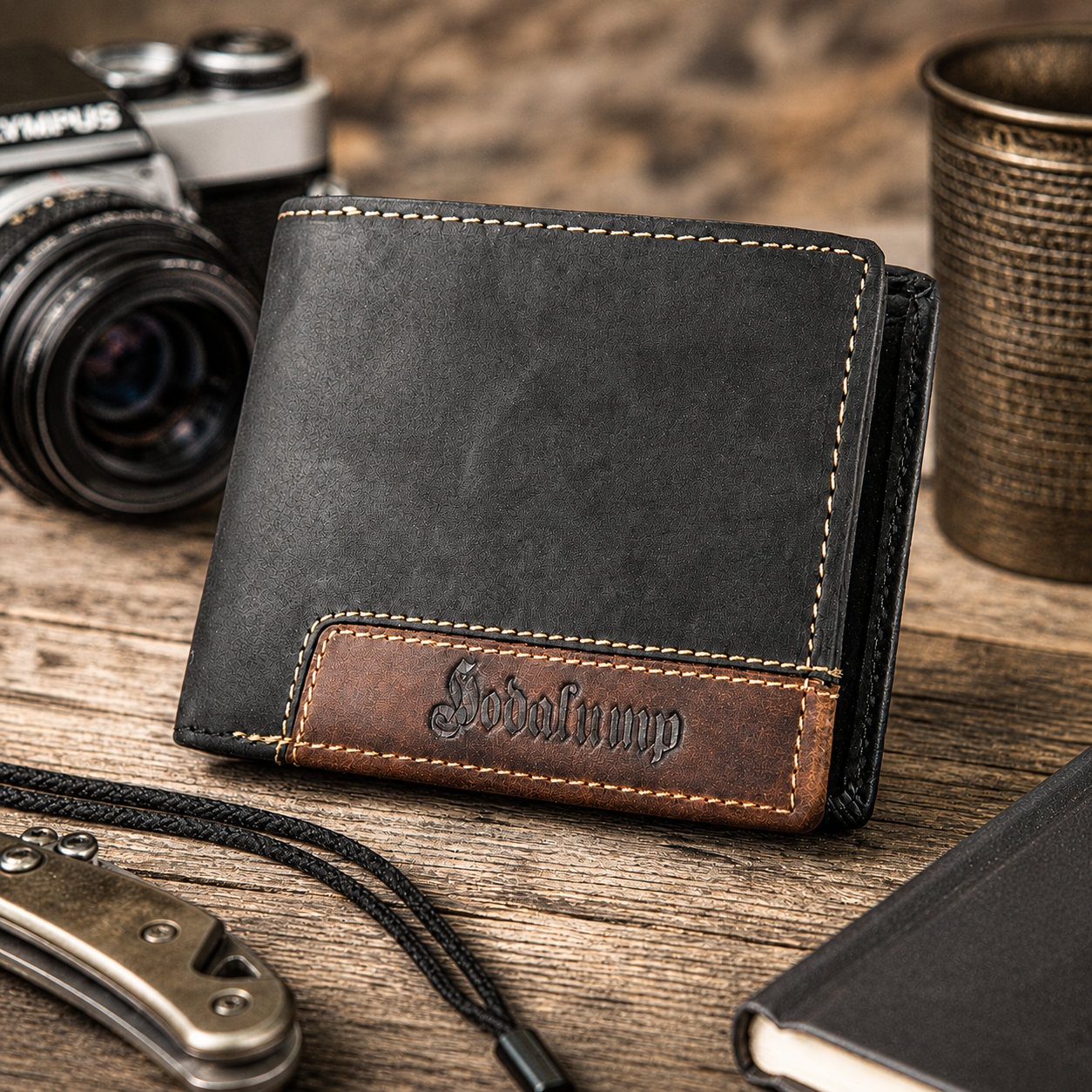

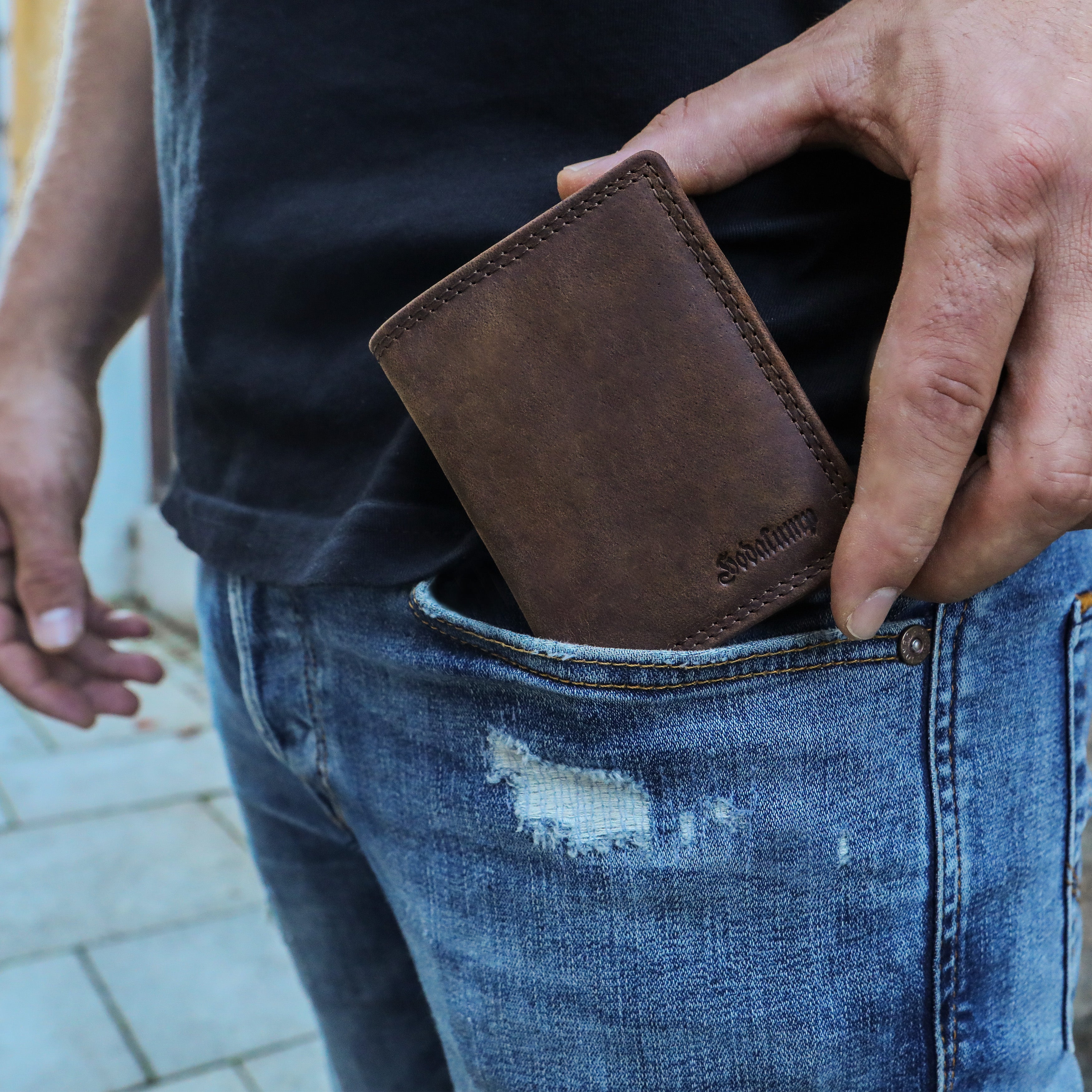


Most wallets aren't too small, they're too full. Empty one out just once and you'll find expired insurance cards, loyalty stamp cards from bakeries you visited twice, and receipts from the summer before last. That isn't a space problem, it's a sorting problem.
This article does the sorting. First what has to come along every day, then the situational things, then what belongs somewhere else for good reasons.
The basics: what has to come along every day
For most people it comes down to five or six things.
- Your bank card. The one card you pay and withdraw cash with.
- One credit card. One. Not three. The second is a backup and can stay at home — that's what makes it a backup.
- Your driving licence, if you drive. In Germany you are legally required to carry it while driving, so this isn't a matter of preference.
- Your ID card. Germany requires you to hold a valid form of identification, but there is no general obligation to carry it with you at all times. It's handy all the same: accepting parcels, proving your age, going to the doctor.
- Your health insurance card. The one card that's missing precisely when you need it.
- Some cash. More on that in a moment.
That's five or six cards. Ordinary wallets are built for exactly that, and that's exactly why eight card slots are enough for almost everyone. The arithmetic behind that is in Wallets with lots of card slots: how many are enough?.
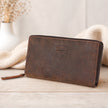
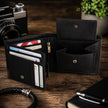
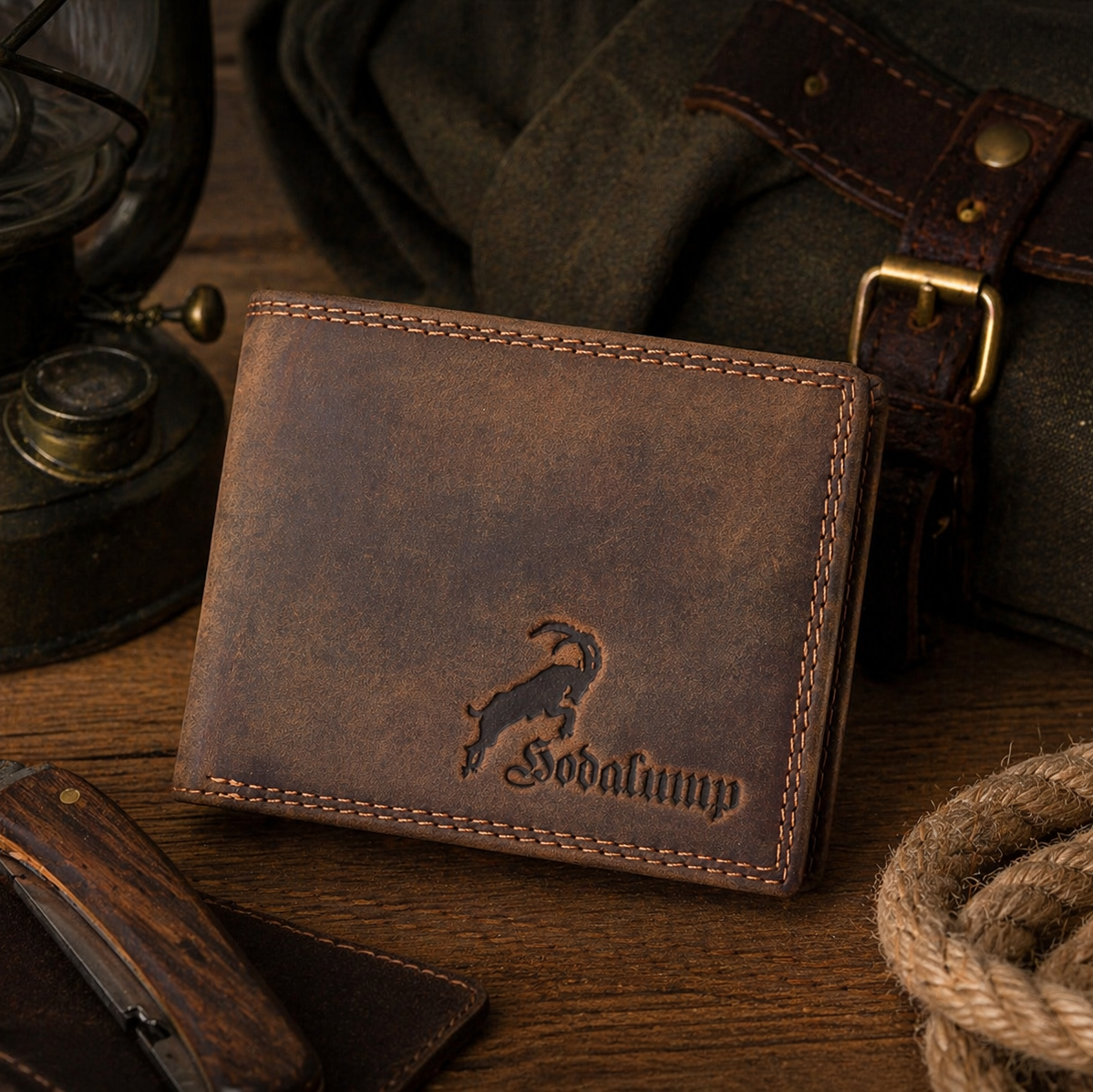
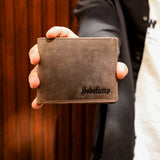
If you often have to show ID, a wallet with a window is worth it — the card can then stay where it is. For example the Classic Wallet Wappen Lugge at €49.95 or the large Hias wallet at €46.95, both with a clear window for an ID card or driving licence.
How much cash makes sense?
There's no correct amount, but there is a usable rule of thumb: enough to get you through a day without paying by card. That covers the situation that actually happens — card reader broken, pub taking cash only, payment terminal offline, parking machine refusing cards.
What that means in euros depends on where you live and how you get about. More important than the amount is having a second, separate reserve that isn't in the same wallet — in a jacket, in a backpack, in the car. Because a lost wallet takes everything in it with it.
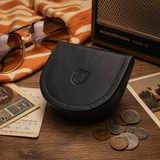
Where it goes wrong: coins are the single most common reason a wallet bulges and eventually splits at the seam. If you accumulate a lot of change, you'll do better with a separate tip-out coin wallet at €29.95 than with an overstuffed coin pocket. It opens with one grip, and your main wallet stays flat.
The note hardly anybody carries
A recommendation that costs nothing and is worth a great deal in an emergency: a small emergency note in the banknote compartment. It should carry an emergency contact number with a name and relationship (“sister”, “partner”), any relevant allergies or medication, and your blood group if applicable.
The reasoning is sober: a locked smartphone is no use to paramedics, a note in your wallet is. And the wallet is the object people find first on an unconscious person.
Where it goes wrong: don't write anything on it that would harm you if lost — no address with a hint about keys, no account details. An emergency contact and health details are enough.
What only needs to come along sometimes
These things move in and out rather than taking up permanent residence:
- Loyalty cards, and only the ones you'll actually present in the coming month. The vast majority now exist as an app.
- Work ID and access cards — on working days.
- Tickets and boarding passes — for the duration of the trip.
- A passport photo, if you know an application is coming up.
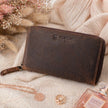
If this category permanently runs to ten cards for you — a trade with several company cards, field sales, multiple accounts — then a bigger wallet really is the right answer. The large Kobi wallet at €39.95 is the entry point into the large format; more models are in the large wallets collection.
What doesn't belong in a wallet
Here it gets specific, and here the list is short and seriously meant.
Your PIN. Neither on a slip of paper nor disguised as a “secret number” inside a phone number. Lose your card and PIN together and you have more than a practical problem: banks generally treat it as gross negligence.
A spare key. A wallet and a house key together with an ID card showing your address — that's the one combination genuinely worth avoiding.
All your cards at once. Second credit card, second bank card, backup debit card: the whole point of a reserve card is that it doesn't get lost along with the rest.
Your entire cash reserve. See above.
Receipts. They are the biggest contributor to bulk there is. Thermal paper fades over time anyway — photograph the receipt if you need it for a warranty or your bookkeeping.
The vehicle title document. In Germany, registration certificate part II belongs neither in your wallet nor in the car, but at home. Only part I — the vehicle registration document — has to be with you when driving.
Where the rest goes instead
This is the real trick: don't buy bigger, move things out.
Car documents into a folder of their own that stays in the glovebox. The vehicle document folder at €14.95 is made for exactly that: registration document, driving licence, insurance card, without anything getting creased. More on that in Vehicle document folder: order for your car papers.
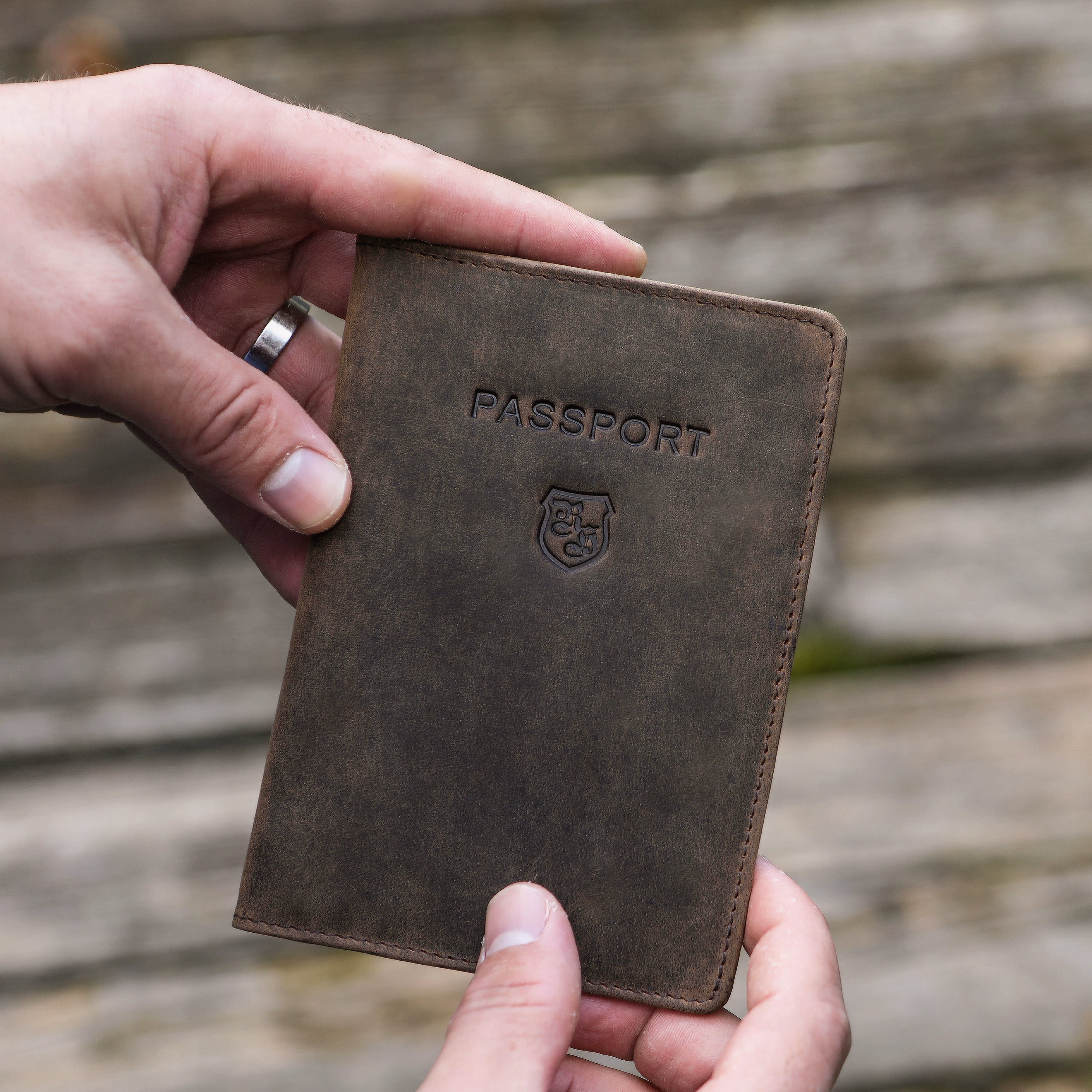
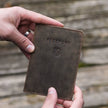
Travel documents into a case that only comes along when you travel. The Markus passport case at €24.95 takes a passport, ID card, ticket, cards and some cash. The pros and cons are in Passport case: do you need one?.
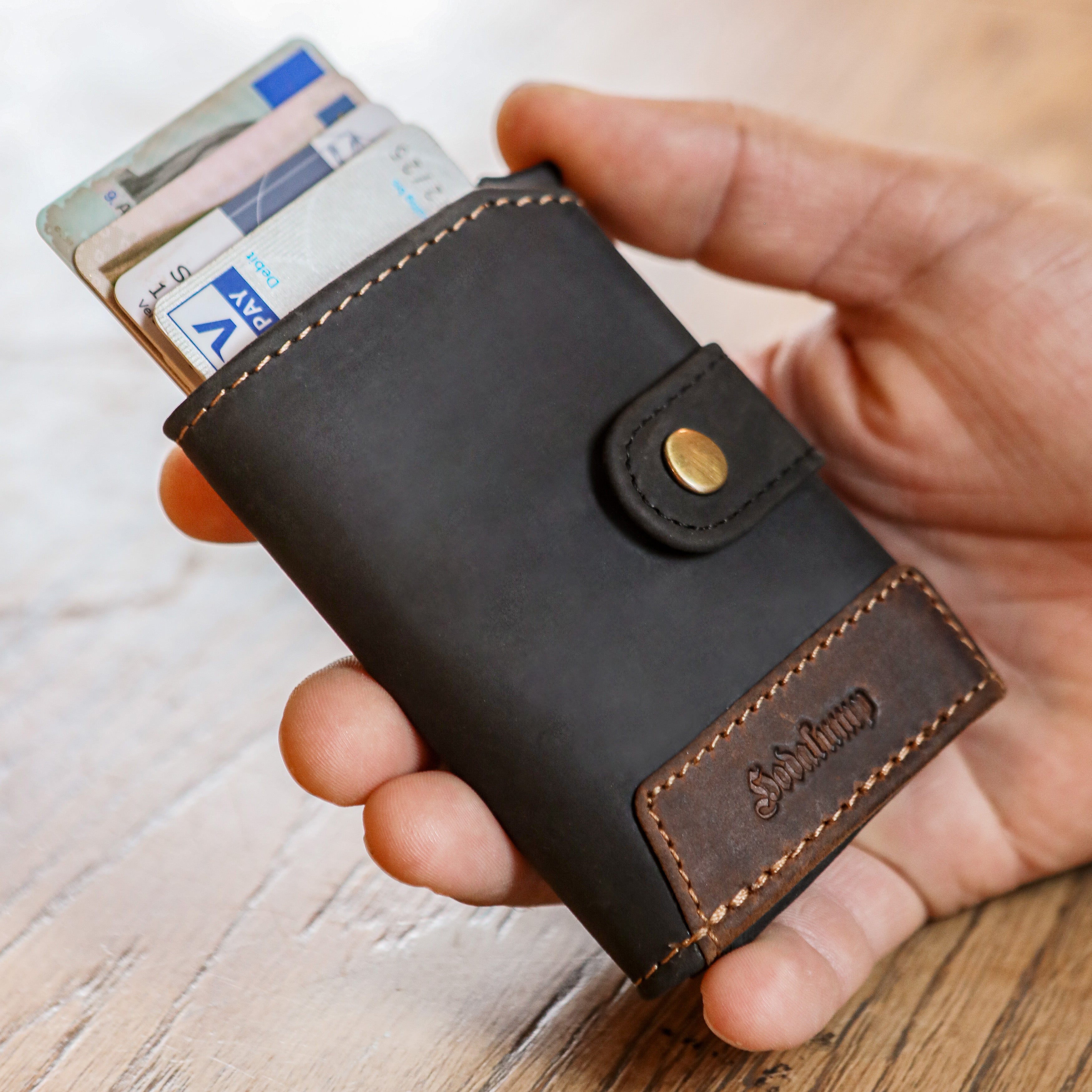
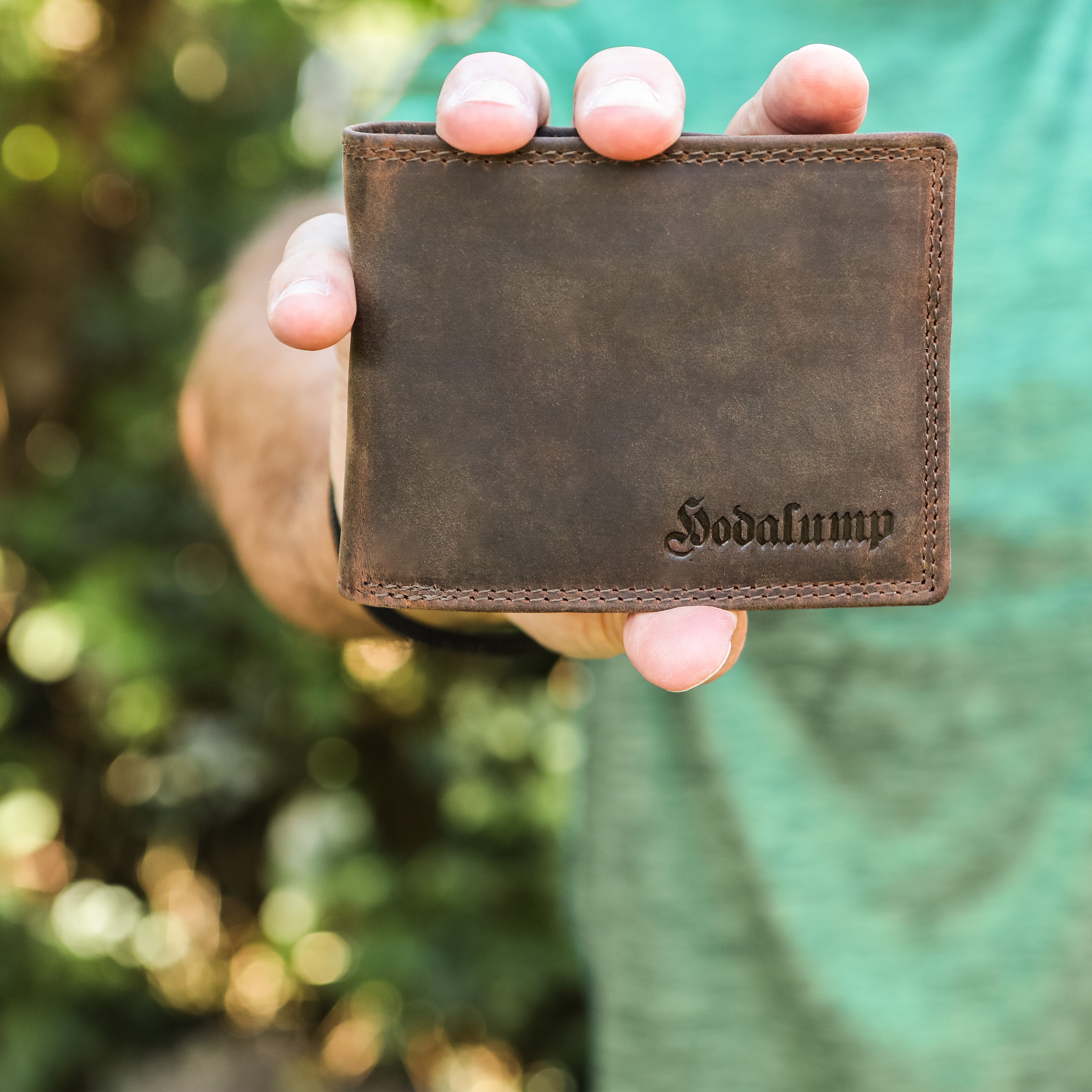
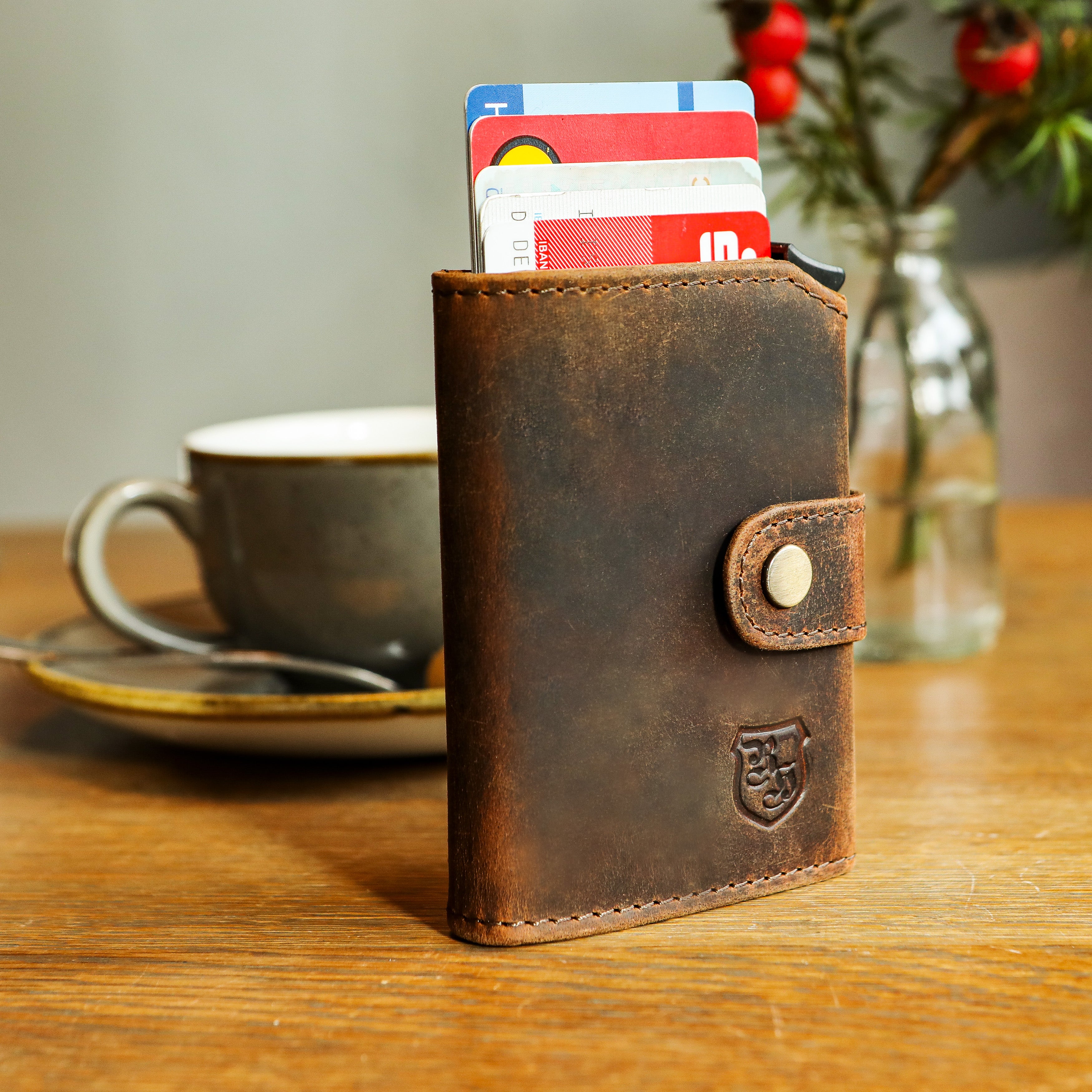
Rarely used cards into a second, small case that lives in your bag or backpack — for instance the Hodalump Edition card holder at €49.95 or the slimmer Hodalump card holder at €15.95. More models in the card holders collection.
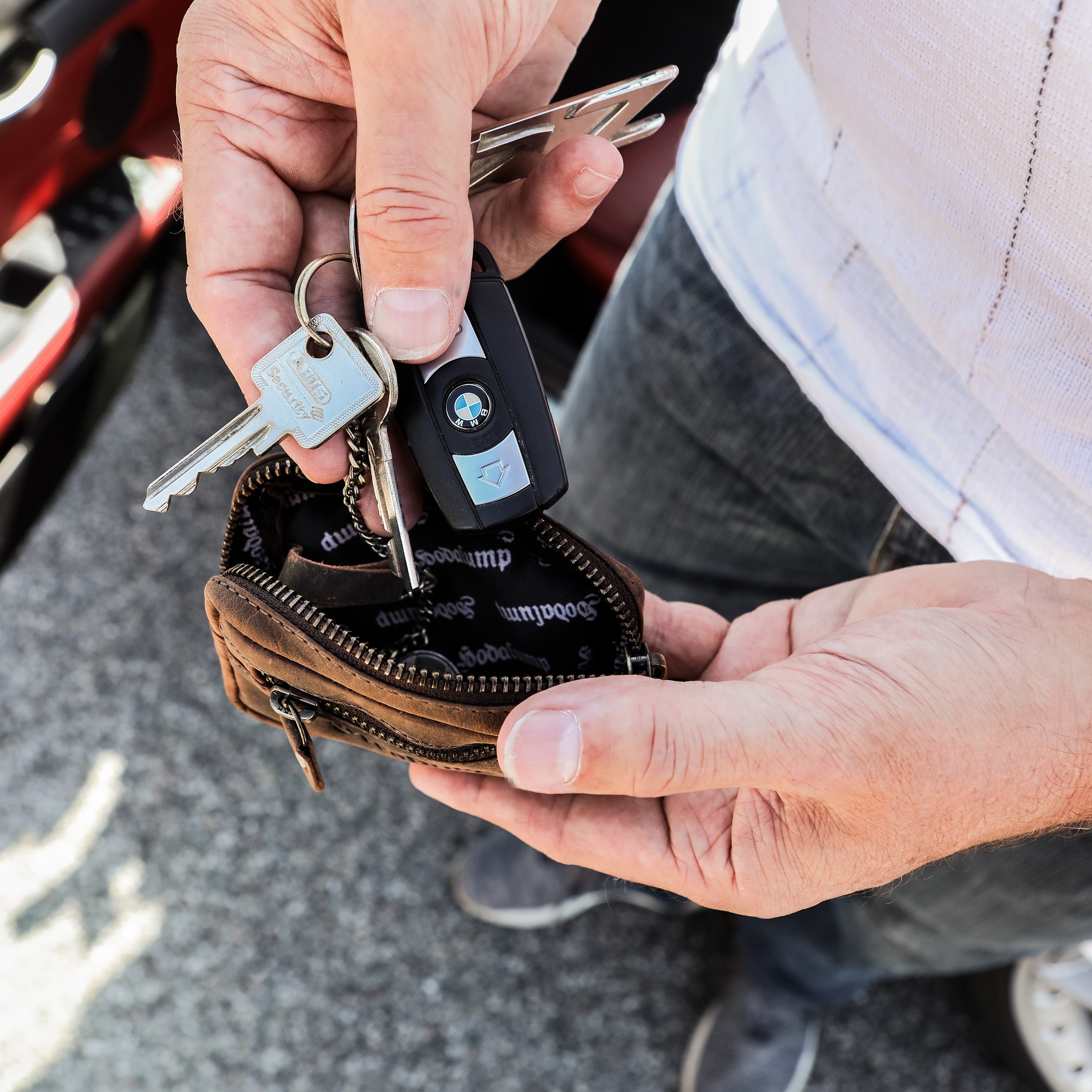
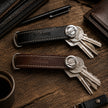
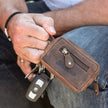
Keys into a key pouch rather than loose in the same trouser pocket, where they scuff the leather. The Hansi key pouch costs €19.95; the overview is in Key organiser or key pouch.
The two-wallet approach
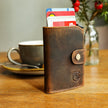
If you want to be consistent about it, carry two things instead of one big one: a slim everyday wallet with the five cards and some cash — for instance the Super Slim wallet at €19.95 or the card holder at €39.95 with room for up to 10 cards and RFID protection — and a second case in your bag for everything else.
It sounds like a detour and works surprisingly well: the everyday cards are to hand, the wallet stays thin, and the rest is with you all the same. Side effect: if you lose something, you never lose the lot.
Where it goes wrong: two things can also be forgotten twice. If you're prone to that, you'll do better with a single, slightly larger wallet.
And the RFID point
Reading cards contactlessly is technically possible; how relevant it is in daily life is judged differently by different people. If you want to be on the safe side without changing your wallet: the RFID/NFC blocker card sleeves cost €9.95 for a set of three and fit into any card slot. Wallets with built-in protection are in the wallets with RFID protection collection.
In short
- Needed every day: bank card, one credit card, driving licence (required by law while driving in Germany), ID card, health insurance card, some cash.
- Cash: enough for a day without card payments — plus a second reserve kept somewhere else.
- An emergency note with a contact and health details costs nothing and is worth a lot when it matters.
- What doesn't belong in there: your PIN, a spare key, all your backup cards, your entire cash reserve, receipts, the vehicle title document.
- The rest gets moved out rather than bought bigger — car papers into the vehicle document folder, travel documents into the passport case, rare cards into a card holder.
- The less there is inside, the longer the wallet lasts: every extra card stretches the leather at the fold. What you can do about it is in Caring for a leather wallet.