







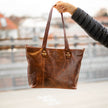

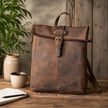

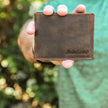
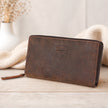











“What's the difference between a Geldbörse and a Geldbeutel?” and “What's the difference between a Geldbörse and a Portemonnaie?” — both questions get asked a lot in German, and both have the same short answer: none. They are three words for the same object, and all three come out in English as “wallet”.
That could be the end of the article. It stays interesting anyway, because behind the three words sit three different linguistic histories — and because there certainly are differences, just not between the words. They sit between the shapes.
The short answer: the same thing, a different region
Geldbörse, Geldbeutel, Portemonnaie, Portmonee, Geldtasche, Brieftasche, Börse, Geldsackerl, Geldkatze — German-speaking Europe has a good dozen names for the thing that holds your cards, notes and coins. Not one of them describes a separate product category. English does the same thing on a smaller scale: wallet, purse, billfold and pocketbook all overlap, and which one you reach for says more about where you grew up than about what you are holding.
No manufacturer distinguishes between a “Geldbörse” and a “Geldbeutel”. If a shop uses both words, it does so for the same reason we do: because customers search differently depending on where they come from.
Where the three words come from
Portemonnaie is borrowed from French and is made up of porter (to carry) and monnaie (coin money). Literally, then: coin carrier. What's interesting is that the word originally referred specifically to the container for coins — banknotes only joined it later. Alongside the French spelling, German also permits the Germanised form Portmonee, which is simply used far less often.
Börse goes back to Medieval Latin bursa, meaning “leather bag” or “pouch”, and behind that stands Greek byrsa for a stripped hide, in other words leather. That's the finest origin of the three: the German word for a wallet already contains the material. English speakers get the same root second-hand — “purse” descends from that very same bursa. In passing, the German Börse in the sense of a trading floor is traced back to the same root as well, as is the French bourse.
Beutel is the only Germanic word of the three and simply denotes a sack made of soft material — the closest English equivalents are “pouch” or “bag”. It is the oldest and plainest of the three — and fittingly, it is the one that has held on in the south.
Who says which word where
Roughly speaking: Geldbeutel is the south — Bavaria, Baden-Württemberg, large parts of Austria. Portemonnaie is heard more in the north and west. Geldbörse is the neutral, cross-regional form, used above all in writing — in catalogues, in product copy, in the newspaper. Austria adds Geldtasche, and Switzerland uses Portemonnaie in its French spelling, which is hardly surprising in a country with four languages. English works the same way, just with different lines on the map: a British “purse” is a woman's small money holder, an American “purse” is a handbag, and “billfold” is barely used outside North America.
Word maps of exactly this kind are compiled by linguists — the Atlas zur deutschen Alltagssprache, an atlas of everyday German, carries a whole series of them. The boundaries are never sharp: every region understands several variants, and plenty of people use two or three side by side.
Where it goes wrong: some guides claim that a “Geldbeutel” is smaller or that a “Portemonnaie” is of higher quality. There is no basis for that. Anyone laying down a rule like this is selling a regional preference in vocabulary as product knowledge.
Brieftasche: here there really is a difference
One genuine distinction does exist, and it gets lost because everyday use blurs it: the Brieftasche. Originally this is an elongated format that takes banknotes unfolded — which is why English calls it a “long wallet”. The German name comes from the fact that letters and documents were once carried in it: Brief means letter.
Today “Brieftasche” is mostly used interchangeably with all the other terms. If you use the word deliberately, though, you normally mean a large format. Which formats exist and what they are good for is set out in detail in Men's wallets: which format for what. The equivalent overview for women is in Women's wallets: shapes, quality and what to look out for.
What really does make a difference: the shape
If the words distinguish nothing, what does? The shape. Here the differences are real, tangible and decisive when you buy.
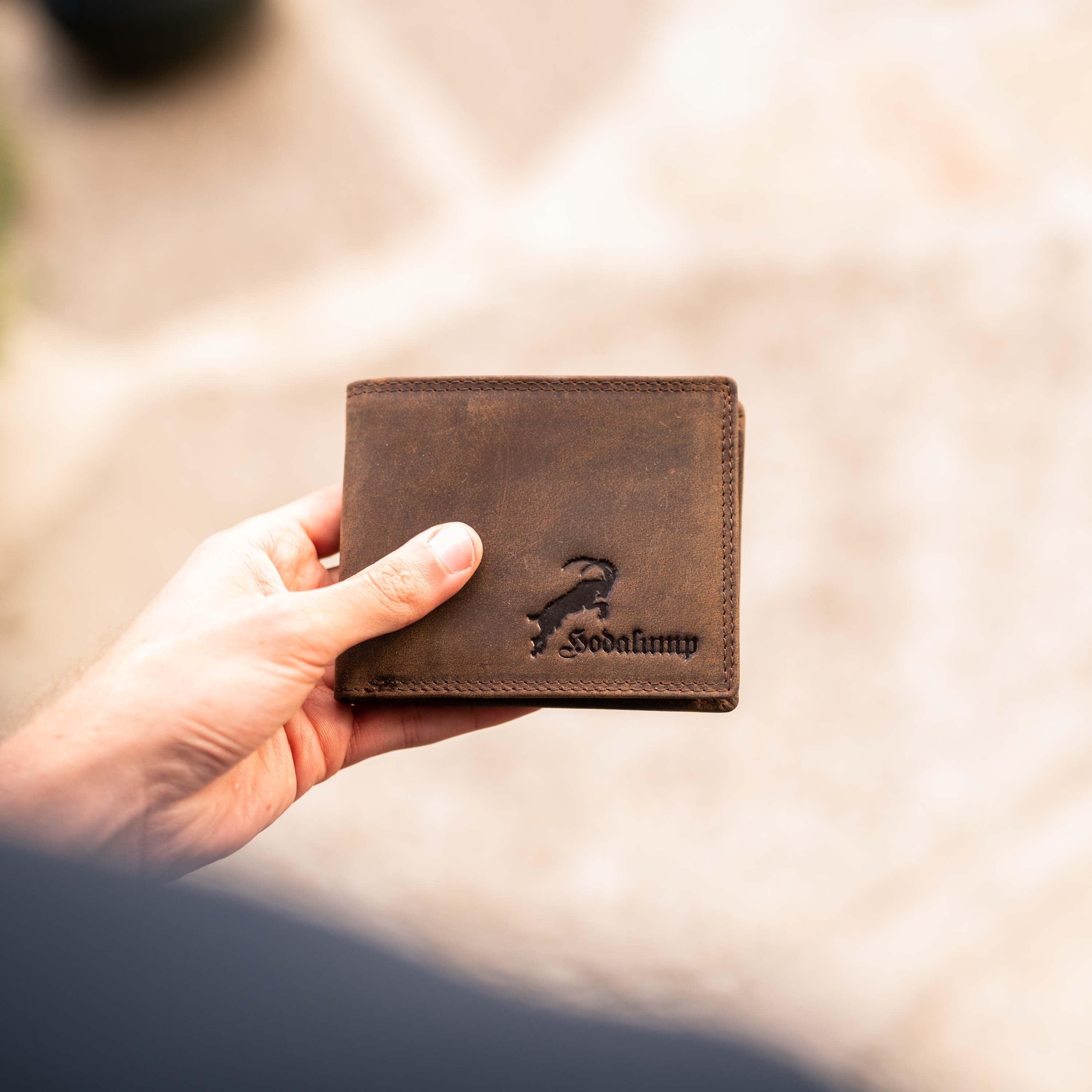
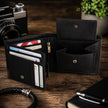
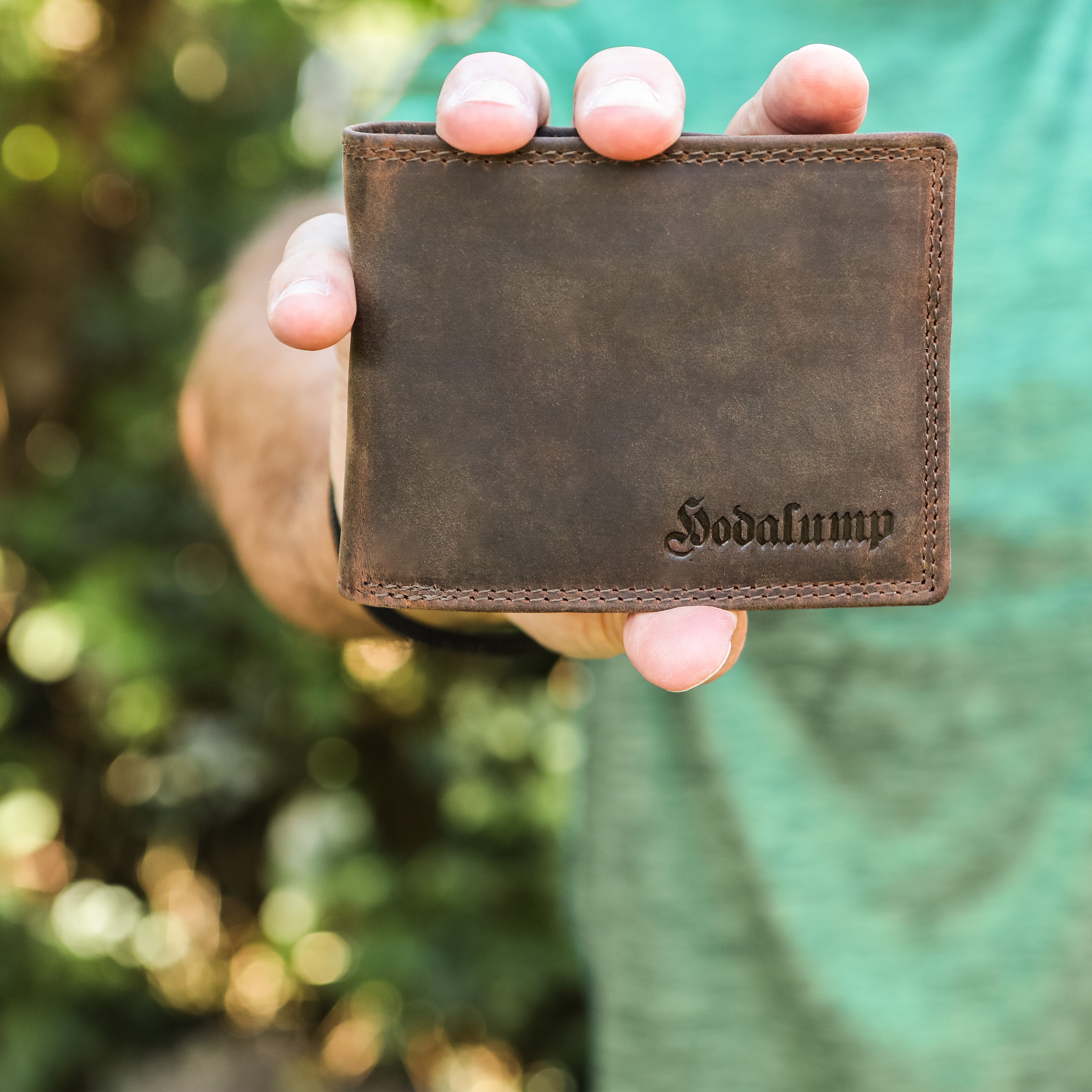
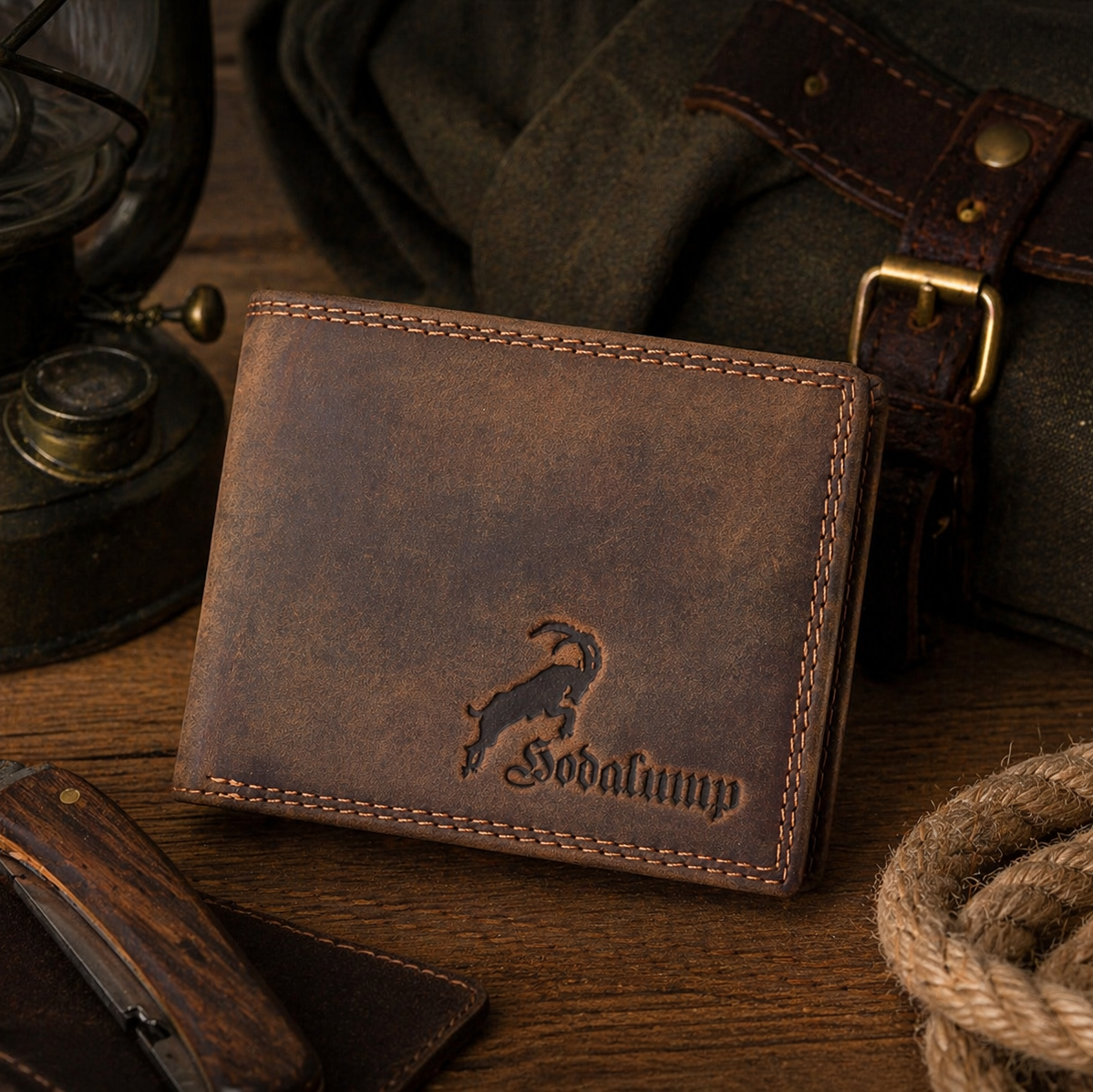
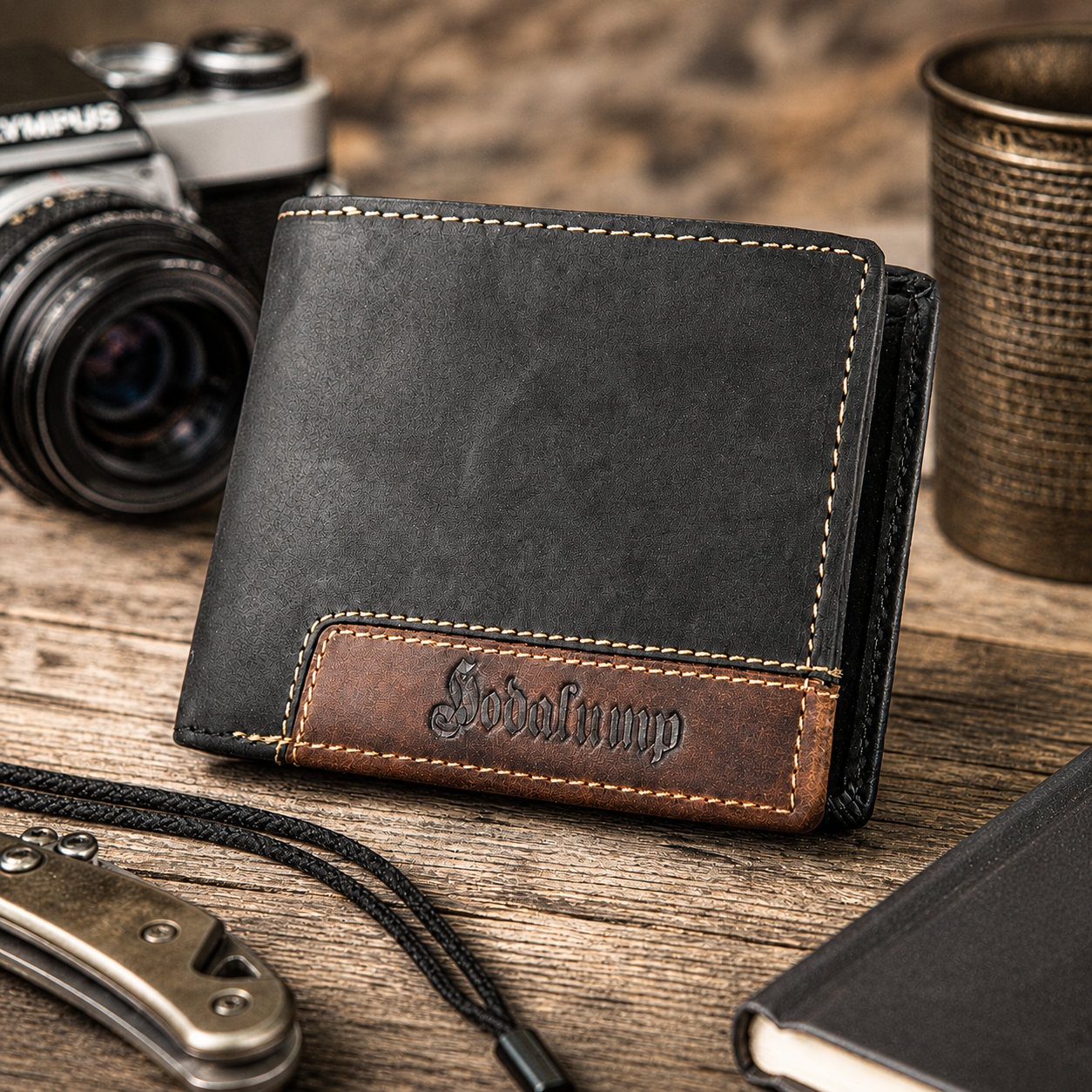
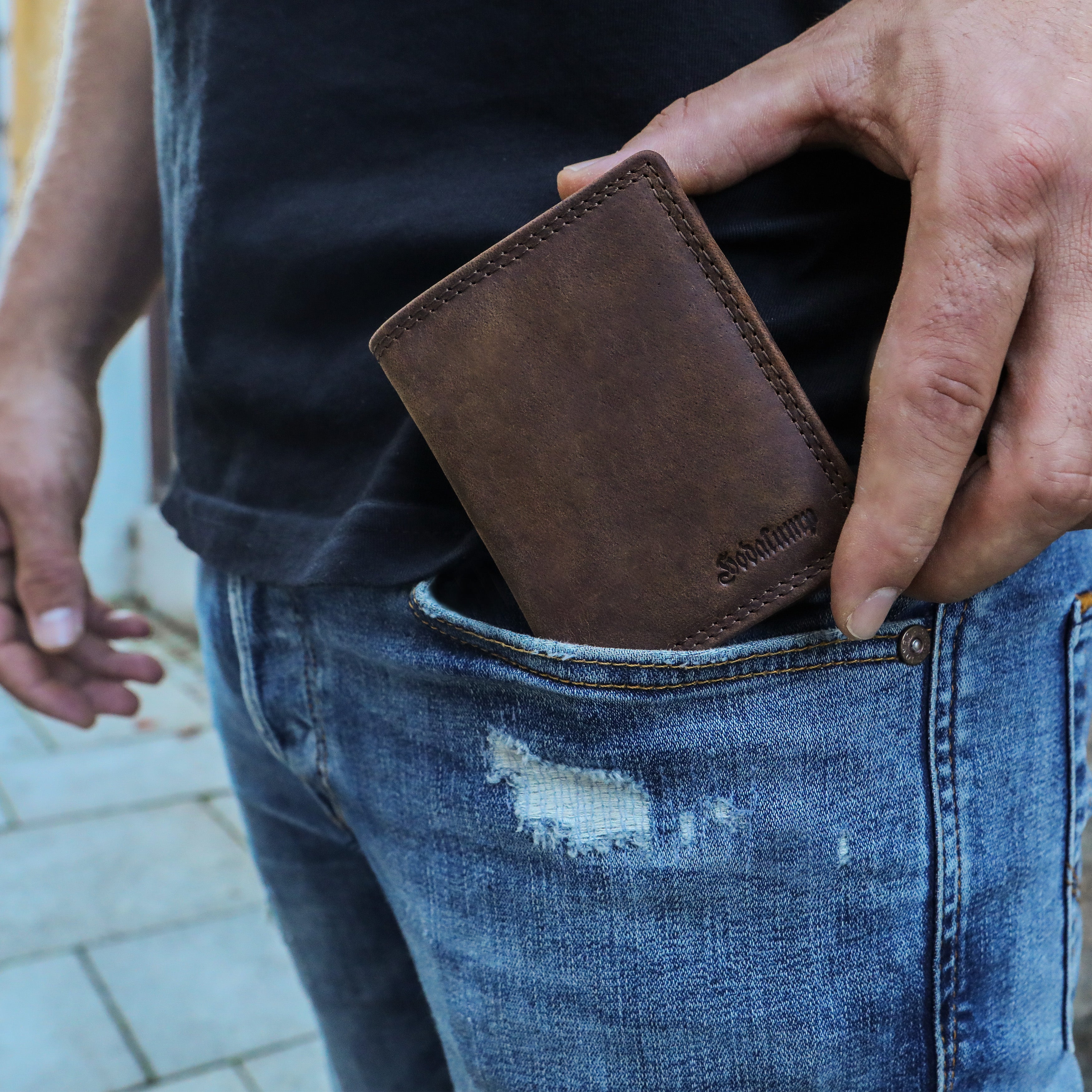
The landscape bifold. The classic: folded once, notes lying crosswise, card slots stacked above one another. It fits in a back pocket, but adds bulk when there's a lot inside. Example: the Hodalump Classic Wallet at €39.95.
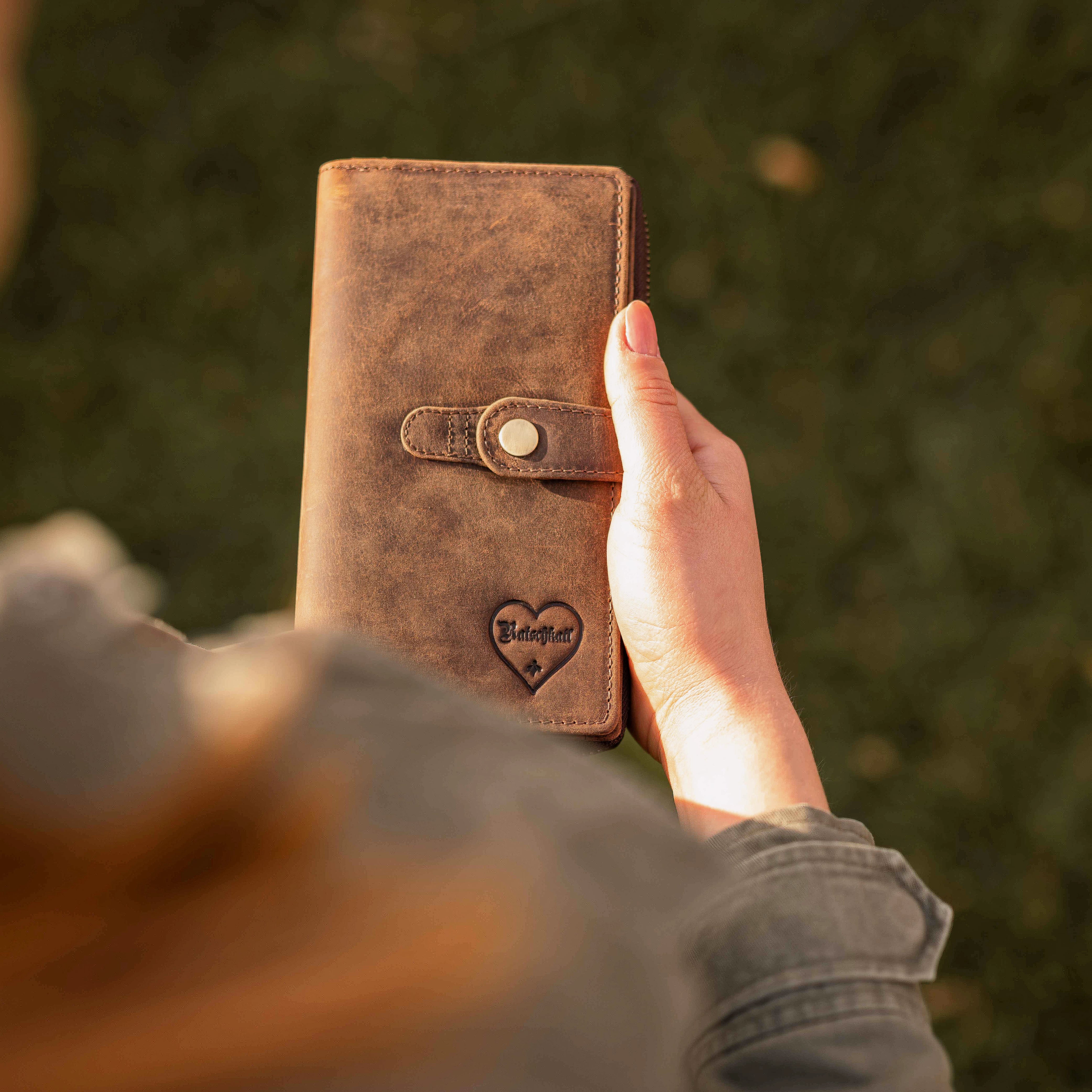
The portrait format. Upright rather than wide. The same number of cards is spread over a narrower, longer shape — it sits well in jacket and inside pockets, but becomes uncomfortable in the back pocket of your jeans. For instance the large Raudi portrait wallet at €39.95 or the Lenz portrait wallet with chain at €46.95.
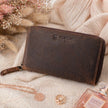
The zip-around wallet. A zip running all the way round, so nothing falls out even when the wallet is upside down in a handbag. The price you pay: every access needs two hands. Example: the Classic Wallet Große Gretl at €79.95.
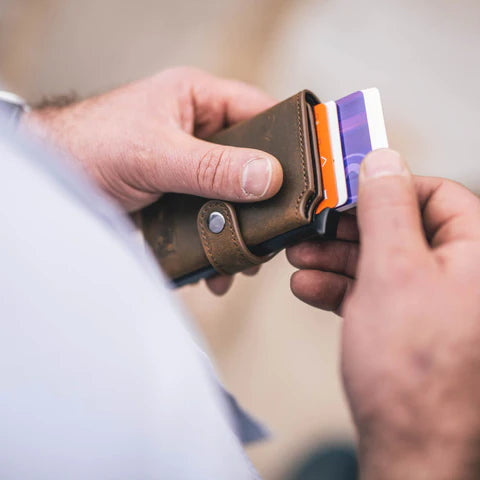
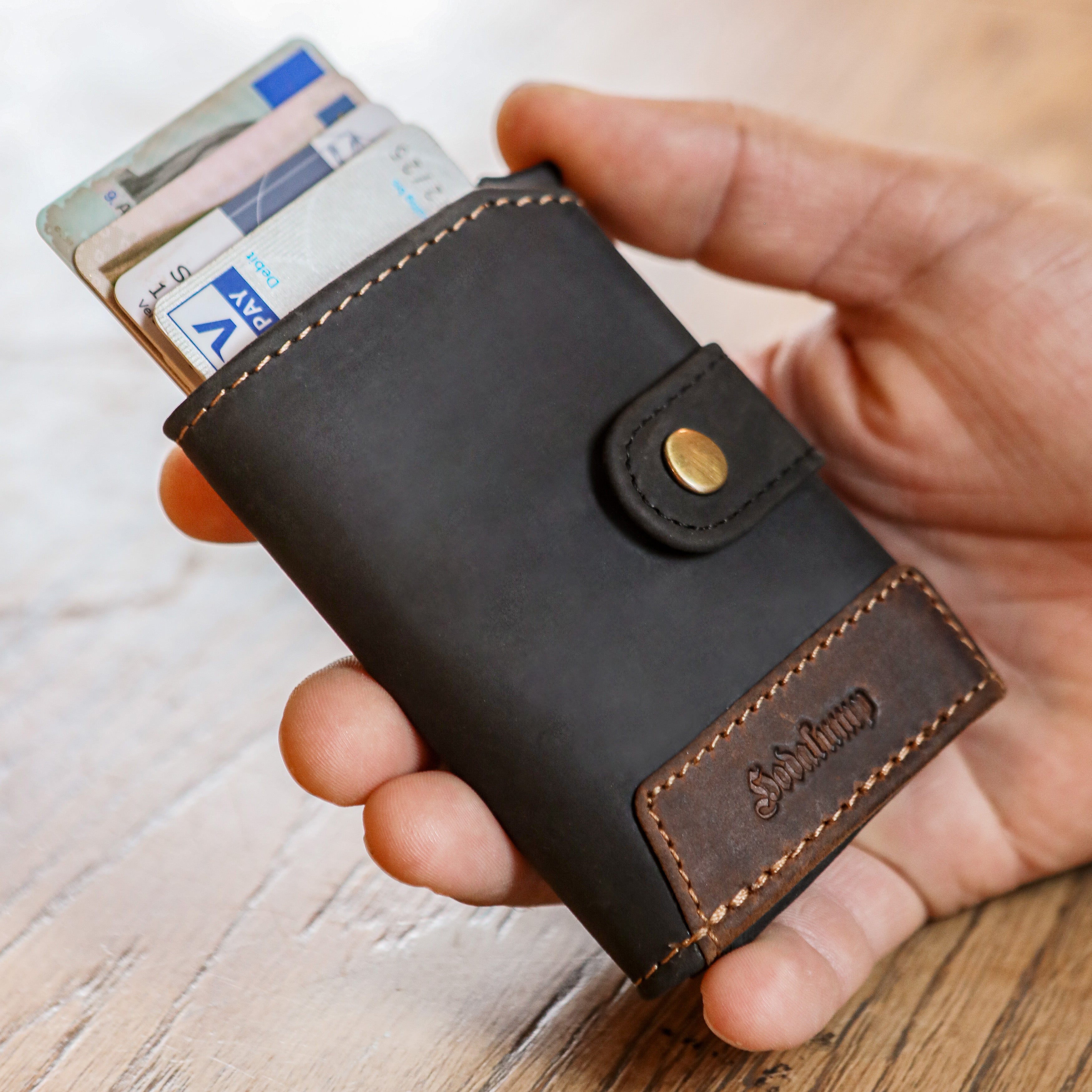
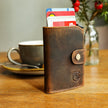
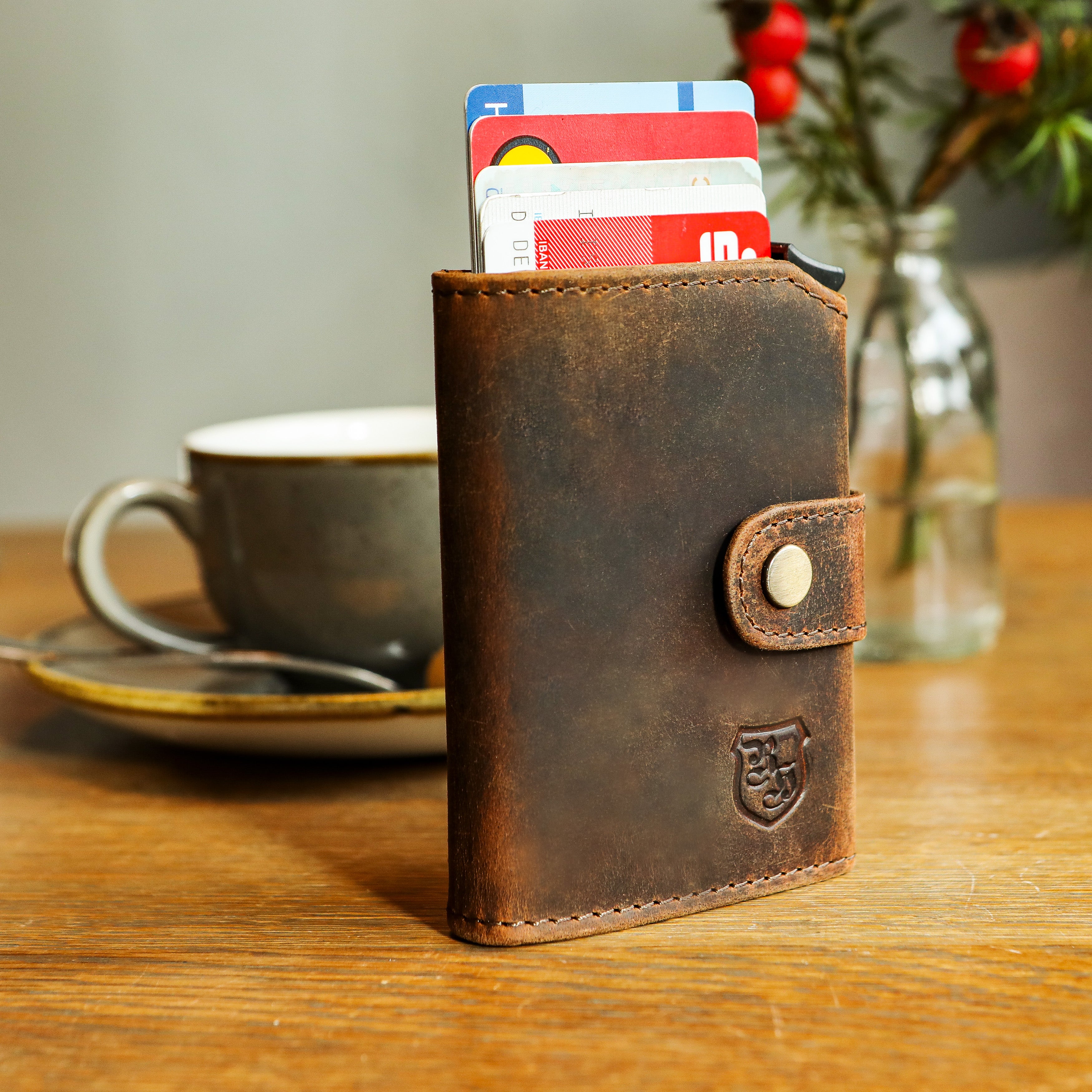
The card holder. Cards only, a central compartment for folded notes, often a small coin pocket. The card holder at €39.95 takes up to 10 cards and has RFID protection. If you want even less: the Hodalump card holder at €15.95 or the Super Slim wallet at €19.95.
The money clip. Notes are clamped rather than stacked in a fold. The Fredl money clip wallet at €34.95 is the slimmest way to carry cash — and the least practical if you have a lot of coins.
The Schüttelbörse. A pure coin wallet — the German name means “shake-out wallet” — opened with one grip so coins can be tipped out and poured back in. The tip-out coin wallet at €29.95 is more of an addition than a main wallet.
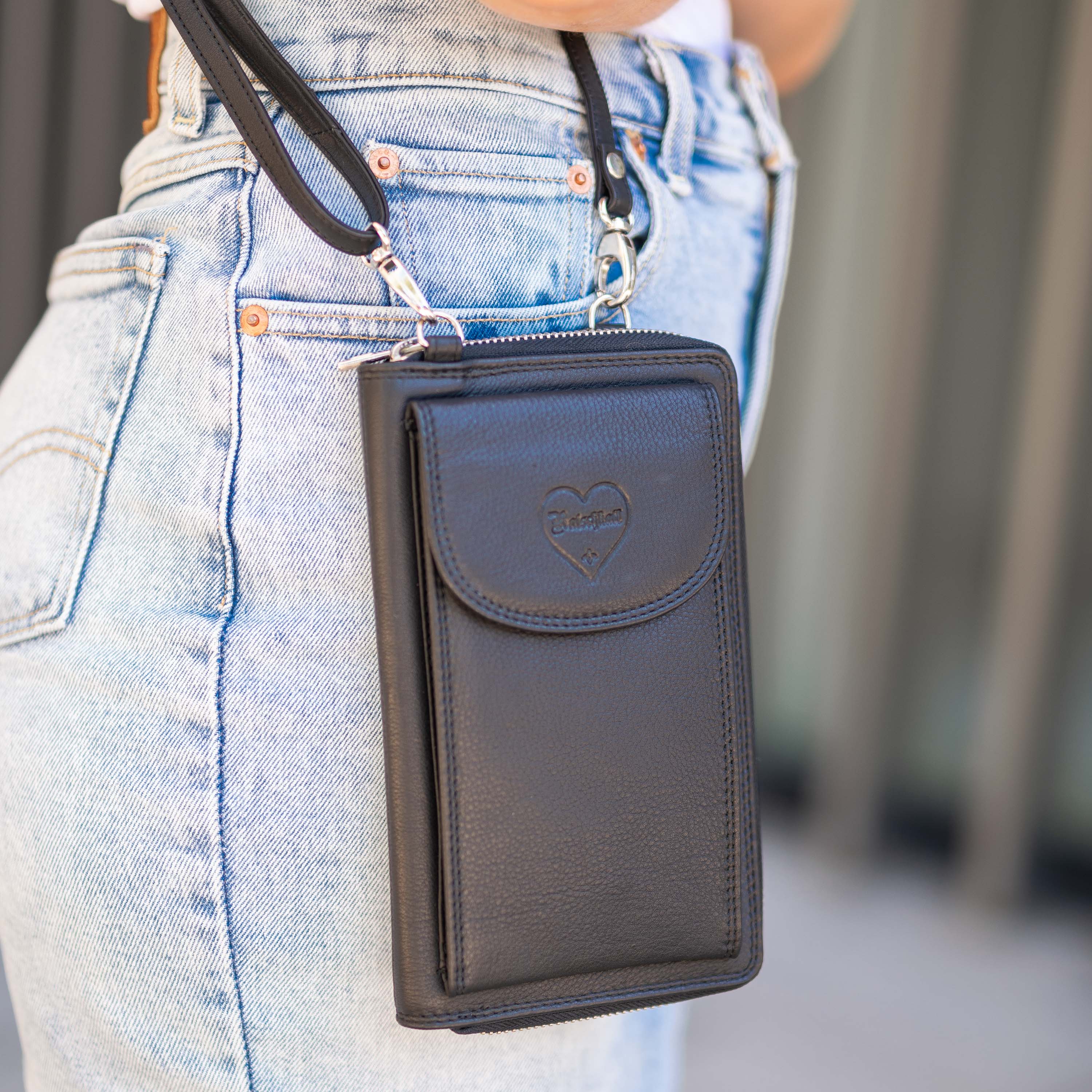
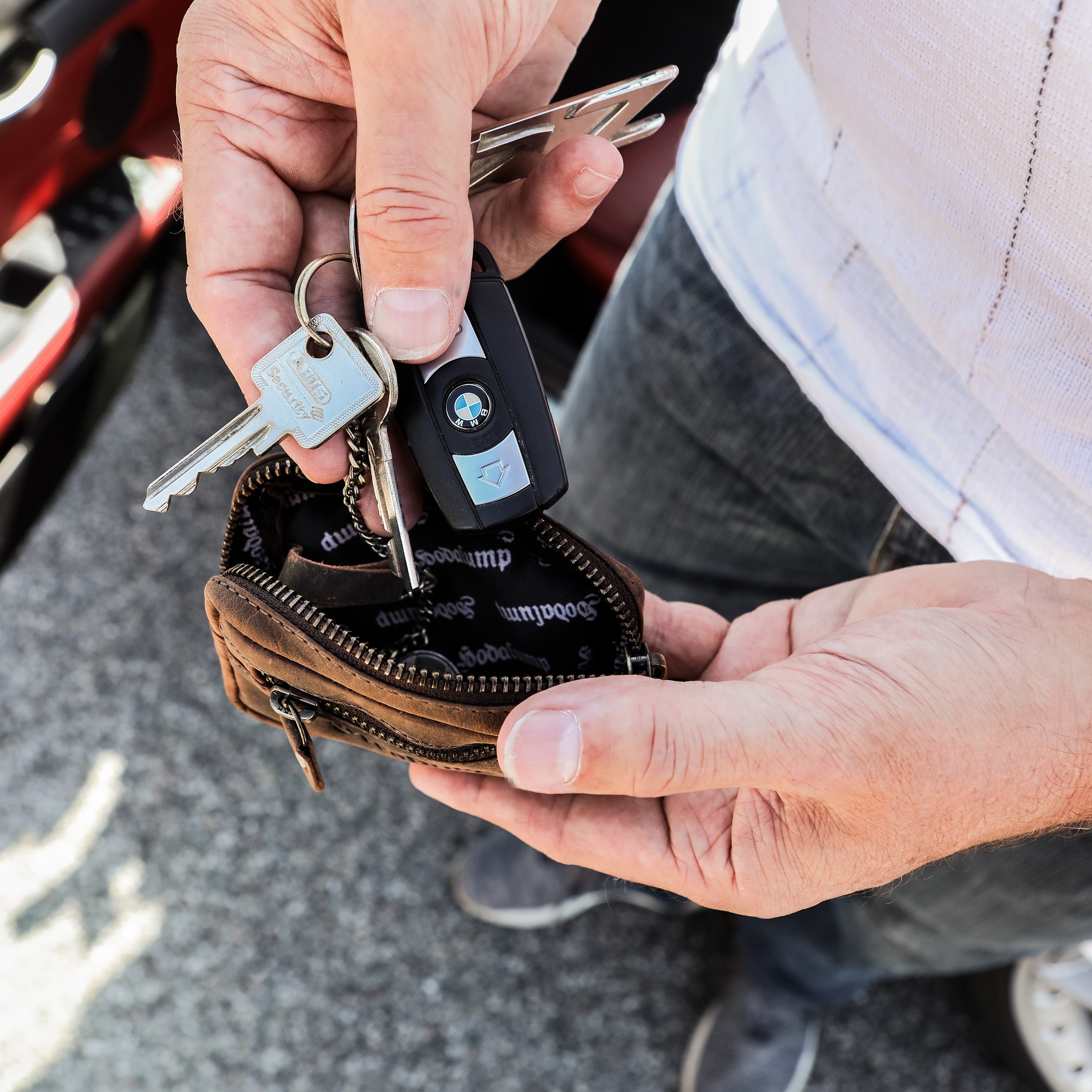
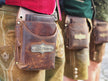
The pouch wallet. The borderline case between a wallet and a small handbag — with room for a smartphone, keys and lipstick. The pouch wallet from €39.95 has a detachable wrist strap for the job.
What else there is to say about wallets
A few points that get asked about regularly and don't fit under any of the headings above.
Do you need RFID protection? Reading cards contactlessly is technically possible; how much it matters in practice is judged differently by different people. If it gives you a better feeling, the extra cost is usually small — many models in the wallets with RFID protection collection have it built in. Retrofitting works too: with the RFID/NFC blocker card sleeves in a set of three at €9.95.
Coin pocket or not? A question of how you pay, not of taste. If you mostly pay by card, a model without a coin pocket saves you noticeable thickness. If you use cash regularly, you'll want it. Models with a coin pocket are in the wallets with a coin pocket collection; the trade-off in detail is in Card holder with coin pocket or slim wallet.
How many card slots do you need? Almost always fewer than you think. How to work that out for yourself is in Wallets with lots of card slots: how many are enough?.
What colour should it be? There's a great deal of symbolism about that and a few solid arguments. Both, kept apart, in Which wallet colour brings luck — and which one is practical?.
How long does a leather wallet last? That depends less on the price than on how full it is and whether it gets looked after. It usually fails at the fold, at the card slot stitching or at the coin pocket fastening. What you can do about that is in Caring for a leather wallet.
In short
- Geldbörse, Geldbeutel and Portemonnaie all name exactly the same object, and all three are simply “wallet” in English. The difference is regional, not factual.
- Geldbeutel is southern German and Austrian, Portemonnaie more northern and western, Geldbörse the neutral written form. Austria adds Geldtasche. English splits along its own lines, with purse, billfold and pocketbook.
- Portemonnaie comes from French (“coin carrier”), Börse via Latin and Greek from “leather bag” — the same root that gave English “purse” — and Beutel is Germanic for a soft pouch.
- Portmonee is a permissible Germanised spelling, but it is rarely used.
- Brieftasche originally means a long format for unfolded notes — the one term that carries a genuine meaning about the object.
- What actually differs is the shape: landscape bifold, portrait, zip-around, card holder, money clip, tip-out coin wallet. All the shapes sit side by side in the leather wallets collection, sorted by audience into men's wallets and women's wallets.