














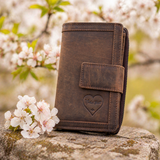
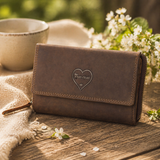
“What brands of women's wallets are there?” is one of the most common searches on the subject — and one of the few where the answer doesn't help. A list of manufacturers tells you nothing about whether the wallet works in your handbag, how long the stitching will hold, or whether your cards will fit.
Anyone searching for brands is really searching for markers. For something you can pin quality to without having used the product for years first. Those markers exist. They aren't on the label; they can be checked on the object itself in two minutes — in a shop, or from a product photo.
So: no list of brands, but a checklist.
First, some clarity: what is a Brieftasche anyway?
The German term has blurred. Originally “Brieftasche” means an elongated format that takes banknotes unfolded — which is where the name comes from: letters and documents were once carried in it, and Brief means letter. English calls the same shape a “long wallet”.
Today “Damenbrieftasche” is mostly used interchangeably with the other German words for a women's wallet. Why those words all mean the same thing and where they come from is covered in Geldbörse, Geldbeutel, Portemonnaie: What's the difference?. For this article: if you deliberately say “Brieftasche”, you normally mean the large format.
The four shapes — and what they're good for
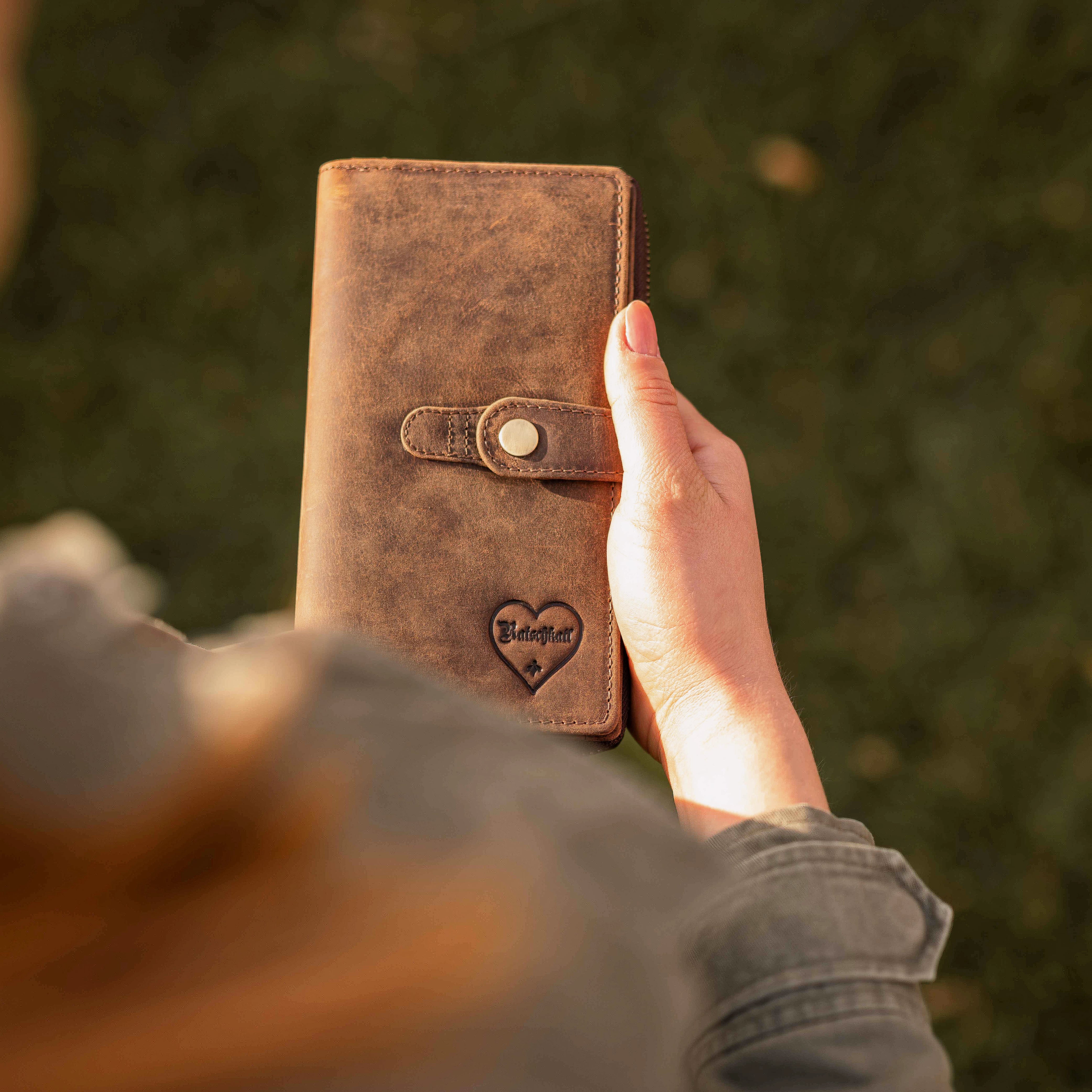
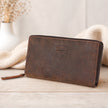
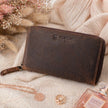
1. The large long wallet with a zip all the way round. This is the classic women's wallet. Notes lie flat, there are plenty of card slots, often a clear window and an extra compartment. The zip holds everything together, even when the wallet is upside down in a handbag.
Examples: the large Zenta wallet at €59.95 with numerous card slots, two large note compartments, a zipped coin pocket and a clear window — or the Classic Wallet Große Gretl at €79.95, which also has a compartment for receipts or a smartphone.
Where it goes wrong: every access needs two hands. Anyone paying at the till with a child on one arm will curse it. And the fuller the wallet, the more strain on the zip — that's the component that gives up first.
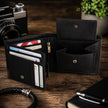
2. The large wallet without an all-round fastening. It folds open and is closed with a press stud, or not at all. Quicker to get into, flatter in build. The large Soferl wallet at €59.95 belongs here — its credit card slots are arranged so that you can see them all at once. It comes in brown and black.
Where it goes wrong: without an all-round fastening, everything falls out if you drop it. For handbags without an inner compartment it's the poorer choice.
3. The medium-sized wallet. The best-selling compromise: enough card slots for everyday use, but not a brick in your bag. Notes get folded once. The medium Babsi wallet costs €49.95, the medium Resal wallet at €49.95 has a zip all the way round and a clear window, and the medium Uschi wallet at €46.95 has a coin pocket with a press stud and a clear pocket.
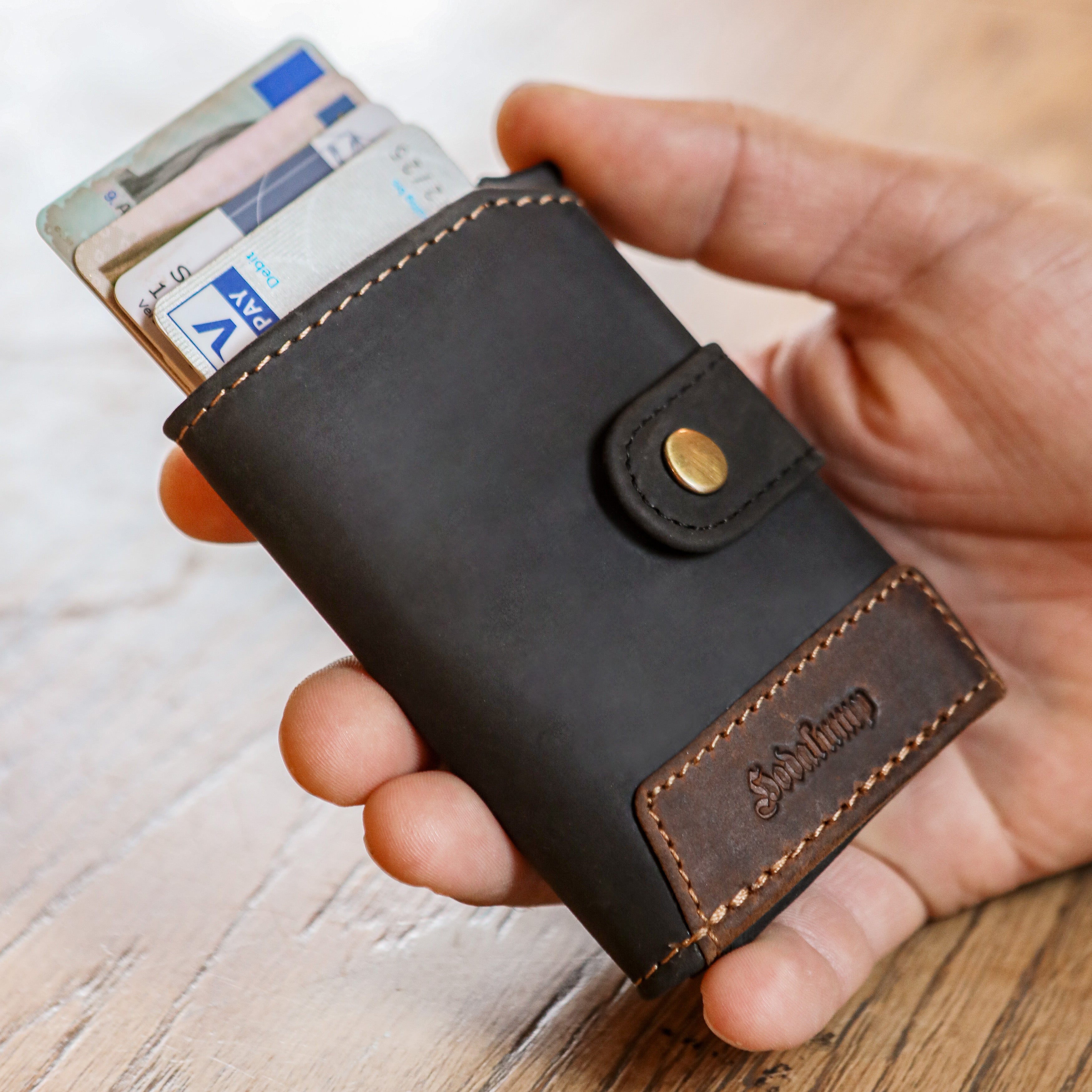
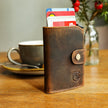
4. The small wallet and the card holder. For anyone who mostly pays by card. The small Hilde wallet costs €46.95, the small Ratschkatl wallet €34.95. More pared back still: the Card Holder Red Edition at €39.95.
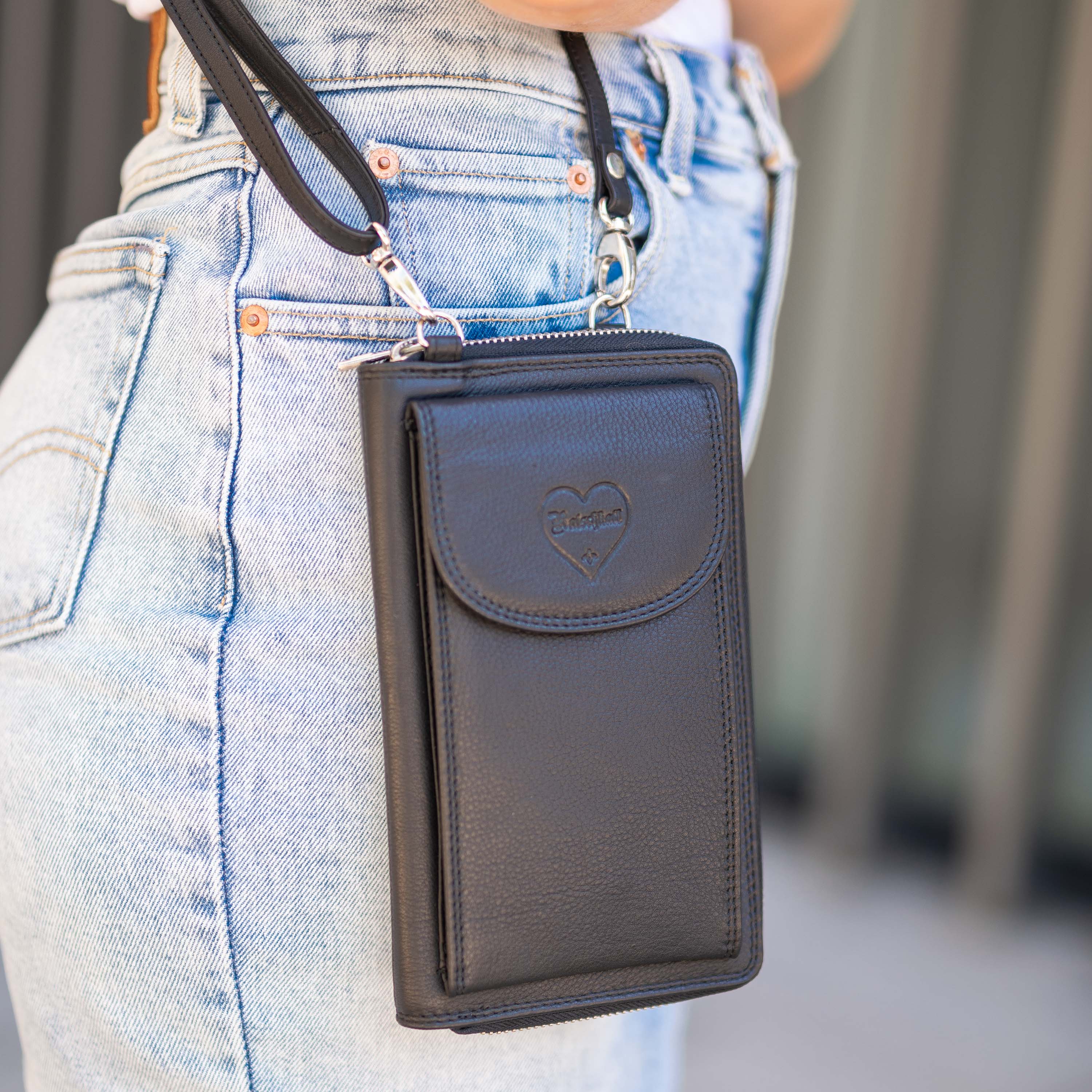
A special case that falls between all of these is the pouch wallet from €39.95 — half wallet, half small handbag, with a detachable wrist strap and room for a smartphone and keys. Good if you're often out without a handbag.
The size question comes before the style question
The most common bad buy with women's wallets isn't the wrong colour but the wrong format — and it goes wrong in both directions. A large wallet doesn't fit into a small cross-body bag. A small wallet disappears into a tote and gets hunted for daily.
The test takes a minute: take the bag you carry most often and measure the inner compartment. Then compare. And count your cards — not the ones you own, but the ones you actually used in the past month. How to sort that out is in Wallets with lots of card slots: how many are enough?; the large formats are set side by side in Large women's wallets: how many compartments you need.
How to recognise quality — five checks
This is the part that replaces a list of brands. All five work without any prior knowledge.
1. The stitching on the card slots. This is where every insertion pulls on the thread, and where a wallet tears first. Look for even, close stitches and check whether there's a backstitch at the start and end of each seam. Loose threads aren't “character”, they're a spot that will open up.
2. The edges. On cleanly made wallets the cut edges are either turned under or smoothed and sealed. A raw, fraying edge draws in moisture and frays further.
3. The lining. Look inside a note compartment. Textile lining is perfectly fine as long as it's densely woven and neatly fitted. A thin, shiny lining that ripples when you reach inside won't last years.
4. The zip. Pull it open and closed a few times. It should run evenly, including around the corners. A zip that already snags when new won't get better. On wallets with a zip all the way round, this is the single most important component there is.
5. The fold. Close the wallet and look at the spine. Is the leather skived there, that is, worked thinner? If not, the material works against itself every day — and that's exactly where wallets break after a few years.
The material: what the description should say
“Genuine leather” is a protected term, but a weak one. It only tells you that it is leather — not from which animal, from which layer of the hide, or how it was finished. It becomes meaningful only when two of those are stated alongside it, such as “oiled buffalo leather” or “cowhide”.
Among the women's models, the large Walli wallet at €59.95, for example, is listed as hunter leather — a through-dyed, oiled leather where abrasion at the edge doesn't go pale. The women's wallet with gloss finish at €49.95 says cowhide. Many others just say “genuine leather” — in which case the animal simply isn't documented, and we won't claim it either.
What each specification means is set out in Which leather is best for a wallet and in Types of leather compared. How to tell genuine leather from split and synthetic leather is in How to recognise real leather.
Where it goes wrong: the mistakes that keep happening
Buying for the looks instead of the interior. You see a wallet from the outside on the product photo. You use it from the inside. If there's no photo of the wallet opened up, that's a bad sign.
Buying too big because you want more room. More room gets filled — always. After six months the large wallet is just as full, and unwieldy with it.
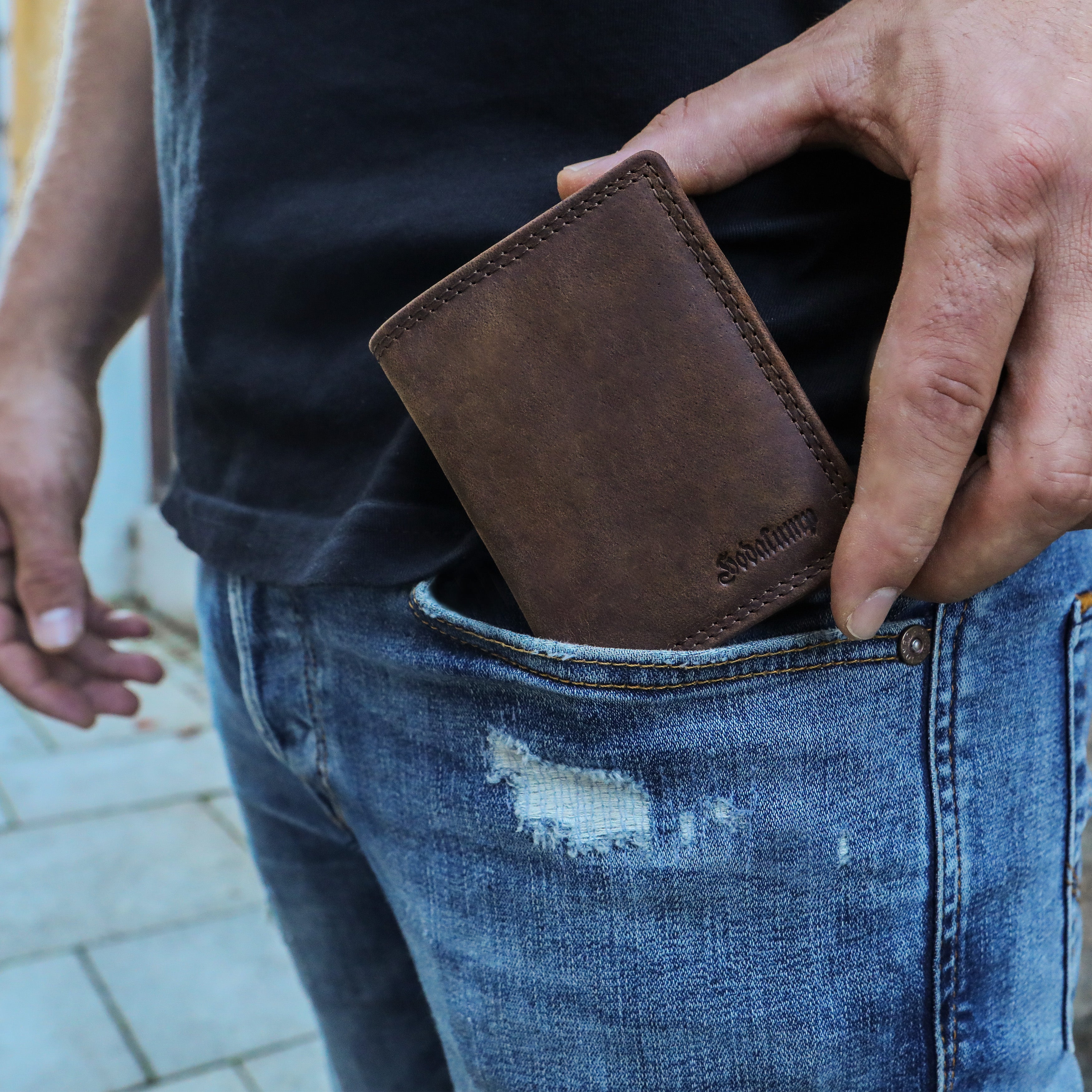
Pale colours for a jeans pocket. Pale leather picks up dye from dark fabrics. No problem in a handbag, a problem in a trouser pocket. More on choosing a colour in Which wallet colour brings luck — and which one is practical?.
Forgetting the care. Oiled leather dries out if it never gets any grease, and then goes brittle at the fold. Leather grease at €8.95 once or twice a year is usually enough; how thinly and for how long is in Applying leather grease. Buffed surfaces such as suede must never have grease on them.
In short
- A list of brands is little help when deciding. What helps are five checks: stitching on the card slots, edge finishing, lining, how the zip runs, and a skived fold.
- “Brieftasche” originally means the long format for unfolded notes. Today the German term is mostly used interchangeably with any women's wallet.
- Four shapes: large long wallet with an all-round zip, large wallet without an all-round fastening, medium wallet, small wallet or card holder.
- A zip holds everything together and costs you a hand. A press stud is quicker and holds less.
- Measure the inner compartment of your handbag before choosing a format — and count the cards you actually use.
- “Genuine leather” on its own is a weak specification. It becomes meaningful with the animal or the finish alongside it.
- All the models mentioned, and more, are in the leather wallets for women collection; the large formats are gathered in large wallets. The full overview of size and style is in Women's wallets: a guide to size, style and quality.